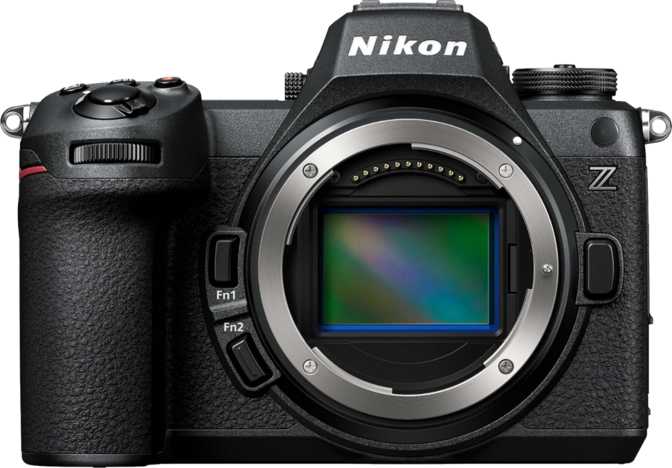
The Nikon Z6 III lands in an interesting spot in Nikon's mirrorless lineup — not the resolution monster aimed at studio and landscape specialists, and not the entry point for someone buying their first interchangeable-lens camera. It's the all-rounder, the camera built for someone who needs to shoot a wedding ceremony in the morning and cut a video recap of it that same evening. After spending real time with this body, what stands out isn't any single headline spec — it's how consistently capable it feels across photography, video, low light, and fast action, without forcing you to compromise heavily in any one area.
Design and Handling: Built for Long Days Behind the Camera
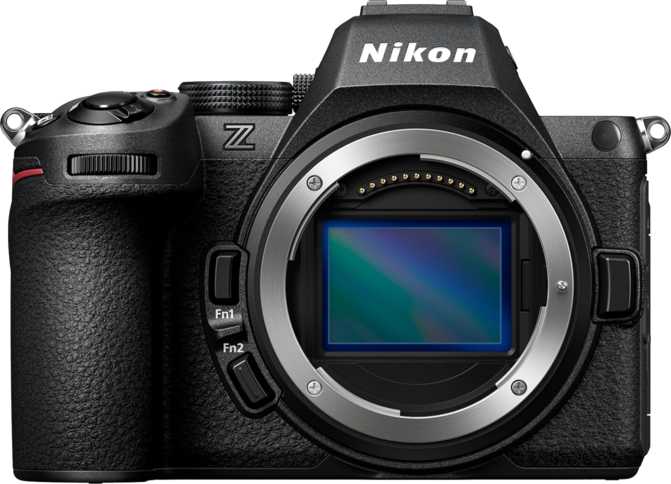
Pick up the Z6 III and the first thing you notice is how it sits in the hand. At 760 grams and with a body roughly the size of a large smartphone stacked three times over (138.5mm wide, 101.5mm tall, 74mm deep), it occupies that sweet spot between "serious tool" and "something you'll actually want to carry all day." Compared to a full-frame DSLR, this is a meaningful weight and bulk reduction — the kind of difference your shoulders notice after eight hours at a wedding or a full day of street photography.
This is a true interchangeable-lens system camera built around Nikon's Z-mount, meaning the body itself is really a gateway to a growing ecosystem of lenses rather than a fixed, sealed unit. That matters for buyers thinking long-term: the body you buy today is meant to grow with you as your lens collection expands.
There's no built-in flash. For a camera at this level, that's standard practice rather than a flaw — the hot shoe up top means you can mount any compatible external flash or speedlight when you genuinely need supplemental light.
Weather Sealing and Temperature Tolerance
The Z6 III carries splash-resistant weather sealing, which is the difference between packing up at the first sign of drizzle and shooting straight through it. It's not built to be submerged, but for realistic conditions — light rain, mist, dusty trails — it keeps working.
- Operates down to -14°C for winter shoots
- Operates up to 40°C for peak summer heat
The Viewfinder and Touchscreen Experience
The electronic viewfinder gives you 100% coverage of the frame, meaning what you see is exactly what you get in the final image — no guessing at edges that might get cropped out, which optical viewfinders on older DSLRs often couldn't guarantee. For composition-critical work like architecture or tight product shots, that precision is genuinely useful rather than a nice-to-have.
On the back, a 3.1-inch touchscreen rated at 2,100k dots delivers sharp, detailed playback — sharp enough to judge focus accuracy on the spot rather than waiting until you're back at a computer. The screen flips out fully, opening up two practical use cases: shooting from awkward low or high angles, and turning the screen toward yourself for vlogging or presenting to camera. Touch autofocus means you can simply tap where you want the camera to focus.
Image Quality and the Sensor: What 24.5 Megapixels on a Full-Frame Sensor Delivers
The Z6 III uses a full-frame sensor, which is the same sensor size found in professional-grade cameras and is significantly larger than what you'll find in most consumer cameras or smartphones. A larger sensor captures more light per pixel, which translates directly into cleaner images in dim conditions and more natural-looking background blur when you want subjects to pop against a soft backdrop.
At 24.5 megapixels, this sensor sits in a deliberately balanced spot. It's enough resolution for large prints, serious cropping flexibility, and commercial work, but not so much that file sizes balloon or that continuous shooting speed has to be sacrificed to manage that data. If your priority is squeezing out the absolute maximum fine detail for billboard-sized prints, there are higher-resolution cameras built specifically for that.
The sensor is also back-illuminated (BSI), a design where the wiring sits behind the light-sensing layer instead of in front of it. The practical benefit: more light reaches the sensor itself rather than being partially blocked by circuitry, which shows up as cleaner detail and less noise, especially at the edges of the frame and in low light.
This is a conventional CMOS sensor rather than a stacked CMOS sensor. Stacked sensors reduce rolling shutter — the distortion you sometimes see when fast-moving subjects appear skewed, particularly with the electronic shutter or fast video motion. Not a dealbreaker for most shooting, but whip-fast action photographers should be aware the readout isn't top tier.
Low-Light Performance and ISO Range
The native ISO range tops out at 64000, with an expanded mode reaching as high as 204800. ISO is essentially your camera's sensitivity to light — push it higher and you can shoot in darker conditions, but at the cost of increasing image noise (a grainy, speckled texture).
| ISO Range | Best Use Case | What to Expect |
|---|---|---|
| Low (64–800) | Daylight, studio, landscapes | Maximum detail, virtually no noise |
| Mid (800–6,400) | Indoor events, overcast days | Clean images, minimal visible noise |
| High (6,400–64,000) | Dim venues, indoor sports, night events | Noticeable but usable noise, still print-worthy |
| Expanded (to 204,800) | Emergency low-light only | Heavy noise — a last resort |
Autofocus and Continuous Shooting Speed
With 273 autofocus points spread across the frame and phase-detection autofocus for both photos and video, the Z6 III's focus system has dense, wide coverage rather than concentrating accuracy in the center of the frame. Combined with autofocus tracking, the camera can follow a moving subject even as they move toward the edges of your composition.
Mechanical continuous shooting tops out at 14 frames per second — enough to capture the precise moment a ball leaves a bat, or the exact peak of a jump, rather than the frame just before or just after it.
Shutter Speed, Flash Sync, and Long Exposures
The mechanical shutter reaches a fastest speed of 1/8000th of a second. Switch to the electronic shutter and that ceiling jumps to roughly 1/16000th of a second — useful for the fastest action, and notably silent, which matters for theaters, courtrooms, weddings, or wildlife. The camera also supports exposures as long as 30 seconds for night and astrophotography, and a flash sync speed of 1/200th of a second covers the large majority of on-location flash work.
Why 8 Stops Matters More Than the Number Suggests
In plain terms, "stops" refer to how much slower a shutter speed you can use handheld while still getting a sharp, blur-free shot. Going from a hypothetical unstabilized shutter speed of 1/250th of a second, 8 stops of correction theoretically lets you shoot handheld at speeds approaching a full second — though real-world results depend heavily on how steady your hands are and what lens you're using.
What this actually means day-to-day: significantly more freedom to shoot in dim restaurants, evening streets, or indoor venues without bumping up ISO or reaching for a tripod. It also means smoother handheld video, since stabilization works continuously rather than only for stills. The system can also combine with stabilization built into compatible lenses for an even more effective result.
Video Performance: How Capable Is This for Filmmakers and Hybrid Shooters?
This is where the Z6 III distinguishes itself from cameras that treat video as an afterthought. The top video mode supports frame rates up to 60 frames per second at its highest resolution setting, giving you the flexibility either to capture smooth, lifelike motion at high resolution, or to slow that same footage down dramatically in post-production for cinematic slow motion.
Footage is recorded at a bitrate of 190 Mbps. Bitrate determines how much visual data is captured per second — a higher number preserves more detail and handles complex scenes with less compression artifacting. The trade-off is larger file sizes, so plan on fast, high-capacity memory cards.
Autofocus carries over its strength from still photography into video, with phase-detection autofocus and continuous AF tracking working while you're rolling. This matters enormously for solo shooters and vloggers who don't have a focus puller. There's also a built-in stereo microphone setup for situations where you don't have an external mic on hand, though serious work will still benefit from one.
Because this isn't a stacked sensor, very fast-moving subjects in video — quick pans, fast vehicles, sports — can show rolling shutter distortion in some situations. For the overwhelming majority of interviews, events, travel, and narrative content, this won't be noticeable.
Battery Life and Power Management: Planning Your Shooting Day
The Z6 III ships with a removable, rechargeable battery rated at 2,100mAh, delivering a CIPA-rated 380 shots per charge. CIPA testing is intentionally conservative, cycling through zoom, flash, and playback in a standardized but heavy-usage pattern. In real-world shooting — especially if you're not chimping through every shot on the rear screen — many photographers comfortably exceed the rated figure, sometimes substantially.
Mirrorless cameras as a category drink more battery than DSLRs because the electronic viewfinder and rear screen are doing constant work that an optical viewfinder simply doesn't require. If you're heading into a full day of continuous shooting, a second battery isn't a luxury, it's a sensible insurance policy. The battery being removable and swappable makes this an easy problem to solve.
Connectivity, Storage, and Workflow Features
Several features here are less about the moment you press the shutter and more about how smoothly your photos and videos move from camera to computer to client.
Dual Card Slots
Write identical files to both cards for instant backup, or use one as overflow. For paid work, this is the difference between a hardware failure being a minor hiccup or a catastrophic loss.
Wi-Fi & Bluetooth
Wireless image transfer and remote camera control from a paired smartphone — useful for sharing a shot on the move or triggering the shutter remotely without introducing camera shake.
No Built-In GPS
Location data isn't automatically embedded from the camera alone, though pairing with a smartphone app can typically fill that gap by geotagging during transfer.
HDMI 2.1 Output
Connect to external monitors or recorders for serious video work. Note: there's no first-party live-streaming support built in, so going live natively isn't possible without extra hardware.
USB Type-C (3.2)
Genuinely fast tethered file transfer, a meaningful convenience for studio workflows moving large raw files or video off the camera quickly.
Pixel Shift & Raw
Pixel shift combines multiple images into one ultra-high-resolution composite for static subjects. Lossless compressed raw gives maximum editing latitude without ballooning file sizes.
Behind much of this performance sits Nikon's Expeed 7 processor — the kind of under-the-hood improvement you feel in faster autofocus and cleaner high-ISO output rather than see directly.
Real-World Fit: Who Should Buy the Nikon Z6 III
| Strong Fit For | Not Ideal For |
|---|---|
| Wedding and event photographers needing speed, low-light capability, and dual-card backup | Shooters who need the absolute highest resolution for large-format prints or heavy cropping |
| Hybrid shooters doing both photo and video professionally | Pure budget-first buyers who don't need full-frame image quality |
| Travel and outdoor photographers needing weather resistance and a manageable weight | High-speed action/sports specialists needing a stacked sensor to eliminate rolling shutter entirely |
| Content creators and solo video shooters needing reliable autofocus without a crew | Casual shooters who'd be better served by a simpler, lighter APS-C body |
| Low-light specialists — night events, indoor venues, documentary work | Anyone wanting native live-streaming straight from the camera without extra gear |
Where the Z6 III Sits in the Full-Frame Mirrorless Market
Positioned within the broader full-frame mirrorless category, the Z6 III sits squarely in the "advanced all-rounder" tier rather than at either extreme. Cameras built primarily for ultra-high-resolution studio and landscape work will out-resolve it, but typically at a real cost in continuous shooting speed and file size practicality. Cameras built primarily for elite sports and action work may offer stacked sensors with even less rolling shutter, but often without matching this level of video sophistication or this combination of stabilization, autofocus density, and weather sealing in one body.
Compared to APS-C (smaller-sensor) alternatives in a similar price range, the trade-off is straightforward: APS-C bodies are typically lighter and cheaper, but give up the full-frame sensor's low-light advantage and shallower depth-of-field control. If image quality in challenging light and lens versatility matter more than shaving off grams, the Z6 III's full-frame sensor earns its place.
Strengths and Weaknesses: A Balanced Take
What Stands Out
What stands out most after putting this camera through its paces is how rarely it forces a compromise. The autofocus system covers the frame densely enough to trust with moving subjects, the stabilization is strong enough to genuinely change how you shoot handheld in low light, and the video specs are serious enough that this isn't a "stills camera that also shoots video" — it's a legitimate hybrid tool.
The weather sealing and wide temperature tolerance mean you can trust it in conditions that would make you hesitate with less rugged gear, and dual card slots give professional shooters real peace of mind rather than a checkbox feature.
Where It Falls Short
The honest weaknesses are specific rather than sweeping. The absence of a stacked sensor means rolling shutter is a real, if situational, concern for fast action shot with the electronic shutter or in video. There's no built-in flash, which is a non-issue for most serious shooters but worth knowing if you expected one.
Live streaming isn't natively supported out of the box, and while the CIPA battery rating is conservative in practice, mirrorless cameras as a category simply don't match DSLR-level battery endurance, making a spare battery a near-essential accessory for long shooting days.
None of these are dealbreakers — they're the kind of trade-offs that come from Nikon prioritizing autofocus performance, video capability, and stabilization within a body that remains reasonably compact and weather-resistant.
Frequently Asked Questions About the Nikon Z6 III
Final Verdict: Is the Nikon Z6 III Worth Buying?
If you need one camera that handles serious photography and serious video without forcing you to choose a lane, the Z6 III earns a clear recommendation. The autofocus system, in-body stabilization, weather sealing, and dual card slots make it dependable for paid professional work, while the video specifications — continuous autofocus, high bitrate, flexible frame rates, and proper audio inputs — mean it won't leave hybrid creators wanting a second, video-specific camera.
It's not the right purchase if your singular priority is maximum resolution for large-format printing, or if you need the most extreme action-sports performance a stacked sensor can offer. But for the photographer or content creator who wants one well-rounded, professionally capable full-frame body that performs reliably across weddings, events, travel, low light, and video — this is a confident, well-justified buy.
Recommended for Hybrid Photo & Video Shooters