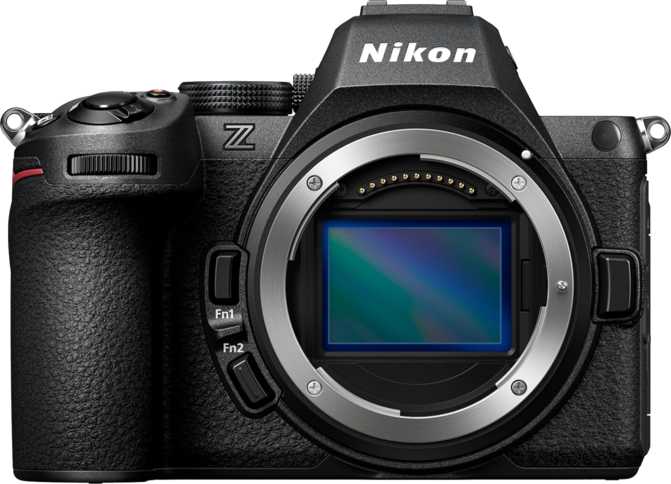
Nikon Z5 II Review: Flagship Intelligence at an Accessible Price
CamerasThe Nikon Z5 II at a Glance
The full-frame mirrorless market has never been more competitive, and yet the Nikon Z5 II manages to feel like a thoughtful answer to real-world frustrations rather than a spec-sheet exercise. Nikon's best processing engine — previously locked to cameras costing significantly more — now lives inside this body, and that changes the math at this price point considerably.
Design, Build, and Physical Experience
Form factor, weather resistance, and the controls experience
Physical Form and Handling
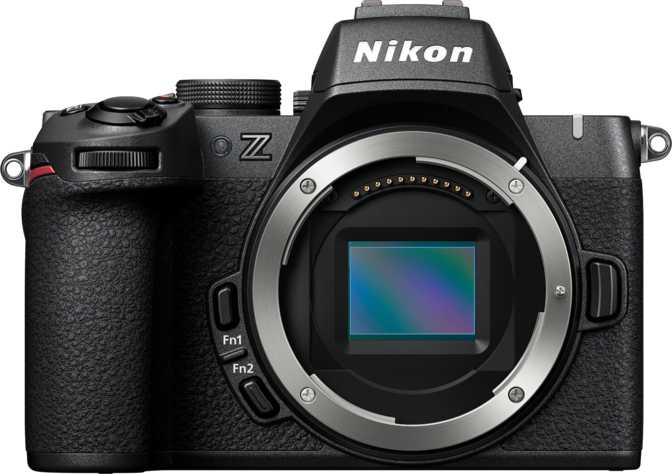
At roughly 134mm wide and just over 100mm tall, the Z5 II sits in the category of cameras that fit a large hand without overwhelming a smaller one. The 72mm grip depth gives enough purchase to feel secure over long shooting sessions, and the 700g body weight signals real materials rather than plastic cost-cutting.
The body dimensions put it in a comfortable middle zone: larger than compact mirrorless options, but noticeably more manageable than Nikon's Z8 or Z9. Photographers migrating from a DSLR will find the proportions immediately familiar — this is not a camera that asks you to relearn how to hold a camera.
Weather Sealing
The weather sealing covers what most photographers actually encounter: light rain, dust on location, splashes during outdoor events, and conditions where stopping to worry about your gear isn't an option. The 0°C to 40°C operating range handles everything from a brisk winter morning to a summer festival without complaint.
For a camera at this price point, genuine environmental protection distinguishes it meaningfully from more budget-oriented full-frame options that omit it entirely. This is not a token feature — it changes where and how confidently you can shoot.
Screen, Viewfinder, and Interface
The rear screen measures 3.2 inches and flips out fully — a design choice that benefits vloggers, photographers working from a tripod at unusual heights, and anyone who shoots regularly in live view. At 2,100,000 dots of resolution, it renders fine detail and focus peaking accurately enough to trust for critical evaluation in the field. Touch functionality is fully active, enabling tap-to-focus in both photo and video modes.
The electronic viewfinder delivers 100% frame coverage — no cropping, no guesswork about what falls just outside the edge. For precise composition, particularly in bright light where the rear screen becomes harder to read, a full-coverage EVF is not a given among competitors at this tier, and its presence here matters.
Hot Shoe, No Built-In Flash: The Z5 II omits the pop-up flash in favor of a full hot shoe for external flash attachment. This is the right trade-off — built-in flashes at this sensor size are rarely useful beyond casual snapshot scenarios, and removing it allows for a cleaner, more weather-resistant top plate.
Image Quality: The Full-Frame Foundation
Sensor architecture, processing power, and low-light capability
A Full-Frame Sensor That Earns Its Keep
The Z5 II uses a full-frame sensor — meaning the imaging surface matches the dimensions of traditional 35mm film. For photographers moving from a crop-sensor camera, this is not a trivial upgrade. A full-frame sensor captures dramatically more light per pixel, which translates directly into cleaner images in dim environments, smoother tonal gradations, shallower depth-of-field control, and more natural rendering at wide-angle focal lengths.
At 24.5 megapixels, the resolution lands in the practical sweet spot. Large gallery-sized prints? Covered. Significant post-processing crops to extract a composition? Workable. Files that won't overwhelm storage and an editing workflow? Exactly. This is not a camera chasing a resolution record — it prioritizes image quality per megapixel, which is a meaningfully different engineering goal.
The sensor uses a back-illuminated (BSI) architecture, which positions the light-gathering photodiodes closer to the lens side of the sensor rather than partially obstructing them with wiring. The practical result is better light collection efficiency across the sensitivity range. It is not a stacked-CMOS design — a faster and more expensive architecture used in Nikon's flagship bodies — but for the Z5 II's target use cases, BSI is a well-matched choice.
Expeed 7: The Engine That Changes the Equation
The Expeed 7 image processor is the most significant thing about the Z5 II. This is the same processing platform found in Nikon's Z8 and Z9 — cameras that sit considerably higher in the market. It handles autofocus computation, noise reduction, video encoding, and the advanced subject-detection algorithms that define the camera's day-to-day experience.
For photographers who understand why processor generation matters: Expeed 7 enables the subject-detection autofocus system, the in-body stabilization algorithms, and the oversampled video output. These capabilities are not watered-down trickle-downs — the processing architecture genuinely enables performance that was previously exclusive to the top tier.
ISO Range and Low-Light Capability
The camera's native sensitivity ceiling covers essentially every low-light scenario a working photographer encounters: dimly lit reception halls, stage performances under spotlights, golden-hour street photography, and indoor sports without supplemental lighting.
Beyond the native range, the camera offers an expanded sensitivity setting that pushes substantially further. Expanded ISO values in any camera come with caveats — noise and loss of dynamic range are unavoidable at these extremes — but a usable image at maximum sensitivity beats no image at all in genuinely difficult lighting situations. The Z5 II handles the native range with confidence; the expanded range is insurance.
Autofocus: Flagship Intelligence at a New Price
299-point phase detection, subject recognition, and touch control
Broad frame coverage keeps subjects in focus from center to edge without needing to recompose
Recognizes people (face & eye), animals, and vehicles — tracking through movement and partial frame exits
Tap the rear screen to place focus — practical for live view, video, or situations where AF point navigation is too slow
How Phase Detection Works in Practice
Phase-detection autofocus works by analyzing two slightly offset views of a subject simultaneously, calculating both the direction and distance of focus error, and moving the lens accordingly — all in fractions of a second. The result is fast, confident acquisition, particularly on subjects moving toward or away from the camera.
299 dedicated points spread across the frame provide genuinely broad coverage. Photographers do not need to park their subject in the center and then recompose — the system tracks subjects moving toward the frame edges without losing them. This is meaningful for dynamic shooting situations where subjects don't cooperate with a centered framing.
Subject Detection Across Stills and Video
The Expeed 7 processor enables subject recognition that goes beyond simple contrast detection. The system identifies and locks onto people — including individual faces and eyes — as well as animals and moving vehicles. It maintains focus through movement, direction changes, and brief occlusions.
Critically, phase-detection AF is active for video as well as stills. Continuous autofocus during recording uses the same intelligent system as stills capture, with subject tracking maintained throughout. For documentary-style work, run-and-gun video, or interviews where a dedicated focus operator isn't available, this removes one of the most technically demanding aspects of solo video production.
What Phase Detection Means for You
- Moving subjects tracked confidently from acquisition to capture
- Eye-detection works on real people, not just posed subjects
- Video AF as capable as stills AF — no mode switching or quality drop
- Touch control lets you redirect focus with a tap on the rear screen
- Manual focus always available for full creative control
Image Stabilization: 7.5 Stops Is Not a Marketing Number
In-body stabilization, real-world implications, and combined IS
Equivalent to shooting a 1/500s scene with a shutter speed near 1/4s — handheld, with a sharp result
Combined Stabilization
When paired with optically stabilized Z-mount lenses, the sensor-shift IBIS and the lens stabilization work in tandem — layering both correction systems for greater effectiveness than either achieves alone. Unstabilized primes still benefit meaningfully from the sensor-side compensation alone.
What 7.5 Stops Actually Changes
A stabilization system rated at 7.5 stops under CIPA testing means the following: if camera shake would normally require a shutter speed of 1/500s to produce a sharp handheld image, this system theoretically allows sharp captures at speeds approaching 1/4s with the same lens. In real-world shooting, results vary by photographer steadiness and focal length, but the rating is legitimately high — and the practical impact is felt in daily use.
Street photographers can use slower shutter speeds to gather more light in dim conditions without a tripod. Travel photographers can shoot architecture or landscapes hand-held in fading evening light. Portrait photographers can push into dimmer indoor environments without resorting to flash. These are not edge cases — they are common shooting scenarios where the Z5 II's stabilization opens options that a camera with weaker IBIS simply doesn't offer.
The system uses sensor-shift stabilization, meaning the sensor itself moves physically to counteract detected motion. This approach works with any lens mounted on the camera — including legacy F-mount glass via the FTZ adapter — not just lenses with optical stabilization elements.
Important distinction: No IBIS system eliminates subject motion blur — only camera shake. For sports, wildlife, or any fast-moving subjects, fast shutter speeds remain necessary. The Z5 II's stabilization solves the half of the blur equation that comes from your hands, not the subject.
Video Capabilities
Oversampled 4K, audio controls, and cinematic modes
Oversampled 4K: Why It Matters
The Z5 II reads out more sensor lines than a standard 4K frame requires, then downsamples the excess data into the final 4K image. This process — called oversampling — produces footage with more detail, sharper edges, and less moiré patterning compared to cameras that simply crop or pixel-bin their way to a 4K resolution. It is a meaningful quality advantage, not a specification technicality.
Maximum 4K frame rate is 30fps. For the overwhelming majority of video applications — broadcast, web publishing, documentary, travel, social content — 30fps is entirely sufficient. For users who specifically require 4K at 60fps for high-frame-rate content or ultra-slow-motion in post-processing, that is not available on the Z5 II, and it is worth knowing before purchase.
A 24p cinema mode is included for footage with the classic cinematic frame rate used in professional film production. Slow-motion recording and a built-in timelapse function cover the remaining practical creative video needs without additional accessories or workarounds.
Audio: More Complete Than Most Competitors Offer
The Z5 II provides both a 3.5mm microphone input and a 3.5mm headphone monitoring jack. This is a combination that cameras at this price point sometimes sacrifice — dropping the headphone output to save space or reduce cost. Retaining both means you can connect a proper external microphone and simultaneously monitor audio levels through headphones, which is essential for any serious video work.
The built-in microphone is a two-element stereo array, which provides workable audio for run-and-gun scenarios where pulling out an external mic is impractical. For interviews, vlogging, or any situation where you control the environment, the external microphone input is the appropriate route.
Video autofocus uses the same phase-detection system as stills, with subject tracking active throughout recording. No hunting, no contrast-detection wavering — the system commits and holds. For solo video operators who can't pull focus manually while also directing and presenting, this is not a convenience feature; it is a functional necessity.
Battery Life and Connectivity
Endurance, charging, wireless, and physical connections
Battery Life: Plan for a Spare
The Z5 II's battery rating of approximately 330 shots per charge is the most honest weakness in this package. For a typical full shooting day, a spare battery is not optional — it is a purchase that should accompany the camera. This is not unique to the Z5 II among mirrorless cameras, but it is more pressing here than with some competing options.
The practical mitigating factor: the camera charges via USB-C, which means topping up with a standard power bank in the field is straightforward. Between shooting sessions, plugging in is low-friction. The USB 3.2 connection also provides fast data transfer to a laptop or workstation at the end of the day.
Connectivity: Everything You Need, Two Notable Omissions
- Wi-Fi 5 (802.11ac) — fast wireless transfer and remote control via smartphone
- Bluetooth — persistent low-power pairing for remote shutter and connection management
- USB 3.2 Type-C — fast data transfer and in-camera charging from any USB-C power source
- HDMI output — external monitor and recorder connection for critical focus and exposure
- Dual memory card slots — backup recording, overflow writing, or RAW/JPEG separation across cards
- No GPS — geotagging requires smartphone pairing or post-production metadata
- No NFC — wireless pairing uses the Wi-Fi setup process instead
The absence of GPS is the connectivity omission that matters most. Location data in image files is genuinely useful for travel photographers and anyone cataloguing work by place. It requires either a paired smartphone running Nikon's companion app during shooting or applying location data in post — neither is difficult, but neither is as frictionless as embedded GPS.
Who Should Buy the Nikon Z5 II
Matching the camera to the right photographer — and being honest about the wrong fit
The Z5 II Is the Right Choice For…
- Wedding and event photographersReliable subject-detection AF, weather sealing, dual card backup, and full-frame quality in unpredictable conditions is exactly what this camera is built for.
- Portrait and studio photographers upgrading from crop-sensorThe background separation, tonal quality, and depth-of-field control that full-frame enables will be immediately apparent in the first session.
- Travel photographersFull-frame image quality with a body size that doesn't dominate a bag, paired with weather sealing that protects in variable conditions.
- Hybrid shootersHigh-quality stills and capable oversampled 4K video from one body, without choosing one at the expense of the other.
- Nikon DSLR users entering mirrorlessThe FTZ adapter preserves the F-mount lens investment while opening access to the full Z-mount ecosystem. No system change required.
The Z5 II Is the Wrong Choice For…
- Sports and wildlife photographers needing high burst rates8 fps continuous shooting is capable, but photographers tracking fast unpredictable movement at 15–20+ fps need a higher-tier body like the Z8 or Z9.
- Professional video productions requiring 4K/60pThe Z5 II's 4K ceiling is 30fps. Productions that need high-frame-rate 4K for slow-motion work need a different camera.
- Photographers who require embedded GPSThere is no built-in GPS. Geotagging requires either a paired smartphone during shooting or manual metadata in post.
- Buyers prioritizing the smallest possible full-frame bodyThe Z5 II is manageable but not compact. Photographers who want the absolute minimum full-frame footprint have purpose-built alternatives to consider.
How the Z5 II Stacks Up Against the Competition
Positioning against the cameras buyers typically cross-shop at this tier
The Z5 II competes primarily against the Sony A7C II and Canon EOS R6 Mark II. Each camera makes different choices about what to prioritize. The Sony A7C II is the most compact option, trading body ergonomics for portability. The Canon EOS R6 Mark II offers 4K at 60fps that the Z5 II cannot match. The Z5 II's standout advantages are its 7.5-stop IBIS rating — which leads this competitive set — and the Expeed 7 processor, which was previously exclusive to substantially more expensive bodies. The table below compares what the Z5 II delivers against what is typical at each adjacent price tier.
| Feature | Budget Full-Frame | Nikon Z5 II | Higher-Tier Full-Frame |
|---|---|---|---|
| Image Processor | Previous-generation chip | Flagship Expeed 7 | Current-generation varied |
| Sensor Stabilization | Absent or 5–6 stops | 7.5 stops (CIPA) | 6–8 stops |
| Weather Sealing | Often absent | Yes | Yes |
| Subject-Detection AF | Basic or limited | People, animals, vehicles | People, animals, vehicles |
| Continuous Shooting | 5–7 fps typical | 8 fps | 10–20+ fps |
| Dual Card Slots | Rarely included | Yes | Yes |
| 4K Video Quality | Basic crop or pixel-bin | Oversampled 4K / 30fps | Oversampled 4K / 60fps+ |
| Flip-Out Screen | Sometimes | Yes | Varies by model |
| Dedicated Audio I/O | Mic in only, typically | Mic in + headphone out | Mic in + headphone out |
| USB Charging | USB-C varied speed | USB 3.2 Type-C | USB 3.2 Type-C |
Competitor column values represent general category characteristics typical at those price tiers, not specifications of any specific model.
Strengths and Weaknesses
An honest assessment of where the Z5 II leads and where it concedes
Where the Z5 II Stands Out
- Expeed 7 processor brings flagship-tier autofocus intelligence and processing to this price point — a genuine differentiator
- 7.5-stop IBIS rating leads this competitive class and meaningfully expands what's achievable hand-held in low light
- Full-frame BSI CMOS sensor delivers excellent image quality and low-light performance per pixel
- Genuine weather sealing is standard, not a paid upgrade or feature reserved for higher-tier bodies
- Dual card slots deliver professional-grade backup reliability as standard equipment
- Flip-out touchscreen with 2.1 million dots of resolution is accurate and practical for both stills and video work
- Oversampled 4K video output with dedicated microphone input and headphone monitoring jack
- 100% EVF coverage with no frame cropping for precise composition
- USB-C charging enables field power management with standard power banks
- Access to the full Nikon Z-mount lens ecosystem, plus F-mount compatibility via the FTZ adapter
Where the Z5 II Makes Trade-Offs
- Battery life of approximately 330 shots per charge requires spare battery planning for any full shooting day
- No built-in GPS — geotagging requires a paired smartphone during shooting or manual metadata in post-production
- Mechanical shutter ceiling of 1/2000s is lower than competing cameras; the electronic shutter extends this but introduces rolling shutter risk on fast subjects
- 4K video is limited to 30fps — no 4K/60p option for high-frame-rate creative work or smooth slow-motion in post
- Continuous shooting at 8 fps is capable but trails the 10–20+ fps offered by sports-oriented alternatives
- Non-stacked CMOS means higher rolling shutter susceptibility when using the electronic shutter versus flagship Nikon bodies
- No NFC — wireless pairing requires going through the Wi-Fi connection process rather than a tap-to-pair interaction
- Flash sync limited to 1/200s, which is standard but may constrain high-speed sync workflows without a compatible flash system
Questions Buyers Actually Ask
Straightforward answers to the questions that matter before purchasing
Our Verdict: Buy It
The Nikon Z5 II makes a compelling case by doing something that rarely happens at this price tier: it gives photographers access to the processing intelligence of cameras that cost substantially more, without requiring them to accept previous-generation autofocus or stabilization as the trade-off.
Its concessions are honest and predictable. Battery life needs planning — carry a spare. Video tops out at 30fps in 4K, not 60. The mechanical shutter is slower than some alternatives. For photographers for whom those constraints represent genuine limitations, the calculus shifts, and that is important to acknowledge. If fast burst rates for sports, 4K/60p for high-frame-rate video, or embedded GPS are requirements, a different camera deserves a look.
For the larger audience — working photographers, enthusiasts upgrading from crop-sensor, hybrid shooters who need high-quality stills and capable video from a single body, and anyone building their first serious full-frame system — the Z5 II earns a specific and confident recommendation. It does the core things exceptionally well, and it does so with Nikon's latest processing intelligence rather than asking buyers to settle for last year's technology at today's prices.
The Nikon Z5 II should be the first camera most buyers look at in this tier — and for many, the last.