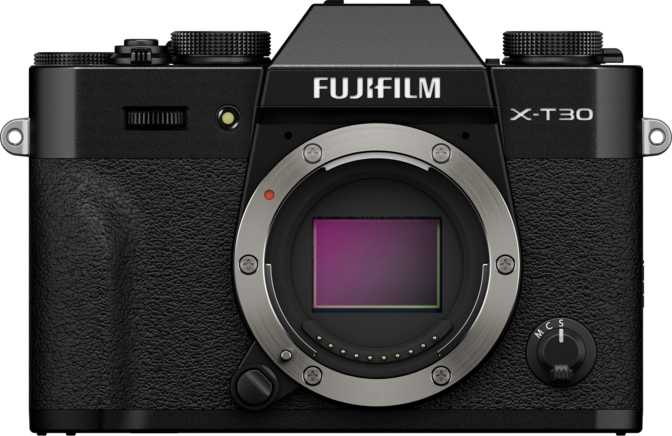
Fujifilm X-T30 III Review: Small Body, Serious Image Quality
CamerasThe Fujifilm X-T30 III is a compact mirrorless camera with genuine ambitions. Its 26-megapixel back-side illuminated sensor produces files capable of large-format printing and aggressive cropping, its 425-point phase-detection autofocus tracks moving subjects with real confidence, and its video credentials exceed what cameras at this price and weight typically offer. The limits — no weather sealing, no in-body image stabilization, a single memory card slot — define exactly who this camera serves best. Those limits stated plainly, this is one of the most capable APS-C mirrorless cameras available in a body compact enough to disappear into a jacket pocket.
Overall Score
Exceptional image quality and confident handling in a carry-everywhere body, with trade-offs that define a clear and specific buyer profile.
Quick Highlights
Performance Ratings
A category-by-category breakdown of where the X-T30 III leads and where it concedes ground relative to its competition.
Design and Build Quality
The X-T30 III packages Fujifilm's classic top-plate dial aesthetic into one of the most compact system camera bodies available — a form factor that encourages daily carry rather than occasional use.
Physical Profile and Controls
The body fits in most jacket pockets and disappears into a small shoulder bag. At under 400 grams, it pairs naturally with Fujifilm's range of compact prime lenses without becoming front-heavy — a balance that makes leaving the camera at home the exception rather than the habit. Photographers who have found other mirrorless systems too cumbersome for daily carry will reconsider that conclusion here.
The top-plate design places dedicated control dials for shutter speed, exposure compensation, and drive mode in plain sight, not buried in screen menus. Beginners learn camera controls faster when settings are physically visible at a glance. Experienced shooters adjust exposure without pulling the camera away from the eye. Both benefit from the same design decision.
Screen and Viewfinder
The electronic viewfinder renders the scene sharply enough to judge manual focus with confidence — a standard many cameras at this price fail to meet. It covers the full 100% of the frame: what you compose through the eyepiece is precisely what the sensor captures, with no hidden sliver of scene cropped away at the edges.
The 3-inch rear touchscreen folds completely away from the body — not just tilting up and down, but opening sideways to face forward or angle toward the ground. This enables genuine low-angle ground shooting, self-facing composition for video, and waist-level street photography without contorting your posture. Touch autofocus lets you tap a specific area to place focus precisely, and this works during video recording as well as stills.
Weather Sealing: Not Present
The X-T30 III carries no splash, dust, or temperature-extreme protection. Shooting in light rain, sandy environments, or cold-weather outdoor conditions puts the body at genuine risk. The rated operating temperature range covers standard indoor and mild outdoor use only. Photographers who regularly shoot in demanding conditions should look at Fujifilm's weather-sealed X-T5 or X-S20, both of which use the same X-mount lens system.
Sensor and Image Quality
This is where the X-T30 III earns its reputation. The sensor technology inside this body is the same generation deployed in Fujifilm's enthusiast and semi-professional line — not a watered-down derivative designed to fill a price point.
Resolution and Detail
At 26 megapixels, this sensor produces files large enough to print at poster dimensions or crop significantly in post-processing without losing publishable quality. Wildlife photographers who frame tightly after the fact, portrait photographers shooting wide and outputting multiple crop ratios, and product photographers working across several deliverable formats will all find the resolution headroom genuinely useful in everyday practice — not merely a spec-sheet number to point at.
Low-Light Capability
The back-side illuminated (BSI) sensor design places light-sensitive elements closer to incoming light by removing the wiring layer that traditional sensors interpose. In practical terms: cleaner output in dim conditions — better performance at indoor events, concerts, candlelit restaurants, and nighttime street photography. The native sensitivity range covers the vast majority of real-world shooting scenarios, with an expanded ceiling available when conditions turn extreme, at the cost of some grain in exchange for a usable image.
Autofocus System
The 425-point phase-detection autofocus covers a wide portion of the frame, meaning subjects near the edges are tracked as reliably as those dead-center. Phase detection calculates focus direction and distance by comparing two slightly different optical views simultaneously — the result is acquisition that is noticeably faster than older contrast-detection methods, with no back-and-forth hunting.
Subject tracking follows faces, eyes, and moving objects across the frame as you recompose. For parents photographing children, event photographers following unpredictable subjects, and anyone whose subjects refuse to hold still on command, this changes how reliably you get the decisive shot.
Shooting Speed and Burst Performance
Speed is not the X-T30 III's primary identity, but its burst capability is solid enough for the majority of fast-action scenarios most buyers will actually encounter.
Mechanical Burst and Electronic Shutter
The mechanical shutter fires at up to eight frames per second — eight separate photographs in the time it takes to blink. For sports moments, unpredictable children, or wildlife at the edge of the frame, this gives you a meaningful buffer of frames from which to select the exact peak expression or decisive action moment.
The electronic shutter extends available speeds far beyond what the mechanical shutter can physically reach. The fastest electronic speeds are so brief that they can effectively freeze a hummingbird's wingbeat mid-stroke — practically useful for photographers shooting at wide apertures in bright sunlight who need shutter speed headroom to control exposure without adding unwanted filtration to their kit.
One nuance worth flagging: the X-T30 III uses a standard CMOS sensor rather than a stacked design. Stacked sensors read pixel data faster, which reduces rolling-shutter warping when panning aggressively during electronic shutter use. The X-T30 III's electronic shutter performs capably for most subjects, but extreme-angle panning of very fast-moving objects may produce some geometric distortion. For the vast majority of photography types, this is not a practical concern.
Stabilization: The Clear Limitation
There is no in-body image stabilization. Steady handheld shooting at slower shutter speeds depends entirely on stabilization built into any attached lens, or on steady technique. Photographers who have relied on in-body stabilization from another system will need to account for this — particularly for handheld video work or long-lens shooting in lower light. Fujifilm's X-mount lens lineup includes excellent optically stabilized options that compensate meaningfully, but that compensation requires selecting stabilized lenses specifically rather than assuming the body covers it automatically.
Speed Specifications
- 8fps Mechanical BurstSufficient for the majority of action and event shooting scenarios
- 1/32,000s Electronic ShutterWide-aperture shooting in bright conditions without overexposure
- ~0.8s Power-On DelayNear-instant readiness from a cold start
- No IBISIn-camera stabilization is absent; lens OIS or technique required
Video Capabilities
The X-T30 III is a credible hybrid camera. Its video specifications compete with dedicated video-focused bodies at significantly higher prices — particularly in data quality and audio infrastructure.
Resolution and Recording Quality
The camera captures video at a resolution that exceeds standard UHD 4K — oversampling from a wider sensor area to deliver footage with more fine detail and better sharpness than the resolution headline alone suggests. At up to 30 frames per second for standard content and a true 24 frames per second cinema mode, the frame rate options cover the requirements of both online content creators and filmmakers aiming for a narrative visual style.
The recording bitrate — the volume of data captured per second of footage — is where the X-T30 III genuinely separates itself from similarly priced rivals. At 200 megabits per second, it records substantially more information per frame than most cameras in this price tier. More data means richer textures, cleaner gradients, and footage that holds up significantly better when color-graded aggressively in post-production. For content creators applying heavy looks or delivering professional-grade output, this matters more than the resolution number alone.
Audio Infrastructure
Both a dedicated 3.5mm microphone input and a 3.5mm headphone monitoring output are present — the full professional audio chain that many cameras at twice the price of the X-T30 III still omit entirely. An external microphone plugs directly in to bypass the built-in stereo microphones, and the headphone port enables real-time audio monitoring during recording so a loose connection or environmental noise problem is caught before it ruins a take in the edit.
The built-in dual stereo microphone array handles casual recording and vlogging acceptably. Serious video producers will pair an external microphone immediately — and the hardware is fully prepared to support it without any adapter or workaround required.
Video Feature Checklist
- 4K-Class Video Resolution
- 200Mbps Recording Bitrate
- 24p Cinema Frame Rate Mode
- 3.5mm External Microphone Input
- 3.5mm Headphone Monitoring Jack
- Phase-Detect AF During Recording
- Continuous Autofocus in Video Mode
- Built-In Timelapse Function
- No Native Live Streaming Support
Live streaming is not natively supported. Creators who need a single-device streaming solution without external hardware will need to look at alternative cameras or use a workaround.
Battery Life and Power
Battery life is one area where the X-T30 III's compact size carries a genuine trade-off. Managing this limitation is straightforward once the expectation is correctly calibrated.
What the Rated Capacity Means in Practice
The industry-standard CIPA battery rating — a standardized test designed to make comparisons fair across brands — puts the X-T30 III at approximately 315 shots per charge. In human terms: a photographer on a casual day out typically captures 100 to 200 frames. A working event photographer at a busy assignment might reach 600 or more.
CIPA ratings represent standardized test conditions. Heavy viewfinder use, video recording, and active Wi-Fi transfer will reduce real-world capacity below the rated figure.
Power Management
- USB-C ChargingCharges from any modern power bank, laptop adapter, or car charger — no proprietary cable required, ever
- Removable BatterySwap a depleted battery for a charged spare in seconds — no waiting for an in-body charge cycle to complete during a shoot
- Battery Level IndicatorRemaining charge is clearly displayed so you are never caught off-guard by a sudden shutdown at a critical moment
- Recommendation: Carry One SpareFor any shooting day longer than a few hours, one spare battery is the practical answer. At this battery's size, it adds negligible weight to any camera bag.
Connectivity and Ecosystem
The X-T30 III connects to a mature wireless ecosystem and offers a solid physical port selection for a camera this compact. There are also specific gaps that professional and advanced buyers should evaluate carefully.
What Is Present
- Wi-Fi with Smartphone Remote ControlTransfer selected images wirelessly to a phone for immediate sharing, or use the Fujifilm app as a remote shutter trigger and settings controller from a distance
- Bluetooth 5.2 — Persistent Low-Energy LinkMaintains a constant low-drain connection between camera and phone, keeping the pairing live without significant battery impact on either device
- USB-C: Charge and Transfer in One PortA single modern connector handles both in-camera charging and file transfer to a computer — no proprietary cable ecosystem to manage
- HDMI OutputConnects to external monitors, capture cards, and video recorders for live preview or clean video signal output during recording sessions
- Hot Shoe for External FlashSupports external flash units and wireless flash triggers — the standard attachment point for any serious on- or off-camera lighting setup
What Is Missing
- No GPSLocation data is not embedded natively. Geotagging requires tethering to a smartphone running the Fujifilm app, which contributes its own GPS coordinates to transferred images
- No NFCCamera-to-phone pairing requires opening the Fujifilm app and initiating a connection manually rather than a simple single tap-to-pair gesture
- Single Memory Card Slot OnlyProfessional workflows requiring simultaneous dual-card recording — writing identical backup copies to two cards during capture — are not possible on this body
- Older Wi-Fi GenerationThe wireless standard is adequate for transferring selected images but slow for bulk RAW file dumps. Transfer selects, not full card contents, to keep wait times reasonable
Who Should Buy the Fujifilm X-T30 III
The X-T30 III earns a strong recommendation for specific buyers — and an equally direct pass for others. Understanding which profile matches your actual shooting needs before purchasing saves money and avoids frustration.
This Camera Is Right for You
- Street, portrait, and travel photographers who prioritize image quality and want a body compact and light enough to carry on every outing without a second thought
- Beginners entering interchangeable-lens photography who will learn faster with physical dials that make camera settings visible and transparent at all times
- Content creators who need stills and video in one body, especially those who record audio seriously and need a dedicated microphone input and headphone monitor jack
- Event hobbyists and enthusiasts upgrading from a smartphone or entry-level camera who want meaningful manual control without complexity for its own sake
- Photographers building a Fujifilm X-mount kit — one of the strongest and deepest APS-C lens ecosystems available, with excellent compact primes and professional zooms
Look Elsewhere If You Need
- Weather resistance for regular outdoor shooting in rain, dust, sand, or cold conditions — the body offers no protection against any of these
- In-body image stabilization for handheld video or slow-shutter photography without relying exclusively on optically stabilized lenses
- Dual card slots for professional assignment reliability — simultaneous backup recording to two cards is not available on this body
- Native live streaming capability without external hardware — first-party streaming support is absent from this camera
How It Compares to the Alternatives
The X-T30 III sits in a crowded APS-C mirrorless segment. Here is how its key specifications measure up against typically configured rivals in the same price tier.
| Feature | Fujifilm X-T30 III | APS-C Rival A | APS-C Rival B |
|---|---|---|---|
| Sensor Resolution | 26.1 MP | 24 – 26 MP | 24 MP |
| In-Body Stabilization | Varies by model | Varies by model | |
| Weather Sealing | Varies by model | Varies by model | |
| EVF Resolution | High | Mid | Mid – High |
| Flip-Out Screen | Varies | ||
| Video Bitrate | 200 Mbps | 100 – 150 Mbps | 100 Mbps |
| Mic + Headphone Jack | Both Present | Mic only (common) | Varies |
| Dual Card Slots | Yes (higher-tier only) | ||
| Body Weight | 378 g | 400 – 500 g | 430 – 480 g |
Comparison reflects typical APS-C mirrorless rivals in the same approximate price tier. Individual model specifications vary — verify exact details before purchasing.
Frequently Asked Questions
Answers to the questions real buyers search for before committing to this purchase.
The Right Camera for the Right Buyer
Overall Score: 4.0 / 5
The Fujifilm X-T30 III asks you to accept its limitations knowingly and, in return, delivers results that cameras at this price point rarely match. Its 26-megapixel BSI sensor produces files that hold up at large print sizes and through aggressive crops. Its electronic viewfinder is class-leading in sharpness and coverage. Its video suite — high-bitrate 4K-class recording, cinema frame rate, full professional audio connectivity — exceeds what any reasonable buyer would expect from a body this compact and this light.
The lack of weather sealing, in-body image stabilization, and a second card slot are not footnotes — they are real limits that define the camera's appropriate audience. For a street photographer, a travel enthusiast, an aspiring portrait shooter, or a content creator who needs one camera that handles both stills and video without significant compromise, the X-T30 III earns a confident, clear recommendation. This is where the Fujifilm X-mount story begins, and it is a strong start.
Buy It If
- Image quality and portability are your top priorities
- You shoot in controlled or predictable environments
- You need a capable stills-and-video hybrid in one body
- You are entering or expanding a Fujifilm X-mount system
Skip It If
- You shoot regularly in rain, dust, or cold weather
- In-body image stabilization is a non-negotiable requirement
- Your workflow demands dual card slots for backup redundancy
- You need native live streaming support out of the box
The X-T30 III pairs best with Fujifilm's X-mount lens lineup. Investment in the lens ecosystem compounds the value of this body significantly over time. For most buyers in its intended audience, this camera earns a clear and confident recommendation.