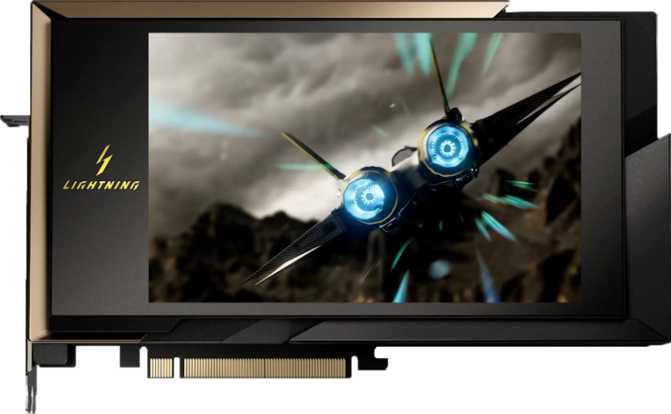
At a Glance: The Numbers That Matter
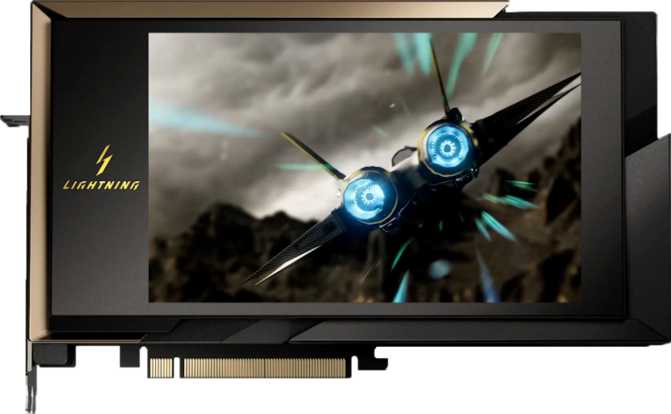
The MSI GeForce RTX 5090 Lightning Z is MSI's highest-tier interpretation of NVIDIA's flagship Blackwell GPU — factory overclocked beyond reference specifications, cooled by a hybrid liquid-assisted system, and fitted with 32GB of the fastest consumer memory currently available. Before examining what each capability means in practice, the specification picture alone establishes this as a categorically different tier of graphics hardware than anything that came before it.
Design and Build Quality
Physical Presence and Case Compatibility
At 260mm wide and 151mm tall, the RTX 5090 Lightning Z occupies real estate inside a case that demands pre-purchase planning. Most full-tower and purpose-built enthusiast mid-towers will accommodate it, but verifying your specific chassis GPU clearance specifications is not optional — it is the first step. The card's physical weight is also substantial enough that a GPU support bracket inside the case is a sensible precaution given the cooler mass.
MSI's Lightning line represents the company's most premium construction tier, and the RTX 5090 Lightning Z upholds that standard throughout. The shroud, backplate, and bracket assembly feel structurally rigid — nothing flexes or rattles where it should not. The materials convey the kind of density that signals engineering confidence rather than cost reduction.
RGB Lighting and Aesthetics
The Lightning Z includes RGB lighting integrated across the cooler shroud. MSI's software ecosystem provides granular control over lighting zones, and for builders with windowed panels who prioritize interior aesthetics, the implementation is deliberate and visually cohesive. For those who prefer understated hardware, the lighting can be fully configured or disabled through software — it is not intrusive either way.
The Lightning Z ships with a hybrid air-and-water cooling system — a meaningful distinction from conventional air-only designs. Part of the thermal load is managed by a liquid loop integrated into the cooler assembly, while the remaining heat is expelled through the fan array.
On a card with a 1000W TDP, this is not an optional luxury — it is an engineering necessity. The hybrid system is specifically what allows the Lightning Z to sustain its 2730 MHz factory overclock under continuous load without throttling back to protect the die.
- Maintains boost clocks under sustained workloads
- Lower die temperatures versus air-only alternatives
- Validated and warranty-covered by MSI
- Case airflow planning required to manage total thermal exhaust
Core Performance Analysis
Processing Power in Real Terms
The RTX 5090 Lightning Z delivers over 118 TFLOPS of floating-point throughput — a compute figure that, until recently, belonged exclusively to professional workstation-class accelerators. Consumer GPUs from a decade ago operated below a single TFLOP. The distance between those cards and this one is not incremental progress; it is a categorically different class of hardware accessible for the first time at the consumer level.
MSI's factory overclock pushes the boost clock to 2730 MHz, meaningfully above the reference architecture's ceiling. Higher sustained boost clocks mean more operations completed per second — translating directly into higher frame rates in gaming and faster completion times in rendering and compute workloads. This is not a paper advantage; it is measurable performance in every workload the card runs.
Blackwell Architecture and Process Efficiency
Built on NVIDIA's Blackwell architecture at a 5nm process node, the chip packs 92.2 billion transistors onto a single die. The 5nm figure describes the physical scale at which transistors are etched — smaller means more transistors in the same area, improving both performance density and power efficiency relative to what each transistor delivers.
Blackwell allocates dedicated hardware to ray tracing acceleration, AI inference processing (powering DLSS), and general rendering at a scale previous architectures could not match. More transistors organized with greater architectural intelligence is why Blackwell delivers a generational step rather than an incremental one.
Memory: Where This Card Separates Itself
The memory subsystem on the RTX 5090 Lightning Z is not simply an upgrade from previous generations — it represents a structural shift in what a consumer GPU can hold and how fast it can move data. Capacity, speed, and bus width are all class-leading by significant margins, and they compound each other.
32GB GDDR7
Most high-end cards ship with 8–16GB of VRAM. The Lightning Z's 32GB pool means no current gaming workload — at any resolution, with any texture pack — will fill this buffer. For creative professionals, 32GB means entire working scenes, high-resolution video frames, and large AI model weights can reside on the GPU simultaneously without constant data shuffling between system and video memory.
1,790 GB/s Bandwidth
Memory bandwidth is often more decisive than capacity alone. The 512-bit bus width — twice as wide as many high-end cards — paired with GDDR7 running at an effective 28,000 MHz clock delivers 1,790 GB/s of peak throughput. In practical terms, this means the GPU's 21,760 shaders are continuously fed with the data they need. There is no pipeline stall waiting for memory to catch up with the silicon.
ECC Memory Support
Error-Correcting Code memory support is normally reserved for professional workstation GPUs. It detects and corrects single-bit memory errors in real time — a capability critical in professional environments where computational accuracy cannot be compromised. Scientific modeling, financial computation, and machine learning training all benefit directly from ECC, making the Lightning Z far more genuinely useful as a workstation GPU than its consumer classification suggests.
Key Features Explained
Every feature below has a direct, real-world impact on daily use. Here is what each one actually means for the person sitting in front of the monitor — not what the manufacturer's specification sheet says about it.
Power Requirements: The Most Critical Specification
The RTX 5090 Lightning Z has a Thermal Design Power of 1000 watts. This single specification determines whether this card is compatible with your current system — or requires rebuilding it from the ground up. No performance metric matters if your power delivery infrastructure cannot support it.
What Your System Actually Needs
- Power Supply: 1600W or Higher
The GPU alone draws up to 1000W under load. Your CPU, storage, memory, fans, and peripherals add hundreds of watts on top. A 1600W PSU from a reputable manufacturer is a prudent baseline, not an overreaction.
- Dedicated Electrical Circuit
In older buildings or regions with lower-amperage domestic circuits, total system draw at peak load may approach a single circuit's safe capacity. A dedicated 20-amp circuit for the PC is a reasonable precaution in these scenarios.
- Deliberate Case Airflow Planning
Even with hybrid cooling, the total thermal output of this system will raise ambient temperatures inside an enclosure. Positive case pressure, multiple exhaust fans, and a chassis designed for high-airflow environments are not optional extras with this hardware.
A system built around the RTX 5090 Lightning Z at full load will consume substantially more electricity than a system built around previous-generation flagships. A reference RTX 4090 drew around 450W; this card draws 1000W at peak TDP — more than double that figure for the GPU alone.
If this system runs for several hours daily in demanding workloads, the difference in electricity consumption over a year accumulates to a non-trivial real-world cost. This is not a reason to avoid the card — it is an honest cost that belongs in the purchase decision alongside the hardware price.
Factor the total cost of ownership — hardware, PSU upgrade, and monthly electricity — into the price you are evaluating this card against. The full investment is meaningfully larger than the GPU's purchase price alone.
Who Should Buy the RTX 5090 Lightning Z
This card earns its place in a specific type of build. Understanding where it fits — and where it is genuinely overkill — is the most useful guidance this review can provide before a purchase decision is made.
- A 4K High-Refresh Gaming Enthusiast
You game at 4K and want maximum settings at maximum frame rates in every title — including ray-traced games where lesser cards lose the performance race. If you have a high-refresh-rate 4K display currently being underutilized due to GPU constraints, this resolves that completely.
- A Creative Professional
GPU-accelerated 3D rendering, VFX compositing, video production at extreme resolutions, and architectural visualization all benefit directly from the 32GB VRAM and raw compute throughput. Render jobs that previously took hours complete in a fraction of that time.
- An AI or ML Researcher
The ECC memory support, 32GB VRAM, and 118+ TFLOPS of throughput make this the most capable consumer option for running large model inferences and training experiments locally — without paying datacenter hardware prices.
- A Future-Proof System Builder
If you are making a deliberate multi-year investment and want a card that will not become the limiting factor in your system for several hardware generations, the Lightning Z provides that headroom more convincingly than any alternative currently available.
- A Value-Focused Buyer
If performance-per-dollar is your primary metric, this is not your card. Mid-range Blackwell GPUs deliver extraordinary performance at a fraction of the power draw and price. The Lightning Z's premium exists for capability ceiling, not value efficiency.
- A 1080p or 1440p Gamer
At these resolutions, even in the most demanding titles, this card is architecturally wasted. You would be spending for capability that simply cannot be utilized at those resolutions with any current gaming software.
- An Underpowered System Owner
If your current PSU is below 1200W or your circuit cannot safely handle sustained high-amperage draw, the total upgrade cost extends significantly beyond the GPU itself. In some cases, building around this card demands a substantial electrical investment on top of the hardware cost.
- A Casual or Moderate Gamer
Players who primarily run non-demanding titles or games outside the top graphical tier will find no meaningful real-world difference between this card and options costing a fraction of the price. The hardware will be running well below its designed operating envelope.
How It Compares to Logical Alternatives
The RTX 5090 Lightning Z does not exist in isolation. Here is how it stacks up against the alternatives a buyer at this tier would genuinely consider — presented without bias toward any option.
| Specification | MSI RTX 5090 Lightning Z | RTX 5090 Reference / Standard AIB | RTX 5080-Class | RTX 4090 (Prev. Gen) |
|---|---|---|---|---|
| Shader Units | 21,760 | 21,760 | Fewer (varies) | Fewer than RTX 5090 |
| VRAM | 32GB GDDR7 | 32GB GDDR7 | 16GB GDDR7 (typical) | 24GB GDDR6X |
| Memory Bandwidth | ~1,790 GB/s | ~1,790 GB/s | Lower | ~1,008 GB/s |
| Boost Clock | 2730 MHz (Factory OC) | Reference (lower) | Varies by AIB | Varies by AIB |
| Cooling System | Hybrid Air + Liquid | Air (typically) | Air (typically) | Air (typically) |
| TDP | 1000W | 575W (reference) | Lower than RTX 5090 | 450W |
| RGB Lighting | Yes | Varies | Varies | Varies |
| Target Buyer | Flagship enthusiast / Pro | Same GPU, standard thermals | Performance-per-watt priority | Legacy investment |
Honest Strengths and Weaknesses
The factory overclock on the Lightning Z is genuine, not marketing material. It produces measurable frame rate and throughput improvements over a reference RTX 5090 without requiring user intervention, additional risk, or warranty concerns — MSI validates these clocks and formally covers them.
The 32GB GDDR7 memory configuration addresses both gaming headroom and professional workload capacity in a way no previous consumer card has. No current workload, at any resolution, will saturate this buffer. That headroom is real and useful across both entertainment and professional use.
The hybrid cooling solution means this card maintains its performance ceiling under continuous workload pressure that would cause competing air-only designs to throttle back. Sustained performance — not just peak performance — is the specific advantage here, and it matters in any workload that runs for more than a few minutes.
The combination of ECC support, FP64 capability, DLSS hardware, and dedicated ray tracing cores makes the Lightning Z legitimately useful for a far wider range of professional and research workloads than a typical consumer GPU — blurring the line between enthusiast and workstation hardware in a way that benefits creative and technical buyers directly.
A 1000W TDP is a system-level commitment that cascades into everything around it. It demands a substantially higher-rated PSU, careful case airflow planning, and a power infrastructure that many existing systems simply do not have. The cost of upgrading these dependencies is real and should be counted as part of the total purchase price — not treated as a separate, optional expense.
This card will measurably increase electricity consumption compared to previous-generation flagships. Over the lifespan of the card at several hours of use per day, that difference accumulates to a non-trivial real-world figure. It is an honest cost to acknowledge before committing.
The premium that MSI's Lightning Z commands over standard RTX 5090 AIB cards is significant. For buyers comfortable with manual overclocking who already have adequate thermal infrastructure, the factory clock advantage may not justify that price delta on its own merits.
The physical dimensions require careful chassis research. Combined with the cooler's height and mass, it narrows the field of genuinely compatible cases compared to more compact flagship designs from competing AIB partners.
Questions Real Buyers Search For
These questions appear consistently in searches made by buyers actively considering this card. The answers below are grounded in the specifications and performance implications covered throughout this review.
The Fastest Consumer GPU Available — For the Right Buyer
The RTX 5090 Lightning Z is the clearest expression of where consumer GPU performance currently stands — and it is genuinely extraordinary by every meaningful measure.
The combination of Blackwell's architectural advances, 32GB of high-bandwidth GDDR7 memory, and MSI's aggressive factory overclock produces a card that outperforms everything available to consumers — without qualification. The question is never whether this card is the fastest. It is.
The question is whether the RTX 5090 Lightning Z is the right card for you specifically. The answer depends almost entirely on your power infrastructure, your workload, and your target resolution. If you are building a system around a high-refresh-rate 4K display, doing professional creative or AI work that demands every gigabyte of that VRAM pool, and you have the PSU capacity and electrical infrastructure to support it, the Lightning Z is not just viable — it is the definitive choice at the top of the consumer market.
MSI's Lightning-tier execution adds measurable, genuine value over a reference board through better sustained performance and thermal confidence. For the right buyer, there is nothing better. That narrow qualifier is simultaneously its only limitation and its most compelling selling point.