Motorola Razr Fold Review: Full Specs, Real-World Test & Verdict
SmartphonesThe Foldable That Finally Stops Apologizing
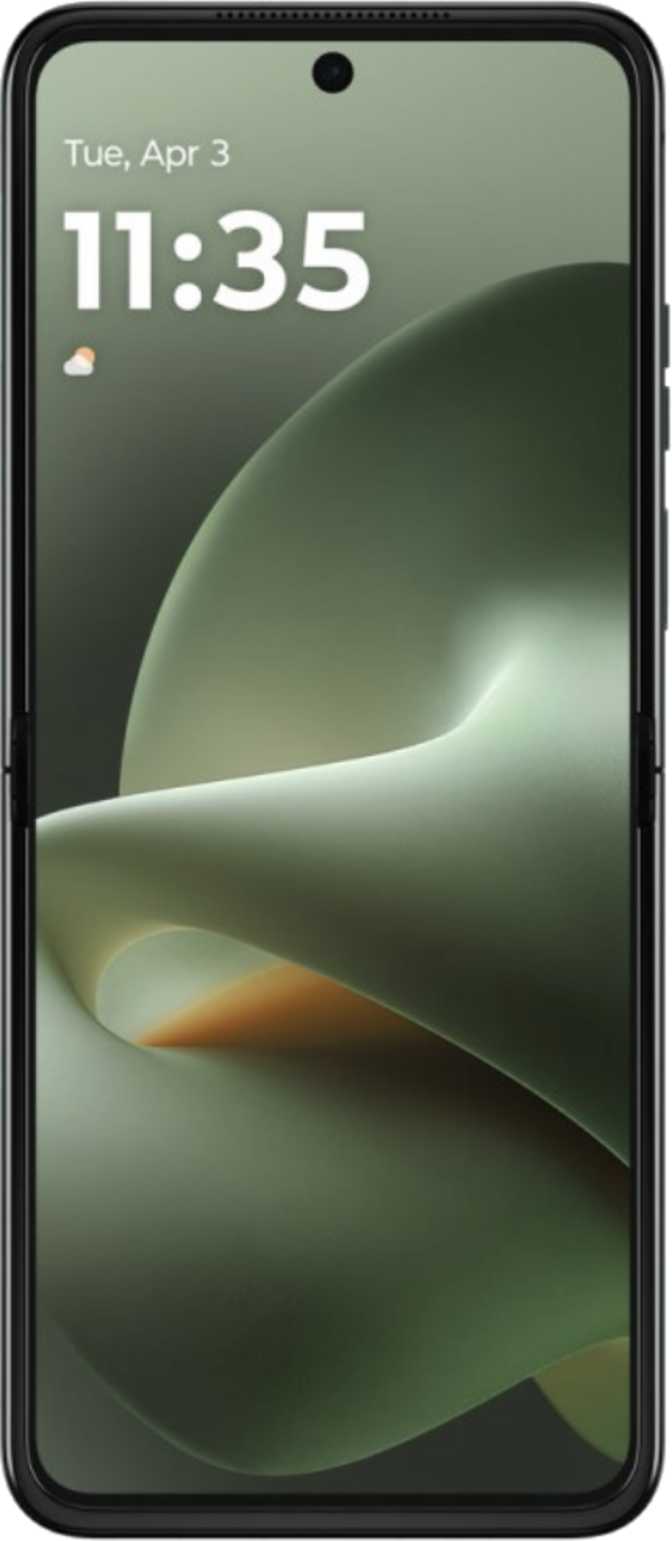
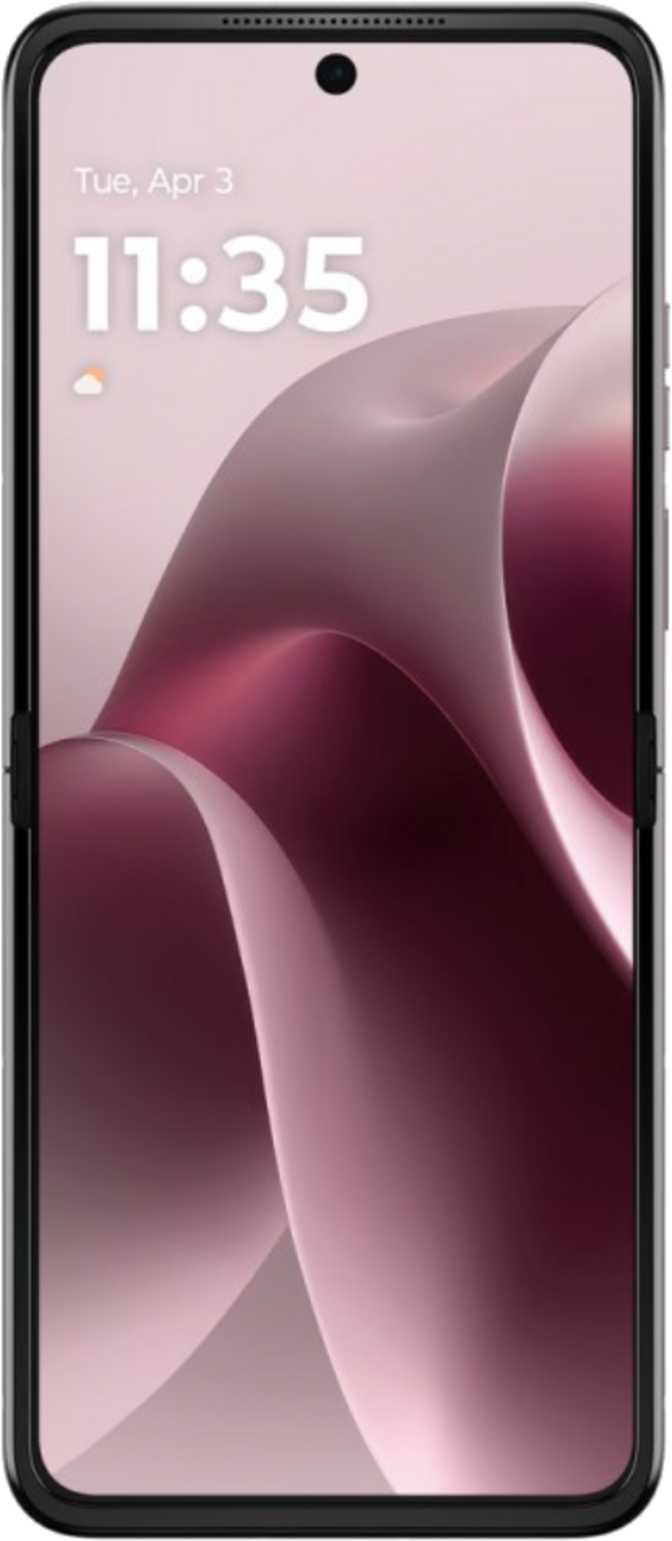
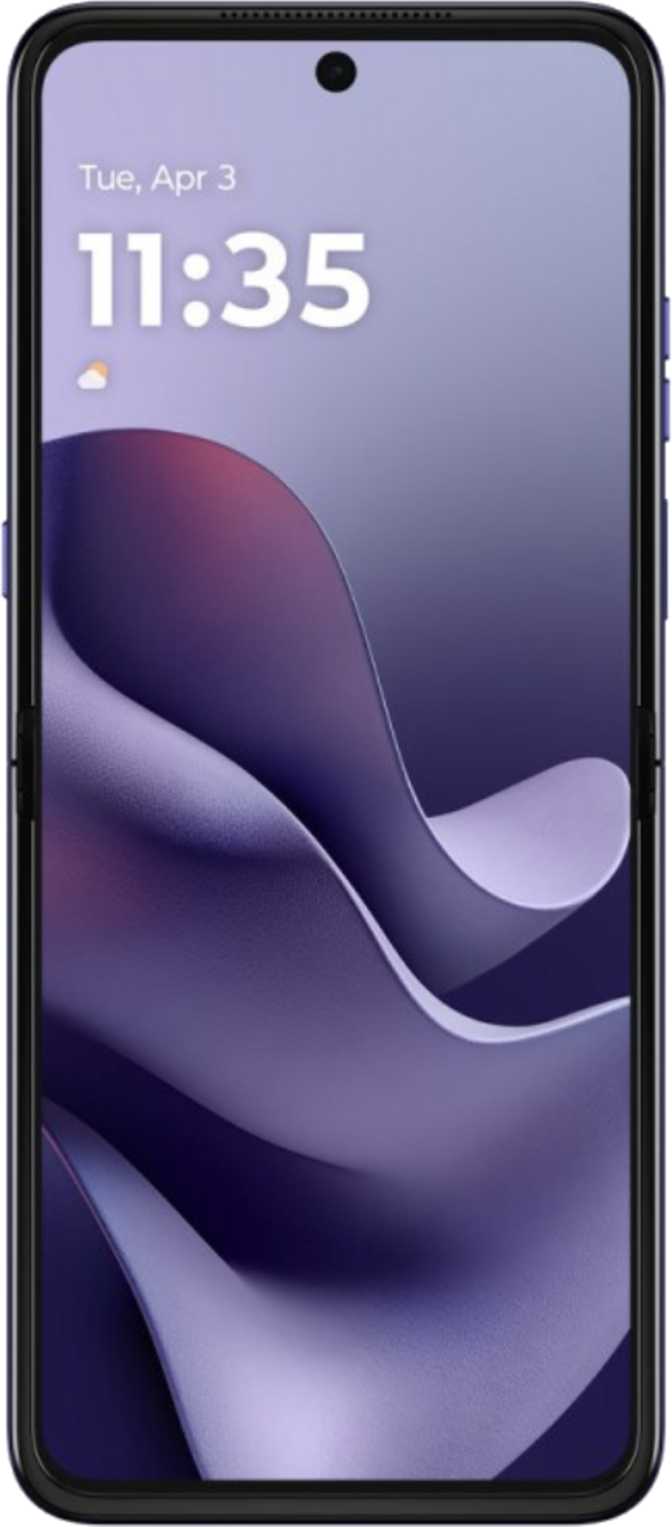
The Razr Fold combines Motorola's iconic clamshell form factor with Snapdragon 8 Gen 5 silicon, a 6,000mAh battery that leads the foldable category, and a triple 50MP camera system — the first clamshell foldable with no spec tier left behind.
Key Specifications at a Glance
Six numbers that define this phone — and what each one actually means for daily use.
A 120Hz adaptive panel at 410 pixels per inch — legitimately tablet-sized, sharp beyond the threshold of human perception, with motion fluidity that makes everything feel instant.
Qualcomm's top-tier 3nm chip with 16GB DDR5 RAM — Geekbench scores that surpass many laptops, and a performance ceiling that will remain relevant years from now.
Enough for years of RAW photo libraries, 8K video archives, and large app installations — without ever needing to delete anything to make room.
Three lenses at identical 50MP resolution — wide, ultrawide, and 3x optical telephoto — delivering consistent image quality across every focal length.
More capacity than most non-folding flagships, with 80W wired and 50W wireless charging — charging anxiety is effectively eliminated at this tier.
Certified submersion-resistant to 1.5 meters — a genuine engineering achievement for a device with a mechanical hinge and a flex-panel chassis.
Design, Build Quality, and Physical Experience
A Phone That Fits in a Front Pocket Again
When folded, the Razr Fold collapses to a profile thinner than most conventional smartphones — approximately the thickness of two credit cards stacked together. At 4.7mm folded, it slides into a front jeans pocket without the rectangular bulge that has become an accepted inconvenience of modern smartphone ownership.
The weight sits at 243 grams. This is heavier than most non-folding flagships, and it is physics rather than oversight — the hinge mechanism and dual-panel chassis add mass that cannot be engineered away. However, the weight distributes evenly across both halves when the phone is open, and the balance in hand feels more neutral than the raw number suggests. Users coming from lighter slab phones will notice the difference, but for the form factor's core benefit, it is a trade-off most users make consciously and accept.
IPX8 Water Resistance on a Foldable Device
The IPX8 certification means the Razr Fold can survive submersion in fresh water up to 1.5 meters for a sustained period. For a foldable — a category that has historically struggled with ingress protection around the hinge — this is a meaningful milestone. Rain, poolside accidents, and a slip into a sink are non-events with this phone.
One Important Caveat on the IP Rating
IPX8 certifies fresh water protection but carries no dust ingress rating — the "X" in the first position confirms this. Dusty or sandy environments still warrant care around the hinge gap where fine particulate can accumulate over time.
Physical Specifications
- Folded Thickness
- 4.7 mm
- Weight
- 243 g
- Unfolded Dimensions
- 160.1 × 144.5 mm
- Water Resistance
- IPX8 — rated to 1.5m
- Display Protection
- Damage-resistant branded glass
- Form Factor
- Clamshell fold with cover display
The Display Experience: 8.1 Inches of OLED
Main Screen: Size, Clarity, and Motion
Unfolded, the main display spans 8.1 inches — meaningfully above the 6.7–6.9 inch range of conventional flagship phones and closer to a compact tablet than a phone. The OLED panel technology means blacks are absolute, colors are vivid and accurate, and the contrast ratio inherent to the technology makes media content pop in a way no LCD can replicate.
At 410 pixels per inch, individual pixels sit firmly below the threshold of human perception at normal viewing distances. Text is sharp, fine photo detail is fully resolved, and the center crease — an unavoidable characteristic of current flexible panel technology — becomes significantly less prominent at this pixel density and at this screen size, where it occupies a smaller proportional strip of the total display area.
The 120Hz adaptive refresh rate gives scrolling, animations, and transitions a fluidity that lower-refresh displays cannot match. HDR10+ support brings frame-level dynamic range tone mapping to compatible streaming content. Damage-resistant branded glass covers the panel — not bare plastic laminate, which meaningfully improves scratch resistance over the first generation of foldables.
The Cover Screen That Earns Its Keep
The external display resolves at 1080 × 2520 pixels — sharper than many conventional full-size smartphone panels from just a few years ago. You can read and respond to messages, control media playback, check navigation, use widgets, and frame selfies using the main rear cameras — all without unfolding the device.
For users who pull their phone out for brief interactions twenty or thirty times a day, the cover screen alone can meaningfully reduce how often the phone needs to be opened. Always-On Display functionality on the main panel surfaces time and notification glances without requiring any button press — a small convenience that compounds over months of daily use.
Performance: Snapdragon 8 Gen 5 in Real Terms
What a 3-Nanometer Chipset Actually Delivers
The Snapdragon 8 Gen 5 sits at the summit of Qualcomm's mobile silicon hierarchy. Built on a 3-nanometer fabrication process — among the most refined semiconductor manufacturing currently available — this chip maximizes processing throughput while managing heat and power draw better than predecessors on older, larger process nodes.
The processor architecture deploys two high-performance cores at maximum clock speed for demanding single-threaded workloads alongside six efficiency cores that handle background tasks without burning through battery unnecessarily. This is the same architectural philosophy used across every major mobile platform, but Qualcomm's implementation here is at the sharpest edge of what current mobile silicon offers.
Sixteen gigabytes of DDR5 RAM running at high bandwidth keeps a large roster of apps simultaneously resident in memory. Switching between applications is near-instant because nothing needs to be reloaded — it was already waiting. At this memory tier, app launch speed stops being a meaningful differentiator; everything simply opens.
Benchmark Snapshot
Outperforms many entry-level laptops in raw throughput
Best-in-class per-core speed for everyday app responsiveness
DDR5 memory — sustained throughput for heavy multitasking
Core Processor Specs
- ChipsetSnapdragon 8 Gen 5
- Fabrication Node3nm
- RAM16GB DDR5
- Internal Storage1TB (no expansion)
- GPUAdreno 840
Camera System: Three Lenses, Each at 50 Megapixels
The Razr Fold's rear camera array is unusual in a field where telephoto lenses typically sacrifice resolution for zoom reach. All three lenses resolve at 50 megapixels — the apertures vary to reflect each lens's optical role, but the resolution floor is identical across the entire system. When you switch from wide to telephoto, there is no image quality cliff.
Primary Wide
Maximum light gathering with OIS and phase-detection autofocus — the workhorse lens for everyday shooting and low-light scenarios where wide aperture matters most.
Secondary Wide
Ultrawide coverage for architecture, landscapes, and group shots in tight spaces — at the same full 50MP resolution as the primary lens.
Telephoto
71mm equivalent reach with OIS — flattering portrait compression and distant subject detail, spanning a 12–71mm focal range that covers most real-world situations.
Video: 8K Recording and Dolby Vision Output
The main camera records at 8K resolution — 4,320 lines of vertical resolution at 30 frames per second. At this level, post-production flexibility is substantial: reframing, stabilizing, or punching in on footage while retaining 4K output quality with significant headroom.
Dolby Vision recording is supported — a dynamic HDR format that embeds frame-level tone mapping metadata, enabling compatible displays and streaming services to render footage with accurate highlight and shadow retention. This places the Razr Fold's video output in the same format tier used in professional cinema workflows.
The camera system also supports RAW capture, manual ISO, white balance, and focus controls, giving photographers who want complete creative control every tool they need. The three-microphone array captures directional audio to match the video quality on offer.
Front Camera
The 20-megapixel front camera sits conventionally within the display — not behind it — which typically produces sharper, better-exposed results than under-display alternatives that still struggle with light diffusion. When the phone is folded, the cover screen lets you frame selfies using the superior rear primary lens, which is a meaningful advantage over any conventional smartphone.
Full Video & Camera Capabilities
- 8K video at 30fps
- Dolby Vision HDR recording
- HDR10 recording support
- Optical Image Stabilization
- Phase-detection autofocus
- Continuous AF during video
- Slow-motion video capture
- Timelapse mode
- RAW photo capture
- Manual ISO, WB & focus
- 3-microphone directional audio
Battery Life and Charging: No Compromises Here Either
Capacity That Leads the Foldable Category
At 6,000mAh, the Razr Fold carries more battery capacity than the vast majority of non-folding flagship phones on the market. For a foldable — a category historically constrained by small batteries due to the space demands of the hinge and dual-panel chassis — this is a meaningful engineering achievement, not simply a marketing number.
Based on this capacity combined with the efficiency characteristics of the 3nm chipset, a full day of mixed use from a morning charge to bedtime is a realistic expectation for most users. Heavy users who spend extended time streaming, gaming, or running GPS navigation may comfortably extend into a second day on lighter activity — a standard that most previous foldables could not approach.
Wired, Wireless, and Reverse Charging
Eighty-watt wired charging takes the phone from critically low to a comfortably usable charge level in well under an hour. For someone who woke up having forgotten to charge overnight, this is the difference between a useful device at breakfast and a dead one.
Wireless charging at 50 watts is class-leading for cable-free replenishment — most wireless chargers top out well below this speed, so a compatible high-wattage pad is needed to realize the full ceiling. Reverse wireless charging at 5W lets the phone top off wireless earbuds or a smartwatch placed on its back — modest by design, but functional.
No charger is included in the box. This is an industry-wide omission but still worth factoring in if you don't already own a high-wattage USB-C adapter. A 65W+ GaN charger is recommended to approach the full wired charging speed.
Charging Specifications
-
Battery Capacity6,000 mAh
-
Wired Charging80W
-
Wireless Charging50W
-
Reverse Wireless5W
-
Charger in BoxNot Included
Connectivity and Software
Future-Proofed Across Every Standard
The Razr Fold supports Wi-Fi 7 — the latest generation of wireless networking, delivering lower latency and higher throughput on compatible routers. It also supports Wi-Fi 6E access to the less congested 6GHz band, with full backward compatibility all the way through Wi-Fi 4. The USB-C port runs at USB 3.2 speeds, fast enough for 4K file transfers in seconds and capable of driving external displays via appropriate adapters.
The SIM configuration supports two physical nano-SIM cards plus an eSIM, enabling two active lines on a single device — useful for separating personal and work numbers, or for using a local data SIM while traveling without losing your home number. NFC handles contactless payments and accessory pairing. 5G connectivity and extremely high theoretical download ceilings provide headroom for dense carrier aggregation in urban environments.
Android 16: Privacy, Productivity, and Personalization
The Razr Fold ships with Android 16, bringing Google's most current privacy and productivity capabilities. Granular camera and microphone access permissions, app tracking controls, clipboard warnings, and location privacy options are all present. On-device machine learning runs locally — relevant for text recognition, smart replies, and voice transcription — without sending data externally.
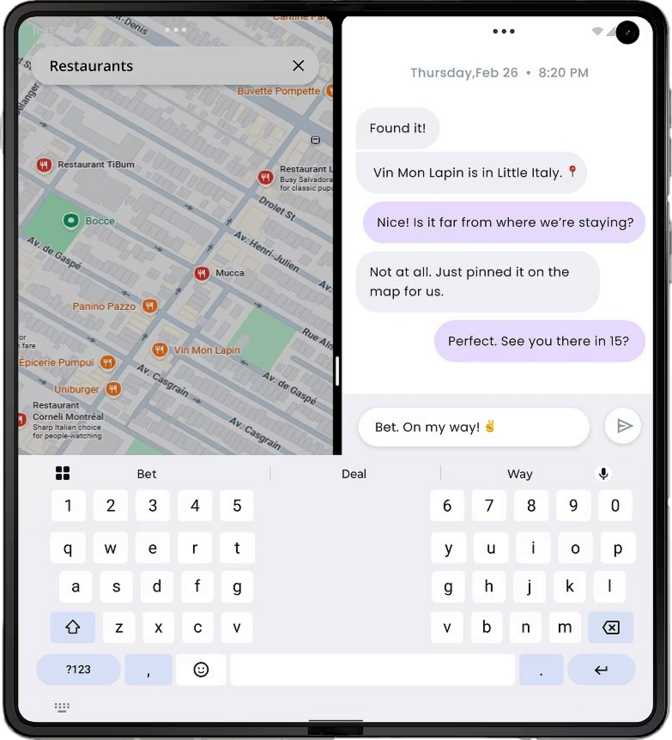
Split-screen multitasking on an 8.1-inch display becomes genuinely practical rather than a cramped compromise. Running a browser alongside a document editor, or a video call beside a reference app, is physically comfortable at this screen size in a way it simply is not on a conventional phone.
- Split-screen multitasking
- Picture-in-Picture mode
- On-device machine learning
- Offline voice recognition
- Granular app tracking controls
- Multi-user profile support
- Dynamic theming and dark mode
Who Should Buy the Motorola Razr Fold
This Phone Is Ideal For
-
Power users who want a large screen in a small pocketThe 8.1-inch display combined with clamshell fold is a combination no conventional slab can replicate — and there is no longer any spec penalty for choosing it.
-
Content creators and photographers8K video, Dolby Vision, RAW capture, and manual controls in a device that is always pocketed and always with you.
-
Heavy multitaskers16GB RAM, 1TB storage, and a genuinely large display make this the closest equivalent to having a tablet in a jacket pocket.
-
Users who prioritize battery endurance in a foldable6,000mAh is a genuine differentiator in a category that has historically traded endurance for thinness.
This Phone Is NOT For
-
Budget-conscious buyersA Snapdragon 8 Gen 5, 1TB storage, and a triple flagship camera system command a price to match. Nothing about this phone is priced for value shoppers.
-
Users who rely on wired or hi-res wireless audioNo 3.5mm jack, and no premium Bluetooth codecs — LDAC, aptX HD, and aptX Adaptive are all absent.
-
Those who need satellite emergency connectivityNo satellite SOS capability — a gap for off-grid users and those who venture into areas without cellular coverage.
-
Anyone prioritizing the lightest possible phoneAt 243g, this is noticeably heavier than most conventional flagships — a physical reality of the form factor, not a design flaw.
How It Compares to the Competition
The Razr Fold's position in the foldable market measured against both rival form factors.
| Feature | Motorola Razr Fold | Typical Clamshell Rival | Typical Book-Fold Rival |
|---|---|---|---|
| Main Screen Size | 8.1" | 6.7" | 7.6–7.9" |
| Battery Capacity | 6,000 mAh | ~3,700 mAh | ~4,400 mAh |
| Chipset Tier | Snapdragon 8 Gen 5 | Varies (often current gen) | Current flagship |
| Default Storage | 1TB | 256–512GB typical | 256–512GB typical |
| Water Resistance | IPX8 | IPX8 | IPX8 |
| Camera System | 3× 50MP uniform | Mixed resolution | Mixed resolution |
| Wireless Charging | 50W | 15–25W typical | 15–25W typical |
| Cover Screen | Full-function display | Full-function display | Narrow strip or none |
Competitor figures represent category averages and typical configurations, not any single named product.
Honest Strengths and Where It Falls Short
Strengths
The Razr Fold's most compelling quality is its coherence. Every specification tier is matched to the others: a top-end processor paired with top-end cameras, top-end storage, and a battery large enough to actually sustain extended use of all those components. There are no obvious weak links engineered in to reach a lower price point — an uncommon achievement in a category where compromises have historically been the defining characteristic.
The camera architecture deserves specific praise. Three lenses at identical 50MP resolution means switching from wide to telephoto does not produce the noticeable quality drop that affects mixed-resolution systems — the image character stays consistent across the full focal range. For anyone who shoots across all three lenses regularly, this is a tangible daily benefit.
The battery situation merits acknowledgment: 6,000mAh is not merely adequate for a foldable — it is genuinely competitive with the best non-folding Android phones on the market. Combined with fast wired and wireless charging, the daily charging ritual is significantly less demanding than with any current foldable competitor.
Where It Falls Short
The weight is real and will matter to some users. At 243 grams, the Razr Fold is noticeably heavier than most conventional flagships. This is the physics of a hinge mechanism and dual-panel chassis, not an oversight — but it is a trade-off that needs to be made consciously rather than discovered unhappily after purchase.
Wireless audio support is functional but not audiophile-grade. No LDAC, no aptX HD, no aptX Adaptive, no aptX Lossless — for users running high-quality wireless headphones that support these codecs, the Bluetooth output quality ceiling is lower than some competing flagships. The absence of a 3.5mm jack compounds this for anyone who prefers wired audio entirely.
Satellite emergency connectivity is absent — increasingly offered on competing flagship hardware and a meaningful gap for anyone who ventures off-grid regularly. The foldable display crease, while less prominent than on earlier generations, remains present and requires a brief acclimation period for new foldable owners.
Key Strengths
- All spec tiers are equally premium
- 8.1" screen folds to front-pocket size
- Category-leading 6,000mAh battery
- Uniform 50MP across all three lenses
- IPX8 certified on a foldable
- 8K + Dolby Vision video recording
Key Weaknesses
- 243g is heavier than slab flagships
- No 3.5mm jack or premium BT codecs
- No satellite emergency SOS
- Display crease needs acclimation
- Charger not included in the box
Questions Real Buyers Ask
Answers to what people actually search for before deciding whether to buy.
The Motorola Razr Fold: Our Recommendation
The most complete clamshell foldable currently available — no specification tier left behind.
The Bottom Line
The Motorola Razr Fold is the version of this concept that clamshell foldable enthusiasts have been waiting for — one where no specification tier has been visibly sacrificed to fund another. The screen is legitimately large and high-quality. The processor sits at the top of its generation. The cameras are versatile and consistent. The battery is sized to match the hardware it powers.
The clamshell form factor remains the most elegant solution to the large-screen-that-fits-in-a-pocket problem, and with this iteration, Motorola has paired that elegant form with substance that holds up to scrutiny at every level. The weight, the absent audio codecs, and the missing charger are real trade-offs — but they are the kind a buyer makes deliberately, not ones discovered unhappily after purchase.
Buy the Razr Fold if you:
- Want the largest screen in the smallest package
- Value camera versatility and professional video
- Want hardware that stays current for years
Look elsewhere if you:
- Prioritize minimal weight above everything else
- Rely on wired or high-res wireless audio
- Need satellite emergency connectivity