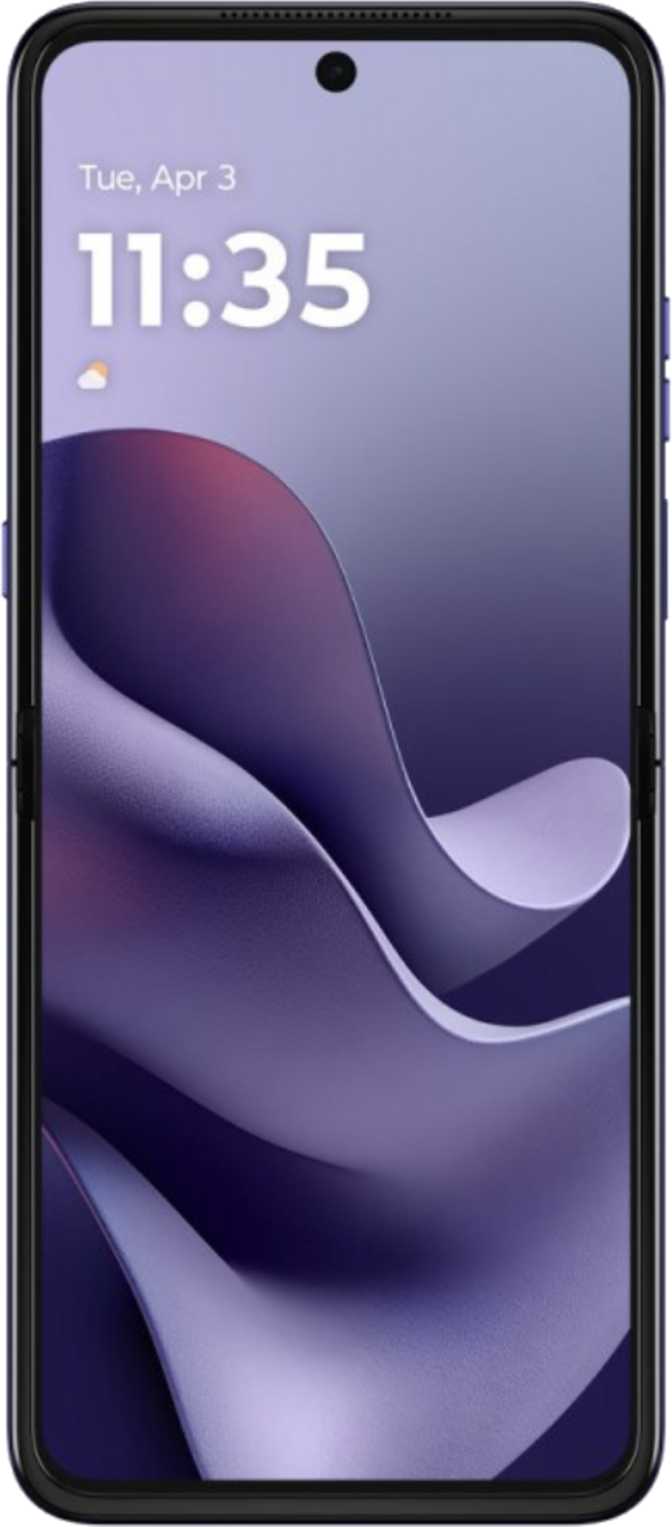
Motorola Razr 70 Ultra Review: The Flip Phone, Fully Grown Up
SmartphonesFoldable smartphones have spent years carrying a reputation problem — compromised cameras, underpowered chipsets, and mediocre displays hidden behind the novelty of the form factor. The Motorola Razr 70 Ultra arrives as a direct challenge to that reputation. It pairs the compact flip-phone format that made the original Razr iconic with hardware that makes no concessions: the same processor found in flagship bar-style phones, a triple 50-megapixel camera system, and a display that rivals dedicated entertainment devices.
If you have been waiting for a foldable that does not ask you to give anything up, this is the device making that case.
Quick Verdict
- Snapdragon 8 Elite — no chip compromises
- 7-inch 165Hz OLED with Dolby Vision
- Dual 50MP rear cameras with OIS
- 5,000 mAh battery — generous for a flip
- No telephoto lens
- No RAW photo capture
- Charger not included
Key Specifications at a Glance
Every important number, translated into what it means for daily use.
Design and Build: Slim, Thoughtful, and Genuinely Pocketable
Physical experience, dimensions, and water resistance explained.
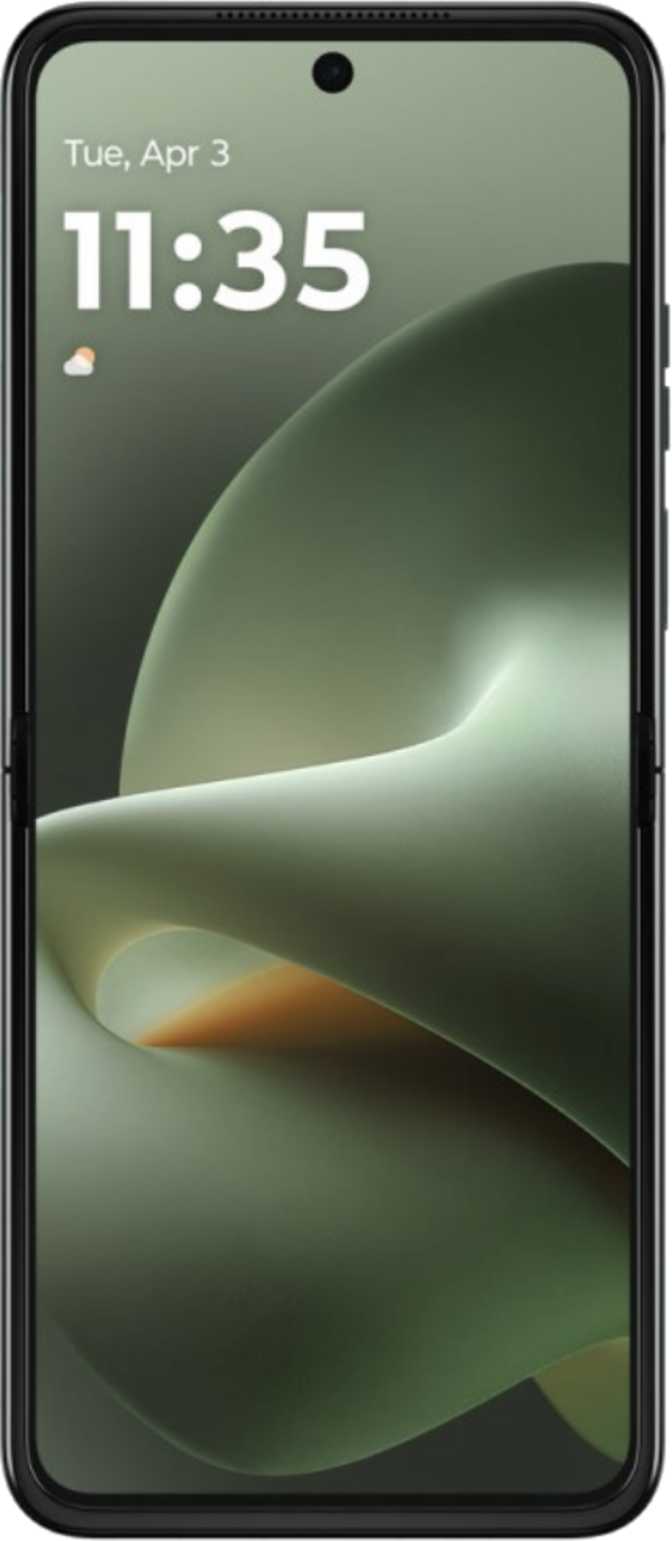
At its core, the Razr 70 Ultra solves a problem most slab-phone users do not realize they have until they try it: it fits in any pocket, worn in any outfit, and unfolds into a full-size phone experience on demand.
Opened flat, the phone measures 171.5mm tall and 74mm wide — comparable to a standard large-screen smartphone. Closed, it folds down to roughly half that height, making it genuinely jacket-pocket or small-bag friendly in a way no conventional phone achieves. The 7.2mm thickness when unfolded is remarkably svelte for a device with this many internal components stacked inside a hinge mechanism.
The weight sits at 199 grams. That is not featherlight, but it distributes well across the folded form. Held open, it feels balanced. Closed and in-hand, it feels dense and premium — the kind of solid that reads as quality rather than bulk.
| Height (open) | 171.5 mm |
| Width | 74 mm |
| Thickness | 7.2 mm |
| Weight | 199 g |
| Water Resistance | IP48 Certified |
| Damage-Resistant Glass | Yes (branded) |
| Rugged Build | No |
Both Screens Explained
Main display and cover screen — what the numbers mean in real use.
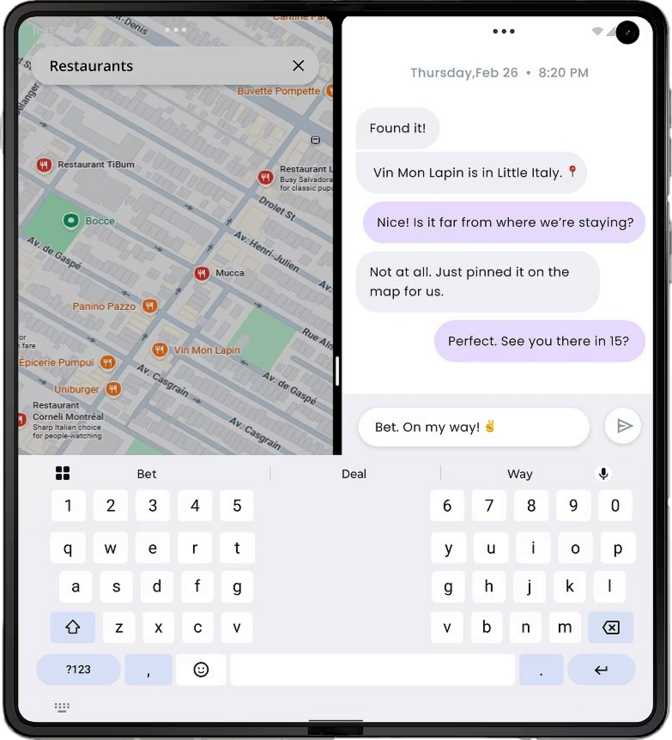
When fully open, the Razr 70 Ultra presents one of the largest displays available on any phone-class device. Seven inches of OLED real estate overlaps with compact tablet territory.
OLED means each pixel produces its own light and can switch completely off to produce true black. The contrast between lit and unlit pixels is essentially infinite, making dark scenes in films and games look genuinely deep rather than washed-out grey.
The panel supports HDR10, HDR10+, and Dolby Vision — the full trifecta of HDR standards — so premium streaming content renders as intended by its creators.
At 462 pixels per inch, text and fine detail are well beyond the threshold where individual pixels become visible to the naked eye at normal viewing distances.
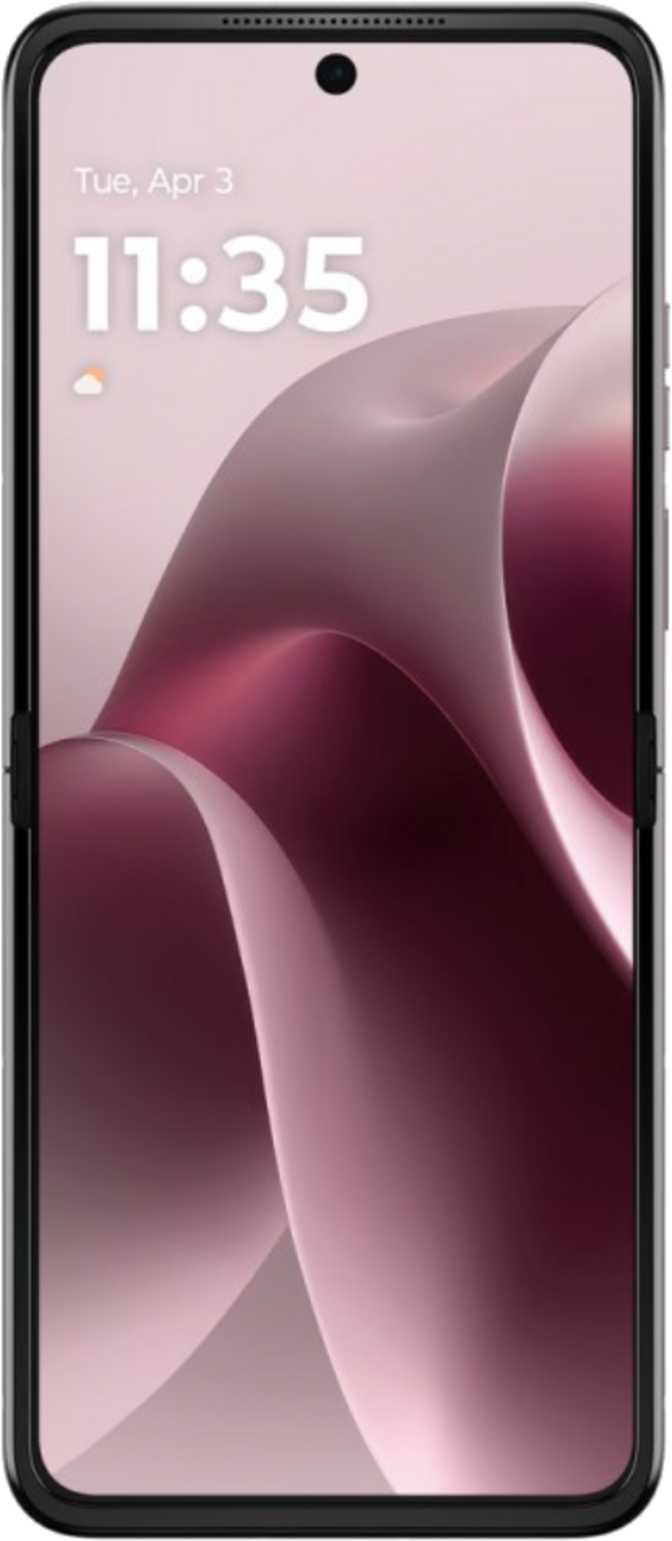
The secondary screen on the outside of the device — visible when folded closed — is not an afterthought. Its resolution exceeds what many phones offered as a main display just a few years ago.
This is a usable display, not a notification ticker. Checking messages, controlling music, viewing calendar events, taking selfies using the superior rear cameras, or running select apps — all without ever unfolding the phone.
For users who frequently glance at their phone for quick information, the cover screen meaningfully reduces how often the device needs to be opened at all.
Performance: Flagship Without Compromise
Chipset, RAM, storage, and GPU — what the hardware actually delivers.
The Chipset
The Motorola Razr 70 Ultra runs on the Qualcomm Snapdragon 8 Elite — the same processor at the heart of the most powerful Android phones on the market. This is not a "foldable-tier" or cost-reduced chip. It is the top-tier silicon available for Android devices, manufactured on a 3-nanometer process node.
The 3nm fabrication matters because smaller transistors consume less energy per computation, which lets the processor run faster workloads without generating excessive heat. The chip uses two performance cores running at up to 4.32 GHz for heavy single-threaded tasks, and six efficiency cores at up to 3.53 GHz for sustained workloads and background processes — a big.LITTLE architecture that is both fast when needed and efficient when it is not.
Memory and Storage
Sixteen gigabytes of DDR5 RAM running at 5,300 MHz gives the Razr 70 Ultra headroom most users will never fully fill. Apps opened an hour ago are still in memory and resume instantly. Heavy multitasking, split-screen applications, and dozens of browser tabs are handled without the system needing to reload anything.
The 512GB of internal storage is fixed — no microSD expansion — but 512GB is an amount the vast majority of users, including heavy photo and video shooters, will not outgrow. Shooting 4K video at 30 frames per second generates roughly 400MB per minute; 512GB accommodates over 20 continuous hours of 4K footage before approaching capacity.
GPU and Gaming
The Adreno 830 GPU, clocked at 1,100 MHz with 1,536 shading units, handles graphics rendering with DirectX 12 and OpenGL ES 3.2 compatibility — meaning every mobile game currently available runs on this hardware. Demanding 3D titles run smoothly on the 7-inch display, giving this phone significantly more screen real estate than any bar-form phone for gaming.
| Chipset | Snapdragon 8 Elite |
| Process Node | 3 nm |
| RAM | 16GB DDR5 |
| RAM Speed | 5,300 MHz |
| Memory Bandwidth | 85.1 GB/s |
| Storage | 512GB (fixed) |
| GPU | Adreno 830 |
| TDP | 8.2W |
Camera System: Three Fifties
What the dual-50MP rear system and 50MP front camera deliver in practice.
Dual Rear Cameras
Two 50-megapixel sensors on the back — a wide-angle primary lens at f/2.0 and an ultrawide lens at f/1.8. Having 50MP on both lenses, rather than reserving resolution for only the primary, means switching between focal perspectives does not produce a visible quality drop.
The primary sensor captures images with 2-micron pixels. Larger pixels collect more light per unit, which directly benefits low-light photography — evening scenes, indoor settings, and shadowed environments where cheaper cameras struggle with noise. The ultrawide uses 1.2-micron pixels, partially compensated by the brighter f/1.8 aperture.
Both cameras feature phase-detection autofocus and continuous autofocus during video recording. Optical Image Stabilization physically compensates for hand movement — meaning sharper photos at slower shutter speeds and smoother handheld video. This is a tangible difference in dim light, not just a spec-sheet claim.
Video Capabilities
Records at up to 4K at 30 frames per second with both HDR10 and Dolby Vision recording — footage retains richer shadow detail and highlight range on capable screens. Slow-motion capture and timelapse are included.
There is no optical zoom. The focal range spans a fixed equivalent of 12mm to 25mm, covering ultrawide to standard perspectives. Buyers who need telephoto reach will find this limiting. What is available is genuinely excellent; what is absent is a dedicated zoom lens.
Manual controls — ISO, exposure, focus, and white balance — give photography enthusiasts full creative control. RAW capture is not supported, which will disappoint dedicated mobile photographers who process images in desktop software.
Front Camera
The 50-megapixel front camera at f/2.0 is mounted inside the main display when unfolded. The more interesting option: use the cover screen as a viewfinder and shoot selfies with the superior rear cameras — delivering OIS, larger sensors, and better low-light capability than any front camera currently available.
Camera Feature Checklist
Battery and Charging: All-Day Confidence
Endurance, wired speed, and wireless charging explained in real terms.
The 5,000mAh battery capacity puts the Razr 70 Ultra at the high end of what any smartphone carries — particularly notable given how much engineering it takes to fit this capacity inside a folding mechanism. Most users with moderate screen-on time — streaming, social media, messaging, calls — will end the day with battery to spare. Heavy users with long screen-on times and demanding workloads may need to top up before bed, but rarely before evening.
Wired charging runs at 68 watts. Starting from a depleted battery, this restores a substantial charge in roughly 30 to 40 minutes. The takeaway is that a 15-minute charge during a commute or lunch break is meaningful, not just a gesture.
Wireless charging at 30 watts is unusually fast for the category — most phones offering wireless charging in this tier max out at 15 watts. Placing the Razr 70 Ultra on a compatible Qi charger overnight tops it up without cable management, and 30W means a wireless top-up during a 20-minute desk break accumulates significant charge.
- 5,000 mAh capacity
- Wireless Qi charging
- Battery health monitoring
- Reverse wireless charging
- Charger not in box
Audio: Wireless-First and Genuinely Capable
Codec support, speakers, and what the missing headphone jack means for you.
The Razr 70 Ultra drops the 3.5mm headphone jack entirely. This is a choice that reflects where wireless audio has arrived, not a hardware cost-cut — given the Bluetooth codec depth on offer here.
The device supports aptX, aptX HD, aptX Adaptive, and aptX Lossless over Bluetooth 5.4. AptX Lossless specifically enables wireless audio that transmits CD-quality, bit-for-bit accurate audio to compatible headphones — no compression artifacts that attentive listeners would detect. For listeners using high-quality wireless headphones that support these codecs, the audio chain is genuinely excellent.
LDAC — Sony's competing high-resolution codec — is absent. Users already invested in Sony headphones optimized for LDAC will receive aptX HD instead, which is still high-resolution but not the identical quality profile.
Stereo speakers fire from the device, making media consumption on the large inner display a noticeably richer experience than mono would provide. Three microphones support call clarity and noise reduction during video recording.
| Codec | Quality Level | Supported |
|---|---|---|
| aptX Lossless | CD-Quality (lossless) | |
| aptX Adaptive | Adaptive high-res | |
| aptX HD | High-resolution | |
| aptX | Standard high quality | |
| LDAC | Sony high-res |
Software: Android 16 With Motorola's Own Flavour
What you get out of the box, privacy features, and foldable-specific software.
The Razr 70 Ultra ships with Android 16 — the most current major version of Google's mobile platform. Android 16 brings granular privacy controls including per-app camera and microphone access permissions, clipboard use notifications, and location options. Dynamic theming adapts the interface color palette to your chosen wallpaper. Dark mode, widget support, split-screen multitasking, and Picture-in-Picture for video are all present.
Motorola adds its own software layer specifically optimized for the foldable form factor — managing the cover screen experience, app continuity between closed and open states, and the ability to use the phone partially folded as a tabletop media stand. These are aspects of the software experience that standard Android does not handle natively.
OS updates come through Motorola's own distribution rather than directly from Google. Motorola has committed to a multi-year update promise for this device tier, though buyers who prioritize receiving the absolute fastest Android updates may find the cadence slightly slower than on Google's Pixel line.
Split-screen operation — running two apps side by side on the 7-inch display — is a feature that is genuinely useful at this screen size, significantly more practical than the same feature on a conventional 6.5-inch phone.
Privacy & Feature Summary
- Camera & microphone access controls
- Clipboard use warnings
- Location privacy options
- App tracking blocker
- Dynamic theming
- Dark mode
- Split-screen multitasking
- Picture-in-Picture
- On-device machine learning
- Offline voice recognition
- Battery health monitoring
- Direct Google OS updates
- Cross-site tracking blocker
Connectivity: No Meaningful Gaps
5G, Wi-Fi 7, Bluetooth 5.4, and sensor suite — what is present and what is absent.
| Feature | Specification / Detail | Status |
|---|---|---|
| 5G | Integrated modem | Supported |
| Wi-Fi | Wi-Fi 7 (802.11be) + 6E, 6, 5, 4 | Future-ready |
| Bluetooth | Version 5.4 | Latest standard |
| NFC | Contactless payments & pairing | Included |
| GPS / Navigation | GPS + Galileo satellite support | Multi-system |
| SIM | 1 Physical SIM + 1 eSIM | Dual SIM |
| USB | USB-C (USB 2.0 speed) | Slow data transfer |
| Fingerprint Scanner | Built-in | Included |
| Gyroscope | Full 6-axis sensor | Included |
| Barometer | Altitude & weather data | Included |
| MicroSD Slot | Storage expansion | Not available |
| Emergency SOS Satellite | Satellite emergency link | Not available |
| Infrared Sensor | Remote control use | Not available |
Wi-Fi 7 support is the most forward-looking connectivity feature here. Wi-Fi 7 routers are increasingly common in homes and offices, offering substantially higher throughput and lower latency than Wi-Fi 6. The theoretical modem speeds supported are not numbers you will see in a home environment, but they indicate the modem will never be the bottleneck in any real-world scenario.
Who Should Buy the Motorola Razr 70 Ultra
Honest guidance on the right buyer — and the wrong one.
- Buyers who want a full-size screen that genuinely fits in small pockets or bags
- Photography enthusiasts who prioritize dual wide-lens quality over zoom
- Mobile gamers who want maximum screen on a pocketable device
- Wireless audio enthusiasts running aptX-compatible headphones
- Users who want the cover screen as a practical productivity tool
- Anyone wanting top-tier flagship performance without a slab form factor
- Users who shoot in RAW format for professional post-processing
- Telephoto photography enthusiasts — no zoom lens is present
- Users in persistently dusty environments needing IP68 or better
- Budget-conscious buyers — this is a premium-tier device at a premium-tier price
- Sony LDAC headphone owners wanting maximum wireless audio quality
- Anyone without a compatible 68W USB-C charger already on hand
How It Compares to the Alternatives
Razr 70 Ultra versus typical competing flip phones and bar-style flagships.
| Feature | Razr 70 Ultra | Typical Competing Flip | Typical Bar Flagship |
|---|---|---|---|
| Chipset Tier | Top-tier Snapdragon 8 Elite | Often mid-tier or prior gen | Top-tier |
| Main Display | 7 inches OLED 165Hz | 6.7–6.9 in, 120Hz typical | 6.2–6.9 in, 120Hz typical |
| Rear Cameras | 50MP + 50MP | Often 12MP + 12MP | 50MP + 12MP + 10MP (zoom) |
| Battery | 5,000 mAh | 3,700–4,400 mAh typical | 4,500–5,000 mAh |
| Wired Charging | 68W | 44W typical | 45–65W |
| Cover Screen | Full HD 1080p | Often lower resolution | N/A |
| Telephoto Camera | None | Common gap in flip class | Usually included |
| RAW Photo Capture | No | Varies | Usually yes |
| Form Factor | Genuinely pocketable | Pocketable | Full-size slab |
The Razr 70 Ultra's most significant structural advantage over other flip phones is processor choice. Most competing flip-style foldables ship with mid-range or previous-generation flagship chipsets to meet price or thermal targets. The Snapdragon 8 Elite closes that gap entirely. Against bar-style flagship phones, the Razr 70 Ultra gives up the telephoto lens and RAW capture — and gains a significantly larger display, a physically smaller closed form factor, and the practical ergonomic benefits of the flip form.
Honest Assessment: Strengths and Weaknesses
Where this phone genuinely excels — and where it invites real criticism.
The Razr 70 Ultra represents a genuine maturation of the flip-foldable category. Its strengths are substantial and tightly clustered around the things that matter most. The processor is the best available on Android. The display specification — in size, refresh rate, and HDR standard support — exceeds most of the smartphone market. The camera system delivers consistent quality across both rear lenses, and the cover screen is one of the most capable and practically useful secondary displays on any foldable.
Battery capacity is generous for the form factor, and charging — both wired and wireless — is fast enough that running low rarely becomes a crisis. The aptX Lossless Bluetooth codec support gives wireless audio enthusiasts a genuine path to CD-quality wireless playback without the compromises found in competing devices at this tier.
Where the phone invites real criticism, the gaps are specific and predictable. The absence of a telephoto lens means the camera system, despite its resolution and stabilization quality, cannot compete with three-camera flagships for zoom versatility. The lack of RAW capture is a meaningful omission for anyone who considers mobile photography a serious creative practice.
The IP48 rating, while genuinely protective for everyday use, leaves a question mark for users in persistently dusty environments over extended ownership. USB 2.0 speeds on a USB-C port is a quiet limitation that most users will never notice — until they try to transfer large volumes of video from the 512GB storage to a computer, at which point the transfer time becomes conspicuous. The missing charger in the box is worth factoring into the total cost at this price tier.
Frequently Asked Questions
Real questions buyers search for before purchasing — answered directly.
The Flip Phone That Stopped Apologising
The Motorola Razr 70 Ultra is the foldable phone that does not ask for forgiveness. Its predecessors — and many current competitors — required buyers to accept real hardware compromises as the cost of the form factor. This device declines that arrangement.
It ships with top-tier processing, a display specification that exceeds most of the smartphone market, a camera system that holds its own among non-foldable flagships, and a battery and charging configuration that provides both all-day endurance and fast recovery.
The trade-offs exist but are narrow: no telephoto lens, no RAW capture, no fine-dust sealing, and no included charger. For buyers who do not need a zoom camera and whose photography practice does not require RAW processing, those are acceptable omissions in exchange for a phone that genuinely fits in a pocket closed and unfolds into a 7-inch Dolby Vision OLED display.