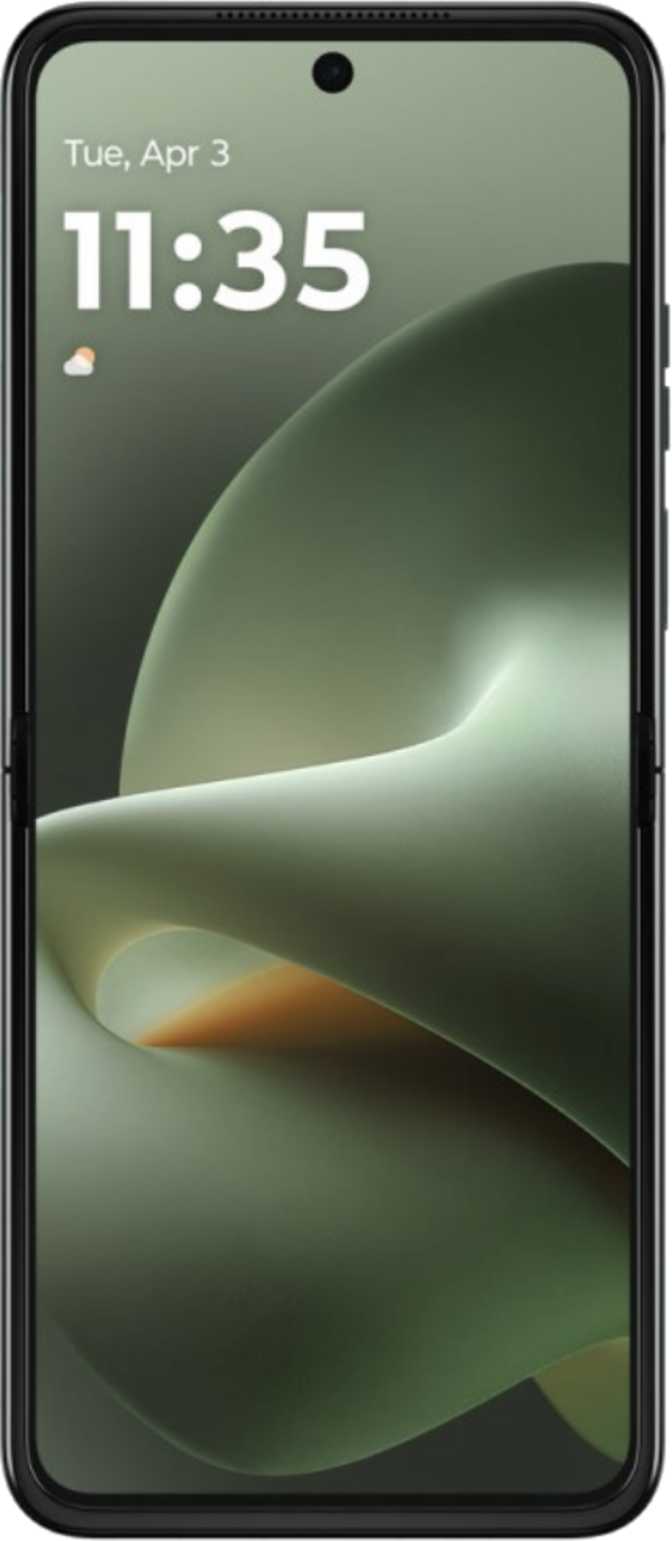
Motorola Razr 70 Plus Review: The Clamshell Foldable Done Right
SmartphonesFlip phones never really went away — they just needed a decade to figure out what they wanted to be. The Motorola Razr 70 Plus arrives as one of the most fully realized compact foldables on the market, pairing a flagship-adjacent processor with a genuinely large inner display, serious camera credentials, and a build thin enough to make you forget it folds at all. For anyone watching the clamshell foldable space from a distance, wondering when the trade-offs would shrink to an acceptable level, this phone makes a compelling case that the wait is over.
Editor's Score
out of 10
Design and Build Quality
Physical form · IP water resistance · Dimensions
The first thing anyone notices about a clamshell foldable is the thickness — or rather, the Razr 70 Plus's surprising lack of it. Unfolded, it measures just 7.1 mm at its thinnest point. That is genuinely slimmer than many traditional candy-bar smartphones, which tend to cluster in the 8–9 mm range. At 189 grams, it sits comfortably in hand without feeling like a device that sacrificed rigidity for slimness.
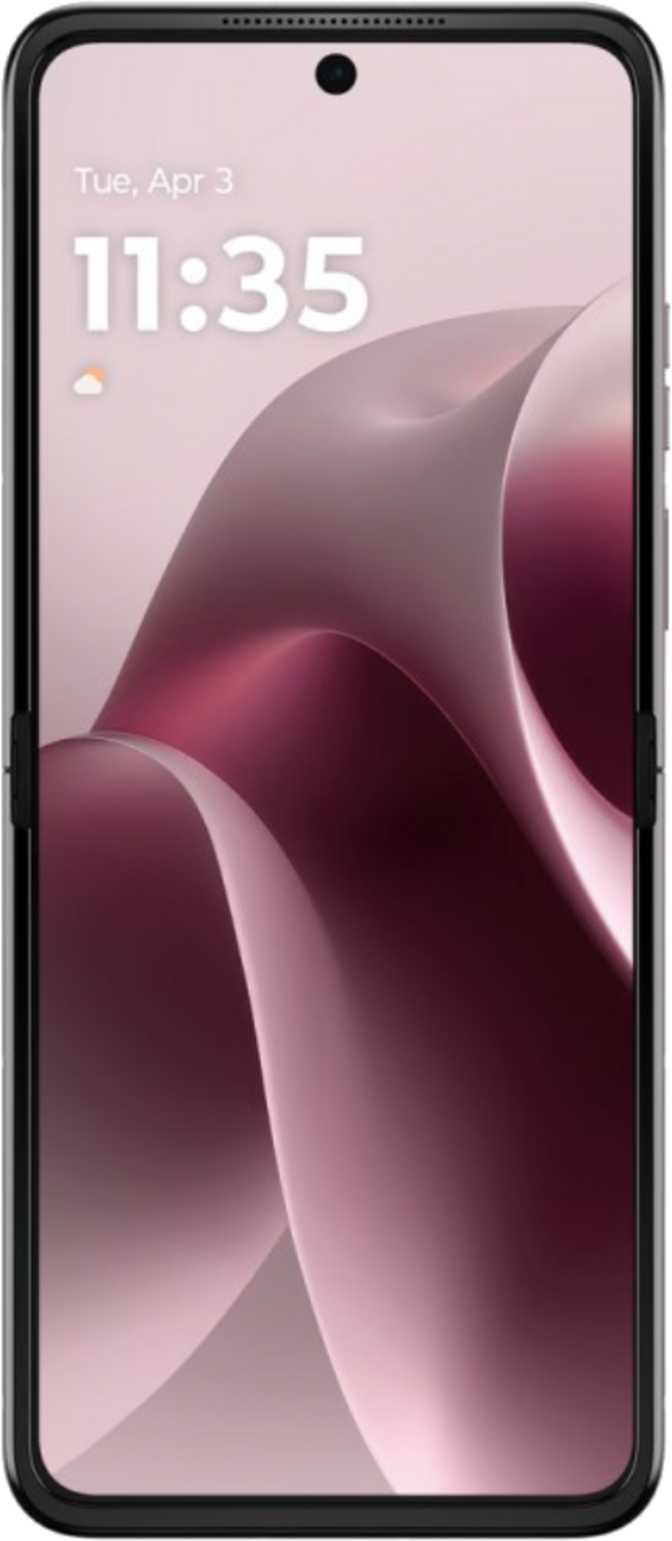
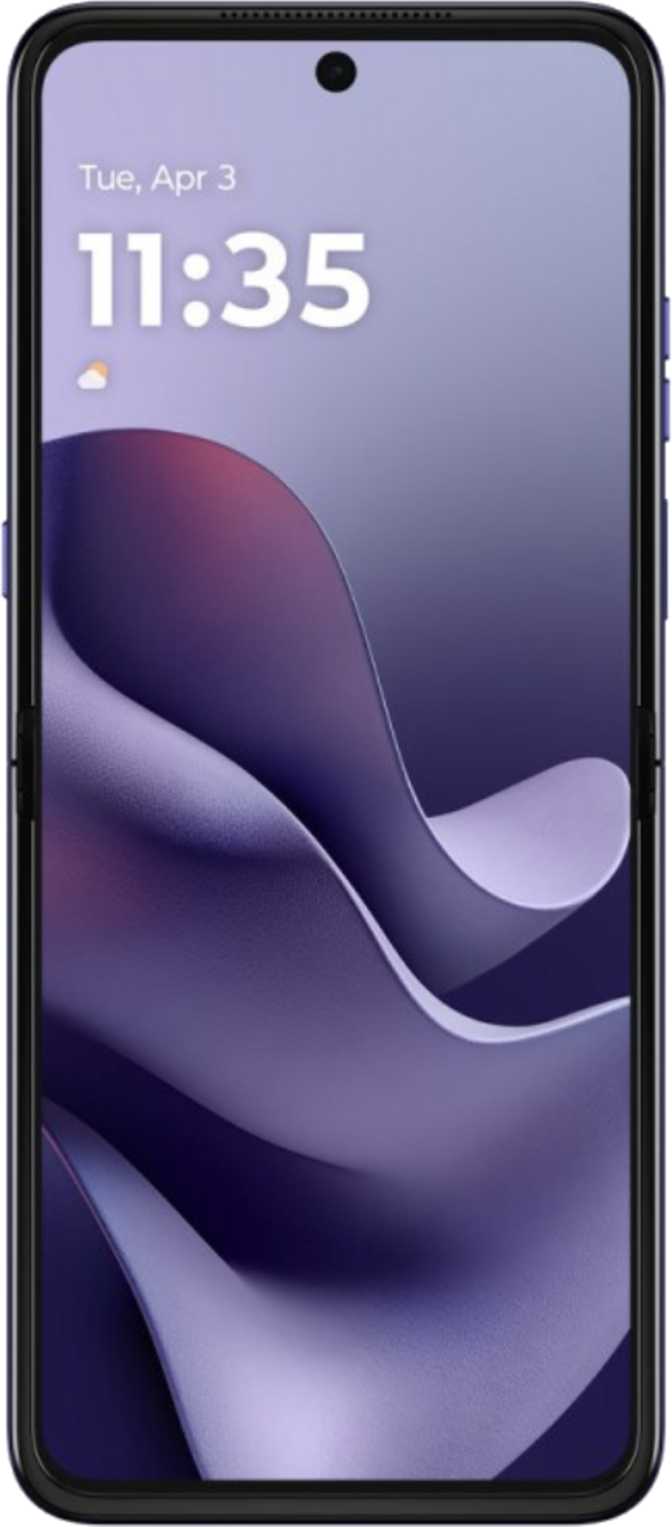
Folded, the phone becomes a compact square that disappears into a pocket or a small bag entirely — the fundamental appeal of the clamshell form factor delivered without the bulky hinge profiles that plagued earlier foldables. The screen is protected by branded damage-resistant glass, and the flat (non-curved) display means protection extends evenly across the full panel with no vulnerable raised edges.
The "4" confirms protection against solid particles larger than 1 mm. The "8" means the phone is rated for continuous submersion in fresh water beyond one metre — the same submersion tier as an IP68 rating.
- Fully safe in rain, splashes, and shallow submersion
- Pool and sink accidents are covered
- Significant engineering feat on a folding hinge
- Not dustproof at the IP6X level — sandy or dusty environments warrant caution
The Display Experience
Inner screen · Cover screen · HDR support
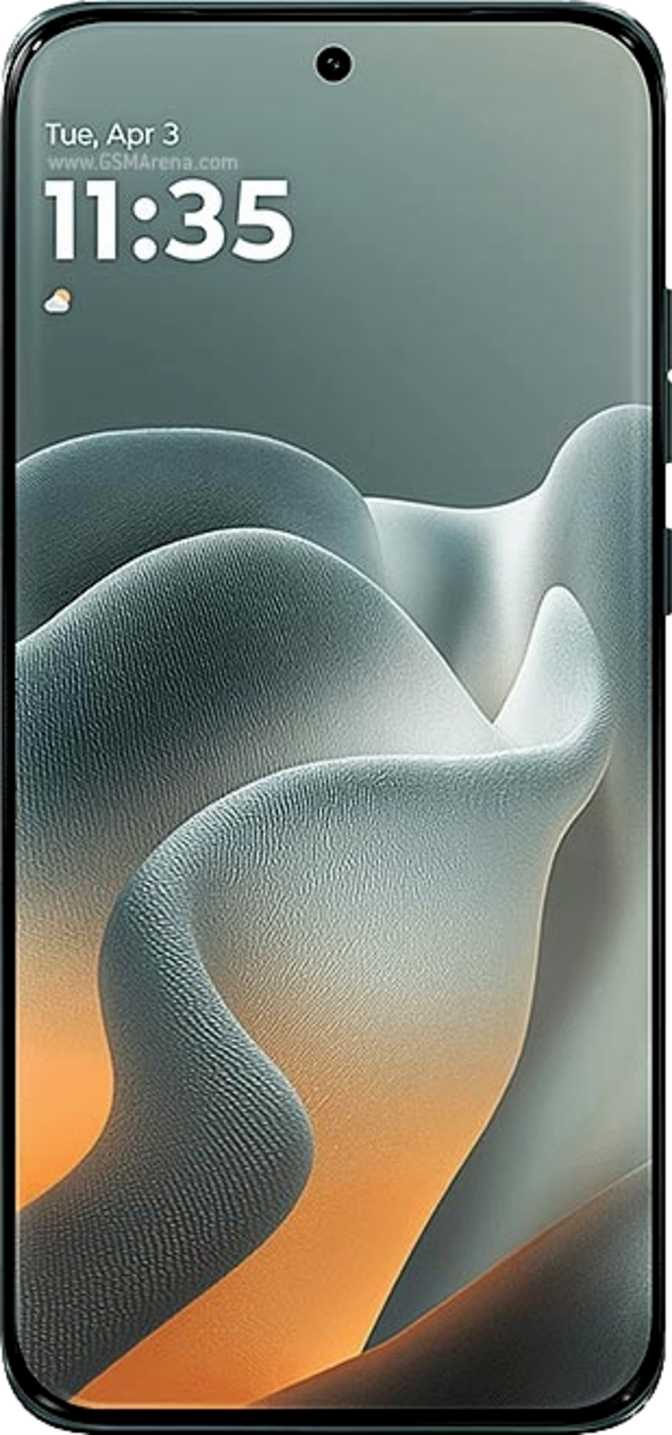
The inner screen spans 6.9 inches diagonally — larger than the main display on many flagship non-folding phones. OLED/AMOLED technology means true blacks, vibrant colours, and no backlight bleed. At 414 pixels per inch, individual pixels are invisible even to those who actively look for them.
The 165Hz refresh rate puts this screen ahead of most premium phones that top out at 120Hz. The difference is visible: scrolling is perceptibly more fluid, animations cleaner, and fast-action gaming renders with less judder.
Touch response is registered at 300Hz — three hundred times per second. For daily use this keeps interactions feeling instantaneous. For competitive gaming it provides a genuine edge.
The external display — visible when the phone is folded — resolves at 1080 x 1272 pixels, far above the postage-stamp panels that early clamshell foldables shipped with. This is a fully interactive screen capable of running notifications, quick replies, music controls, widgets, and select apps without ever opening the device.
For anyone who frequently checks their phone in meetings, at the gym, or while cooking, the cover display reduces how often you need to fully open the phone to near zero for routine interactions. It is functional rather than decorative — a meaningful distinction at this form factor.
HDR Standard Support
All three major HDR standards are supported. Netflix relies on Dolby Vision, YouTube uploads use HDR10 — this display handles every piece of HDR content at its intended quality with no fallback to standard dynamic range.
Performance: Snapdragon 8s Gen 3
Chipset · Benchmarks · Memory and storage
What the Chip Means Day-to-Day
The Qualcomm Snapdragon 8s Gen 3 is manufactured on a 4-nanometre process — the same generation used in chips powering the most demanding flagship devices. Smaller transistors deliver more processing power per watt, translating to faster performance without proportionally draining the battery.
The CPU uses an eight-core arrangement: one prime core at 3 GHz for the heaviest single-thread tasks, four performance cores at 2.8 GHz, and three efficiency cores at 2 GHz for background work. Demanding tasks — photo processing, video export, complex app rendering — hit the fast cores. Checking email or playing audio in the background falls to the efficiency cores, preserving battery without you managing that trade-off manually.
The Adreno 735 GPU, clocked at 1,100 MHz with full DirectX 12 support, handles graphically intensive gaming at high settings. Combined with the 165Hz display and 300Hz touch sampling, gaming on this phone is a matched system — the hardware underneath keeps pace with the screen's capability.
Scored relative to flagship performance tier
Memory and Storage
- RAM
- 12 GB DDR5
- RAM Speed
- 4,800 MHz
- Internal Storage
- 256 GB
- Max Addressable
- 24 GB
- L3 Cache
- 8 MB
- microSD Slot
- Not supported
Twelve gigabytes of DDR5 RAM — the current generation of mobile memory — contributes to fast app switching and reduced load times. The 8 MB of L3 cache further reduces how often the processor reaches into slower system memory during intensive tasks. Storage tops out at 256 GB with no expansion slot, so plan accordingly if you archive large video files.
Camera System
Dual 50MP setup · 4K video · Manual controls · Front camera
The Dual 50-Megapixel Setup
Both main cameras resolve at 50 megapixels — the primary wide-angle lens opens to f/2.0 and the secondary ultrawide to f/1.8. Pixel sizes of 0.8 µm on the main sensor and 1.28 µm on the ultrawide tell an important story: the ultrawide captures more light per pixel, so ultrawide shots in low light hold up better than on devices where the secondary camera is an afterthought.
Optical image stabilisation on the main camera counteracts hand movement during handheld shooting — essential for sharp stills in anything short of bright daylight, and critical for smooth video. Phase-detection autofocus locks on subjects faster and with less hunting than contrast-detection systems, and continuous AF during video means moving subjects are tracked without the lurch-and-refocus behaviour that makes amateur footage look amateurish.
Video Capabilities
The main camera records 4K video at up to 60 frames per second. Both Dolby Vision and HDR10 recording are supported, meaning footage shot here can play back in full HDR on compatible screens with complete dynamic range intact.
Front Camera
The 32-megapixel selfie camera (f/2.4) sits inside the main display — not beneath it — ensuring display resolution and image quality are fully uncompromised. Video calls, selfies, and short-form video content are all well-served by this sensor.
Important: No Optical Zoom
The focal length range — roughly 12 mm to 25 mm equivalent — covers architecture, group shots, and portrait distances well. But there is no telephoto lens. If you regularly photograph wildlife, sports, or distant subjects, the absence of optical zoom is a real gap that digital zoom cannot fix without degrading image quality.
Battery Life and Charging
Capacity · Wired and wireless charging · What is in the box
The battery capacity is sized to cover a full day of moderate-to-heavy use for most people — larger than many foldable competitors, which have historically squeezed in undersized cells to manage the mechanical constraints of a folding chassis. It is not the largest cell available on any phone in this class, but it is a meaningful step forward for the clamshell form factor.
Wired charging at 45W means a significant portion of the battery refills in roughly 30–40 minutes from a low charge. Fast enough that a brief top-up during a lunch break becomes a real strategy rather than a hopeful gesture.
Wireless charging is supported at 15W — convenient for overnight charging on a pad or desk-charging throughout the day. Reverse wireless charging is not available, so you cannot use this phone to top up wireless earbuds or a smartwatch by placing them on the back.
Charger Not Included
No charger ships in the box. If you do not already own a USB-C fast charger rated to 45W, budget for one separately.
Audio
Stereo speakers · Bluetooth codec stack · Microphones
Stereo speakers mean audio comes from two separate directions — the difference between stereo and mono is immediately obvious when watching video or playing games without headphones. Sound feels fuller and more immersive with spatial separation, and this phone delivers that as standard.
There is no 3.5 mm headphone jack. Wired listening requires a USB-C to 3.5 mm adapter or USB-C headphones. Neither is included in the box.
Three microphones are built in, enabling proper noise isolation during calls. The phone uses directional processing to distinguish your voice from background noise, delivering cleaner audio to the other end of a call.
Bluetooth Codec Support
| Codec | Quality Tier | Supported |
|---|---|---|
| aptX Lossless | CD-quality wireless audio | |
| aptX Adaptive | Dynamic quality adjustment | |
| aptX HD | High-resolution wireless | |
| aptX | Standard wireless | |
| LDAC | Sony lossless |
aptX Lossless delivers CD-quality audio wirelessly when your headphones also support it. aptX Adaptive dynamically adjusts to maintain quality over varying connection conditions.
Software and Privacy
Android 16 · Privacy controls · Key features
The Razr 70 Plus ships with Android 16, placing it among the first devices running Google's most current platform. Android 16 brings updated privacy controls across clipboard access, location sharing, and camera and microphone permissions — the phone surfaces clear indicators whenever apps access these resources.
Dynamic theming adapts the system colour palette to your wallpaper. The ability to play games while they download is a small but meaningful quality-of-life detail. App offloading manages storage without full uninstalls. Offline voice recognition means voice commands work without an internet connection.
One practical note: OS updates route through Motorola's pipeline rather than arriving the day Google publishes them. Major OS and security updates depend on Motorola's release schedule.
Privacy and Feature Highlights
- Clipboard access warnings
- Location privacy controls
- Camera and microphone access controls
- App tracking blocker
- Dark mode and dynamic theming
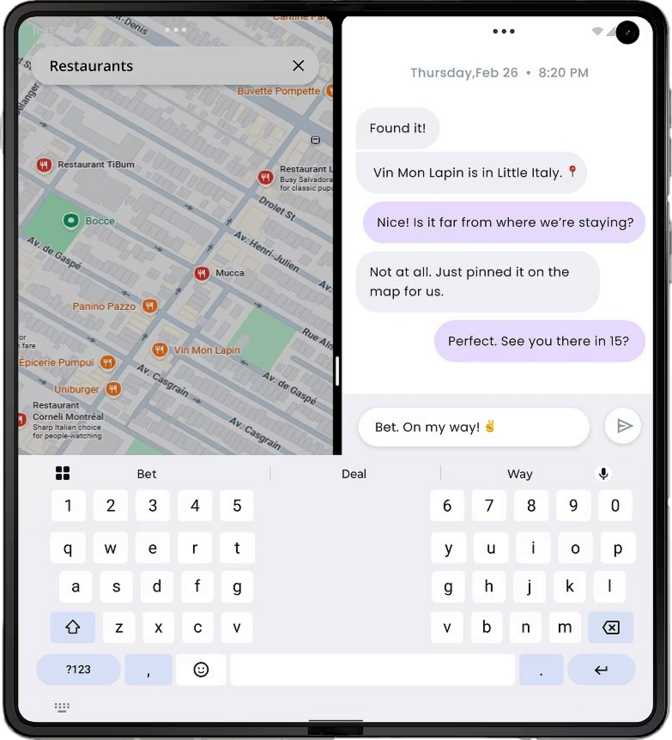
- Split-screen multitasking
- Picture-in-Picture (PiP)
- Offline voice recognition
- Battery health monitoring
Connectivity
Wi-Fi 7 · 5G · Bluetooth 5.4 · USB-C · NFC
Wi-Fi 7 (802.11be) is supported alongside Wi-Fi 6E, Wi-Fi 6, Wi-Fi 5, and older standards. This phone connects to any network you are likely to encounter, and on a Wi-Fi 7 router it delivers the fastest wireless speeds currently achievable on consumer hardware.
The SIM configuration offers one physical SIM slot and one eSIM — useful for travellers who want to maintain a home number while adding a local data SIM without carrying a physical card. NFC enables contactless payments and quick device pairing.
The USB-C port charges the phone and transfers files, but the USB 2.0 data standard means cable transfers are slower than USB 3.x. For users who move files via Wi-Fi or cloud services this is invisible in daily use. For those who regularly move large video files by cable, it is a notable limitation.
| Feature | Specification |
|---|---|
| 5G | Supported |
| Wi-Fi | Wi-Fi 7 (802.11be) |
| Bluetooth | Version 5.4 |
| NFC | Supported |
| USB Port | USB-C (USB 2.0) |
| SIM | 1 Physical + 1 eSIM |
| GPS | GPS + Galileo |
| Fingerprint | Built-in scanner |
| Barometer | Present |
| Gyroscope | Present |
| microSD | Not supported |
| 3.5mm Jack | Not present |
Who Should Buy This Phone
Ideal buyers · Users who should look elsewhere
- You want the pocket-friendly clamshell form factor without accepting significant performance trade-offs
- You carry your phone in a small bag or tight pockets and value compactness above everything
- You split time between media consumption and quick interactions — the large cover screen and inner 165Hz panel both earn their keep
- You shoot primarily at standard and wide angles — the dual 50MP system is genuinely capable
- You use high-quality Bluetooth headphones and want the best wireless audio codec support Android offers
- You regularly photograph wildlife, sports, or distant subjects — there is no telephoto lens
- You transfer large video files by cable regularly — the USB 2.0 ceiling becomes real friction
- You want the longest possible battery life — flat-slab phones can pack considerably larger cells
- Your environment is consistently dusty or sandy — IP48 lacks full dustproofing at the IP6X standard
- You need immediate OS updates — patches route through Motorola's pipeline, not directly from Google
How It Compares to Rivals
Clamshell foldable segment comparison
| Feature | Motorola Razr 70 Plus | Rival Clamshell A | Rival Clamshell B |
|---|---|---|---|
| Inner Display | 6.9" OLED · 165Hz | 6.7" OLED · 120Hz | 6.7" AMOLED · 120Hz |
| Chipset | Snapdragon 8s Gen 3 | Comparable flagship tier | Mid-range tier |
| Cover Screen | Full interactive · 1080p | Partial interactive | Widget-only |
| Water Resistance | IP48 | IP48 | IP48 |
| Wireless Charging | Yes · 15W | Yes · 15W | No |
| Bluetooth Audio | aptX Lossless + Adaptive | Varies | Varies |
| Optical Zoom | None | None / 3x | None |
The Razr 70 Plus differentiates primarily on display refresh rate and cover screen capability. It concedes ground on battery capacity compared to flat-slab phones and telephoto reach compared to flagship multi-camera setups.
Honest Assessment
Where it excels · Where it falls short
The display package — inner screen size, refresh rate, HDR support — is excellent by any standard, not just foldable standards. At 165Hz and 6.9 inches, it outperforms most direct competitors on both dimensions simultaneously.
The processor keeps the device fast for its expected lifespan. The Snapdragon 8s Gen 3 on a 4 nm process is not a mid-range compromise squeezed into a foldable chassis — it is a genuine performance-tier chip that handles everything a daily driver needs.
The IP48 rating removes the material anxiety that surrounded earlier foldables. Water resistance on a folding hinge is substantially harder to achieve than on a flat slab — yet this phone delivers it confidently.
The cover screen is large enough to be functional rather than decorative. Alongside the full aptX codec stack, this phone delivers audio and interactive benefits that most competitors in the category simply do not offer.
There is no telephoto lens, and at this price tier, that gap stands out. The focal range covers standard and wide-angle photography well, but the absence of a dedicated telephoto is a genuine trade-off for anyone who shoots at distance regularly.
The USB 2.0 port will frustrate professionals who transfer files by cable. The vast majority of users move content via Wi-Fi or cloud services, but for those with cable-based workflows, the limitation is real and persistent.
The battery handles a typical day reliably, but anyone who ends their day below 20% consistently will reach for a charger more often than they might on a phone with a larger flat-slab cell.
Software updates route through Motorola's pipeline. For buyers who want immediate security patches the day Google publishes them, this is a point against the Razr 70 Plus compared to devices with direct update pipelines.
Frequently Asked Questions
Answers to what buyers search before purchasing
Final Verdict
Motorola Razr 70 Plus
The Motorola Razr 70 Plus is the answer to the question the clamshell foldable segment has been building toward: can a folding phone be recommended without significant caveats? The answer here is close to yes.
The display package is genuinely excellent — not just by foldable standards. The processor is fast and modern. The camera system handles standard and wide-angle shooting capably. The cover screen is functional rather than gimmicky. IP48 water resistance means you carry this phone with confidence rather than anxiety.
The missing telephoto lens and USB 2.0 port are real gaps, not imagined ones. For everyone else — and that is most smartphone buyers — the Razr 70 Plus represents the strongest case yet that you do not have to choose between a phone that fits your pocket and a phone that keeps up with your life.