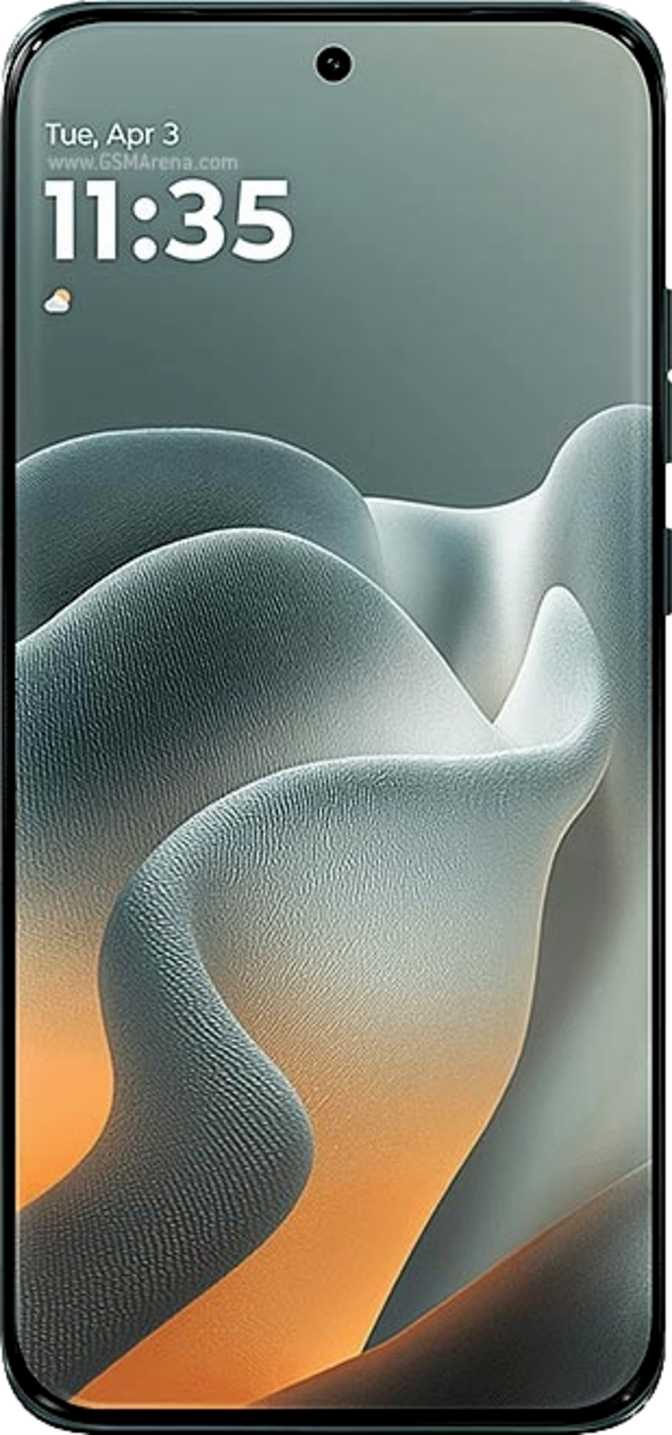
Motorola Edge 70 Fusion Plus Review: An Honest In-Depth Look
SmartphonesThe mid-range smartphone market is where most buyers actually live, and where manufacturers make the hardest choices — what to keep, what to cut, and where to quietly compromise. The Motorola Edge 70 Fusion Plus does not quietly compromise. Its IP69 waterproof certification, 6.8-inch 144Hz OLED display, triple camera system with genuine 3x optical telephoto, and 4-nanometer chipset form a specification profile that, until recently, required premium pricing to access. This review examines every layer of that proposition.
IP69
Waterproof Rating
144Hz
6.8" OLED Display
50MP
3x Optical Telephoto
12GB
DDR5 RAM • 4nm Chip
Editorial Ratings
Design, Build Quality & Physical Experience
At 7.2mm thick and 193 grams, the Edge 70 Fusion Plus occupies a specific physical sweet spot. It is noticeably slimmer than most phones in its class — where 8mm to 9mm is typical — without feeling fragile or hollow. The 75.6mm width keeps it manageable for one-handed use despite housing a large display, though buyers with smaller hands will need to make some adjustments for extended use.
The front glass is Corning Gorilla Glass 7i, a variant engineered for mid-range devices with an emphasis on drop survivability on rough surfaces. It is not the highest tier of Gorilla Glass, but it represents a meaningful step up from the generic tempered glass common at this price point. The phone is not built in a traditional rugged sense — no rubberised bumpers or armoured casing — but its core protection profile comfortably exceeds the competition.
What IP69 Actually Means in Practice
IP68 — the benchmark cited by most rival phones — certifies protection against sustained submersion in still water. IP69 adds certified resistance to high-pressure, high-temperature water jets used in industrial cleaning environments. For everyday users this translates to confident handling in heavy rain, poolside conditions, kitchen splashes, and accidental submersion up to 1.5 metres — an ingress protection level that typically appears only on phones priced significantly higher.
Build Specifications
- Waterproof Rating
- IP69 (1.5m depth)
- Thickness
- 7.2 mm
- Weight
- 193 g
- Width
- 75.6 mm
- Height
- 162.8 mm
- Front Glass
- Gorilla Glass 7i
- Form Factor
- Standard (non-folding)
Display: A Screen That Earns Your Attention
Size, Resolution & Sharpness
The 6.8-inch OLED panel delivers 449 pixels per inch. At that density, text edges are absolutely crisp, UI elements never appear aliased, and even small-print content in PDFs or spreadsheets remains readable without zooming. Individual pixels are too small for the human eye to resolve at normal viewing distances — a benchmark that mid-range phones rarely reach. The OLED technology means each pixel produces its own light, which produces true blacks, infinite contrast ratios, and colour saturation that appears punchy without looking over-saturated when properly calibrated.
Refresh Rate & Smoothness
The 144Hz refresh rate makes scrolling through social feeds, navigating menus, and swiping between apps feel perceptibly smoother than the 60Hz or 90Hz panels common at this price. For mobile gaming, 144Hz opens the door to genuinely smooth frame rates in titles that support high-refresh rendering — a capability that, until recently, was gated behind gaming-focused flagship prices.
Colour, HDR & Streaming Content
Both HDR10 and HDR10+ standards are supported, meaning compatible streaming content renders with extended highlight detail and a wider colour range than standard video. HDR10+ support — the more advanced of the two — enables dynamic scene-by-scene tone mapping for compatible content on platforms such as Amazon Prime Video and Samsung TV Plus.
Dolby Vision is absent, which is relevant for Apple TV+ subscribers or anyone whose primary streaming platform relies on that format. For the majority watching Netflix, YouTube, or Prime Video, HDR10+ coverage handles the practical requirements entirely.
Always-On Display
The always-on mode keeps time, notifications, and status visible without fully waking the screen. It sounds minor until it becomes daily habit — it removes the reflex of picking up the phone just to check the time or a notification status.
Display Specifications
- Panel TypeOLED / AMOLED
- Screen Size6.8 inches
- Resolution1272 × 2772 px
- Pixel Density449 ppi
- Refresh Rate144Hz
- Front GlassGorilla Glass 7i
- HDR10
- HDR10+
- Dolby Vision
- Always-On Display
Performance: A Chipset That Punches Upward
The Processor
The Qualcomm Snapdragon 7s Gen 4 is built on a 4-nanometer fabrication process — the same node used in many 2024 flagship chipsets. A smaller node means more transistors in the same silicon area, producing better performance per watt: more processing power without proportionally more heat or battery drain.
The eight-core processor uses one performance core at 2.7GHz for demanding single-threaded tasks, three efficiency-plus cores at 2.4GHz for mid-weight workloads, and four efficiency cores at 1.8GHz for background tasks. This big.LITTLE architecture allocates processing power intelligently — fast when needed, conserving battery when it does not need to be.
Memory & Storage
Twelve gigabytes of DDR5 RAM at 3200MHz means apps opened hours ago remain in memory when you return — no reload wait, no lost context. For someone juggling a browser with multiple tabs, a video editor, navigation, and messaging simultaneously, that headroom genuinely changes the experience. The 256GB internal storage is generous, though the absence of a microSD slot means heavy 4K video shooters should plan their storage habits accordingly.
Graphics & Gaming
The Adreno 710 GPU runs at 1050MHz and provides DirectX 12 support — the same graphics standard used on PC gaming platforms — alongside 25.6 GB/s of memory bandwidth. Graphically intense titles run at medium-to-high settings with good frame rates. The most demanding AAA mobile games may require some quality adjustments to hit 144fps targets, but 60-to-90fps smooth gameplay is readily achievable across a wide library.
Performance Snapshot
- ChipsetSnapdragon 7s Gen 4
- Process Node4 nm
- CPU Architecture8-core big.LITTLE
- Peak Core Speed2.7 GHz
- GPUAdreno 710
- GPU Clock1050 MHz
- DirectXDirectX 12
- RAM12 GB DDR5
- RAM Speed3200 MHz
- Memory Bandwidth25.6 GB/s
- Internal Storage256 GB
Camera System: Three Lenses, Real Versatility
The rear camera array covers the full spectrum from 12mm wide to 73mm telephoto — spanning expansive architectural and landscape shots to compressed portrait work with genuine background separation. Each lens serves a distinct purpose rather than acting as a filler spec.
50MP
Wide Primary
f/1.8 aperture
OIS Stabilised50MP
Telephoto 3x
f/2.2 aperture
Optical Zoom10MP
Supporting Lens
f/2.0 aperture
Ultra-wide/Depth50MP
Front Camera
f/2.0 aperture
High ResolutionWhy Optical Zoom Changes Everything
The 3x optical zoom uses a physically separate telephoto lens rather than cropping from the wide frame digitally. The practical difference is significant: at 3x, photos retain full resolution and detail rather than degrading into the soft, pixelated results of digital zoom. For photographing events, wildlife, sports, or portraits at distance, this distinction is the difference between a usable shot and a blurred disappointment.
Optical Image Stabilisation
OIS uses physical lens movement to counteract hand shake. In low-light photography, where longer exposures are required, OIS is what separates a sharp image from a blurred one. For video, it smooths the micro-vibrations of walking or subtle movement that would otherwise make handheld footage unwatchable. Its presence at this price point is a meaningful differentiator.
Video Capabilities
The camera captures 4K video at 60 frames per second — producing smooth, high-resolution footage suited to professional-looking travel video and content creation. Continuous autofocus operates during recording, keeping moving subjects sharp without manual adjustment. Slow-motion recording is supported for high-impact moments where normal speed misses the detail.
Manual Controls & Features
- ISO sensitivity control
- Manual exposure compensation
- Manual white balance
- Manual focus
- Phase-detection autofocus
- Burst / serial shot mode
- HDR mode
- Timelapse
- Manual shutter speed (not available)
Camera Limitations Worth Knowing: No front-facing LED flash means selfies in true darkness depend on display fill-light. Laser autofocus is absent — phase-detection AF performs well in most conditions but provides less accuracy in very dark environments. Neither limitation is unusual at this tier.
Battery & Charging: Built for Full Days
5,200
mAh Capacity
68W
Wired Charging
15W
Wireless Charging
Daily Endurance
Combined with the 4-nanometer chipset's efficient power profile, the battery capacity supports genuine all-day use for the majority of users. Light-to-moderate users — calls, messaging, social browsing, music, occasional camera use — will find the phone ends the day with charge remaining. Heavy users running GPS navigation, video streaming, gaming, and continuous connectivity throughout a full waking day will approach 15 to 18 hours before needing to plug in — reasonable for a phone of this scale and capability.
Charging in Practice
The 68W wired charging speed is among the more competitive figures in this segment. A phone critically low on battery in the morning reaches a functionally useful charge level within 20 to 25 minutes. A complete charge from empty takes approximately one hour, making overnight charging practical but not the only option.
The 15W wireless charging suits overnight top-ups or desk charging during the workday. Reverse wireless charging is not supported, so the phone cannot charge accessories like earbuds by contact.
Software: Android 16 With a Light Touch
Running Android 16, the Edge 70 Fusion Plus arrives with the latest Android version and Motorola's characteristically restrained customisation layer — a genuine advantage over manufacturers who apply heavy UI overlays that slow updates and complicate the experience. The result feels close to stock Android while adding practical quality-of-life improvements.
Privacy & User Control
Per-app camera and microphone access controls, granular location privacy options, app tracking blocking, and clipboard access warnings collectively represent a mature privacy posture. These controls put users in active charge of what background processes can access and when, rather than relying on platform-level defaults.
Productivity
Split-screen multitasking, picture-in-picture mode, and full-page scrolling screenshots cover the practical productivity bases. Offline voice recognition means voice commands and dictation function without an active internet connection — useful in areas with poor signal. Dynamic theming adjusts the system colour palette based on wallpaper, producing a visually coherent interface across apps and system UI that sounds cosmetic but feels meaningfully polished in daily use.
Update Policy: OS and security updates are distributed through Motorola rather than directly from Google. Updates arrive on Motorola's schedule. Buyers who prioritise receiving security patches immediately upon release should factor this in.
Software Feature Checklist
- Android 16
- Split-screen multitasking
- Picture-in-picture mode
- Full-page scrolling screenshots
- Offline voice recognition
- Dynamic theming (wallpaper-based)
- App tracking blocking
- Clipboard access warnings
- Dark mode
- Battery health check
- On-device machine learning
- No direct OS updates from Google
Connectivity: Current Standards Across the Board
5G & Wi-Fi
5G is integrated directly into the Snapdragon 7s Gen 4 chipset rather than added as a separate module, contributing to efficiency. Theoretical download throughput reaches approximately 2,900 Mbps — a figure that exceeds what current infrastructure delivers in practice, but ensures the phone will not become a bottleneck as networks improve.
Wi-Fi 6E support extends coverage into the 6GHz band available on compatible routers. In congested wireless environments — apartment buildings, offices, or anywhere many devices compete for bandwidth — Wi-Fi 6E delivers lower latency and more consistent performance than standard Wi-Fi 6 or older standards.
Bluetooth 6 & NFC
Bluetooth 6 is the current generation standard, offering improved connection reliability and power efficiency over Bluetooth 5.x. NFC supports contactless payments and fast device pairing. Notably, neither aptX HD nor LDAC audio codecs are present — a specific limitation for audiophiles using high-resolution Bluetooth headphones who depend on those codecs for lossless wireless audio. Standard Bluetooth audio works fine for most listeners; the absence is a narrow but real concern for that audience.
SIM, Ports & Navigation
One physical SIM and one eSIM operate simultaneously. The eSIM is particularly useful for travellers who want to maintain a home number while adding a local data SIM without carrying a second card.
The USB-C connector handles charging and data transfer, though it operates at USB 2.0 transfer speeds — adequate for charging and routine file transfers, but slower than USB 3.x for moving large video files to a computer. There is no 3.5mm headphone jack, which now reflects the market norm but requires either Bluetooth headphones or a USB-C adapter for wired listening.
Connectivity at a Glance
Who Should Buy the Motorola Edge 70 Fusion Plus
This Phone Is For
-
Value-focused buyers who refuse to sacrifice camera quality
Optical telephoto and OIS at this price bracket is genuinely rare.
-
Outdoor and active users
IP69 goes meaningfully beyond most competitors — confident in rain, kitchens, and poolside environments.
-
Multimedia consumers
The 6.8-inch 144Hz OLED with HDR10+ creates one of the best media viewing experiences at this price.
-
Mobile gamers
Snapdragon 7s Gen 4, 12GB DDR5 RAM, and 144Hz display form a capable gaming platform.
-
Battery-anxious users
Large capacity plus 68W fast charging effectively eliminates range anxiety.
This Phone Is NOT For
-
Wireless audio enthusiasts using hi-res headphones
No aptX HD or LDAC means high-resolution Bluetooth audio streams at standard quality.
-
Heavy video file transfer users
Moving large video files to a computer via cable is slower on USB 2.0 than on USB 3.x competitors.
-
Dolby Vision streaming enthusiasts
Primary Apple TV+ subscribers won't see that format's full benefit on this display.
-
Buyers who require guaranteed rapid software updates
Update delivery depends on Motorola's own release schedule, not Google's.
-
Compact phone fans
At 6.8 inches and 75.6mm wide, one-handed operation is possible but not comfortable for extended periods.
How It Compares to the Competition
The Edge 70 Fusion Plus trades a headphone jack for advantages across almost every other technical dimension compared to commonly seen alternatives in its bracket. The comparison below reflects the typical specification profile of mid-range rivals in this price tier.
| Feature | Motorola Edge 70 Fusion Plus | Mid-Range Rival A | Mid-Range Rival B |
|---|---|---|---|
| Waterproofing | IP69 | IP68 | IP67 |
| Display | 6.8" OLED 144Hz HDR10+ | 6.7" AMOLED 120Hz HDR10 | 6.6" LCD 90Hz |
| Telephoto Camera | 50MP 3x Optical | 8MP 2x Optical | Digital Zoom Only |
| RAM | 12GB DDR5 | 8GB DDR4 | 6GB DDR4 |
| Chipset Process | 4nm | 6nm | 6nm |
| Wireless Charging | 15W | 15W | |
| Bluetooth | 6.0 | 5.3 | 5.1 |
| Headphone Jack |
Honest Assessment: Strengths & Limitations
Where It Excels
The Motorola Edge 70 Fusion Plus builds its strongest case on things that actually happen to a phone in the real world — getting wet, needing a longer zoom, running out of battery, watching a video at night, or playing a demanding game. Its IP69 protection goes meaningfully beyond what most competitors offer at any price below flagship. Its genuine optical telephoto and OIS camera combination is rare at this tier and genuinely useful in daily shooting scenarios.
The 144Hz OLED display with HDR10+ delivers one of the better media experiences in this segment. The 4-nanometer chipset with 12GB of DDR5 RAM provides performance that handles everyday tasks and mobile gaming without friction. The 68W fast charging effectively eliminates the anxiety of leaving home with a partially charged device.
The clean software experience and strong Android 16 privacy controls respect both the user's time and their data. These advantages are not marginal — they are substantial enough to matter in daily use, and the combination of all of them in one mid-range device is what makes this phone worth serious consideration.
Where It Falls Short
The limitations of this phone belong to specific enthusiast communities rather than the average buyer. The audio codec situation — no aptX HD or LDAC — will disappoint anyone who invested in high-resolution wireless headphones and relies on those codecs to hear the difference. This is a real compromise for that audience, not a theoretical one.
USB 2.0 data speeds will frustrate videographers who regularly offload large 4K files to a computer via cable. What takes minutes on USB 3.x takes longer here — a minor inconvenience for occasional transfers, a genuine friction point for regular workflows. The absence of Dolby Vision similarly affects a narrow but real segment of the streaming audience.
The update distribution through Motorola rather than Google is worth naming clearly: security and OS updates arrive on Motorola's schedule, which has improved but remains slower than direct-update alternatives. And for all its capability, this is a large phone — buyers accustomed to compact devices should handle one before committing.
Questions Buyers Ask Before Purchasing
The questions real buyers search before spending their money, answered directly.
Final Verdict
A Mid-Range Phone That Takes Its Job Seriously
The Motorola Edge 70 Fusion Plus becomes easier to recommend the more closely you examine it. Its IP69 protection, triple camera system with genuine optical telephoto, 144Hz OLED display, 12GB DDR5 RAM, and 4-nanometer chipset represent a specification profile that, until recently, required premium pricing to achieve.
The trade-offs it makes — no headphone jack, USB 2.0 data speeds, no Dolby Vision, no aptX HD — are real, but they are the trade-offs of a phone that prioritised the right things for the majority of its audience.
If you need a large-screen phone that handles whatever your day throws at it, captures varied scenes with genuine photographic capability, runs quickly, and can survive a rainy day without concern — this phone delivers on every one of those requirements. For buyers who have been waiting for mid-range to catch up with premium: in several meaningful ways, it has.
8.7/10
Overall Score
IP69
Best-in-class protection
3x OIS
Optical zoom at this price