Motorola Moto Buds 2 Plus Review: An Honest Look at Mid-Range Value
Wireless EarbudsBudget and mid-range wireless earbuds have never been more competitive, and the Motorola Moto Buds 2 Plus lands squarely in a category where every dollar is scrutinized. These aren't earbuds chasing flagship glory — they're built to answer a specific question: how much can you get for a reasonable price without sacrificing the features that actually matter day to day? After breaking down everything from the audio hardware to the connectivity stack, the answer is more nuanced than a quick spec-scan would suggest.
Design and Build Quality
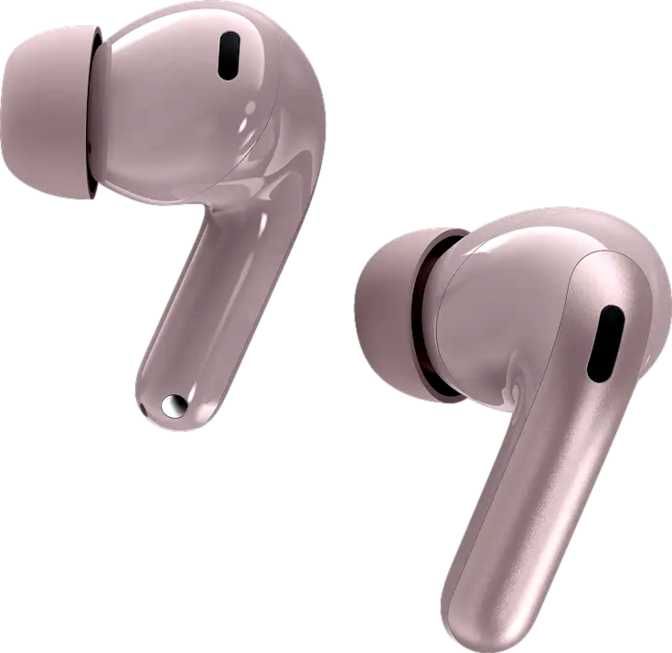
The Moto Buds 2 Plus takes a clean, no-nonsense approach to its physical design. The earbuds sit in-ear with a classic stem form factor — no wingtips are included, meaning fit comfort depends entirely on how well the standard silicone ear tips seal against your ear canal. If you have smaller or irregularly shaped ears, it is worth trying all included tip sizes before settling on a verdict.
There is no RGB lighting, no display on the case, and no gimmicky extras. Every omitted flourish is a cost redirected toward more substantive hardware — a discipline that shows up most clearly in the microphone array and driver size covered in the sections below.
The case is compact, and a carrying bag is included in the box — a small but welcome touch that signals Motorola is thinking about real-world use rather than just shelf appeal.
Durability for Everyday Life
The IP54 rating covers sweat, light rain, and the general abuse of an active lifestyle. These earbuds are not waterproof — submerging them or using them in heavy rain pushes beyond their designed tolerance. For gym sessions, commutes in drizzly weather, and everything short of a downpour, you are fully covered.
- Fit TypeIn-Ear (Stem)
- IP RatingIP54
- True WirelessYes
- Wingtips IncludedNo
- RGB LightingNo
- Carrying BagIncluded
Sound Quality: The Hardware Behind the Listening Experience
Driver Size and Frequency Response
The Moto Buds 2 Plus covers the full range of human hearing, and having a larger driver handling that range means the low end feels less strained. Expect a warmer, fuller sound signature rather than a thin or brittle one — especially noticeable with bass-forward music genres.
Driver size is one factor among many, but it is a meaningful specification that points toward a more satisfying listen at the price.
Active Noise Cancellation
ANC is present, and at this price tier, that is not a given. The system meaningfully reduces consistent background noise — HVAC hum, road noise during a commute, the ambient din of a café. It does not perform at the level of Sony's XM5 earbuds or the AirPods Pro. Think of it as effective filtering, not isolation.
Passive noise reduction from the physical in-ear seal works alongside the active system. The combination is genuinely useful for most everyday listening environments.
Spatial Audio Support
Spatial audio is supported, adding a sense of dimensional depth to compatible content. Music mixes, movies, and games encoded for spatial playback will sound more immersive — less like sound inside your skull, more like a soundscape around you.
Call Quality: Six Microphones Is a Serious Specification
Six microphones across both earbuds is a significant hardware investment for this category. Most earbuds at similar price points use two to four microphones. The larger array, paired with noise-canceling mic processing, is built to capture your voice clearly while filtering out surrounding noise.
This matters practically in several scenarios: video calls from a coffee shop, hands-free calls while walking on a busy street, or voice message recording in an open office. If you use earbuds heavily for communication — not just music — the microphone stack here is one of the strongest arguments in the product's favor.
Battery Life: How Far Will One Charge Take You?
The earbuds provide nine hours of playback on a single charge — enough for a full workday of music or a long-haul flight without touching the case. With ANC active, that figure drops somewhat, as noise cancellation draws additional power from the earbud cell.
The charging case extends total listening time to 31 hours before you need a wall outlet. For most people, that means several days of normal use between charges. Fast charging means a short time on charge can recover meaningful playback time when you are in a hurry.
Charging is handled via USB-C — the cable you already carry. A battery level indicator communicates remaining charge, so you are not caught off guard mid-listen.
- ConnectorUSB-C
- Fast ChargingYes
- Wireless ChargingNo
- Battery IndicatorYes
Connectivity: Bluetooth 6 and the Codec Question
Bluetooth 6: What the Version Number Means
The Moto Buds 2 Plus ships with Bluetooth 6, the newest generation of the wireless standard. In practical terms, this brings more efficient signal handling, lower latency in supported environments, and better coexistence with other wireless devices nearby. The maximum wireless range is 10 meters — standard for earbuds, covering a normal room without walls in between.
Two-Device Multipoint
Two-device multipoint support keeps these earbuds paired to two sources simultaneously — a phone and a laptop, for example — and switches between them when audio starts playing on either device. For anyone who bounces between work and personal devices throughout the day, this is one of the most practically useful features in the set.
Codec Support: LDHC Is the Headline
The Moto Buds 2 Plus supports LDHC (also known as HWA), AAC, and standard SBC. LDHC is a high-resolution wireless codec capable of transmitting audio at high bitrates — on paper, higher even than LDAC — but it requires a compatible source device to engage. If your phone supports LDHC, you can access higher-quality wireless audio than most earbuds in this range offer.
For most listeners streaming from a smartphone app, the codec situation won't be a meaningful limitation. For audio-focused buyers with specific codec preferences, confirm device compatibility before purchasing.
- Bluetooth VersionVersion 6
- Max Wireless Range10 meters
- Multipoint2 Devices
- NFC PairingNo
- Google Fast PairNo
- LDHC (HWA)Supported
- AACSupported
- LDACNot Available
- aptX (all variants)Not Available
- Bluetooth LE AudioNot Available
- AuracastNot Available
Features That Shape Daily Use
Who Should Buy the Moto Buds 2 Plus?
- Use earbuds heavily for calls, video meetings, and voice interaction — the 6-mic array is a standout for this use case.
- Connect to two devices simultaneously — a phone and a laptop — and want automatic switching throughout the day.
- Work out or commute in light weather and need solid sweat and splash resistance backed by a real IP rating.
- Own an LDHC-compatible Android device and want high-resolution wireless audio without paying a premium price.
- Want ANC and ambient sound mode without stepping into flagship-tier pricing.
- Need wireless charging for the case — this is a hard omission that affects daily routine convenience.
- Are invested in aptX or LDAC and want guaranteed high-resolution codec engagement with those specific standards.
- Rely on auto-pause when removing an earbud — that in-ear detection convenience is absent here.
- Want noise cancellation that competes with flagship-tier earbuds — the ANC here is capable but not class-leading.
How It Stacks Up Against the Competition
Head-to-head comparison of key features across wireless earbud categories at similar price levels.
| Feature | Moto Buds 2 Plus | Typical Mid-Range | Typical Budget |
|---|---|---|---|
| Active Noise Cancellation | Yes | Yes | Rarely |
| Microphone Count | 6 | 2 – 4 | 2 |
| Bluetooth Version | 6 | 5.3 – 5.4 | 5.2 – 5.3 |
| High-Res Audio Codec | LDHC | LDAC / aptX HD | SBC / AAC only |
| Multipoint Connection | 2 Devices | 1 – 2 Devices | Rarely |
| Wireless Case Charging | No | Sometimes | No |
| Auto-Pause (In-Ear Detection) | No | Often | Rarely |
| Earbud Battery Life | 9 hours | 6 – 8 hours | 5 – 7 hours |
| Total (Earbuds + Case) | 31 hours | 24 – 32 hours | 20 – 28 hours |
Honest Assessment: Strengths and Weaknesses
The Moto Buds 2 Plus makes smart bets. The decision to invest in a six-microphone array sets it apart in a crowded field — call quality is often the weakest link in budget earbuds, and Motorola has clearly prioritized this. The Bluetooth 6 chipset is forward-thinking hardware, and nine hours of single-charge listening is genuinely class-competitive.
LDHC codec support, when paired with a compatible source device, delivers audio quality the price tag doesn't advertise. The full suite of practical features — ANC, ambient mode, multipoint, notification reading, Find My Device — makes daily use feel cohesive rather than feature-stripped.
The product stumbles in smaller but real ways. No wireless charging for the case is a friction point that's hard to overlook in daily life. The absence of auto-pause means more manual interaction than you'd want from a product trying to be transparent in use.
The codec story is limiting if your device doesn't support LDHC — you're then using AAC, which is serviceable but no differentiator. The ANC performs honestly: it reduces environmental noise without pretending to do more than it can, but buyers upgrading from premium earbuds will notice the performance gap.
Frequently Asked Questions
The Motorola Moto Buds 2 Plus is a focused product with clear strengths and honest trade-offs. The microphone hardware is the standout specification — six noise-canceling microphones at this price tier is unusual and practically valuable for anyone who spends meaningful time on calls. The Bluetooth 6 chipset and LDHC support represent genuine forward investment, and the battery endurance is competitive with the best options at this level.
What holds it back from an unqualified recommendation is the absence of wireless case charging and auto-pause — both quality-of-life features that, once experienced, are difficult to give up. The codec library, while featuring a high-ceiling option in LDHC, is narrower than some competitors and doesn't engage on iPhone or most non-Huawei devices.
- Call-heavy and remote workers
- Dual-device users (phone + laptop)
- LDHC-compatible Android device owners
- Active users wanting ANC without premium pricing
- Wireless case charging is essential
- You rely on aptX or LDAC codecs
- Auto-pause is non-negotiable for your workflow
- You need flagship-level noise cancellation