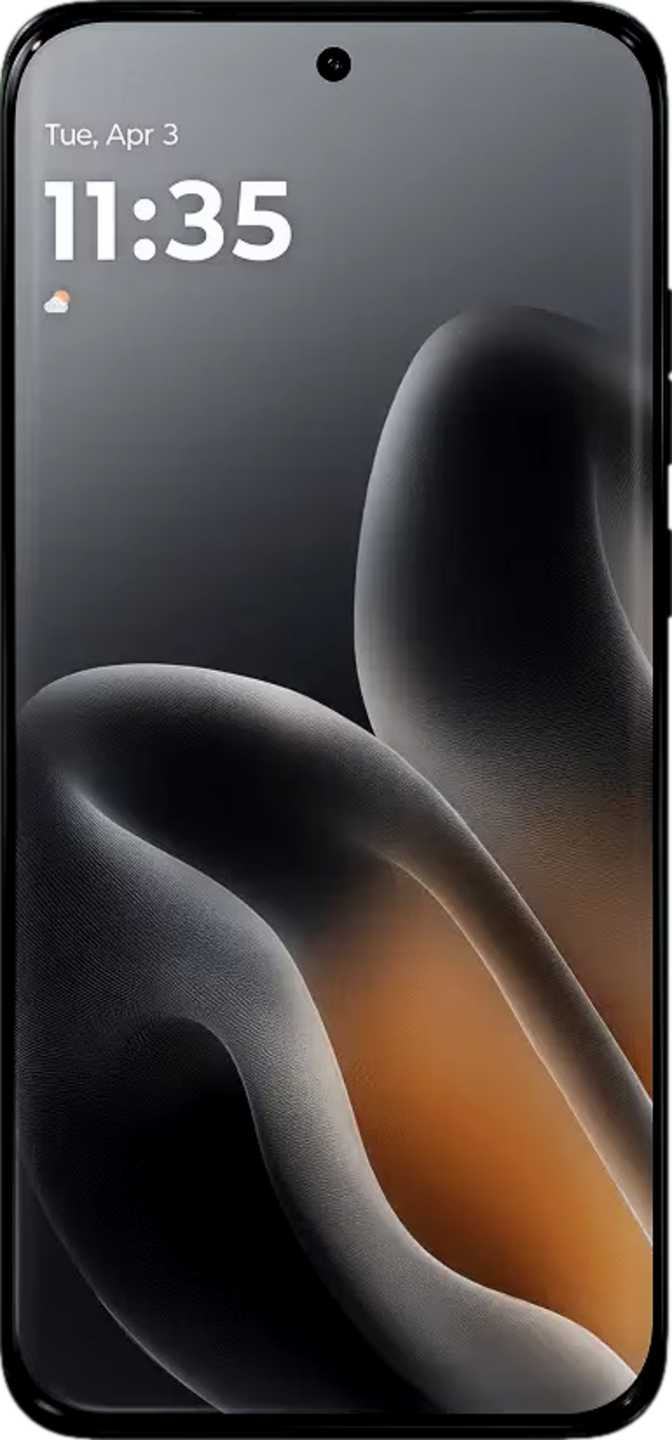
Motorola Edge 70 Fusion: Full Review of a Serious Mid-Range Contender
SmartphonesThe mid-range smartphone market is brutally competitive, and most phones in it ask you to make peace with at least one painful trade-off — a dim display, a mediocre battery, or a camera that disappoints in low light. The Motorola Edge 70 Fusion takes direct aim at that pattern. It arrives with a spec sheet that reads more like a flagship checklist: a massive battery, a sharp OLED panel running at a silky-smooth refresh rate, a capable processor built on modern manufacturing, and waterproofing that goes well beyond the usual rainy-day reassurance. Whether it actually delivers on that promise — and where it quietly pulls punches — is what this review works through.
At a Glance: Our Rating
Overall Score
Six Reasons This Phone Stands Out
Design and Build Quality
Physical Profile
At 7.2mm thick and 193 grams, the Edge 70 Fusion occupies a genuinely comfortable position in the hand. The weight is distributed well for a 6.78-inch device — you will not feel like you are holding a slab of concrete after twenty minutes of scrolling. The 75.6mm width keeps one-handed use plausible, even if stretching for the top corner requires a small shuffle of the grip.
Many phones in this price tier land above 200 grams and hover around 8mm in thickness. The Edge 70 Fusion is measurably slimmer and lighter than most of its direct competition — a real difference when the phone lives in a pocket all day.
The display is covered by Gorilla Glass 7i — Corning's latest generation engineered specifically for the mid-range tier. It is not sapphire crystal, but it is meaningfully tougher than the older Gorilla Glass 5 and Victus variants found on competing devices at this price.
| Height | 162.8 mm |
| Width | 75.6 mm |
| Thickness | 7.2 mm |
| Weight | 193 g |
| Display Glass | Gorilla Glass 7i |
| IP Rating | IP69 |
IP69: More Than Rainy-Day Reassurance
Most mid-range phones carry IP67 or IP68 — protection against still water at limited depth. The Edge 70 Fusion holds an IP69 rating, certified for high-pressure, high-temperature water jet resistance — the same standard applied to industrial equipment. Kitchen splashes, pool accidents, and heavy rain register no concern whatsoever at this protection level.
The Display: An OLED Screen That Earns Its Keep
The Edge 70 Fusion uses an OLED panel — not an LCD, and not a watered-down variant. OLED produces true blacks by switching individual pixels off completely, delivering contrast depth that LCD simply cannot replicate. Colours appear vivid without looking artificial, and dark scenes in video or games have genuine shadow detail. At 450 pixels per inch across a 6.78-inch panel, individual pixels are invisible at normal viewing distance — text is crisp for extended reading, and fine photo detail renders cleanly without aliasing.
True-black pixel-off technology with no backlight bleed — richer contrast than any LCD at this price
Ultra-smooth motion for scrolling, gaming, and UI — immediately noticeable and hard to go back from
Pixel-perfect sharpness across the full 6.78-inch surface — invisible pixel grid at normal distance
Dynamic scene-by-scene tone mapping for streaming — goes further than standard HDR10
Time and notifications visible at a glance without a full screen wake — at negligible battery cost
Corning's latest mid-range glass — measurably tougher than Glass 5 and Victus on competing phones
Performance: What the Snapdragon 7s Gen 3 Actually Delivers
The Processor in Context
The Snapdragon 7s Gen 3 is Qualcomm's upper mid-range platform, manufactured on a 4-nanometre process — the same fabrication scale used in flagship chips. Smaller transistors mean better computational efficiency and lower heat generation compared to older 6nm or 7nm chips still found in many competing phones.
The CPU is arranged in eight cores: one high-performance core running at 2.5GHz, three performance cores at 2.4GHz, and four efficiency cores at 1.8GHz. This big.LITTLE arrangement applies processing muscle where tasks demand it and dials back to quieter cores for light work like messaging or music playback — which is a significant reason this chip supports the battery life story.
12 gigabytes of DDR5 RAM running at 3,200MHz delivers a peak memory bandwidth of 25.6 GB/s. Apps stay loaded in memory longer, reducing reload times when multitasking, and the system remains responsive under heavier workloads. The 256GB of internal storage is fixed — there is no microSD slot.
Benchmark Results
| Test | Score | Context |
|---|---|---|
| Multi-Core | 3,239 | Upper Mid-Range |
| Single-Core | 1,162 | Upper Mid-Range |
| Test | Score | Context |
|---|---|---|
| Multi-Core | 3,242 | Upper Mid-Range |
| Single-Core | 893 | Upper Mid-Range |
| RAM | 12GB DDR5 |
| RAM Speed | 3,200 MHz |
| Peak Bandwidth | 25.6 GB/s |
| Internal Storage | 256GB (no expansion) |
Camera System: Strengths, Limits, and Real-World Results
| Specification | Main Lens — Primary | Main Lens — Wide | Front Camera |
|---|---|---|---|
| Resolution | 50 MP | 13 MP | 32 MP |
| Aperture | f/1.8 | f/2.2 | f/2.2 |
| Optical Stabilisation | |||
| Autofocus Type | Phase-Detection | — | Fixed Focus |
| Max Video | 4K / 30fps | — | — |
| Optical Zoom | None (0x) | — | — |
| Front Flash | — | — |
What the Main Camera Does Well
The 50-megapixel primary lens carries an f/1.8 aperture — wide enough to admit useful amounts of light in indoor and evening conditions. Optical Image Stabilisation compensates for hand movement during handheld shots and video, producing sharper results than digital stabilisation alone. Phase-detection autofocus locks on to subjects quickly and accurately — comparable to phones that cost significantly more.
The 13MP secondary wide lens expands the field of capture for landscapes, group shots, and tight interior spaces. Both lenses support a full manual control set including ISO, white balance, focus, and exposure — useful for anyone who wants to move beyond fully automatic shooting. Slow-motion, timelapse, panorama, continuous burst, and HDR modes are all present.
Honest Camera Limitations
The optical zoom value is 0x — any zoomed shot is achieved through digital cropping of the sensor rather than actual optical magnification. At modest zoom levels this is acceptable; pushing beyond 2-3x will show a visible quality drop. This is a consistent limitation across every mid-range phone that lacks a dedicated telephoto lens.
4K video tops out at 30 frames per second. HDR10 video recording is not supported, so footage does not carry the dynamic range metadata that HDR10+ stills can deliver. The front camera has no dedicated flash, so low-light selfies rely on ambient light or screen fill.
Battery Life: The Headline Feature That Justifies Itself
Cell Capacity
A 7,000mAh battery is roughly 40 percent larger than the segment norm of 4,500–5,000mAh. In practical terms, this translates to multi-day battery life under typical usage. A user who spends a couple of hours on social media, takes photos, listens to music during a commute, and takes calls throughout the day would realistically see the phone last two full days before needing a charge. Heavy users — streaming video, gaming frequently, or navigating — should still expect a comfortable single day with meaningful capacity remaining by bedtime.
For travellers, commuters, or anyone who routinely forgets to charge, this battery is a genuine quality-of-life upgrade. Battery anxiety — the low-level stress of watching percentage numbers drop — effectively disappears with this size of cell.
Recovers a large portion of the cell quickly. A full charge takes longer in absolute time than on a smaller battery — the trade-off is simply that you charge far less often.
Present at a price point where several competitors omit wireless charging entirely. Adequate for overnight desk or pad charging — not the fastest available, but the option is there.
The phone cannot charge other devices wirelessly from its own battery. Given the 7,000mAh capacity, reverse wireless charging would have been a useful addition — its absence is a missed opportunity.
Software: Android 16 with Motorola's Light Touch
The Edge 70 Fusion ships with Android 16. Motorola has historically maintained a near-stock Android experience with a modest layer of its own additions — no heavy skin, no aggressive bloatware, and a UI that stays close to the Android design language most users already know. The absence of a cluttered manufacturer overlay is itself a feature for buyers who have experienced Samsung One UI or Xiaomi HyperOS.
Privacy Controls
- Granular camera and microphone access permissions per app
- Clipboard activity warnings when apps access copied content
- Location privacy options with fine-grained app-level controls
- App tracking blocking to limit cross-app data sharing
- On-device machine learning — no cloud dependency for key features
- Battery health monitoring tool built into system settings
Everyday Usability
- Split-screen multitasking for running two apps simultaneously
- Picture-in-Picture mode for video while using other apps
- Dynamic theming — system accent colours adapt to your wallpaper
- Full-page scrolling screenshots capture entire pages at once
- Extra dim mode for low-light environments below the standard minimum brightness
- Offline voice recognition — works without an internet connection
Connectivity: What You Get and What You Don't
- 5GFull 5G support for next-generation mobile speeds wherever networks are available.
- Wi-Fi 6EAccess to the 6GHz band for higher throughput and reduced interference in dense network environments — only recently a mid-range inclusion.
- BT 6Bluetooth 6 brings improved connection stability and enhanced location accuracy over the more common version 5.3 found in competing phones.
- NFCEnables contactless payments via Google Pay and compatible banking apps — tap-to-pay works out of the box.
- eSIMDual SIM via physical nano-SIM plus eSIM — practical for international travel or keeping work and personal numbers separate.
- USB 2.0 data speeds — The USB-C port charges at full 68W but transfers files to a computer at old-standard speeds. A meaningful bottleneck for photographers and videographers pulling large libraries.
- No 3.5mm headphone jack — Wired listening requires USB-C headphones or an adapter. Not unusual at this price, but still worth noting.
- No LDAC or aptX HD — High-resolution Bluetooth audio codecs are absent. Everyday wireless listening is unaffected; audiophile-grade streaming is not possible.
- No satellite emergency SOS — Connectivity for emergency alerts in areas without cell coverage is absent, despite appearing in several competing phones at this price tier.
- No crash detection — The phone cannot automatically detect and report vehicle accidents — a safety feature spreading across competing mid-range devices.
Who Should Buy the Motorola Edge 70 Fusion?
- Battery life is your top priority. The 7,000mAh cell delivers multi-day endurance that puts it in a different category from the mid-range competition — not just slightly better, genuinely different.
- You work or spend time in wet conditions. Kitchens, outdoor sites, gym showers, poolside — IP69 protection removes nearly all water-damage worry at this price point.
- You want an OLED display with 144Hz and 450ppi pixel density without paying flagship prices. The screen experience here rivals phones in a higher bracket.
- A slim, light phone matters. At 7.2mm and 193g, it is measurably slimmer and lighter than most competitors in the 6.78-inch class.
- You prefer clean Android software. Motorola's near-stock approach is less cluttered and more responsive than the heavier manufacturer skins on competing devices.
- Camera versatility matters. No telephoto lens means zoom shots degrade rapidly beyond 2-3x. Photography enthusiasts who regularly shoot at distance will be underserved.
- You are an audiophile. Without LDAC or aptX HD, this phone cannot stream lossless-grade audio to compatible headphones. The gap matters to this specific audience.
- You frequently transfer large files by cable. USB 2.0 speeds will test your patience when moving large photo or video libraries from phone to computer.
- Safety features are a deciding factor. Crash detection and satellite emergency SOS — increasingly available in competing mid-range phones — are absent here.
- Maximum-settings gaming is the goal. The Snapdragon 7s Gen 3 handles most titles well but is not a gaming-tuned processor — demanding games at top settings will show its limits.
How It Compares to the Competition
The Edge 70 Fusion wins clearly on battery capacity, waterproofing level, and display smoothness. It yields ground on optical zoom capability and USB data speed. The inclusion of wireless charging at this price separates it from several competitors that omit it entirely.
| Feature | Edge 70 Fusion | Mid-Range Rival A | Mid-Range Rival B |
|---|---|---|---|
| Battery Capacity | 7,000 mAh | ~5,000 mAh | ~4,500 mAh |
| Display | 6.78” OLED, 144Hz, 450ppi | 6.7” OLED, 120Hz, 395ppi | 6.6” LCD, 90Hz, 400ppi |
| Water Resistance | IP69 | IP68 | IP54 / splash only |
| Wired Charging | 68W | 33W | 67W |
| Wireless Charging | 15W | 15W | |
| Chipset Process | 4nm Snapdragon 7s Gen 3 | 6nm Snapdragon 778G | 4nm Dimensity 7200 |
| Bluetooth Version | Version 6 | Version 5.3 | Version 5.3 |
| Wi-Fi Standard | Wi-Fi 6E | Wi-Fi 6 | Wi-Fi 6 |
| Optical Zoom | None | None | 2x optical |
| USB Data Speed | USB 2.0 | USB 2.0 | USB 3.2 |
Honest Strengths and Weaknesses
The Edge 70 Fusion makes unusually good choices in the areas that affect daily phone ownership most directly. The 7,000mAh cell effectively eliminates battery anxiety — a genuine psychological burden for many smartphone owners. The IP69 rating delivers protection that matches real-world accident scenarios better than IP68, and it is genuinely rare below flagship prices.
The 144Hz OLED display at 450ppi is a sensory experience that holds up against phones costing significantly more. Paired with HDR10+ and Always-On Display, it is one of the strongest screen packages in the mid-range. Motorola's HDR10+ implementation with dynamic metadata improves on standard HDR10 in a way that is visible during streaming.
The Snapdragon 7s Gen 3 on 4nm is well-chosen — efficient enough to support the battery endurance story and fast enough for every daily workload the target buyer actually runs. DDR5 RAM architecture adds responsiveness that keeps the system feeling current. Motorola's software restraint is a genuine plus, not a lack of features.
The camera system is capable but not characterful. The absence of a telephoto lens means zoom photography disappoints whenever you move beyond the primary focal length. No optical zoom is a common cost-cutting decision at this price, but it still limits real-world camera versatility in a way that cannot be recovered through software processing.
The USB 2.0 limitation on the Type-C port shows up every time you try to move a large file batch to a computer. It is a visible cost-cutting choice in an otherwise well-specced device. The lack of LDAC and aptX HD codec support quietly excludes a specific but vocal audience — audiophiles who have invested in compatible headphones will notice immediately.
The absence of crash detection and satellite emergency SOS is increasingly conspicuous as these features spread into competing mid-range pricing. These are safety features, not luxury additions, and their absence here is a gap worth weighing — particularly against rivals that include both.
Common Questions Before You Buy
Final Verdict
The Motorola Edge 70 Fusion is a phone built around a clear philosophy: own the aspects of daily smartphone life that create the most friction, and accept trade-offs in areas where most buyers rarely push the limits.
For the buyer it is designed for, that philosophy plays out exceptionally well. Battery anxiety is a genuine burden for many smartphone owners, and a 7,000mAh cell effectively eliminates it. The IP69 rating is legitimately rare below flagship prices and delivers protection that matches real-world accident scenarios better than IP68. The 144Hz OLED display at 450ppi holds its own against phones costing significantly more.
If you charge your phone every night out of habit but the habit occasionally fails you — if you use your phone in rain, at the gym, or near water — and if you spend meaningful time watching video or scrolling content, the Edge 70 Fusion covers your most frequent pain points with unusual competence for the price. If zoom photography, lossless Bluetooth audio, or rapid wired file transfers are central to your use, you will need to look elsewhere. For its intended audience, this is not just a solid choice — it is arguably the most battery-focused, durability-prioritising OLED phone available in the mid-range.