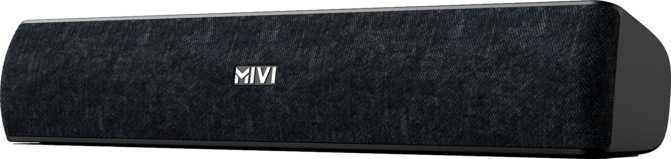
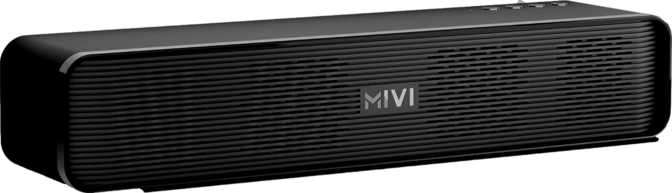
Mivi Fort Q80 Review: Premium Codecs, Smart Trade-offs
SoundbarsA 2.2-channel speaker system with aptX Adaptive Bluetooth, S/PDIF input, and a codec stack that outclasses most competitors at this price — built for listeners who want audio quality over smart-home features.
Editor's Rating
4.5 / 5
Audio-First Value Pick
What the Mivi Fort Q80 Is — and Why It Deserves Your Attention
The home audio market below a certain price threshold is littered with products that promise cinematic sound and deliver little more than amplified tinny noise. The Mivi Fort Q80 sits in a different corner of that market — one occupied by buyers who want genuine, room-filling audio without committing to the complexity or cost of a full home theater system.
With a 2.2-channel configuration, a surprisingly advanced Bluetooth codec stack, and a wired connection lineup that punches above its category expectations, the Fort Q80 makes a clear argument: you don't need streaming integrations or voice assistant tie-ins to have a genuinely great-sounding speaker setup.
Whether you're outfitting a bedroom, a mid-sized living room, or a study that doubles as an entertainment space, this unit deserves a close look before you make your decision.
Design and Build: Understated Hardware with a Purpose
The Fort Q80's physical design reflects a philosophy that is increasingly rare in budget-to-mid-range audio: put the engineering budget into the components, not the aesthetic theater. The control panel is mounted directly on the device itself — a practical choice that means you're never hunting for buried touch zones or guessing at capacitive button placement in the dark.
The remote control that ships in the box adds a layer of convenience for couch-use scenarios, though it runs on standard replaceable batteries rather than a rechargeable cell. That's a minor trade-off worth knowing upfront: you'll want to keep a spare set of batteries on hand rather than relying on a USB charging cycle to keep the remote functional.
The 2.2-channel system layout — two full-range drivers paired with two dedicated bass drivers — creates a physically wider soundstage than a conventional 2.0 or 2.1 setup. In practice, the low-frequency reproduction isn't handled by a single subwoofer unit fighting to distribute bass evenly across the room, but instead by a paired arrangement that delivers more consistent bass response regardless of where you're seated.
Sound Performance: What 2.2 Channels Actually Means at Listening Distance
The Channel Configuration Explained
For listeners unfamiliar with channel notation: "2.2" means two main stereo channels (left and right) plus two dedicated low-frequency drivers. This is distinct from the more common 2.1 setup, where a single subwoofer handles all bass reproduction. The dual-bass arrangement in the Fort Q80 contributes to a fuller, more balanced sound across a wider listening area — the sweet spot isn't limited to a single chair directly in front of the unit.
Dialogue, midrange instruments, and vocals land cleanly through the two main channels, while the dual bass drivers add weight and depth without overwhelming the midrange — assuming the EQ isn't pushed to extremes.
Codec Performance: Where the Fort Q80 Earns Its Credibility
The device supports three Bluetooth audio codecs — and this combination matters more than most buyers realize.
AAC
Apple Ecosystem
The native codec for iPhone, iPad, and Mac. Streaming from any Apple device gives you meaningfully better quality than the baseline codec many speakers fall back to.
aptX
Android / Laptop
Qualcomm's higher-fidelity codec found on most Android phones and laptops. Transmits at a higher bitrate, reducing compression artifacts and preserving texture in the high frequencies.
aptX Adaptive
Dynamic Bitrate
Dynamically adjusts bitrate in real time — scaling up in clean wireless environments, scaling down when interference is detected — all while keeping latency low enough for synchronized video playback.
The combination of all three codecs means the Fort Q80 is genuinely device-agnostic — it will extract the best available quality from whatever you connect to it, without requiring manual configuration.
Bluetooth 5.2: Stability Over Distance
The Fort Q80 uses Bluetooth 5.2, a version of the standard that improves connection stability, better handles interference from other wireless devices, and uses power more efficiently on the transmitting device. In practical terms: connections hold reliably across a room even with walls, furniture, and other wireless traffic in the environment. Dropouts and stuttering — common complaints with older Bluetooth implementations — are significantly reduced at this version.
Wired Connections: A Surprisingly Capable Backend
AUX Input
The 3.5mm auxiliary input accepts a wired audio signal from virtually any source — a TV's headphone output, a laptop, a gaming console's analog output, a vinyl turntable pre-amp, or an older media player. This connection bypasses Bluetooth entirely: zero latency, zero codec compression. For TV sets with a 3.5mm output, this is a clean and immediate solution.
S/PDIF Input
The presence of an S/PDIF port is notable for a product at this tier. It allows a digital audio signal to travel without any analog conversion at the source — the signal stays in the digital domain until the Fort Q80's own converter handles it.
Recommended connection path for TV users with a digital audio output.
What the Fort Q80 Does Not Do — and Why That Matters
Transparency about limitations is not a weakness of a review; it's the point of one. These are real constraints, not minor footnotes.
No Wi-Fi
No Spotify Connect, no AirPlay, no Chromecast. Cannot be added to a multi-room audio setup. Every source must connect via cable or Bluetooth from a nearby device.
No Voice Assistants
No Google Assistant, Alexa, or Siri compatibility. If you're building a smart home audio ecosystem, this unit won't participate.
No Smartphone App
No remote EQ, no custom sound profiles, no connection status from your phone. Control is limited to the physical panel and the included remote.
No HDMI ARC
No HDMI ports of any kind. TV setups that depend on HDMI-connected audio routing must use S/PDIF or AUX instead.
No Dolby Atmos or DTS:X
The Fort Q80 will play content encoded in these formats, but decodes only the stereo downmix — not the full spatial audio layer. Object-based surround sound is not processed or simulated.
Who Should Buy the Mivi Fort Q80
The Right Buyer Profile
- Apartment and bedroom users who want significantly better sound than their TV's built-in speakers, without the cable management burden of a full surround system
- Bluetooth-first listeners who stream from a phone or laptop and want the highest wireless audio quality their device's codec can deliver
- TV room upgrades where the television has a 3.5mm or S/PDIF output and the owner simply wants louder, richer sound than the TV itself produces
- Buyers who prefer hardware simplicity — people who don't want an app, don't want a Wi-Fi setup process, and just want to press a button and have it work
- aptX Adaptive device owners — if your phone or laptop supports aptX Adaptive, the Fort Q80 will perform noticeably above what most Bluetooth speakers in this range can offer
Who Should Look Elsewhere
- Buyers who need HDMI ARC for a clean TV connection path — the Fort Q80 simply doesn't offer it
- Anyone building a multi-room audio setup — without Wi-Fi, this unit can't participate in any networked ecosystem
- Listeners who specifically want Dolby Atmos or spatial audio processing — you'll need a certified Atmos soundbar for that experience
- Users who rely on voice assistant integration for daily control of their audio environment
Competitive Positioning: How the Fort Q80 Stacks Up
For a cleaner view of how the Fort Q80 compares against key decision points buyers consider in this segment, here's a structured comparison against the profile of typical alternatives at similar price levels.
| Feature | Mivi Fort Q80 | Typical Budget Soundbar | Typical Mid-Range Smart Speaker |
|---|---|---|---|
| Channel Config | 2.2 | 2.0 or 2.1 | 2.0 |
| Bluetooth Codec | aptX Adaptive + aptX + AAC | SBC or AAC only | SBC or AAC |
| Bluetooth Version | 5.2 | 5.0 | 5.0–5.1 |
| AUX Input | Varies | ||
| S/PDIF | |||
| Wi-Fi / Smart Features | |||
| Voice Assistant | |||
| HDMI ARC | Sometimes | ||
| Remote Control | Sometimes | ||
| Smartphone App |
The Fort Q80's strongest differentiation is its codec stack and dual-bass channel configuration — competing products at equivalent prices typically offer one or the other, rarely both.
Honest Assessment: Strengths and Weaknesses in Practice
The Mivi Fort Q80's audio credentials are genuinely strong for what it costs. The aptX Adaptive support alone puts it in a class of wireless audio fidelity that buyers usually have to pay significantly more to access. Pair that with the 2.2-channel layout and the S/PDIF input, and you have a unit that handles both Bluetooth streaming and TV-connected use with more capability than its category competitors typically offer.
Where It Excels
- aptX Adaptive is the headline differentiator — a genuine one, not a marketing claim. Buyers with compatible devices will notice the difference compared to competing units.
- The 2.2-channel layout delivers more spatially even bass than a single-sub design, creating a consistent listening experience across more of the room.
- S/PDIF input adds a meaningful wired connection path that most competing products in this range simply do not offer.
- Bluetooth 5.2 provides connection stability that older implementations can't match — fewer dropouts, better handling of a busy wireless environment.
Where It Falls Short
- The battery-powered remote is functional but unexceptional — the lack of a rechargeable cell is a minor but persistent inconvenience for daily use.
- No HDMI ARC creates a hard connectivity gap for buyers whose TVs route audio through HDMI — workarounds exist, but they add friction.
- The absence of any smart features creates a hard ceiling on integration with modern connected home setups — this unit operates as an island.
- Bass quality from the dual-driver arrangement depends on driver tuning that specs alone cannot confirm — real-world listening remains the definitive test.
Questions Real Buyers Ask Before Purchasing
These are the questions that appear most frequently when buyers research the Fort Q80 — answered directly.
Final Verdict
A Clear, Direct Purchase Recommendation
The Mivi Fort Q80 is a well-specified, audio-first speaker system that makes deliberate trade-offs and mostly earns them. If your use case fits within its wheelhouse — Bluetooth streaming from a phone or laptop, TV audio through a wired connection, and a preference for hardware that just works without setup complexity — it delivers considerably more for the price than most of its direct competitors.
The Standout Case
The aptX Adaptive codec support is the headline differentiator and a genuine one — not a marketing claim. Buyers with compatible devices will notice the difference. The 2.2-channel layout and S/PDIF input add further value that competitors at similar prices rarely match.
When to Look Elsewhere
The recommendation becomes less clear if you want HDMI ARC, smart home integration, or spatial audio processing. For those requirements, the Fort Q80 is simply the wrong product — and you should not compromise on fundamental connectivity needs to save money, because you'll spend more correcting it later.
Overall Score
Our Verdict
Confident Buy — For the Right User