Mivi Fort Q120 Soundbar Review: Better Bass, Smarter Bluetooth
SoundbarsThe soundbar market is packed with options that promise cinematic audio but deliver little more than slightly louder TV speakers. The Mivi Fort Q120 takes a different approach — it strips away smart features, streaming integrations, and voice assistant gimmicks to focus on one thing: delivering genuinely good sound through a clean, no-fuss setup. For a brand that has steadily carved its name into the Indian audio space, the Fort Q120 represents a clear statement of priorities. Whether those priorities match yours depends entirely on how you use your TV and what you actually need from a soundbar.
Best for everyday TV audio and Bluetooth music. Not suited for Atmos or smart home setups.
- 2.2 channel dual-bass output
- aptX Adaptive Bluetooth
- HDMI ARC — single cable setup
- No Dolby Atmos or DTS:X
- No Wi-Fi or voice assistants
Design and Build: Understated and Functional
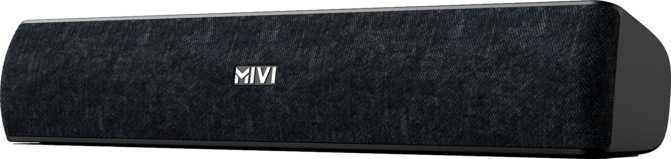
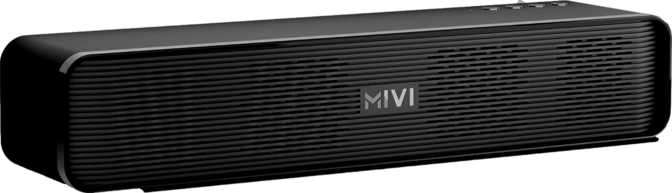
The Fort Q120 doesn't try to be the centerpiece of your entertainment setup. Its profile is clean and unobtrusive — the kind of soundbar that sits below your television and disappears into the furniture rather than demanding attention. The controls are placed directly on the unit itself, a practical choice: you always know where to find them, and they work even when the remote is missing.
The included remote is a traditional battery-powered unit. It doesn't recharge via USB, so keep a spare set of batteries nearby. This is a minor inconvenience rather than a dealbreaker, but it's worth knowing upfront. There is no companion smartphone app, which means no features locked behind software updates or Bluetooth app pairing. What you see is what you get — and for many buyers, that kind of simplicity is genuinely appealing.
The overall build quality sits comfortably in the value-to-mid tier. It feels purposeful rather than premium, which is consistent with its pricing and the brand's positioning in the market.
- On-device control panel for volume, input, and power
- Low-profile form factor designed to sit below most TVs
- Remote uses replaceable batteries — not USB rechargeable
- No companion smartphone app of any kind
The 2.2 Channel Configuration: More Bass, More Balance
Most entry-level soundbars ship as 2.0 or 2.1 systems — two full-range drivers with at most one subwoofer driver. The Fort Q120 goes a step further with a 2.2 channel layout, pairing two primary audio channels with two dedicated low-frequency drivers. In practical terms, this creates a wider, more anchored bass foundation — bass that feels distributed rather than localized.
Music
Stereo separation stays intact while the low-end fills out properly — making this noticeably better for music playback than most 2.1 soundbars at the same price.
TV & Film
Dialogue stays clear and centered while action sequences and deep sound effects carry genuine weight. Not just louder — fuller and better balanced.
Small Rooms
Two subwoofer drivers distribute bass more evenly across the listening area, avoiding the single-point "boxy" effect that budget 2.1 systems sometimes produce.
Audio Codecs: The aptX Adaptive Advantage
This is where the Fort Q120 earns a genuine point of distinction over competitors at similar price points. The soundbar supports three Bluetooth audio codecs — and the top-tier one is rarely found at this price.
The standard codec used by iPhones and most streaming apps. Wide compatibility, decent quality — works with virtually every modern phone.
Best for: iPhone users, standard streaming
More efficient compression than standard Bluetooth, meaningfully reducing the audio quality loss typical of wireless transmission. Primarily benefits Android users with compatible devices.
Best for: Android mid-range phones
Dynamically adjusts bitrate based on connection conditions — prioritizing quality when signal is strong, maintaining stability when interference is present. Supports high-resolution audio up to 24-bit depth.
Best for: Recent flagship Android devices
Connectivity: Wired Options Covered, Smart Features Absent
- HDMI ARC
- One cable connects soundbar to TV and passes audio both ways. Your TV remote handles volume. Note: this is ARC, not eARC — but that distinction has no practical impact given the supported audio formats.
- S/PDIF Output
- Passes digital audio downstream to a DAC, amplifier, or secondary speaker. Uncommon at this price point and adds meaningful flexibility for more complex setups.
- AUX Input (3.5mm)
- Covers older TVs, computers, and legacy devices. Any device with a headphone jack connects instantly.
- Bluetooth 5.1
- Stable across typical living room distances. Pairing is reliable and requires no app.
- No Wi-Fi
No OTA firmware updates, no multi-room audio, no direct app streaming. - No NFC Pairing
Tap-to-pair is absent, though standard Bluetooth pairing is straightforward. - No Microphone Input
No karaoke, no voice amplification — this is a pure audio playback device. - No Ethernet
Wired networking is not supported. The only wired inputs are HDMI, AUX, and S/PDIF.
What It Does Not Support — And Why That May Not Bother You
Several features common on premium soundbars are absent here. Each gap matters to a different type of buyer — knowing which ones apply to you is the most important part of this decision.
No Dolby Atmos or DTS:X
These object-based surround formats require upward-firing drivers and a minimum 2.1.2 channel configuration to be meaningful. The Fort Q120 plays Atmos-tagged content in standard stereo — expected behavior for a front-facing 2.2 soundbar, but a real limitation for home theater enthusiasts.
No Dolby Digital Decoding
The soundbar cannot decode standard Dolby Digital or Dolby Digital Plus — the formats used in most streaming services and broadcast TV. Audio will be downmixed to stereo by the soundbar or source device. Subtle for casual viewing; significant if multichannel audio matters to you.
No Voice Assistants
Google Assistant, Amazon Alexa, Siri, and Apple HomeKit are all absent. You cannot speak to the Fort Q120. Smart home integration is not possible. This is a deliberate product decision — and the right one for buyers who don't need it.
No Streaming App Integration
AirPlay, Chromecast, and Spotify Connect are all absent. You cannot stream directly from an app without Bluetooth pairing. For Apple Music, Spotify, or YouTube Music users accustomed to direct-to-speaker streaming, Bluetooth is the only wireless audio path available.
Real-World Usage: Who This Soundbar Is and Is Not For
- Casual TV watchers who want noticeably better audio than built-in TV speakers without the complexity of a multi-component system.
- Bluetooth music listeners using a recent Android phone with aptX or aptX Adaptive — the codec quality difference is real and audible on compatible devices.
- Smaller room setups where a full surround system is overkill and front-facing stereo covers the entire listening area.
- Simplicity seekers — no app, no Wi-Fi config, no voice setup. Plug in via HDMI ARC, pair your phone, play.
- Budget-conscious buyers who want a 2.2 channel setup with premium Bluetooth codec support without paying for smart features they won't use.
- Home theater enthusiasts who want Dolby Atmos or DTS:X processing for an immersive, spatial audio experience.
- Apple ecosystem users who want AirPlay 2 to stream wirelessly from iPhone or Mac without the friction of Bluetooth pairing.
- Smart home users who want Alexa, Google Assistant, or HomeKit integration for hands-free voice control.
- Multi-room audio setups — without Wi-Fi, this soundbar cannot participate in a synchronized multi-room system.
- Karaoke or voice amplification — there is no microphone input of any kind on this unit.
How It Compares to the Alternatives
The Fort Q120 occupies a specific and deliberate niche. It offers better Bluetooth codec support and a superior channel configuration than most budget soundbars, while trading away the smart platform ecosystem that mid-range competitors increasingly offer.
| Feature | Mivi Fort Q120 | Typical Budget 2.1 Soundbar | Mid-Range Smart Soundbar |
|---|---|---|---|
| Channel Config | 2.2 | 2.1 | 2.0 or 2.1 |
| aptX Adaptive | Varies | ||
| HDMI ARC | Sometimes | ||
| Wi-Fi / App Streaming | |||
| Dolby Atmos | Often Yes | ||
| Voice Assistant | Often Yes | ||
| S/PDIF Output | Rarely | Varies | |
| Setup Complexity | Very Low | Low | Moderate |
Honest Assessment: Strengths and Weaknesses
Where It Delivers
The 2.2 configuration delivers bass performance that most similarly priced soundbars can't match. Two subwoofer drivers move more air more evenly than one — the result is bass that feels distributed across the room rather than localized to a single point. That distinction is especially clear with music, where the stereo image stays intact and the low-end fills out without overwhelming it.
The aptX Adaptive codec support is the kind of specification you'd normally expect to pay more for. Finding it at this price point is a genuine differentiator — not a marketing point. For Android users with compatible devices, the improvement in Bluetooth audio quality over standard codecs is audible, particularly in music with dynamic range.
Simplicity is also, genuinely, a strength. There's no app to download, no Wi-Fi password to enter, no firmware issues to worry about. Connect it via HDMI ARC, pair your phone, and it works. In an era of feature creep and mandatory app registrations, that reliability has real value.
Where It Falls Short
The lack of Dolby Digital decoding is a meaningful limitation for streaming service users. Netflix, Amazon Prime Video, and broadcast TV transmit multichannel audio that the Fort Q120 cannot decode — you'll hear stereo from sources sending surround. For background viewing, this is barely noticeable. For film nights where audio is half the experience, it starts to matter.
The non-rechargeable remote is a small but recurring inconvenience — the kind you'll notice at an inconvenient moment. More significantly, the absence of any EQ or sound mode adjustment means you accept the soundbar's factory tuning as permanent. If the default frequency response doesn't suit your room or taste, there's no software path to adjust it.
The HDMI ARC connection (rather than eARC) is a minor point given the limited codec support, but buyers with premium 4K television setups may find it less future-ready than competitors offering eARC at a similar price.
Frequently Asked Questions
Final Verdict: Who Should Buy the Mivi Fort Q120
The Mivi Fort Q120 is a focused product that does what it sets out to do well. If you want meaningfully better TV audio without navigating a smart ecosystem, and if you listen to music over Bluetooth from an Android device, this soundbar punches above its category norms. The 2.2 channel configuration and aptX Adaptive support are the two specifications that most directly justify the purchase over cheaper alternatives.
For buyers whose checklist includes Dolby Atmos, voice assistant control, AirPlay, or Wi-Fi streaming, those features require a different class of hardware entirely. This is not the right product for that use case — and it doesn't try to be.
...want better everyday TV sound and Bluetooth music quality, value zero setup friction, and have no use for smart home features or spatial audio.
...want Dolby Atmos, voice assistant control, AirPlay, Chromecast, or Wi-Fi streaming built in.
Best for casual TV watchers and Android Bluetooth audio users