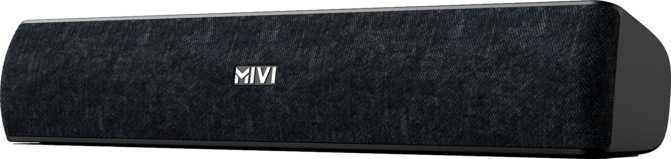
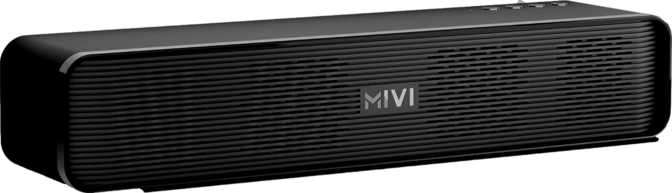
Mivi Fort Q60 Review: An Honest Look at This Audio-First Speaker
SoundbarsMost of what gets marketed as "premium" in the speaker category these days means smart home features, app ecosystems, and voice assistant hookups. The Mivi Fort Q60 ignores all of that. It is a 2.2 channel Bluetooth speaker system built on a different set of priorities: wireless audio fidelity, a hardware-forward speaker configuration, and enough connectivity options to fit into genuinely varied setups, without any of the platform dependencies that force a particular phone, subscription, or home ecosystem.
Whether that sounds liberating or limiting tells you a great deal about whether the Fort Q60 is the right choice for you. This review covers exactly what the hardware delivers, who it serves well, and where it falls short.
- 2.2 Channel Configuration — Dual Subwoofers
- aptX Adaptive + aptX + AAC Codec Support
- Bluetooth 5 Wireless
- 3.5mm Analog AUX Input
- S/PDIF Digital Output Port
- Physical Remote Control Included
- On-Device Control Panel
- No Wi-Fi or Smart Platform Integration
- No HDMI Connectivity
- No Dedicated Smartphone App
A 2.2 Channel Configuration: What Two Subwoofers Actually Change
Understanding what sets the Fort Q60 apart starts with its speaker layout and how a dual-subwoofer design changes what you actually hear in a real room.
The "2.2" designation refers to a stereo pair of main speakers handling midrange and treble, working alongside two separate subwoofer units responsible for bass reproduction. This differs from the far more common 2.1 configuration — stereo mains plus a single subwoofer — in ways that are audible and not merely theoretical.
Even Bass Distribution
A single subwoofer produces bass that tends to pool — powerful in some listening positions and thin in others, depending on how low frequencies interact with the room's walls and dimensions. Two subwoofers placed at different points disrupt this pooling effect. The bass response becomes more consistent across the entire listening area, so the system sounds fuller regardless of where you are sitting.
Lower Strain at Higher Volumes
Each subwoofer in a 2.2 system handles half the total bass workload. At higher listening levels, this means each unit operates below its physical limits, which generally produces cleaner, less compressed low-frequency output than a single subwoofer pushed to match the same total volume.
For listeners who regularly play music genres that live in the lower frequencies — hip-hop, electronic, and R&B — or who watch content where soundtrack impact matters, these distinctions are audible and meaningful.
Bluetooth Audio Quality: Where the Fort Q60 Makes Its Strongest Case
The Fort Q60 supports three Bluetooth audio codecs. Their combined presence represents genuine engineering intent, not checkbox specification filling.
aptX Adaptive
aptX Adaptive is Qualcomm's most advanced Bluetooth audio codec. Where standard Bluetooth audio uses a fixed compression rate that sacrifices detail to maintain a stable stream, aptX Adaptive continuously adjusts its transmission rate based on wireless conditions.
In a stable environment with low interference, it transmits audio at quality levels high enough that the gap between Bluetooth playback and a physical wired connection becomes difficult to detect. For listeners using lossless streaming services or local high-resolution audio files, the Fort Q60 does not bottleneck the quality you are already paying for at the streaming tier.
AAC Codec
AAC support covers Apple device users effectively. AAC performs considerably better than SBC — the standard fallback codec when nothing else negotiates — delivering improved clarity and stereo imaging over the same Bluetooth connection.
For iPhone users, this represents a meaningful quality step above a typical Bluetooth speaker's fallback behavior. Practical wireless audio quality on Apple hardware is genuinely good, even without access to aptX Adaptive.
Bluetooth 5
The wireless connection itself runs on the fifth generation of the Bluetooth standard, which matters independently of codec support. The most practical benefit is connection stability at greater distances — moving between adjacent rooms no longer causes audio to drop out the way earlier Bluetooth implementations often did.
Bluetooth 5 also handles interference from competing wireless devices more competently, which is relevant in living rooms where multiple phones, tablets, and other connected devices share the same frequency range.
Connecting the Fort Q60 to Your Existing Setup
Bluetooth is the primary connection, but two additional ports expand the Fort Q60's usefulness well beyond wireless-only operation.
The Analog AUX Input
A standard 3.5mm analog input handles wired connections from any device with a headphone output. Laptops, portable media players, turntables with outboard phono preamps, and older devices without Bluetooth all connect directly. There is no pairing process, no codec negotiation, and no latency — just a physical cable delivering audio immediately.
The S/PDIF Digital Output
This is the connectivity specification that most distinguishes the Fort Q60 from the average consumer speaker system. An S/PDIF output port lets the Fort Q60 send its audio signal digitally to an external device — a standalone DAC, a home theater receiver, or an amplifier with a compatible digital input.
Most consumer products use an S/PDIF input to receive audio from a television, not an output to send audio onward. For buyers who want the Fort Q60 to function as a source component in a larger audio chain, this port provides a clean digital handoff without the signal degradation that analog connections accumulate.
What Is Missing from the Connectivity Spec
No HDMI
No ARC or eARC support. TV integration requires Bluetooth or a 3.5mm cable, not the one-cable HDMI solution modern soundbars offer.
No Wi-Fi
Eliminates Spotify Connect, Chromecast built-in, AirPlay, and all network-based streaming platforms entirely.
No NFC Pairing
Bluetooth setup follows the standard multi-step pairing process. Tap-to-pair convenience is not available on the Fort Q60.
No Microphone
No speakerphone, no voice commands, and no interaction with Alexa, Google Assistant, or Siri in any form.
Physical Controls and Daily Operation
The Fort Q60 is controlled through buttons on the unit itself and a bundled remote — a conventional approach that prioritizes reliability over software dependency.
The on-device control panel sits directly on the speaker, handling essential functions without requiring anything else in hand. For moments when you are across the room or simply do not want to stand up, the included remote provides the same control at a distance.
The remote runs on replaceable batteries rather than a built-in rechargeable cell. It means keeping batteries on hand, but it also means the remote remains functional indefinitely. A sealed internal battery ages out of reliability over a few years; replaceable batteries do not have that failure mode.
There is no dedicated smartphone app for the Fort Q60. Source switching, volume, and playback control operate entirely through physical hardware. For a significant number of buyers this is genuinely convenient — no account creation, no app permissions to manage, no updates to install. For those accustomed to EQ adjustments, sleep timers, or software-based remote control, this absence will feel like a real constraint.
Control Method Summary
- On-device button panel for direct control
- Bundled remote included for distance control
- Replaceable batteries — no charging required
- No smartphone app or app-based control
- No EQ adjustment or sound tuning software
- No voice command support of any kind
Who the Mivi Fort Q60 Is Built For
The Fort Q60 fits a specific listener profile well. Being direct about who that is saves time on both sides of the purchase decision.
-
Android Users with aptX Adaptive-Compatible Phones
Those who stream high-quality audio and want a speaker that can actually deliver it wirelessly — the use case where the Fort Q60 performs at full capability.
-
Listeners Who Prioritize Consistent Bass Across a Room
The dual subwoofer setup addresses uneven bass distribution in a way that single-sub competitors in this category do not.
-
Buyers Who Want Audio Hardware Without Ecosystem Lock-In
No app, no platform dependency, no connected device to manage. Press a button, hear music.
-
Those with Genuinely Varied Source Types
Bluetooth for phones, AUX for a laptop or turntable, S/PDIF out for routing into an external amplifier or DAC.
-
Television-Centric Setups
Without HDMI, connecting a modern TV means working around an absent feature. If TV audio is the primary use case, this is not the right tool for that job.
-
Smart Home Households
No voice control, no Wi-Fi, no integration with Google, Amazon, or Apple ecosystems. The Fort Q60 does not participate in any of those platforms.
-
iPhone-Primary Users Wanting Maximum Wireless Quality
AAC works well, but aptX Adaptive — one of the main reasons to choose this system — is inaccessible on Apple hardware.
-
Listeners Who Depend on App-Based EQ Tuning
Hardware-only controls mean what you hear is what you get, with no software layer available for any kind of adjustment.
How the Fort Q60 Compares to the Category
The speaker market at this level divides into two distinct groups: products competing on smart platform features, and products competing on audio hardware quality. These two groups rarely overlap effectively.
Smart-feature-focused systems typically offer Spotify Connect, AirPlay or Chromecast integration, multi-room grouping, and app control. Their Bluetooth codec support is often SBC-only or AAC-only. Audio-hardware-focused systems invest in codec support and speaker configuration. The Fort Q60 belongs firmly in the second group, and within it, aptX Adaptive support and the 2.2 channel configuration represent genuine differentiation from the typical 2.1 field.
| Capability | Mivi Fort Q60 | Smart-Feature-Focused | Audio-Hardware-Focused |
|---|---|---|---|
| Channel Configuration | 2.2 — Dual Subwoofers | 2.0 or 2.1 | 2.1 — Single Sub |
| Bluetooth Codec Ceiling | aptX Adaptive | AAC or SBC | aptX or AAC |
| Wi-Fi / Platform Integration | Limited or None | ||
| HDMI Connectivity | Sometimes | ||
| S/PDIF Output | Rarely | ||
| Physical Remote Included | Sometimes | ||
| Operates Without App | |||
| Category columns reflect general market patterns across competing product types, not specifications of specific products. | |||
Honest Assessment: Where It Excels and Where It Falls Short
A balanced look at what the Fort Q60 genuinely delivers and the fixed hardware limitations that will matter to certain buyers.
The Fort Q60's most meaningful strengths are structural — built into the hardware rather than dependent on software support or ecosystem partnerships. aptX Adaptive support will remain relevant as long as Bluetooth is the dominant wireless audio standard. The 2.2 channel configuration delivers its acoustic advantages regardless of firmware versions. The S/PDIF output provides flexibility for setups that evolve over time. None of these benefits erode.
The absence of a companion app, for the right buyer, is also a strength framed as a missing feature. Hardware-controlled audio — where pressing a button does exactly what the button says, every time, without needing a phone nearby — offers a kind of reliability that app-dependent systems cannot replicate. Buyers who have spent time with this approach often come to prefer it.
The weaknesses are equally structural, and that matters. No HDMI is permanent — the port either exists or it does not. No Wi-Fi means the Fort Q60 will always be outside any home network audio ecosystem. These are not gaps a software update can address, and buyers should weigh them as fixed hardware decisions rather than features that might arrive later.
The absence of a companion app cuts both ways. Buyers moving from app-dependent systems will feel the reduction in control options — no EQ, no sound modes, no advanced configuration. Both reactions are reasonable responses to the same reality.
The battery-powered remote is a small inconvenience that reflects where design priorities were set. It is a workable situation, but it is still a situation worth noting before purchase.
Common Questions Before Purchasing
Real answers to the questions buyers search for most before committing to the Mivi Fort Q60.
The Mivi Fort Q60 is a product with a clear, specific purpose: high-quality wireless audio, dual-subwoofer bass coverage, and multi-source connectivity — without smart home infrastructure, Wi-Fi dependence, or app requirements.
Android users with compatible phones who stream music seriously and want a speaker that can match the quality of what they are streaming will find the Fort Q60 directly addresses that need. The aptX Adaptive support and 2.2 configuration provide hardware capabilities that are less common at this positioning than their value justifies.
If HDMI connectivity, Wi-Fi-based streaming, or integration with smart home ecosystems are non-negotiable for your setup, the Fort Q60 is not designed for those requirements — and there are products specifically built for each of those use cases that will serve you better. The Fort Q60 earns its recommendation for audio quality and speaker hardware. It does not earn it as a connected-home device, and buyers should make that distinction before purchasing.
Overall Verdict
out of 10