Mivi Fort Q18 Review: Compact Stereo Speaker With aptX Adaptive
SoundbarsQuick Verdict
What the Mivi Fort Q18 Actually Is
The Mivi Fort Q18 sits in a crowded space: the affordable Bluetooth speaker market where most products promise a lot and deliver average. Mivi, a homegrown Indian audio brand, has built a reputation on squeezing respectable hardware into budget-conscious packages. The Fort Q18 follows that pattern — but a close look at what it includes, and what it leaves out, tells a more specific story about exactly who this speaker is built for.
This is not a smart speaker. It will not respond to your voice, sync with your smart home, or stream from the cloud. What it does offer is a physically compact, wirelessly capable stereo speaker with a codec lineup that punches well above its price point.
The Short Version
True stereo output and aptX Adaptive wireless codec support in a compact bar speaker form factor. Clean, simple, and focused on audio quality rather than smart features.
Design and Build: Compact Enough to Travel, Solid Enough to Stay
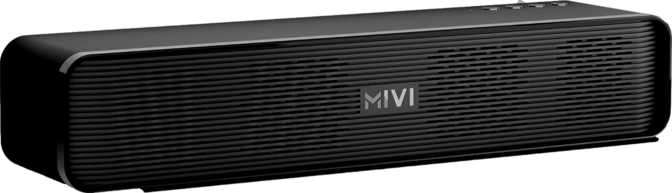
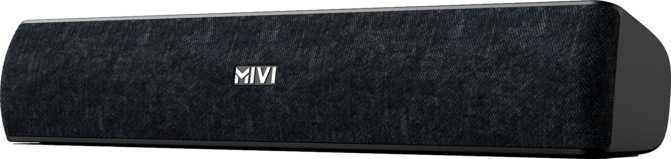
At 348mm wide and just 63mm tall, the Fort Q18 takes the form of a compact bar speaker — wide enough to create genuine stereo separation, slim enough to sit on a desk, shelf, or nightstand without dominating the surface. The 70mm depth keeps it from protruding awkwardly when placed against a wall.
The weight sits in an interesting middle ground. It is light enough to move between rooms without effort, but substantial enough that it does not feel like it will tip over or skitter across a surface when the bass hits. Most single-driver portable speakers in this class come in under 500g — the Fort Q18's added mass is a deliberate trade-off in favor of build density and driver housing.
The enclosure volume — roughly 1.5 liters of internal space — is meaningfully larger than what you find in purely pocket-portable options. That matters acoustically: more cabinet volume generally allows for deeper low-frequency extension without relying entirely on digital processing to fake it.
Controls are placed directly on the unit. There is no remote, and there is no companion smartphone app. For a speaker in this category, that simplicity is a reasonable call — fewer points of failure, nothing to charge separately, and no app to install and eventually forget.
- Width348 mm
- Height63 mm
- Depth70 mm
- Weight832 g
- Enclosure Volume~1.5 L
- ControlsOn-Device Panel
- Remote ControlNone
Audio Performance: The Codec Story Is the Real Headline
Stereo Output That Actually Separates
The Fort Q18 produces true left and right audio channels. This sounds obvious until you compare it to the enormous number of single-driver cylindrical speakers that fake stereo through phase tricks. A dedicated two-driver stereo arrangement at this size produces a soundstage with actual width — instruments and vocals sit in distinct positions rather than blending into a central mass.
aptX Adaptive: The Highest-Quality Bluetooth Audio at This Price Key Feature
The codec support here is the specification that deserves the most attention. The Fort Q18 supports aptX Adaptive — a codec that automatically adjusts its bitrate depending on connection stability. In practical terms: when your phone is close and the signal is clean, you get near-lossless wireless audio quality. When there is interference, the codec degrades gracefully rather than dropping out abruptly.
aptX Adaptive supersedes standard aptX and aptX HD. The Fort Q18 also supports standard aptX for backward compatibility with older Android phones, and AAC support rounds out the picture for iPhone users — since iOS devices use AAC as their primary high-quality Bluetooth codec.
Auto-adjusting bitrate for the best possible wireless audio your connection allows. The highest tier of Qualcomm's Bluetooth audio stack — and the Fort Q18's standout feature.
Backward-compatible fallback ensuring older Android devices that lack Adaptive still get above-average wireless audio quality rather than falling to the SBC default.
Full-quality Bluetooth audio for iPhone and iPad users. Apple devices prefer AAC over SBC, and the Fort Q18 supports it natively without compromise.
Bluetooth 5.1: Connection Quality Beyond Just Range
Bluetooth 5.1 is not just about range — though the improvement over older 4.x versions is a practical benefit in larger rooms. The more relevant advancement is reduced interference in congested wireless environments. Pairing is faster and connections are more stable in real-world conditions compared to older Bluetooth generations.
The AUX Input: An Underrated Inclusion
The 3.5mm AUX input extends the speaker's usefulness significantly. Plug in a laptop, a TV, a record player with a preamp, or any audio source that does not speak Bluetooth — and the Fort Q18 becomes a wired speaker with no latency, no codec concerns, and universal compatibility going back decades. For users who want a desktop audio upgrade for a computer without Bluetooth, this single input alone justifies serious consideration.
What the Fort Q18 Does Not Do
These are not flaws — they are design choices that define who this speaker is for. Read them before purchasing.
-
No Wi-Fi ConnectivityNo network streaming, no multi-room audio, and no cloud integration. This is purely a local-connection speaker.
-
No Voice Assistant SupportGoogle Assistant, Alexa, and Siri are all absent. Cannot set timers or control smart home devices.
-
No NFC PairingStandard Bluetooth pairing only — hold the button, find it in your device's Bluetooth menu.
-
No Dolby Atmos or DTS:XSpatial audio formats are not supported — expected at this size and price tier.
-
No Dedicated App or EQNo equalization, no firmware updates via app, no preset management. Factory tuning is all you get.
-
No MicrophoneCannot be used for hands-free calls or speakerphone conversations at all.
Real-World Usage: Who Gets the Most from the Fort Q18
- The Bedroom and Desktop User
Place it on a desk or nightstand, connect to a phone or laptop, and get clean stereo sound in a personal listening space — no sprawling speaker setup required.
- The Casual Party Host on a Budget
For small gatherings in a single room — dorm, studio apartment, or balcony — the Fort Q18 provides volume and stereo separation that a single-driver speaker simply cannot match.
- The Intentional Traveler
Not a backpacking speaker, but an ideal suitcase companion — hotel rooms, beach houses, and anywhere you want better audio than a phone speaker without hauling dedicated equipment.
- Hands-Free Calling
There is no microphone. Calls will play through the speaker, but you cannot speak through the unit.
- Smart Home Integration
No Wi-Fi, no Alexa, no Google Home. The Fort Q18 cannot join a connected home ecosystem.
- Spotify Connect or Cloud Streaming
Cannot stream directly from apps to the speaker. A phone or device must always be in the middle.
- Rugged Outdoor Audio
No water or dust resistance rating mentioned. A ruggedized IP-rated portable speaker is a safer outdoor choice.
Competitive Positioning: Where the Fort Q18 Sits in the Market
The Fort Q18's real competition is other compact stereo Bluetooth bars in the same price band. Its differentiator within that group is aptX Adaptive support — which most competitors at this price simply do not offer.
| Feature | Mivi Fort Q18 | Typical Budget Single-Driver | Mid-Range Wi-Fi Smart Speaker |
|---|---|---|---|
| Stereo Channels | 2 — True Stereo | 1 (Mono / Virtual) | 2 (Often) |
| aptX Adaptive | Wi-Fi Audio Instead | ||
| AUX Input | Sometimes | ||
| Bluetooth Version | 5.1 | 5.0 Typically | 4.2 – 5.0 |
| Voice Assistant | |||
| Wi-Fi Streaming | |||
| App / EQ Control | Sometimes | ||
| Portability | Medium | High | Low |
Strengths and Weaknesses: An Honest Assessment
The Fort Q18's biggest genuine strength is its audio codec implementation. aptX Adaptive at this price point is unusual — most budget speakers top out at standard aptX or AAC. The inclusion of Adaptive means the speaker is genuinely forward-compatible: as more phones ship with Adaptive support, the Fort Q18 benefits without any hardware change.
The true two-channel stereo output is the second standout quality. For personal listening at desk distance, the driver spacing produces a noticeably wider image than compact mono or pseudo-stereo alternatives.
The AUX input is a quietly valuable addition. Wired fallback is reliable, universal, and zero-latency — useful in situations where Bluetooth is inconvenient or unavailable.
Where the speaker shows its budget origins is in the absence of a companion app. With no EQ control, users cannot tune the sound to their preference or room acoustics. The factory tuning is all you get — for better or worse.
The lack of voice-control support or wireless ecosystem integration puts a ceiling on how deeply the Fort Q18 can embed into a modern connected home. It is a speaker you use independently, not one that participates in a larger system.
The 832-gram weight, while not prohibitive, means this is not a speaker you drop into a jacket pocket or small daypack. It commits you to a bag, which narrows its spontaneous portability.
Answers to Common Buyer Questions
Final Verdict: A Focused Speaker for a Specific Buyer
The Mivi Fort Q18 is a deliberately narrow product — and that is not a criticism. It does a specific job well: deliver two-channel wireless audio with a codec stack that most competitors at this price ignore.
If you want a compact stereo speaker for personal listening, desk use, or small-room enjoyment — and you do not need voice assistants, smart home integration, or app-based control — the Fort Q18 represents strong value. The aptX Adaptive support alone makes it technically superior to most budget alternatives on pure audio transmission quality.
If your priorities include speakerphone use, ecosystem integration, or truly pocketable portability, this is the wrong product regardless of price. Those are architectural limitations, not fixable with a firmware update. For the buyer who simply wants to hear music well from a small, honest stereo speaker, the Fort Q18 makes a compelling and unambiguous case for itself.
Buy This If:
- You want true stereo from a compact form factor
- Your Android phone supports aptX Adaptive
- You need a wired AUX fallback for other sources
- Simple, app-free operation suits your lifestyle
Skip It If:
- Smart home, speakerphone, or Spotify Connect matter to you
- You need truly pocketable outdoor portability
- EQ customization via an app is non-negotiable