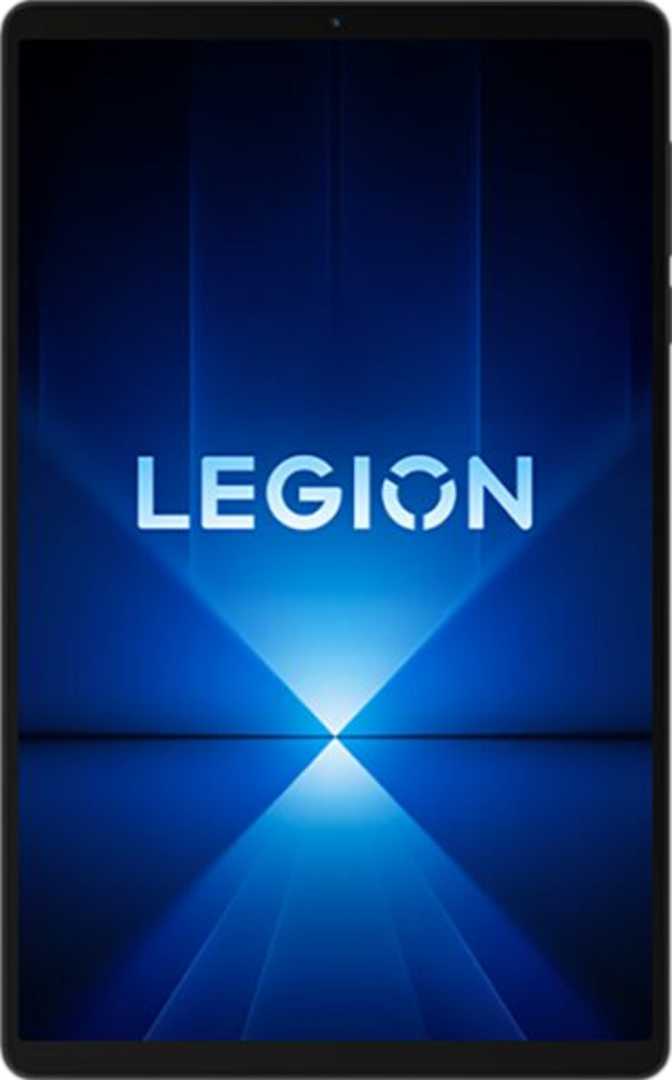
Lenovo Legion Y700 Gen 5 Review: The Compact Gaming Tablet Tested
TabletsA Gaming Tablet That Fits in One Hand — But Punches Like a Desktop
The compact gaming tablet is a rare breed. Most manufacturers default to 10-inch or larger screens when targeting serious players, leaving a genuine gap for anyone who wants console-level performance in something that fits inside a jacket pocket. The Lenovo Legion Y700 Gen 5 exists precisely to fill that gap — and on paper, it fills it aggressively.
What makes this device interesting is the combination it attempts: an 8.8-inch footprint paired with specifications that would embarrass most full-sized Android tablets released in the past two years. Whether that combination holds up under scrutiny, and whether the inevitable trade-offs are acceptable ones, is exactly what this review addresses.
Quick Verdict
Category Ratings
What We Like
- Snapdragon 8 Elite Gen 5 — benchmarks that rival mid-range laptops
- 165Hz display at 408 ppi — visibly smooth and sharp at this size
- 24GB RAM and 1TB storage far exceed the category norm
- 340g and 7mm thin — genuinely pocketable for a gaming tablet
What Falls Short
- No fast charging — a real frustration for a performance-first device
- Wi-Fi only — no cellular or 5G connectivity at all
- No headphone jack; limited Bluetooth audio codecs
- Display lacks anti-reflection coating and certified screen protection
Key Specifications at a Glance
Design, Build Quality, and Physical Experience
Form Factor • Materials • Portability
At 340 grams and just 7 millimeters thin, the Legion Y700 Gen 5 sits in the same weight class as a large smartphone rather than a traditional tablet. Most 8-inch Android tablets land in the 300–380 gram range, so Lenovo isn't defying physics — but the slim profile makes clear that portability was a first-order design priority, not an afterthought.
The 7mm profile pays dividends most noticeably during extended handheld sessions. Holding the Y700 Gen 5 for a long gameplay period doesn't produce the wrist fatigue that heavier, thicker slabs generate. That matters more than it sounds — a gaming tablet that feels comfortable for thirty minutes but exhausting after two hours isn't doing its job.
The design philosophy here is focused rather than versatile. There is no stylus, no detachable keyboard, no accessory ecosystem of input peripherals. Lenovo built this to play games and consume media, and deliberately avoided retrofitting productivity features that would compromise its core purpose.
- No water resistance — no IPX rating of any kind; liquid exposure is a fully unprotected risk
- No certified display protection — scratch-resistant glass is absent; apply a screen protector from day one
- No anti-reflection coating — reflections in bright environments will require adjusted screen angle or seating
- No stylus or keyboard included — purely a gaming and media device; not a productivity hybrid
Display: Small Screen, Serious Credentials
8.8" IPS LCD • 3040 × 1904 px • 165Hz • Dolby Vision
Pixel Density
Individual pixels are invisible to the naked eye — text and game assets appear genuinely sharp at normal viewing distance
Refresh Rate
Motion in fast-paced games looks markedly smoother than on 60Hz or 90Hz panels — the difference is immediate and visible
Screen Size
Compact enough for single-hand hold; expansive enough to display game UI with clarity across the full panel
What 165Hz Actually Means for Gaming
At 165Hz, the screen redraws its image 165 times per second. The practical effect: every animation, menu transition, and fast character movement appears markedly smoother than on a standard 60Hz or 90Hz panel. Mobile shooters, fighting games, and racing titles all benefit visibly — the difference between 60Hz and 165Hz is not subtle once your eyes have calibrated to it.
For competitive gaming specifically, a higher refresh rate reduces the perceived latency between input and on-screen response. This is measurable and real, not marketing language. In fast-paced multiplayer titles, those fractions of a second translate to a tangible response-time advantage over opponents on slower displays.
IPS LCD vs. OLED: The Right Call for Gaming
The panel type is IPS LCD rather than OLED. LCD panels offer better sustainable peak brightness in direct light and eliminate the burn-in risk that long, repetitive gaming sessions impose on OLED screens — particularly problematic for titles with fixed HUD elements. The trade-off is that blacks won't reach true OLED depth.
Dolby Vision support adds frame-by-frame dynamic color and brightness adjustment in certified content. On streaming platforms that deliver Dolby Vision masters, this produces noticeably richer highlights and color depth. Note that HDR10 certification is absent, so compatibility with HDR10-encoded game content may vary in practice.
Outdoor Use Warning: The display lacks an anti-reflection coating. In any environment with bright light sources — windows behind you, overhead fluorescents, direct sun — expect visible reflections that compete directly with on-screen content. This is a gaming-at-home device, not a park-bench companion.
Performance: The Snapdragon 8 Elite Gen 5 Explained
Chipset Architecture • Benchmarks • GPU • Memory • Storage
3nm Architecture and What It Delivers
The Qualcomm Snapdragon 8 Elite Gen 5 is built on a 3-nanometer fabrication process. Smaller transistors mean more computing units occupy the same physical area, switching faster while generating less heat. The practical result is a chip that delivers substantially more performance per watt than its predecessors — which matters significantly in a compact 8.8-inch chassis where thermal headroom is constrained.
The CPU uses a split design: two high-performance cores running at up to 4.6 GHz tackle the most demanding workloads, while six efficiency cores at 3.62 GHz handle everything else. This heterogeneous approach allows the tablet to serve light tasks — browsing, streaming, messaging — without spinning up the power-hungry cores unnecessarily, preserving battery life throughout.
Memory: Far Above Category Average
Twenty-four gigabytes of RAM running at 5,300 MHz over a dual-channel bus with a peak bandwidth of 85.1 GB/s is exceptional for any mobile device. Most flagship smartphones ship with 12–16GB. The Legion Y700 Gen 5 carries enough memory to run large apps simultaneously, keep game world states loaded in the background, and handle demanding emulation without the stuttering pauses caused by constant memory reloading.
The memory also supports ECC — a feature borrowed from enterprise hardware that detects and corrects single-bit memory errors in real time. In practice, this contributes to system stability during sustained high-load gaming sessions where lesser memory configurations can surface data errors that trigger crashes.
Storage: 1TB, No Compromise Required
One terabyte of internal storage means the question of which games to uninstall simply doesn't arise for most users. Modern mobile games routinely occupy 5–15GB each; console-quality titles and emulation libraries push even higher. The Y700 Gen 5 accommodates all of it alongside offline video libraries without careful curation. There is no microSD expansion slot — 1TB is the ceiling. But for the overwhelming majority of buyers, that ceiling won't come into view.
Performance scores contextualized against the Android tablet category. Higher is better in all cases.
Scores above 3,000 indicate near-instant response on tasks that can't be parallelized — including most game engine operations
Puts this chipset ahead of most competing Android tablets and competitive with premium laptop chips at low power
| GPU Model | Adreno 830 |
| Clock Speed | 1,200 MHz |
| Shading Units | 1,536 |
| DirectX Support | DirectX 12 |
| OpenGL ES | Version 3.2 |
| External Displays | Up to 2 via USB-C |
Software: Android 16 on Gaming Hardware
Android 16 • Privacy Controls • Multitasking • Gaming Features
The Legion Y700 Gen 5 ships with Android 16, which brings a refined permission architecture, improved notification controls, and more granular privacy options. For a gaming tablet, these platform-level improvements are largely background benefits — they make the device more trustworthy and secure without requiring any action from the user.
The software platform includes the ability to download and play games simultaneously — a practical feature for anyone installing large titles over moderate-speed connections. Split-screen multitasking is fully supported, allowing a game to run alongside a walkthrough browser or a chat application without leaving one to use the other.
On-device machine learning through the chipset's neural processing unit enables offline voice recognition, live text extraction from images, and AI-assisted camera processing — all without sending data to a remote server. These features function without an internet connection, which matters in variable-connectivity environments.
Software Support Note: Direct OS update commitments from Lenovo's vendor program are not confirmed in the available specification data. Buyers who prioritize multi-year software support should verify Lenovo's specific update policy for this model before purchasing.
Platform Feature Highlights
Battery and Charging: The Most Significant Trade-Off
Capacity • Charging Speed • Wireless Charging • Real-World Endurance
mAh Capacity
Genuinely large for an 8.8-inch compact gaming tablet
Capacity: More Than Enough for a Full Day
The 9,000 mAh battery is a genuinely large reservoir for a device this size. Paired with a 3-nanometer chipset designed for power efficiency, expect a full day of mixed usage — browsing, streaming, social apps, casual gaming — without reaching for a charger. During sustained high-performance gaming at 165Hz with the screen at full brightness, consumption accelerates noticeably, but even under heavy load the battery should carry three to four hours of intense play before approaching critical levels.
Charging Speed: The Problem That Cannot Be Ignored
This device does not support fast charging. In a product category where competing tablets and flagship phones charge from empty to full in 30–45 minutes, the Legion Y700 Gen 5 requires significantly longer on a standard charger to recover a meaningful percentage of capacity. Wireless charging is also absent.
For a gaming device whose audience is mobile by nature, this is a real limitation. Drain the battery during a long session and need to play again within the hour? You will be playing tethered to a cable — and you won't recover much capacity in that time. Overnight charging is the realistic usage pattern, not top-up charging as a quick convenience.
Critical Limitation: The absence of fast charging is this tablet's single biggest practical gap. If your sessions regularly drain the battery and you need quick turnaround, plan your usage around overnight charging — or keep the charger within reach during every extended play session.
Camera Capabilities: Present, but Not the Point
50MP Rear Camera • 8MP Front Camera • Manual Controls • HDR Mode
What the Camera Does Well
The 50-megapixel rear camera provides a resolution ceiling well above what most tablet cameras offer. At that megapixel count, cropping into images remains viable without destroying detail — useful for document scanning and casual photography where precision framing matters after the shot.
For a tablet camera, the manual control set is unusually complete. Manual ISO, manual exposure, manual white balance, and manual focus give photographers meaningful creative input over each image. HDR mode is available for high-contrast scenes, and both touch autofocus and continuous autofocus during video recording are present.
- 50MP resolution — viable for document scanning and cropped photography
- Manual ISO, exposure, white balance, and focus controls
- Touch autofocus and continuous autofocus during video recording
- Built-in HDR mode for high-contrast shooting scenarios
- 8MP front camera with continuous autofocus for clear video calls
Where the Camera Falls Short
Several features photographers rely on are notably absent. No optical image stabilization means handheld video will show camera shake during movement. No slow-motion recording, no panorama mode, and no timelapse further reduce versatility compared to modern smartphones.
The sensor is not back-illuminated, which constrains low-light performance. In dim conditions, noise and loss of detail will be more pronounced than on BSI-equipped smartphone sensors with dedicated computational photography pipelines. The honest framing: cameras on gaming tablets serve video calls and document scanning. The Y700 Gen 5 covers those bases competently — nothing more.
- No optical image stabilization — handheld video will show camera shake
- No slow-motion video recording
- No panorama mode, no timelapse, no burst mode
- Non-BSI sensor — low-light performance is noticeably limited
Audio: Stereo Speakers, No Headphone Jack
Speaker Configuration • Wireless Codecs • Wired Options
The stereo speaker configuration is appropriate for a gaming tablet — spatial separation between left and right channels improves both gaming immersion and movie audio, particularly in landscape orientation where the speakers sit on opposing sides of the device. The specific driver tuning and output quality require hands-on evaluation beyond what specification data confirms.
The 3.5mm headphone jack is absent. Wired audio requires either a USB-C to 3.5mm adapter or a USB-C native headset. For competitive gaming where audio directional cues matter — hearing footsteps or environmental sounds before opponents respond — the Bluetooth codec situation deserves careful attention.
The device supports neither aptX, aptX HD, aptX Adaptive, aptX Low Latency, aptX Lossless, nor LDAC. Wireless audio falls back to standard SBC or AAC. For casual listening and media consumption, AAC is entirely adequate. For latency-sensitive competitive play over Bluetooth, standard codecs introduce more noticeable audio delay than premium alternatives. A USB-C gaming headset or wired adapter is the recommended setup for serious play.
- Stereo Speakers
- 3.5mm Headphone Jack
- USB-C Audio Output
- aptX / aptX HD
- LDAC
- aptX Adaptive / Lossless
Connectivity: Wi-Fi First, Cellular Never
Wi-Fi 7 • USB 3.2 Type-C • No Cellular • No GPS • No NFC
The Legion Y700 Gen 5 is a Wi-Fi-only device. There is no cellular radio, no 5G support, and no SIM card slot. Every connection runs through Wi-Fi. For users who game at home or in venues with reliable wireless networks, this is no obstacle. For users who want to game on cellular during commutes or travel, this device cannot help them.
The wireless performance specification aligns with Wi-Fi 7 capability. Wi-Fi 7 operates across 6 GHz bands with reduced interference and substantially higher throughput than previous generations. In practical gaming terms, this means lower and more stable ping in environments with many competing wireless devices — common in apartments and shared spaces.
The USB-C port runs at USB 3.2 speeds, enabling both high-speed data transfer and external display output. The GPU can drive two external displays simultaneously, enabling a desktop-style multi-monitor setup with the right adapters. GPS is absent, meaning navigation applications won't function and location-based games are incompatible with this device.
- Wi-Fi (Wi-Fi 7 Class)Available
- USB-C (Version 3.2)Available
- External Display OutputUp to 2 Screens
- Cellular / 5GNot Available
- GPS / LocationNot Available
- NFCNot Available
- HDMI OutputNot Available
Competitive Positioning: How It Stacks Up
The Legion Y700 Gen 5 compared to logical alternatives in the same purchase consideration set
| Feature | Lenovo Legion Y700 Gen 5 | Typical 10" Android Gaming Tablet | Typical 8" iPad Mini Competitor |
|---|---|---|---|
| Screen Size | 8.8" | 10–11" | 8.3" |
| Refresh Rate | 165Hz | 120–144Hz | 60–90Hz |
| RAM | 24GB | 12–16GB | 6–8GB |
| Storage | 1TB | 128–512GB | 64–256GB |
| Chipset Tier | Flagship | Mid-to-High Flagship | Varies by Model |
| Cellular Option | No | Often Available | Available |
| Fast Charging | No | Yes (Most Models) | Yes (Most Models) |
| Device Weight | 340g | 450–600g | ~290g |
Competitor data represents general category estimates based on typical specifications at this size and price tier — not specific product benchmarks.
Who This Tablet Is For — and Who It Is Not
Match the device to your actual usage pattern before committing to a purchase
- Play mobile games seriously and want the smoothest possible experience on a compact handheld device
- Prioritize portability above all — you want something that disappears into a bag without dominating it
- Game at home or in fixed Wi-Fi locations exclusively — cellular is not part of your usage pattern
- Want demanding console-era emulation capability with real performance headroom to spare
- Value generous storage and want to stop managing which apps and games stay on the device
- Need cellular connectivity for on-the-go gaming, work, or general use away from Wi-Fi
- Rely on fast charging to power through multiple gaming sessions in a single day
- Want a stylus for note-taking, illustration, or creative work alongside your gaming
- Game outdoors frequently — the reflective screen will actively fight you in bright conditions
- Prioritize camera quality as a meaningful part of your tablet purchase decision
An Honest Assessment of Strengths and Weaknesses
Balanced analysis for buyers who want the full picture before spending money
Where the Y700 Gen 5 Is Genuinely Strong
The Legion Y700 Gen 5's strengths are concentrated and meaningful. The chipset is among the most powerful available in any mobile device, and the Geekbench results make that claim concrete rather than aspirational. The 165Hz display at 408 pixels per inch delivers a gaming experience that exceeds most competing tablets at any screen size — and doing so in a 7mm chassis is an engineering achievement worth acknowledging.
The combination of 24GB RAM and 1TB storage positions this device well above the Android tablet category norm. Approaching small laptop territory on both dimensions, the Y700 Gen 5 removes any concern about running out of resources for years. This isn't future-proofing as a marketing claim — it's a material reason why the device ages better than rivals shipping with 8GB and 128GB.
For Android gaming specifically, the Adreno 830 GPU with DirectX 12 and OpenCL 3.0 support means every current mobile title runs, and demanding titles that leverage modern graphics APIs have full feature access. Two external display outputs via USB-C also open up desktop-style setups that few tablets at any size can match.
Where Lenovo Left Gaps
The charging situation is the most significant gap between this tablet's ambitions and its practical reality. A device marketed at enthusiasts who might drain a battery in an extended session should support fast charging. It does not, and that gap doesn't become acceptable simply because the battery capacity is large. The pairing of performance-first hardware with standard-speed charging is a mismatch Lenovo has not resolved.
The absence of cellular is a design constraint rather than an oversight — Lenovo positioned this as a home gaming device, and that decision is defensible. Whether it matches your life depends entirely on your habits. But worth stating clearly: this device gives you no path to cellular. You buy the Wi-Fi version, or you don't buy it.
The display's lack of certified protective glass deserves monitoring over ownership. Gaming tablets take handling stress that productivity tablets don't — they get passed around, placed on hard surfaces, and used in situations where drops happen. The screen is the device's most vulnerable and most expensive-to-replace component. A quality screen protector from day one is not optional advice here — it is the responsible thing to do with this purchase.
Common Questions Buyers Ask
Answers to what people search for before purchasing this device
Final Verdict
Lenovo Legion Y700 (Gen 5) — Our Recommendation
The Lenovo Legion Y700 Gen 5 is the most capable compact Android gaming tablet available at its screen size. That is not faint praise — there is no meaningful competition at 8.8 inches offering anything close to this level of processing power, display quality, or memory configuration.
Strongly Recommended For
Home-based gaming, Wi-Fi-only sessions, a preference for handheld portability over maximum screen real estate, and buyers who can accommodate slow charging as part of their overnight routine.
Not Recommended For
Buyers who need cellular connectivity or the convenience of rapid power recovery. Those two absences don't negotiate — the device's strong credentials elsewhere don't offset them if you genuinely need them.
For the right buyer — one whose usage pattern aligns with what this device does — the Legion Y700 Gen 5 delivers an experience no competitor in this size class currently matches. For everyone else, understanding where it stops is exactly as important as knowing where it excels.