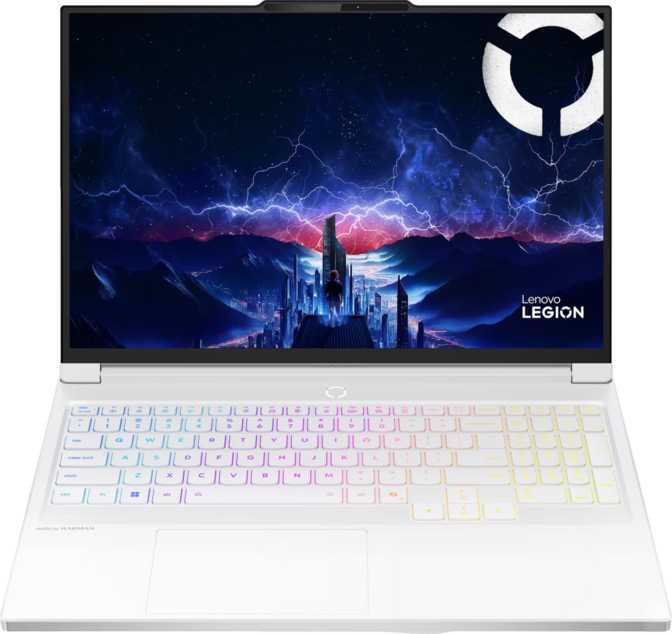
Lenovo Legion 7i Gen 10 16-Inch Review: When the Screen Steals the Show
LaptopsThe Legion 7i Gen 10 arrives at a moment when gaming laptops face a genuine identity crisis. Portable-but-compromised machines sacrifice display quality for slim profiles on one end, while desktop-replacement slabs bury stellar specs under chassis you would rather not carry on the other. Lenovo has spent several generations of the Legion 7i threading that needle — and with the Gen 10, the argument for this particular balance of power, portability, and display excellence is harder to dismiss than it has ever been.
What sets this machine apart is a 16-inch OLED panel running at a refresh rate that even many desktop monitors cannot match, paired with a processor-and-GPU combination drawn from the current cutting edge of Intel and NVIDIA silicon. Whether it earns its asking price is exactly what this review is here to determine.
At a Glance
A premium gaming laptop that earns its price through exceptional display quality and current-generation hardware across the board.
Category Ratings
Design and Build: Slim for Its Class, Purposeful in Every Millimetre
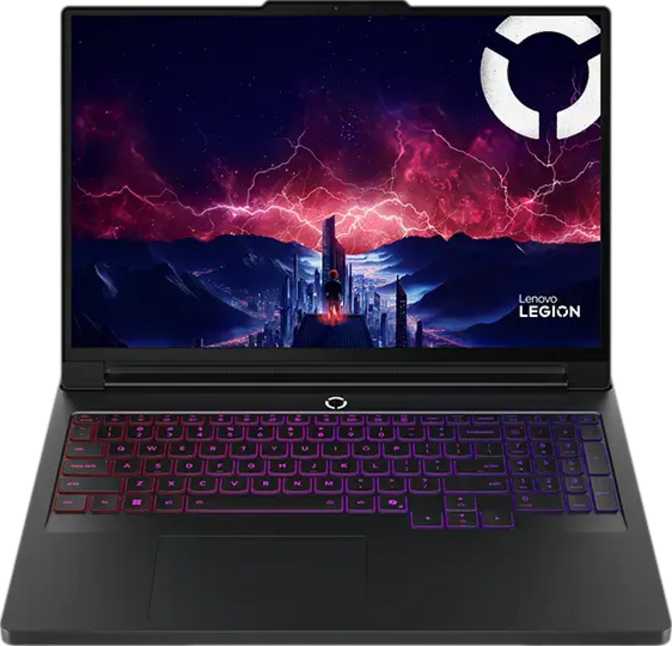
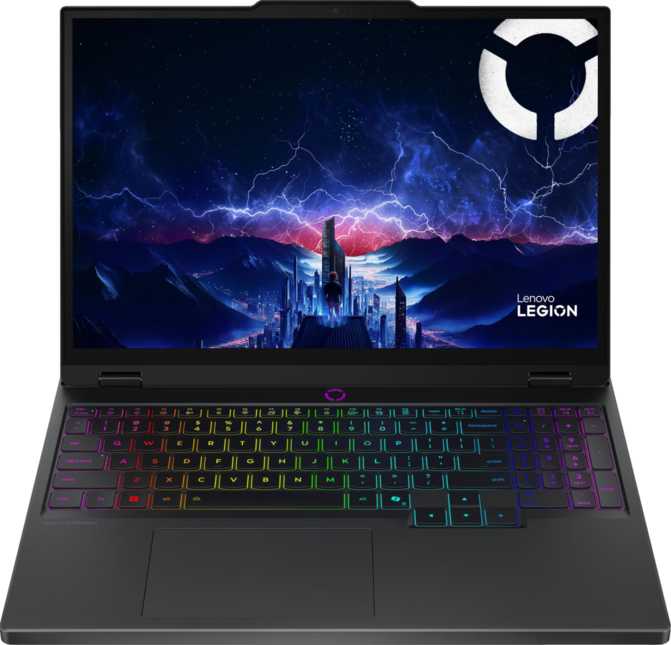
At two kilograms, the Legion 7i Gen 10 sits in the lighter half of the high-performance gaming laptop segment. That weight figure matters because it does not come with obvious physical compromises — the chassis measures just 15 millimetres at its thinnest point, which, for a laptop housing active cooling and discrete graphics hardware of this tier, is genuinely slim.
The footprint of 361 mm wide by 263 mm deep is proportional to a 16-inch panel. It will occupy a full desk, but it will not dominate one. The total enclosed volume of roughly 1.4 litres places this machine in a class where engineering has done real work to keep thermals and component density in balance without making the chassis suffer for it.
This is not a rugged machine and makes no pretence of being one. There is no weather sealing, no reinforced corners, and no MIL-spec certification. The Legion 7i Gen 10 is a performance tool built for desks, bags, and commutes — not construction sites or outdoor shoots. The lack of a fanless design is the honest trade-off: this hardware cannot be cooled passively, and Lenovo has not tried to pretend otherwise.
The backlit keyboard serves a functional as much as aesthetic purpose during low-light sessions. Authentication relies entirely on Windows Hello 3D facial recognition via the 5MP webcam — quick, reliable across varied lighting conditions, and without the need for additional hardware. No fingerprint scanner is present.
Physical Specifications
- Weight
- 2.0 kg
- Thickness
- 15 mm
- Width
- 361 mm
- Depth
- 263 mm
- Volume
- ~1.4 litres
- Backlit KB
- Yes
- Rugged Build
- No
- Warranty
- 1 Year
The Display: Where the Legion 7i Gen 10 Makes Its Strongest Argument
Stop here before looking at anything else. The display on this laptop is the most important thing about it.
OLED at 240Hz — Why That Combination Is Rare and Significant
Most gaming laptops offer one or the other: an OLED panel with deep blacks and accurate colour capped at 60 or 120Hz, or a high-refresh IPS panel at 165Hz or faster with the shallow contrast and colour accuracy limitations that IPS technology brings. The Legion 7i Gen 10 offers both in the same panel.
A 240Hz OLED display means that motion in games — enemies moving across screen, fast camera pans, competitive shooters — is rendered with the smoothness that high-refresh panels deliver, while the underlying image retains the near-infinite contrast ratio and absolute black levels only OLED can produce. For a gamer who has used a high-refresh IPS screen for years and then seen a premium OLED television, this display is what closes that gap.
Resolution, Density, and the 16:10 Advantage
The panel runs at 2560×1600 pixels in a 16:10 aspect ratio — not the standard widescreen 16:9. That extra vertical space, roughly 11 percent more screen height, is meaningful for productivity. Web pages, code editors, spreadsheets, and documents all benefit from the additional room. At 188 pixels per inch on a 16-inch panel, text and interface elements appear sharp without Windows scaling becoming a necessity.
Brightness and the One Honest Caveat
The panel’s 500-nit typical brightness is comfortable for indoor use and matches or exceeds most of the competition. Without an anti-reflection coating, however, direct sunlight or strong overhead lighting introduces reflections that work against the otherwise exceptional image quality. This is a laptop designed for indoor environments, and the panel characteristics confirm it.
Display Specifications at a Glance
| Specification | Value | Real-World Meaning |
|---|---|---|
| Panel Type | OLED / AMOLED | Near-infinite contrast, true blacks, vivid colour |
| Screen Size | 16 inches | Substantial workspace in a portable form |
| Resolution | 2560 × 1600 | 16:10 ratio; sharp at normal viewing distances |
| Refresh Rate | 240Hz | Ultra-smooth motion for games and everyday use |
| Brightness | 500 nits (typical) | Excellent indoors; reflective in direct light |
| Pixel Density | 188 ppi | Visibly crisp text and UI elements |
| Anti-Reflection | Not present | Best suited to controlled indoor lighting |
| External Displays | Up to 4 simultaneous | Full multi-monitor workstation capability |
CPU Performance: Intel’s Hybrid Architecture, Pushed Hard
The processor inside the Gen 10 represents Intel’s current laptop architecture at the higher end of the mobile performance range. Understanding how it works sets accurate expectations for both gaming and productivity use.
Hybrid Core Design: What It Means for You
The chip uses a hybrid architecture with two distinct core types: eight higher-power performance cores at a 2.7GHz base and sixteen efficiency cores running at 1.8GHz. These are not interchangeable — they operate differently by design. The performance cores handle demanding, latency-sensitive tasks like gaming, while the efficiency cores manage background processes and lightly threaded workloads without pulling the performance cores away from primary work.
Together the chip exposes 24 threads to the operating system. For gaming, the thread count is more than sufficient — very few game engines saturate beyond eight to twelve threads, so the performance cores carry the load comfortably. For video rendering, 3D work, or software compilation that scales across many threads, all twenty-four contribute meaningfully.
Peak Speed and Thermal Headroom
The processor boosts to 5.5GHz on its fastest cores under demanding conditions. The thermal ceiling before throttling is set at 105°C — a high upper bound that gives the cooling system room to extract peak performance during sustained loads. Built on a 4-nanometre process with a 50-watt TDP in this chassis, it represents aggressive thermal engineering for a 15mm laptop. Combined L2 and L3 cache totalling 76MB reduces how often the CPU must fetch data from slower system memory — a meaningful benefit for game physics, AI calculations, and large dataset operations.
Benchmark Context
GPU Performance: NVIDIA Blackwell Arrives in a Laptop
The graphics chip is drawn from NVIDIA’s Blackwell architecture — the generation following Ada Lovelace and representing the current state of NVIDIA’s laptop GPU lineup. This is the same architecture behind NVIDIA’s latest desktop RTX 50-series cards, now in mobile form.
Raw Compute and What the Numbers Mean
The GPU contains 4,608 individual shading units — the processing elements handling the millions of parallel calculations required to render each frame. Combined with a boost clock reaching 2,520MHz under optimal thermal conditions, this contributes to 23.22 TFLOP floating-point throughput. For everyday gaming, that compute capacity handles current AAA titles at the panel’s native resolution with headroom to spare. For GPU-accelerated creative work — AI-assisted image processing, video encoding, 3D rendering — the compute capacity has become meaningful far beyond entertainment.
GDDR7 Memory: The Generation Jump That Matters
The GPU carries 8GB of GDDR7 video memory. The jump from GDDR6X to GDDR7 is not incremental. Effective memory speed beyond 25,000MHz translates to a bandwidth ceiling of approximately 406 gigabytes per second — the rate at which the GPU moves texture data, frame buffers, and geometry. That figure is competitive with bandwidth numbers that were desktop-only territory until recently.
The 128-bit memory bus can generate concern among enthusiasts, but GDDR7’s speed largely compensates for the narrower bus configuration. Real-world frame delivery is the meaningful measure, and the bandwidth figure reflects a bus working at substantially higher per-lane efficiency than its predecessors.
DLSS, Ray Tracing, and DirectX 12 Ultimate
DLSS support means the GPU uses AI-based upscaling to render frames at a lower internal resolution and reconstruct them at the display’s native resolution — delivering near-native visual quality at meaningfully higher frame rates. On a 240Hz OLED panel, DLSS is what makes sustained high refresh rates achievable in demanding titles rather than merely benchmarkable ones. Ray tracing and DirectX 12 Ultimate confirm compatibility with current lighting and reflection techniques used in modern AAA titles. Intel’s Resizable BAR is enabled, delivering modest but measurable frame rate improvements in supported games.
Memory and Storage: Fast Enough to Stay Out of the Way
System RAM
The 32GB of DDR5 system memory runs at 5,600MHz across two memory channels. Both slots are occupied at 16GB per stick — dual-channel operation doubles available memory bandwidth compared to a single-stick configuration, with a tangible effect on GPU performance since CPU and discrete GPU share some operations through system memory.
For the majority of gaming and creative workloads today, 32GB is ample. The constraint becomes relevant for very large open-world asset streaming, complex multi-application workflows, or professional applications with unusually high RAM requirements.
Storage
The 1TB NVMe SSD uses PCIe 4.0 — the current standard for fast laptop storage. Boot times, game load screens, and large file transfers all benefit from NVMe speeds compared to older SATA-based drives. The practical experience is fast application launches and near-instant wake from sleep.
A 1TB drive is sufficient for a curated game library plus applications, but players managing many large modern titles will want to plan for supplementary storage. An external memory card slot is present for lighter overflow needs.
Connectivity: A Port Layout for Modern Workflows
The Legion 7i Gen 10 takes a selective approach to ports that reflects current connectivity standards rather than backward-compatible quantity.
| Port / Interface | Count | Speed / Version |
|---|---|---|
| USB4 / Thunderbolt 4 (USB‑C) | 2 | 40 Gbps — eGPU, docks, 8K displays |
| USB 3.2 Gen 2 (USB‑C) | 1 | 10 Gbps — fast storage and accessories |
| USB 3.2 Gen 1 (USB‑A) | 2 | 5 Gbps — mice, headsets, flash drives |
| HDMI | 1 | HDMI 2.1 — 4K 120Hz external displays |
| Memory Card Slot | 1 | External media overflow |
| Wi‑Fi | — | Wi‑Fi 7 (802.11be), 6E, 6, 5, 4 |
| Bluetooth | — | Bluetooth 5.4 |
| Ethernet (RJ45) | 0 | Not present — adapter required |
Wireless Highlights
Wi‑Fi 7 (802.11be) is the latest wireless standard, offering higher throughput, improved performance in congested environments, and lower latency than Wi‑Fi 6E. With a Wi‑Fi 7 router, the connection ceiling is now in the router rather than the laptop.
Wi‑Fi 7 is backward compatible with all previous Wi‑Fi generations — no immediate infrastructure upgrade is required.
Battery Life: Honest Expectations for a High-Performance Machine
The battery carries 84 watt-hours of capacity — a competitive figure for a gaming laptop in this chassis class, approaching what certain premium thin-and-light ultrabooks carry despite the significantly higher-performance hardware inside.
Managing expectations here is important. This is not a laptop that will match the all-day endurance of an ultrabook. The OLED panel, high-performance CPU, and discrete GPU draw considerable power under load. Gaming sessions on battery drain the pack quickly. The 84Wh capacity is best understood as the difference between two hours of gaming on battery and perhaps three — it extends the window without eliminating the need for a power adapter during serious gaming sessions.
For lighter tasks — browsing, document work, video streaming — the CPU’s efficiency cores take over and the discrete GPU can remain largely idle, extending runtime meaningfully. The sleep-and-charge functionality on the USB ports means the laptop can top up accessories even when in sleep mode, a small convenience that becomes habit over time.
Webcam and Audio: Above the Gaming Laptop Baseline
Camera and Biometrics
A 5-megapixel front-facing camera is notably above the 720p or 1080p single-megapixel sensors found on many competing gaming laptops. For video calls, content creation, or streaming where the webcam doubles as a secondary camera, the resolution difference is visible. The camera pairs with 3D facial recognition for Windows Hello login — quick, reliable across varied lighting conditions, and functional without additional hardware. Two built-in microphones provide adequate voice capture for video calls and in-game communication.
Audio
Stereo speakers and a 3.5mm headphone jack are both present. The headphone jack is increasingly absent on ultraportable machines — here it remains as a practical choice for wired audio, where quality and latency advantages over Bluetooth still matter for gaming and monitoring. Dolby Atmos processing is not included, so spatial audio on the internal speakers relies on Lenovo’s own software processing pipeline.
Who Should Buy the Lenovo Legion 7i Gen 10?
This Laptop Is Ideal For
- Gamers who care about display quality as much as frame rate.If you have been waiting for a laptop where the screen is genuinely excellent — not a compromise — the OLED 240Hz panel is the answer to that wait.
- Creative professionals who also game.Video editors, motion designers, and 3D artists who need GPU compute for their tools and want one machine that transitions from work to play without switching devices.
- Users who value portability in a gaming machine.At two kilograms and 15mm thin, this is among the more portable options at this performance tier. It goes into a backpack without obvious penalty.
- Developers and power users running demanding workloads.The 24-thread processor, fast NVMe storage, and high memory bandwidth make compile times, virtual machines, and large dataset operations noticeably faster than mid-range configurations.
This Laptop Is Not the Right Choice For
- Pure competitive esports players prioritising frame rate above all else.If the goal is maximum frames in a single competitive title at 1080p with everything turned down, cheaper machines deliver similar frame counts on lower-resolution panels.
- Anyone who needs a regular wired ethernet connection.No built-in RJ45 means carrying an adapter. For LAN events or stable competitive connections, this is a recurring inconvenience.
- Budget-constrained buyers.This is a premium product at a premium price. The combination of Blackwell GPU, OLED 240Hz display, and current-generation silicon does not come cheaply.
- Professional users who need more than 32GB of RAM.Both memory slots are occupied from the factory. Users whose professional workloads demand 64GB or more will find no upgrade path here.
How the Legion 7i Gen 10 Compares to Its Likely Alternatives
The clearest differentiator is the display. IPS competitors at similar prices deliver higher sustained brightness and better anti-glare performance outdoors, but cannot replicate OLED’s contrast or colour saturation. Against thinner gaming laptops with more aggressive portability targets, the Gen 10 concedes a few hundred grams in exchange for better sustained performance and a larger battery.
| Feature | Legion 7i Gen 10 This Model | High-Refresh IPS Rival | Thin Gaming Laptop |
|---|---|---|---|
| Display Technology | OLED, 240Hz | IPS, 240Hz+ | OLED or IPS, 120–165Hz |
| Aspect Ratio | 16:10 | 16:9 | 16:10 or 16:9 |
| GPU Generation | Blackwell (current) | Ada Lovelace (previous) | Blackwell or Ada Lovelace |
| VRAM | 8GB GDDR7 | 8–12GB GDDR6X | 6–8GB GDDR6 or GDDR7 |
| Wi-Fi Generation | Wi‑Fi 7 | Wi‑Fi 6E | Wi‑Fi 6E or Wi‑Fi 7 |
| Built-in Ethernet | No | Often yes | Rarely |
| Weight Class | ~2 kg | 2.2–2.6 kg | 1.7–2.2 kg |
| Thunderbolt Ports | 2 (TB4 / USB4) | 0–1 | 1–2 |
Strengths and Weaknesses in Full
Strengths
The Legion 7i Gen 10’s greatest strength is the conviction of its display choice. OLED at 240Hz with a 16:10 aspect ratio and 188 pixels per inch is not a specification that hedges — it is a deliberate commitment to image quality that defines the machine’s character. Every hour with that panel reinforces why it was worth prioritising over a cheaper IPS alternative.
The processor and GPU pairing reflects current-generation silicon without compromise. The CPU’s hybrid architecture handles both gaming and productivity workloads with equal confidence, while the Blackwell GPU delivers performance that is genuinely new rather than a renamed re-release. GDDR7 memory at this bandwidth level is a meaningful step forward for workloads that stress video memory throughput.
Connectivity is forward-looking. Two Thunderbolt 4 / USB4 ports, Wi‑Fi 7, and HDMI 2.1 mean this laptop will not feel outdated from a connectivity standpoint for several product cycles to come.
Weaknesses
The weaknesses begin with the absent ethernet port. In a gaming machine marketed to users who understand the value of low-latency wired connections, asking them to carry an adapter is a small but recurring inconvenience. Several competitors at this price point handle this better.
The memory ceiling at 32GB is a constraint that matters more than it would on a lesser machine. A laptop configured with hardware of this calibre should offer a path to higher RAM for professional users who need it. Both slots are occupied, and that leaves no upgrade path whatsoever.
Battery life will disappoint anyone coming from a non-gaming ultrabook. This is contextually honest — no gaming laptop with active GPU hardware delivers ultrabook endurance — but the expectation gap is real and worth stating plainly.
The absence of an anti-reflection coating on the OLED panel is the known cost of the display’s otherwise excellent characteristics. It limits comfortable use in bright environments, and deserves careful consideration for anyone who primarily works near windows or under strong overhead lighting.
Answers to the Questions Real Buyers Search For
Final Verdict
The Lenovo Legion 7i Gen 10 is one of the most honest expressions of what a gaming laptop can be when display quality is treated as a first-class specification rather than an afterthought. The OLED 240Hz panel is the defining feature — it changes what gaming looks like in a way that cannot be captured in benchmarks, and it makes the machine genuinely compelling for creative work alongside gaming.
The processor and GPU are current-generation without qualification, the connectivity is forward-looking, and the chassis achieves a thoughtful balance between performance and portability. The absent ethernet port, the fixed 32GB memory ceiling, and the panel’s reflection characteristics are real limitations that deserve honest consideration against individual use patterns.
For the right buyer, the Legion 7i Gen 10 is not a compromise — it is a decision.