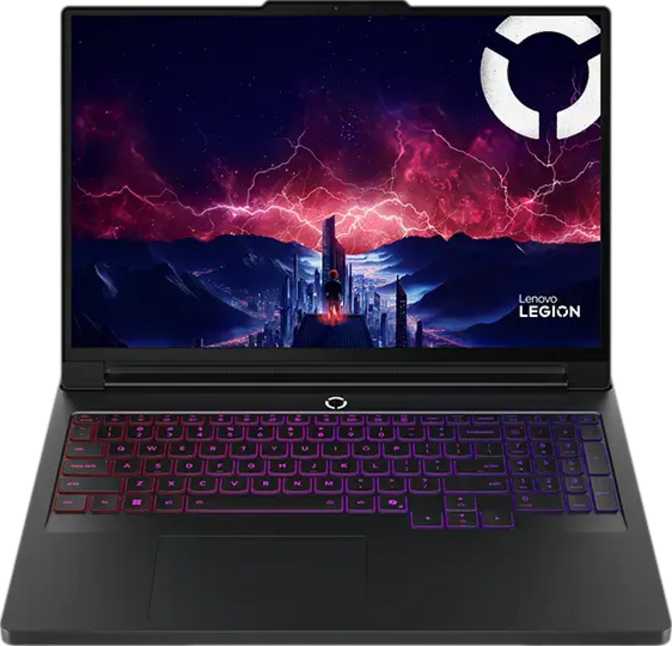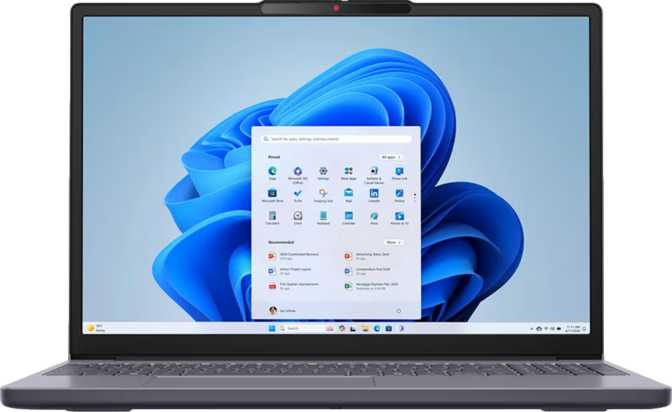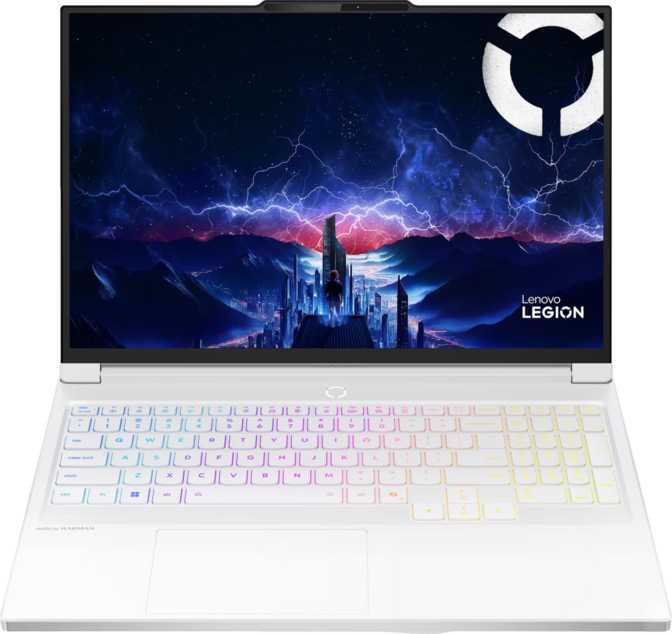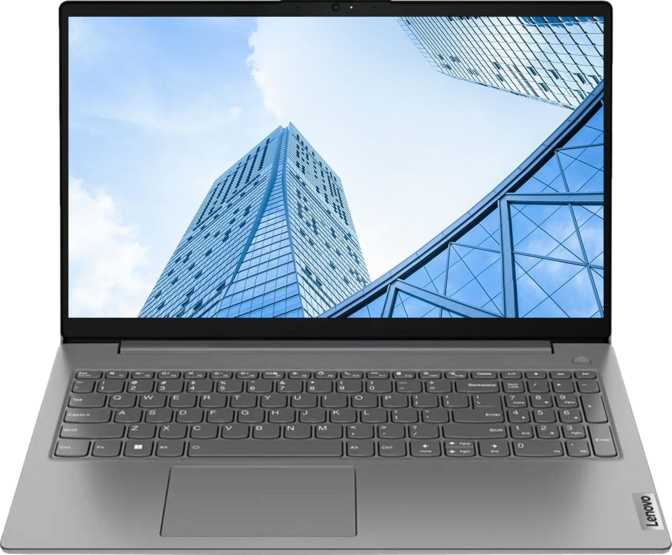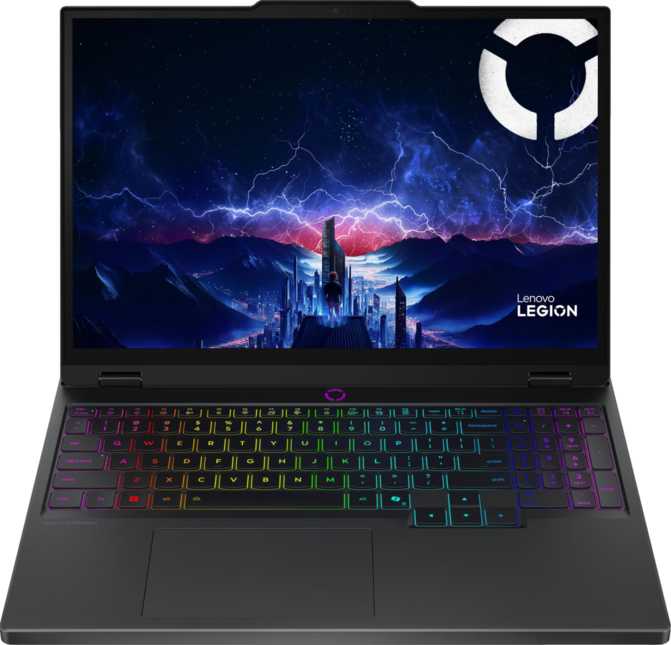
Lenovo Legion 5i Gen 10 (2025) 15″ Review: OLED Gaming Done Right
LaptopsThe Legion 5i Gen 10 pairs a rare 2560×1600 OLED display with Blackwell-generation discrete graphics and a chassis slim enough to pass as a business laptop. It is one of the most coherent gaming laptops available at its tier — strong on visuals, strong on performance, and honest about its trade-offs.
Overall Rating
4.5 / 5
Premium 15″ Gaming Laptop
Design and Build Quality
Slim, Understated, and Purposeful
At 21mm thick and weighing just under 1.9 kilograms, the Legion 5i Gen 10 sits in a category of its own: gaming laptops that you could plausibly bring to a coffee shop without looking conspicuous. That 21mm profile is genuinely slim for a machine with active cooling — this is not a fanless design, and it doesn't pretend to be. Two fans work to keep the internals cool under load, and Lenovo has managed to engineer the airflow into a footprint that would have been unthinkable on gaming hardware just a few generations ago.
The physical dimensions — 344mm wide by 255mm deep — make it essentially the same desk footprint as a standard 15-inch business laptop. The backlit keyboard is the feature you'll interact with most, and it serves both late-night gaming sessions and regular productivity work without requiring you to choose between them.
What the Legion 5i Gen 10 does not have: weather sealing, a rugged certification, or a stylus. None of those omissions will matter for the target audience, but if you're hoping for anything resembling outdoor durability, this isn't that machine.
Physical Specifications
- Thickness
- 21 mm
- Weight
- 1,900 g (~4.2 lbs)
- Width
- 344 mm
- Depth
- 255 mm
- Chassis Volume
- ~1,842 cm³
- Cooling
- Active (fans)
- Keyboard
- Backlit
Display: Where the Legion 5i Gen 10 Genuinely Surprises
OLED in a Gaming Laptop — And Done Right
The 15.1-inch OLED panel renders at 2,560 × 1,600 pixels — a slightly taller aspect ratio than the 16:9 standard, which means more vertical real estate for both gaming environments and productivity tasks like code editors or document editing. At roughly 199 pixels per inch, text is crisp and game environments have visible depth that IPS panels at this size can't match.
The refresh rate sits at 165Hz, threading the needle between competitive gaming responsiveness and the smooth animation that content creation benefits from. For most multiplayer gaming titles, 165Hz is more than sufficient. It's not a 240Hz or 360Hz panel — buyers whose primary concern is competitive FPS gaming at the absolute highest frame rates should note that. For everyone else, 165Hz with OLED image quality is a trade most will be happy to make.
Brightness is rated at 500 nits — solid for an OLED and more than enough for indoor use. One legitimate caveat: the panel does not carry an anti-reflection coating. In rooms with direct sunlight or strong overhead lighting, reflections will be visible.
The display system supports output to up to four external monitors simultaneously, making it a credible workstation-replacement option for multi-screen desktop setups.
| Panel Type | OLED / AMOLED |
| Size | 15.1 inches |
| Resolution | 2560 × 1600 px |
| Pixel Density | 199 PPI |
| Refresh Rate | 165 Hz |
| Brightness | 500 nits |
| Touch Input | No |
| Anti-Reflection | No |
| External Displays | Up to 4 |
Processing Power: What's Actually Inside
A Hybrid CPU Architecture Built for Modern Workloads
The processor uses a hybrid core architecture — a design philosophy where different types of cores handle different types of tasks. There are eight high-performance cores clocked up to 5.5GHz under boost, and twelve efficiency cores handling lighter background tasks at lower speeds. In total, the chip manages 28 execution threads simultaneously.
For gaming, this matters in two specific ways. First, games demanding sustained single-core performance — which includes most AAA titles — benefit directly from the burst speed those performance cores can reach. Second, the efficiency cores handle background workloads (system processes, streaming software, browser tabs) without pulling resources away from the game.
The chip is manufactured at a 5-nanometer process node, which directly influences thermal efficiency and battery consumption. The 33MB of onboard cache means the processor spends less time waiting on slower memory for frequently accessed data.
The thermal ceiling is set at 100°C for the CPU, and the base thermal design power is 45W — but gaming laptops of this class typically boost well above their base TDP under sustained gaming loads. The chassis cooling system is designed with that in mind.
CPU Key Figures
- Performance Cores
- 8 cores
- Efficiency Cores
- 12 cores
- Total Threads
- 28
- Max Boost Clock
- 5.5 GHz
- Process Node
- 5 nm
- L3 Cache
- 33 MB
- TDP
- 45 W
CPU Benchmark Results
Geekbench 6 Multi-Core
13,529
Top-tier laptop performance
Geekbench 6 Single-Core
2,504
Strong single-thread speed
PassMark CPU
37,155
Far above 30K prev-gen avg
PassMark Single-Core
3,987
Excellent per-core output
Graphics Performance: Blackwell Architecture in a 15-Inch Chassis
The Discrete GPU Explained
The dedicated graphics in the Legion 5i Gen 10 come from NVIDIA's Blackwell architecture — the same fundamental GPU design found in the current generation of desktop graphics cards, adapted for laptop power envelopes. This is not a rebadged previous-generation chip.
The GPU carries 8GB of GDDR7 video memory — a meaningful upgrade over the GDDR6 and GDDR6X found in previous-generation laptop GPUs. GDDR7 offers substantially higher memory bandwidth: effective memory speed reaches 28,000MHz, delivering up to 448GB/s of memory bandwidth. For context, that bandwidth figure approaches what previous-generation high-end desktop GPUs offered. The GPU is less likely to stall waiting for texture data, even at higher resolutions.
The raw compute figure sits at approximately 9.7 TFLOPS of floating-point performance. This positions the Legion 5i Gen 10 for comfortable 2560×1600 gaming in demanding titles — exactly what the OLED display is running at.
DLSS (Deep Learning Super Sampling) allows the GPU to render at a lower internal resolution and reconstruct it at higher quality, delivering better frame rates without visible quality loss in most titles. For the Legion 5i Gen 10 specifically, DLSS matters because it enables ray-traced visuals — computationally expensive — without destroying frame rates.
Intel Resizable BAR is active on this system, allowing the CPU to access the full contents of GPU video memory in one pass. The performance impact varies by title but is consistently positive.
| Specification | What It Means |
|---|---|
| Blackwell Architecture | Current-gen GPU, not a rebrand |
| 8GB GDDR7 VRAM | Fast enough for 1440p; future-ready |
| ~9.7 TFLOPS Compute | Comfortable AAA 1440p performance |
| DLSS Support | Frame rate boost, minimal visual cost |
| Ray Tracing | Realistic lighting in supported titles |
| 448 GB/s Bandwidth | Reduces texture-loading bottlenecks |
| Resizable BAR | CPU-GPU data transfer efficiency |
Memory and Storage: No Compromises Here
32GB DDR5 and a PCIe 5.0 NVMe Drive That Keeps Up
The system ships with 32GB of DDR5 RAM running across a dual-channel configuration. DDR5 at this speed tier transfers data significantly faster than the DDR4 found in previous-generation machines, and the dual-channel setup doubles the effective throughput compared to a single-stick configuration.
32GB is the right amount of memory for a gaming laptop in this class. Games alone rarely consume more than 16GB, but when you account for a browser, Discord, streaming software, and a game running simultaneously — a realistic usage pattern for any serious gamer — 32GB provides headroom that 16GB does not. The maximum supported memory is expandable significantly beyond the shipped configuration, which matters for longevity.
Storage is handled by a 1TB NVMe drive using PCIe generation 5 — the current standard for peak-performance storage. PCIe 5.0 SSDs read and write at speeds that make game load times largely irrelevant and large file transfers nearly instant.
Memory & Storage Specs
- Installed RAM
- 32 GB
- Memory Standard
- DDR5
- RAM Speed
- 5,600 MHz
- Memory Channels
- Dual-Channel
- Max Expandable RAM
- 192 GB
- Storage Capacity
- 1 TB
- Storage Type
- NVMe SSD
- PCIe Generation
- PCIe 5.0
Connectivity: Plenty of Ports, One Gap to Note
Five USB ports, Wi-Fi 7, and wired Ethernet — with a notable omission
The Legion 5i Gen 10 is generous with physical ports. Five USB connections in total — two USB-C and three USB-A, all running at the current fast standard — cover most desk setups without requiring a hub. A dedicated Gigabit Ethernet port handles wired network connections, which is essential for competitive gaming where Wi-Fi latency is unacceptable. HDMI 2.1 supports 4K at high refresh rates to external displays.
Wi-Fi 7 is the wireless standard here — the newest generation of Wi-Fi, offering lower latency and higher throughput than Wi-Fi 6E. The hardware is ready for infrastructure upgrades over the machine's lifetime.
The one notable gap: there is no Thunderbolt 4 or USB4 port. USB 3.2 Gen 2 at 10Gbps handles external drives, monitors, and peripherals without issue. However, users who need Thunderbolt-only docking stations or external GPU enclosures will need to factor this in.
| Port / Feature | Detail | Use |
|---|---|---|
| USB-C (fast) | 2× Gen 2 | Drives, monitors |
| USB-A (fast) | 3× Gen 2 | Peripherals |
| HDMI | 1× v2.1 | 4K external display |
| Ethernet | 1× RJ45 | Wired gaming |
| Wi-Fi | Wi-Fi 7 | Latest standard |
| Thunderbolt | None | Not supported |
| Memory Card | None | Adapter needed |
| Audio Jack | 3.5 mm | Wired headsets |
Camera and Audio
Above-average webcam, honest speaker expectations
5MP Front Camera
The 5-megapixel front-facing camera is notably above the 1MP or 2MP cameras that many gaming laptops ship with. It produces images sharp enough for video calls and content creation without requiring an external webcam — a practical advantage for users who switch between gaming and remote work.
Stereo Speakers
Audio comes through stereo speakers with a 3.5mm headphone jack for wired headsets. There is no Dolby Atmos processing on this system, which means spatial audio relies on headphone-based processing rather than the built-in speakers.
Battery and Power: Setting Honest Expectations
A plugged-in gaming machine with portable productivity capability
Gaming laptops of this class are fundamentally tethered machines when running at full performance. The combination of Blackwell discrete graphics, a powerful CPU with boost clocks up to 5.5GHz, and a high-refresh OLED display draws substantial power under load. No laptop battery handles sustained gaming at peak settings for extended periods.
When running on integrated graphics — for productivity work, video streaming, or document editing — power draw drops dramatically. In those scenarios, the machine functions as a usable laptop away from an outlet. The hybrid graphics architecture makes this possible; the discrete GPU steps back entirely when it isn't needed.
Sleep-and-charge capability means the USB ports remain powered even with the lid closed, useful for keeping a phone charged overnight.
Gaming: Stay Plugged In
Unplugged gaming battery life is limited — this is a category reality, not a flaw specific to this laptop.
Productivity: Portable
Integrated graphics mode extends unplugged usage for work and streaming tasks meaningfully.
Who Should Buy the Legion 5i Gen 10 — And Who Should Not
- Gamers who prioritize visual quality. The OLED at 2560×1600 with 165Hz is a premium visual experience IPS panels at this size can't match.
- Students and remote workers who also game. The restrained design, slim profile, and 32GB RAM make this a credible daily driver that doesn't announce itself as a gaming machine.
- Content creators who game. The CPU performance, fast storage, and OLED display combine into a workstation that handles video editing and 3D rendering alongside gaming.
- Users upgrading from aging hardware. The jump from previous-era laptops to Blackwell GPU architecture and DDR5 memory will be immediately obvious.
- Competitive FPS players needing 240Hz+. If high refresh rate is your primary concern above all else, this 165Hz panel is the wrong choice regardless of OLED quality.
- Users who rely on Thunderbolt. External GPU enclosures, professional docking stations, and Thunderbolt-exclusive peripherals won't work here.
- Budget buyers. Blackwell GPU, OLED display, DDR5, and PCIe 5.0 storage are not components found at budget price points.
- Outdoor or rugged use cases. No weather sealing, a reflective display, and standard build fragility make this unsuitable for rough conditions.
Competitive Positioning
How the Legion 5i Gen 10 stacks up against logical alternatives
| Feature | Legion 5i Gen 10 | Typical IPS Competitor | Typical 144Hz OLED Competitor |
|---|---|---|---|
| Display Type | OLED, 165Hz, 2560×1600 | IPS, 144–165Hz, 1080p or 1440p | OLED, 144Hz, 1080p |
| GPU Generation | Blackwell (current) | Varies | Varies |
| VRAM | 8GB GDDR7 | 8–16GB GDDR6 | 8GB GDDR6 |
| Shipped RAM | 32GB DDR5 | Often 16GB DDR5 | Often 16GB DDR5 |
| Weight | ~1.9 kg | 1.8–2.5 kg | 1.9–2.3 kg |
| Thunderbolt 4 | No | Varies | Varies |
| Wi-Fi Standard | Wi-Fi 7 | Usually Wi-Fi 6E | Usually Wi-Fi 6E |
| Anti-Reflection | No | Often Yes | Often No |
The Legion 5i Gen 10 leads on display resolution and refresh rate for an OLED panel, and the GDDR7 video memory gives it a bandwidth advantage over machines still using GDDR6. The Blackwell architecture means it receives current-generation driver optimizations for longer than older GPU hardware. The trade-off versus some competitors is the absence of Thunderbolt and anti-reflection coating.
Honest Strengths and Weaknesses
A balanced assessment — not a marketing summary
The Legion 5i Gen 10's strongest argument is the coherence of its package. An OLED panel at 2560×1600 resolution with 165Hz refresh rate, combined with Blackwell GPU architecture and genuine performance headroom, doesn't require buyers to compromise between visual quality and gaming capability. The OLED-versus-high-refresh-rate trade-off that defined previous generations of gaming displays doesn't apply here in the same way.
The memory and storage configuration ships at a level where most buyers won't feel the need to upgrade immediately. 32GB of fast DDR5 RAM and a 1TB PCIe 5.0 drive handle both current gaming demands and workstation-adjacent tasks.
The design restraint is a genuine strength for anyone using this laptop in multiple environments. The Legion 5i Gen 10 manages portability without the usual compromise in thickness or weight feeling punishing.
The absence of Thunderbolt 4 is a real limitation for users who rely on that ecosystem, and it's notable in a premium-tier machine where competitors sometimes include it.
The lack of anti-reflection coating on the display is a frustrating omission given how premium the panel itself is — it signals that Lenovo made a cost decision in a place where the user experience pays the price every time they're near a window.
The single microphone is a missed opportunity on a machine that will appeal to streamers and content creators who expect more from the hardware at this price point.
The battery situation is not a weakness specific to this laptop — it's a category reality — but first-time gaming laptop buyers should set expectations clearly. This is a desk machine with portable capability as a secondary function, not a primary one.
Questions Real Buyers Are Asking
Answers to the searches that brought you here
Final Verdict
The Lenovo Legion 5i Gen 10 (2025) 15″ is a genuinely well-considered machine that succeeds at something few gaming laptops manage: being an excellent gaming laptop and a credible everyday portable without obvious sacrifices in either direction.
The OLED display at 2560×1600 and 165Hz is the headline feature, and it earns that status — it's one of the better gaming displays available in a 15-inch laptop chassis. The Blackwell GPU, paired with GDDR7 memory and its associated bandwidth advantages, handles that resolution comfortably and brings current-generation feature support including DLSS and ray tracing. The CPU keeps pace with the GPU without creating a processing bottleneck, and 32GB of DDR5 RAM means the system won't feel underpowered as software demands increase over the next few years.
The weaknesses — no Thunderbolt, no anti-reflection coating, a single microphone — are real and worth factoring in based on your specific workflow. They don't undermine the core value proposition, but they do indicate that the premium pricing isn't unlimited in what it delivers.
Buy the Legion 5i Gen 10 if:
You want a 15-inch gaming laptop with a premium OLED display, current-generation GPU performance, and a design that doesn't broadcast "gamer" in every environment.
Look elsewhere if:
Thunderbolt connectivity is essential, you need 240Hz or above for competitive gaming, or you want a machine that performs equally well away from a power outlet.
Overall Score