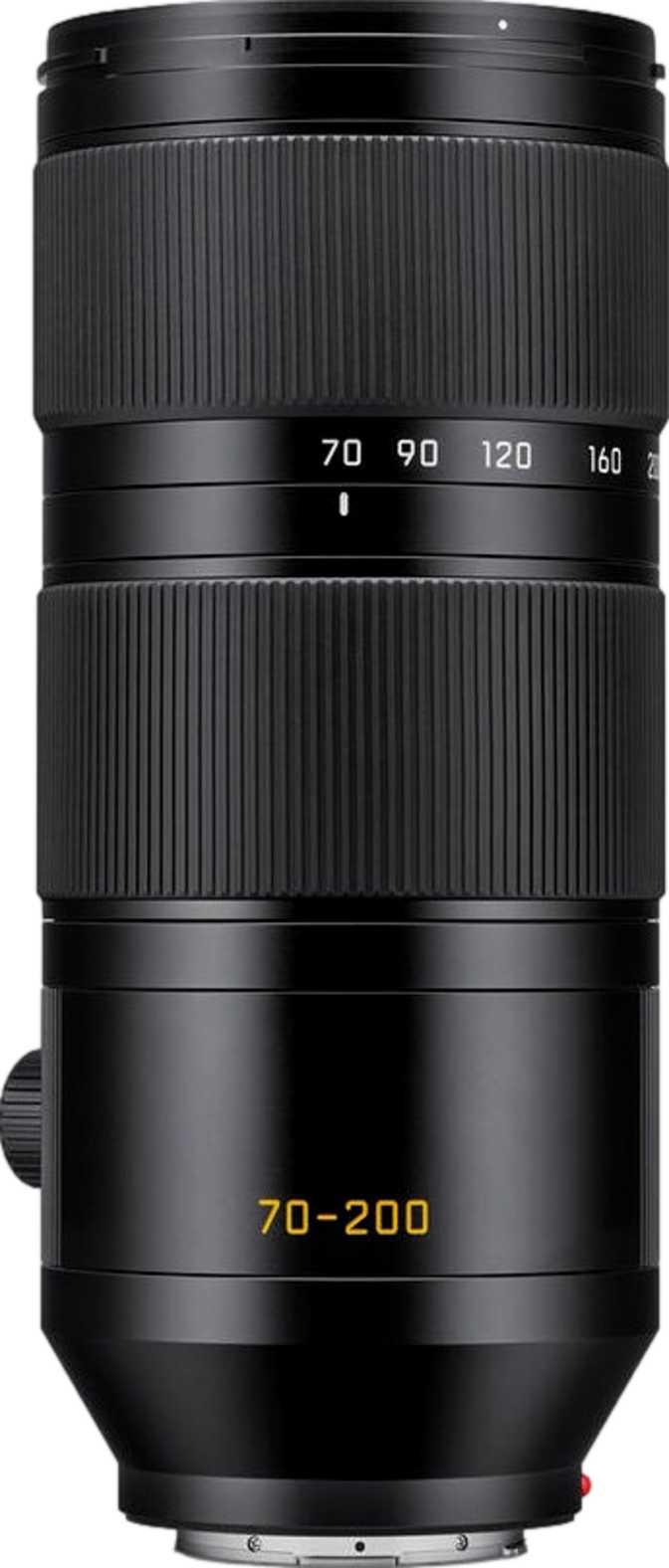
Leica Vario-Elmarit-SL 70-200mm f/2.8 ASPH: An Honest Full Review
Camera LensesA Telephoto Zoom Built Without Compromise
The telephoto zoom is arguably the most demanding test of any optical system. It must deliver across a wide range of focal lengths, resist the temptation to trade corner performance for headline aperture numbers, and survive the physical punishment of professional use. Most manufacturers make concessions somewhere. Leica, with the Vario-Elmarit-SL 70-200mm f/2.8 ASPH, has chosen not to.
This is a lens built for the Leica SL system — a platform designed from the ground up around mirrorless full-frame performance — and it wears the Elmarit name with intention. That designation in Leica's nomenclature specifically denotes a maximum aperture of f/2.8, and the "Vario" prefix confirms zoom capability. Together, they signal exactly what this optic is: a fast, constant-aperture telephoto zoom that leaves nothing on the table.
Whether you're approaching this lens as a working professional considering a system investment, or as an enthusiast drawn to Leica's optical reputation, what follows is everything you need to know before committing.
Category Ratings
- Constant f/2.8 across full range
- 11-blade rounded aperture for smooth bokeh
- Silent internal autofocus motor
- Full professional weather sealing
- No optical image stabilization
Full Specification Breakdown
Every key specification translated into what it actually means for your shooting
| Specification | Value | What It Means for You |
|---|---|---|
| Lens Type | Zoom, Telephoto | Variable focal length in the telephoto range — covers portrait distances through sports and wildlife reach in a single lens |
| Lens Mount | Leica L | Native mount shared across Leica SL, Panasonic Lumix S, and Sigma fp systems via the L-Mount Alliance |
| Focal Length Range | 70–200mm | Moderate to strong telephoto — the standard professional working range for portraits, events, and action |
| Maximum Aperture | f/2.8 (constant) | Fast and consistent across the entire zoom range; exposure settings stay predictable as you zoom |
| Minimum Aperture | f/22 | Full depth-of-field control for landscape and tripod-mounted work where sharpness front-to-back is the priority |
| Aperture Blades | 11, Rounded | High blade count with rounded shape — background light sources render as smooth circular discs, not harsh polygons |
| Optical Stabilization | None | Relies entirely on in-body image stabilization (IBIS) from the camera body; no fallback for unstabilized bodies |
| Autofocus Motor | Internal, Silent | Self-contained AF drive produces no audible noise — critical for video recording and quiet professional environments |
| Min. Focus Distance | 65cm | Unusually close for a 200mm telephoto — enables near-macro framing of small subjects without a dedicated macro lens |
| Max. Magnification | 0.2x | Subjects fill a meaningful portion of the frame at close range; useful for flowers, small products, and resting insects |
| Filter Thread | 82mm (non-rotating) | Polarizing and graduated filters stay precisely aligned through focus and zoom adjustments — no readjustment needed |
| Weather Sealing | Full | Dust and moisture resistant throughout; designed for professional outdoor use in variable conditions |
| Mount Construction | Metal | Resists wear at the camera-lens contact point over thousands of connection cycles across the lens's lifespan |
| Lens Hood | Included | Sized appropriately for the zoom range; reduces flare and contrast loss in backlit shooting conditions |
| Weight | 1,540g | Substantial but consistent with other professional 70-200mm f/2.8 lenses — proper support required for extended use |
Build Quality and Physical Design
What it feels like in the hand — and how it holds up in the field
A Lens That Feels Like a Precision Instrument
Pick up the Vario-Elmarit-SL 70-200mm f/2.8 ASPH and the first thing you register is weight. At approximately 1.5 kilograms, this is a substantial piece of glass and metal — not something you'll forget is hanging from your shoulder. That weight is not incidental; it's a direct consequence of the optical complexity required to maintain f/2.8 across the full focal range on a full-frame sensor, and of the construction quality Leica demands.
The mount is metal, not plastic, which matters for long-term reliability. Lens mounts are high-stress contact points — they flex, rotate, and bear the full mechanical load of the body-lens connection thousands of times over a lens's lifespan. A metal mount is the only appropriate choice at this tier, and its presence here is expected but still worth confirming.
Weather Sealing and Durability
The lens carries full weather sealing throughout its construction. For a telephoto zoom — a focal length range that gets used outdoors, at sporting events, in rain-soaked landscapes, and at coastal locations — this is not a luxury feature. It's a professional requirement. You can shoot through a passing shower without hesitation, and the sealing works in conjunction with the weather-sealed bodies in the SL lineup to create a genuinely protected system.
The Front Element and Filter System
The 82mm front filter thread is large, as expected from a fast telephoto zoom of this class. Critically, the front element does not rotate during focusing or zooming. This matters most for photographers who use polarizing filters — a rotating front element would require constant readjustment as you reframe or refocus. With a non-rotating design, a polarizer, graduated ND, or any orientation-sensitive filter stays exactly where you set it.
A lens hood is included in the box — the correct decision for a lens at this price point. Flare control at longer focal lengths and wider apertures benefits significantly from proper shading.
Optical Performance: What the Specifications Actually Mean
Translating raw optics data into real-world image quality
Constant f/2.8 Across the Full Range — Why It Matters
Many zoom lenses advertise a wide maximum aperture at their short end, then quietly narrow as you zoom in. A lens listed as f/4–5.6 gives you f/5.6 when you need reach the most. The Vario-Elmarit-SL holds f/2.8 at every focal length from 70mm through 200mm without exception.
In practical terms, this means two things. First, your exposure settings don't shift as you zoom, which simplifies shooting in manual mode and keeps auto-exposure behavior predictable. Second — and more importantly — you have f/2.8 available at 200mm, where subject separation, background blur intensity, and low-light capability matter most.
Shooting a subject at 200mm and f/2.8 produces a level of background isolation that a variable-aperture zoom simply cannot match.
Angle of View and Subject Isolation
At 70mm on a full-frame sensor, the lens captures a moderately narrow field — roughly comparable to how a slightly telephoto portrait lens sees the world. Subjects appear natural, with minimal distortion, making this an excellent starting point for environmental portraits, moderate-distance action, or compressed landscape details.
At 200mm, the angle of view narrows dramatically, pulling distant subjects close while compressing perspective and isolating them against richly blurred backgrounds. The combination of this narrow angle and the f/2.8 maximum aperture produces the kind of subject separation that defines professional telephoto photography.
Aperture Blades and Bokeh Character
The aperture diaphragm uses eleven rounded blades — a high count for a zoom lens, and the rounded design is intentional. When point light sources appear in the out-of-focus background — streetlights, candles, specular highlights on water — they render as soft, circular discs rather than the polygonal shapes produced by fewer, straight-edged blades.
The result is a smoother, more organic quality to the out-of-focus areas. This is not a spec sheet detail that only pixel-peepers care about; it visibly affects the overall aesthetic of images, particularly at wide apertures in scenes with busy or light-rich backgrounds.
The lens can be stopped down to f/22 at the wide end of the zoom range, providing the full range of depth-of-field control for tripod landscape work or any situation requiring maximum depth.
Minimum Focus Distance and Close-Up Capability
The closest this lens will focus is 65 centimeters from the subject. For a 200mm telephoto, this is notably close — it allows a degree of near-subject framing that many telephoto zooms cannot achieve. The magnification at minimum focus reaches 0.2x, which places small subjects such as flowers, insects at rest, or product details into usable frame-filling territory without requiring a dedicated macro lens.
It doesn't replace true macro work, but it extends the lens's versatility meaningfully beyond what you'd expect from a telephoto zoom.
Autofocus: Speed, Silence, and Reliability
How the focusing system performs across stills and video use cases
The lens houses its own focus motor internally — the standard for the SL system's native optics — meaning the autofocus mechanism doesn't depend on the camera body's motor. The focus motor is fully silent in operation.
Silent autofocus carries real-world weight across multiple shooting contexts. During video production, the camera's microphone — or any ambient recording — won't pick up mechanical focus noise in the soundtrack. In quiet environments such as ceremonies, conferences, or wildlife photography, the lack of audible feedback from the lens keeps the photographer less conspicuous and subjects unaware of being tracked.
Focus extends all the way to infinity, confirming the lens is fully capable for astrophotography, aviation photography, or any subject at effectively unlimited distance.
- Internal motor — no body-side drive dependency
- Fully silent — suitable for video and quiet environments
- Infinity focus confirmed — astrophotography and aviation capable
- Close focus to 65cm — near-macro without switching lenses
The Absent Feature: No Optical Image Stabilization
The most significant omission — and how to evaluate it honestly
The conventional guideline — keeping shutter speed at or above the reciprocal of the focal length — means you need at least 1/200s at full zoom to consistently get sharp handheld images, and in practice, 1/400s or faster is safer. There are three mitigating factors to consider carefully before this becomes a dealbreaker.
Body IBIS
The Leica SL2 and SL2-S bodies include in-body image stabilization. When paired with a current SL-system body, the body's stabilization compensates for camera movement. It is not a complete substitute for optical stabilization in all conditions, but it provides meaningful real-world compensation.
f/2.8 as Light Advantage
f/2.8 itself is a form of light gathering. In low light, f/2.8 lets you use shutter speeds two stops faster than f/5.6 while maintaining equivalent exposure. That directly reduces motion blur risk — the fast aperture compensates for the absent stabilization in many real-world scenarios.
Tripod-Based Work
For tripod-mounted shooting — studio work, landscapes, architecture, video on a stabilized rig — the absence of in-lens stabilization is entirely irrelevant. If your primary workflow involves supported shooting, this limitation simply doesn't apply.
For handheld sports or wildlife photography in low light without a stabilized body, this limitation is real and should factor directly into your purchase decision.
Who This Lens Is For — and Who Should Look Elsewhere
Matching the lens to the right shooter before you commit
Ideal For
- Professional portrait photographers who want compression and subject isolation at wide apertures across the 70–200mm range
- Event photographers shooting ceremonies, galas, or performances where silence, reach, and available-light performance converge
- Sports and action photographers using the SL system on a stabilized body, where the fast aperture compensates for the absence of in-lens stabilization
- Videographers in the SL ecosystem who need silent autofocus, a constant aperture for consistent exposure during zooming, and smooth optical performance
- Committed SL system photographers who want a native, optically matched telephoto zoom as the anchor of a professional kit
Look Elsewhere If...
- You shoot handheld telephoto extensively in low light without a stabilized SL body — the lack of in-lens OIS will require disciplined technique and faster shutter speeds
- You need to travel light — at over 1.5kg, this lens defines a committed carry, not casual portability
- You're not invested in the Leica L mount ecosystem — the value proposition is inseparable from the SL system context
- Your primary need is true macro work — the 0.2x magnification ceiling will require a dedicated macro solution for serious close-up photography
Competitive Positioning
How the Leica Vario-Elmarit-SL stacks up against the broader fast telephoto zoom category
The fast telephoto zoom category is crowded at the system level, with every major mirrorless manufacturer offering a 70-200mm f/2.8 as a cornerstone pro lens. The Leica Vario-Elmarit-SL competes differently than most — its distinguishing characteristics are its optical design philosophy, its 11-blade aperture exceeding the blade count of most competitors, and its L-Mount Alliance compatibility.
| Feature | Leica Vario-Elmarit-SL 70-200mm f/2.8 ASPH |
Typical Fast Telephoto Zoom (Category Average) |
|---|---|---|
| Maximum Aperture | f/2.8 Constant | f/2.8 (constant in premium tiers) |
| Aperture Blades | 11, Rounded | 7–9, often rounded |
| Optical Stabilization | None (IBIS-dependent) | Often included |
| Build Construction | Metal mount + full sealing | Sealing common; mount material varies |
| Filter Thread | 82mm, non-rotating | 77–82mm, typically non-rotating |
| Weight | ~1,540g | 1,400–1,700g (varies widely) |
| Min. Focus Distance | 65cm (0.2x magnification) | Typically 85–120cm |
| Ecosystem | Leica L (L-Mount Alliance) | System-specific |
Honest Assessment: Strengths and Limitations
A balanced evaluation — because credibility requires acknowledging both sides
Where It Excels
The Vario-Elmarit-SL 70-200mm f/2.8 ASPH is built to a standard rather than to a price. Its constant maximum aperture, eleven-blade rounded diaphragm, silent internal focus motor, and full weather-sealed metal construction represent a coherent set of choices oriented entirely toward image quality and professional reliability.
The non-rotating front element, included lens hood, and unusually close minimum focus distance add practical value that compounds across real shooting sessions. The fact that f/2.8 holds at 200mm — where it matters most — is the kind of specification that separates this lens from the broader competition.
For photographers already operating within the Leica SL ecosystem, or seriously building toward it, this lens performs at the level the Leica name implies. It is built for photographers who expect their equipment to match their standards rather than set them.
Where It Asks More of You
The single real trade-off is the absence of built-in optical stabilization — a meaningful concession that the Leica SL system partially addresses through body-based stabilization, but does not eliminate entirely. For those who regularly shoot handheld in challenging light without body-based stabilization, it is a constraint that requires honest assessment before purchase.
The weight is also a real consideration; this is not a lens that disappears into your bag or forgives a careless carry strategy. Extended handheld sessions demand proper technique and physical conditioning, and a good support system — monopod, tripod, or shoulder rig — is not optional for serious use.
Neither of these limitations speaks to optical quality or build integrity. They are engineering trade-offs specific to this form factor, and they affect only certain shooting styles. Knowing which camp you fall into before buying is the most important step in the evaluation process.
Common Questions from Buyers
The questions real buyers search for before committing to a lens at this level
Final Verdict
The Leica Vario-Elmarit-SL 70-200mm f/2.8 ASPH is a professional telephoto zoom that refuses shortcuts. Its constant maximum aperture, high-count rounded aperture blades, silent autofocus, and sealed metal construction are not features assembled from a checklist — they reflect a unified design philosophy that prioritizes optical performance and working reliability above all else.
The single real trade-off is the absence of built-in optical stabilization. For SL system shooters using a stabilized body, this is workable. For those who regularly shoot handheld in challenging light without body-based stabilization, it is a constraint that requires honest assessment before purchase.
For the photographer already committed to the Leica SL ecosystem — or seriously evaluating it — this lens is the telephoto zoom the system warrants. It performs at the level the Leica name implies, built for photographers who expect their equipment to match their standards rather than set them.