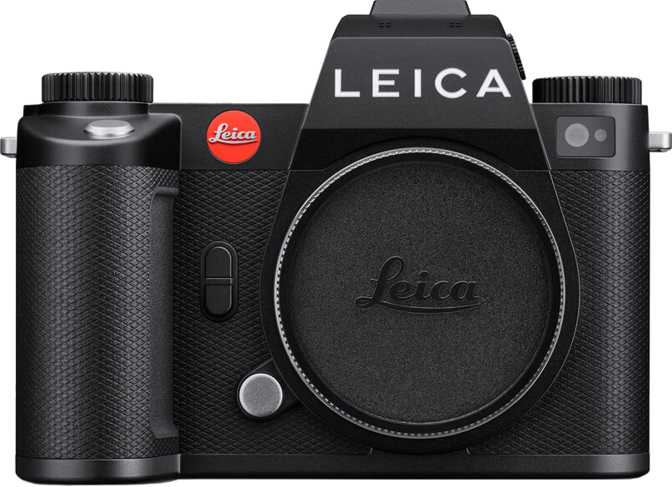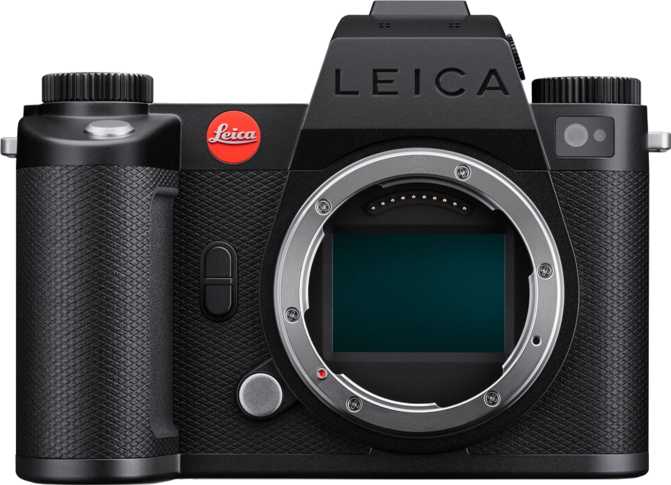
Leica SL3-S Full Review: A Professional Tool Built Without Compromise
CamerasWhat the Leica SL3-S Actually Is — and Why It Matters
There is a version of Leica that exists purely as a status symbol, bought for the red dot and displayed rather than used. The SL3-S is emphatically not that camera. It is a full-frame mirrorless body engineered for professionals who demand the optical heritage and color science of Leica alongside a feature set that can stand in a working studio, on a film set, or at the edge of a storm without apology.
It sits at the serious end of the L-Mount ecosystem — the collaborative lens standard shared between Leica, Panasonic, and Sigma — and it earns its place there through a combination of sensor technology, video capability, and physical resilience that makes it a genuine tool, not a trophy.
- Build Quality5.0
- Image Quality4.8
- Video Performance4.9
- Autofocus4.0
- Battery Life2.5
- Value for Money3.5
Key Specifications at a Glance
Sensor
Full-Frame Stacked BSI CMOS
Resolution
25.3 Megapixels
Video
4K-Class / 800 Mbps
Stabilization
5-Stop IBIS (CIPA)
Autofocus
779 Phase-Detect Points
Weather
Sealed, -10°C to 40°C
Design and Build: The Leica Way, Made Practical
Physical Presence
The SL3-S is not a small camera. At roughly 141mm wide, 108mm tall, and 83mm deep, it occupies serious real estate in a bag and in the hand. Its weight — just under 770 grams for the body alone — puts it firmly in the professional full-frame category alongside similarly sized competitors. That weight is not negligence; it reflects the magnesium alloy construction and the depth of engineering within.
What Leica has done well here is make that size feel purposeful rather than bloated. The grip is deep and well-contoured, meaning a full day's shoot does not translate into hand fatigue in the way that smaller, lighter bodies sometimes do. Shooters with larger hands will particularly appreciate the balance once a medium telephoto is mounted.
Weather Sealing and Operating Conditions
The SL3-S carries proper environmental sealing against moisture and dust. It is rated to operate in temperatures ranging from -10°C to 40°C (14°F to 104°F), which covers the overwhelming majority of professional shooting conditions — from winter weddings in northern Europe to summer documentary work in warm climates. This is not splashproof in a casual sense; it is engineered to work in sustained adverse conditions alongside sealed L-Mount lenses.
Photographers who regularly shoot outdoors or in unpredictable environments — photojournalists, travel photographers, wedding teams — can rely on this body not flinching when the sky opens.
Screen and Viewfinder
The rear display is a 3.2-inch touchscreen that renders fine detail and accurate color — fine enough that reviewing images critically in the field is genuinely useful rather than just indicative. Crucially, the screen articulates outward — not into a full side-flip but with enough movement to make low-angle shooting and overhead framing practical without forcing you to lie on the ground or guess at the frame.
The electronic viewfinder covers the full frame with 100% accuracy. What you see is exactly what the sensor will capture — no small thing when composing with precision. There is no option to tilt the viewfinder itself, which is a minor inconvenience for occasional shooting positions but rarely a dealbreaker in professional contexts.
Touch autofocus is supported, so you can tap the screen to set focus during both stills and video work — a feature that feels increasingly essential once you have used it consistently.
Body Dimensions
- Width
- 141.2 mm
- Height
- 108 mm
- Depth
- 82.7 mm
- Weight
- 768 g (body only)
- Operating Temp.
- -10°C to +40°C
Display & Viewfinder
- Screen Size
- 3.2 inches
- Screen Resolution
- 2,333,000 dots
- Touch Screen
- Yes, with AF
- Flip Screen
- Articulating
- EVF Coverage
- 100%
Sensor Performance: The Core of the SL3-S Argument
A Stacked Sensor with Real Implications
The SL3-S is built around a full-frame stacked BSI CMOS sensor resolving approximately 25 megapixels. Each element of that description carries specific meaning for working photographers.
Full-Frame Sensor
A larger physical light-capturing area compared to APS-C or Micro Four Thirds formats. This directly enables shallower depth of field, superior light collection, and low-light performance that smaller formats cannot match regardless of their megapixel count.
BSI Architecture
Back-side illumination repositions the light-collecting circuitry behind the photodiodes rather than in front of them. The result: more incoming light reaches the pixel, measurably improving low-light efficiency and dynamic range over equivalent conventional sensors.
Stacked CMOS
A dedicated processing layer sits beneath the sensor itself, dramatically increasing data-read speed. This reduces rolling shutter distortion in fast-moving subjects and enables sustained high-speed continuous shooting without thermal throttling.
Resolution: Right-Sized for the Intended Use
Twenty-five megapixels is a deliberate choice, not a compromise. It produces files large enough for generous print sizes, billboard work, and heavy cropping in post-processing, while keeping file sizes manageable across a long shooting day. For photographers regularly filling dual card slots across a multi-day shoot — events, commercial work, photojournalism — this balance between resolution and file overhead is genuinely practical.
Those who need more pixels for ultra-large reproduction or aggressive pixel-level retouching will find other full-frame bodies more suited to that specific requirement. The SL3-S is tuned for throughput and speed, not maximum resolution.
Light Sensitivity and Dynamic Range
The SL3-S extends to an ISO ceiling that places it among the most light-sensitive cameras in the full-frame category. In practical terms, this means the camera can be pushed into conditions — deep shadow, available-light portraiture, nighttime events — where other bodies would require either a tripod, a flash, or a significant sacrifice in image quality. Whether every stop of that extreme sensitivity range produces commercially usable output depends on the use case, but having the headroom available changes how you approach an uncontrolled environment.
Autofocus: 779 Points and What That Number Actually Means
The SL3-S deploys phase-detection autofocus across 779 individual points covering the sensor. Phase detection, as opposed to contrast detection, uses dedicated pixel pairs to calculate focus distance directly rather than hunting for peak contrast — the result is faster, more decisive focus acquisition, particularly in marginal light.
AF tracking is active for both stills and video, and touch autofocus allows you to assign focus either by physical touch on the screen or through the viewfinder, depending on your working style. The system is designed for continuous subject tracking as subjects move through the frame — a requirement for event, sports, wildlife, and documentary work.
For video specifically, continuous phase-detection autofocus during recording is supported, which eliminates the need to pull focus manually in many single-operator scenarios.
AF Capabilities
- 779 phase-detection AF points
- Subject tracking for stills & video
- Continuous AF during recording
- Touch AF on rear screen
- Manual focus override available
Continuous Shooting and Speed
The mechanical shutter sustains seven frames per second — a rate that covers most action and event scenarios without the buffer constraints that can plague cameras attempting faster burst rates. The stacked sensor architecture means the electronic shutter can exceed this in optimal conditions with reduced rolling shutter artifacts compared to conventional full-frame sensors.
The mechanical shutter's fastest speed of 1/8000s is standard for full-frame professional bodies, while the electronic shutter can reach 1/16000s — useful when shooting in very bright light with wide apertures without requiring an ND filter. Flash sync operates at 1/200s, which is conventional for the category and supports standard studio and location flash setups without limitation.
7 fps
Mechanical Burst Rate
1/8000s
Max Mechanical Shutter
1/16000s
Max Electronic Shutter
1/200s
Flash Sync Speed
In-Body Image Stabilization: Five Stops of Confidence
The sensor-shift stabilization in the SL3-S is rated at five stops by CIPA standards — the industry benchmark for measuring stabilization effectiveness. Five stops means that a shutter speed requiring 1/250s to freeze camera shake could, in optimal conditions, be extended to approximately 1/8s while maintaining sharpness. That is a significant operational advantage when shooting in low light without flash, or when using long telephoto lenses.
The system can combine with optically stabilized L-Mount lenses for coordinated stabilization — the two systems working together rather than independently, which produces more effective overall correction than either system alone. For video, this combination becomes particularly relevant, producing smoother handheld footage without the need for gimbals in many scenarios.
5
Stops IBIS (CIPA)
Sensor-shift stabilization
Combines with OIS-equipped L-Mount lensesVideo Capability: Built for Serious Production
Resolution and Bitrate
The SL3-S records video at a maximum width of approximately 3968 pixels horizontally, representing a high-resolution 4K-class output well above the broadcast minimum. At a maximum bitrate of 800 Mbps, this is substantially higher than most competing cameras in this class — the bitrate determines how much data is captured per second, directly affecting the amount of fine detail, color gradation, and flexibility available in post-production color grading.
For editors and colorists working on commercial, documentary, or narrative projects, 800 Mbps represents a very different level of raw material than the 100–200 Mbps typical of consumer-oriented cameras. The files are larger, but the grading latitude is commensurately broader.
Frame Rates and Cinema Mode
A native 24p cinema mode is included — the frame rate that imparts the motion cadence associated with film and cinema production. This is not a trivial addition; many cameras treat cinema frame rates as secondary options with reduced bitrate or cropped output. Slow-motion video recording is also supported, enabling footage that can be slowed in post for impact or analysis.
Audio
The SL3-S includes a built-in stereo microphone with two capsules — adequate for environmental sound and behind-the-scenes audio — alongside a 3.5mm microphone input and a 3.5mm headphone jack. This combination supports professional audio monitoring in the field and the use of external microphones or lavalier systems without adapters. For broadcast or commercial video work, dedicated audio recorders are still the standard approach, but the SL3-S provides a competent self-contained audio system for run-and-gun production.
- Max Resolution
- 3968 px wide (4K-class)
- Max Frame Rate
- 30 fps at full resolution
- Max Bitrate
- 800 Mbps
- Cinema Mode
- 24p Native
- Slow Motion
- Supported
- HDMI Output
- HDMI 2.1
- Mic Input
- 3.5mm Jack
- Headphone Out
- 3.5mm Jack
Connectivity and Workflow
Card Slots & Data Transfer
Dual memory card slots are present — a non-negotiable requirement for professional photography where redundant backup protects against catastrophic data loss. HDMI 2.1 supports clean high-bandwidth output to external recorders for those who want to bypass internal compression entirely.
USB Type-C at USB 3.2 speeds means tethered shooting and file transfer are fast enough to support a studio workflow without bottlenecks.
Wireless
Wi-Fi 5 and Bluetooth 5 provide wireless image transfer, remote control from a smartphone, and connection to external devices. The smartphone remote functionality is useful for solo video operators and for situations where the camera needs to be positioned at a distance.
There is no NFC for instant pairing, and there is no built-in GPS for automatic geotagging of images. Initial wireless setup requires navigating the standard menu system.
Hot Shoe & Flash
A standard hot shoe is present for mounting external flash units, triggers, and accessories. This is a conventional rather than advanced hot shoe — proprietary TTL accessories designed for advanced communication protocols from other manufacturers will not function in advanced mode, though manual and optical triggers work without limitation. There is no built-in flash.
Connectivity Summary
Battery Life: Honest Assessment of the Trade-Off
Battery Life Is the SL3-S's Most Significant Weakness
At approximately 315 shots per CIPA rating, a working photographer should carry a minimum of two or three spare batteries for any full-day assignment.
The CIPA-rated battery life of approximately 315 shots per charge is, by the standards of professional full-frame mirrorless cameras, modest. This is a consequence of the power demands of the stacked sensor, high-resolution EVF, image stabilization system, and wireless radios all drawing from a 2,200 mAh battery — a capacity that by modern mirrorless standards sits in the mid-range.
In practical terms, a photographer shooting a full-day event should carry at least two or three spare batteries. For studio work with USB-C charging between sessions, this is less of a concern. For documentary or travel photography without reliable power access, battery management becomes a planning requirement, not an afterthought.
The battery is fully removable and rechargeable — no proprietary charging cradle required — and the camera supports USB-C charging for top-up from a power bank in the field, which significantly mitigates the headline limitation.
315
shots per charge (CIPA)
- Removable, rechargeable battery
- USB-C field charging supported
- Battery level indicator on display
Who the Leica SL3-S Is For
Ideal For
- Commercial & editorial photographersWho need reliable full-frame image quality, precise color, and a professional-grade body that commands confidence in client-facing situations.
- Documentary & narrative videographersWho require high-bitrate 4K-class footage with cinema framing options and the stabilization to work handheld effectively.
- Existing L-Mount lens usersWhether from the Leica, Sigma, or Panasonic Lumix S ecosystems, for whom this body is a direct and powerful upgrade path.
- Photojournalists & reportage photographersWho need weather resistance, fast AF tracking, and reliable performance across a wide temperature range.
- Hybrid stills/video shootersWho move fluidly between stills and video assignments and need a single body that handles both without compromise.
Not the Right Tool For
- Sports & wildlife specialistsWho require sustained burst rates of 10fps or above and deep buffer depths — this is not a dedicated action camera.
- Lightweight travel photographersAt nearly 770 grams before a lens is attached, every day of carrying this will be felt.
- Budget-conscious buyersThe SL3-S is positioned at the premium end of the full-frame mirrorless market, and neither the body price nor the cost of L-Mount lenses suits tight financial constraints.
- Users dependent on GPS geotaggingThere is no internal GPS, and no workaround beyond a compatible smartphone tether for location data.
How It Compares to Logical Alternatives
The SL3-S competes within a field of capable full-frame mirrorless professionals. Here is how it stacks up against the most likely alternatives a buyer would consider.
| Feature | Leica SL3-S | Sony A7 IV | Panasonic Lumix S5 II | Nikon Z6 III |
|---|---|---|---|---|
| Sensor Resolution | ~25 MP | 33 MP | 24 MP | 24 MP |
| Sensor Architecture | Stacked BSI CMOS | BSI CMOS | BSI CMOS | Partially Stacked |
| Max Video Bitrate | 800 Mbps | ~600 Mbps | ~200 Mbps | ~600 Mbps |
| IBIS Rating | 5 stops | 5.5 stops | 5 stops | 6 stops |
| Continuous Shooting | 7 fps (mech.) | 10 fps | 9 fps | 20 fps |
| Battery Life (CIPA) | ~315 shots | ~610 shots | ~370 shots | ~360 shots |
| Weather Sealing | ||||
| Lens Ecosystem | L-Mount | Sony E | L-Mount | Nikon Z |
| Built-in GPS |
Competing camera specifications are drawn from publicly available sources for comparative context. Always verify current specifications before purchase.
The most direct observation from this comparison is that the SL3-S trades competitive burst speed and battery capacity for superior video bitrate and the specific rendering and build character that defines Leica. Panasonic's S5 II shares the L-Mount lens compatibility, making it an interesting point of comparison for those already invested in that glass — the SL3-S offers a substantially higher video bitrate ceiling and a stacked sensor architecture, while the S5 II delivers better battery endurance at a lower price point.
Strengths and Where the SL3-S Falls Short
The SL3-S is genuinely impressive when evaluated against its own design brief. The stacked sensor architecture allows video capabilities that no similarly priced conventional full-frame sensor can match, and the 800 Mbps bitrate ceiling is a legitimate differentiator for anyone producing content that will be graded seriously. The build quality is exemplary — this is a camera that communicates its structural integrity through every control interaction, and the weather sealing inspires confidence that most other bodies simply cannot replicate at a tactile level.
The autofocus system is capable and practical for the majority of professional shooting scenarios. It is not, however, the fastest or most subject-detection-capable system in the full-frame mirrorless category — photographers whose primary requirement is tracking erratically moving subjects at high speed should test the system directly against their specific use case before committing.
The battery situation is the most significant genuine weakness. Three hundred and fifteen shots on a single charge is not adequate for sustained professional use without spare batteries, and while USB-C charging provides a workaround, it does not change the underlying reality. For a camera at this price point, more battery endurance would meaningfully improve the day-to-day experience.
The absence of GPS will matter to some and not at all to others — but it is worth knowing before purchase, particularly for photojournalists or travel photographers who rely on embedded location data for archiving and licensing.
Answers to Common Questions
Final Verdict
An expert opinion for professionals who know exactly what they need
4.3
Overall Score
The Leica SL3-S is a focused, uncompromising tool built for photographers and filmmakers who prioritize image quality, video data integrity, and physical durability over burst speed, battery longevity, or ecosystem breadth. It does not try to be everything to everyone, and that restraint is part of what makes it credible.
For working hybrid professionals in commercial, editorial, or documentary fields — particularly those already using L-Mount glass — it is a compelling and well-justified choice. This is a camera that will reward those who understand what they are buying and why.
Buy It If
- Your work demands the highest video data rates in the full-frame mirrorless category
- You value build quality as a professional requirement, not a luxury
- The L-Mount ecosystem meets your optical needs
Reconsider If
- Shooting endurance between charges is your highest priority
- You primarily shoot fast action and need burst rates above 10fps
- Your entry price into full-frame must be as competitive as possible