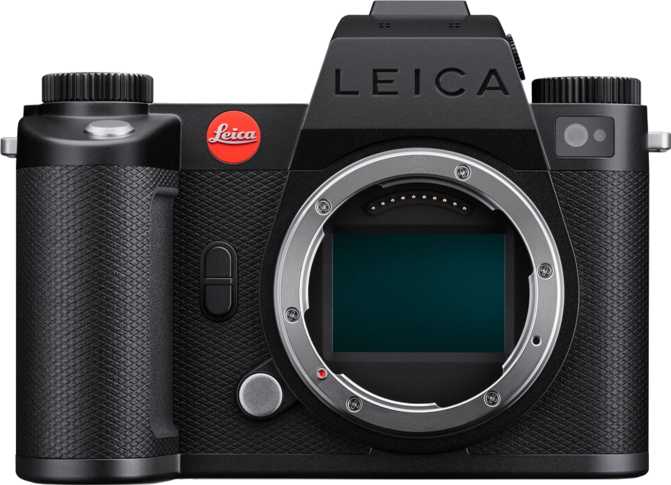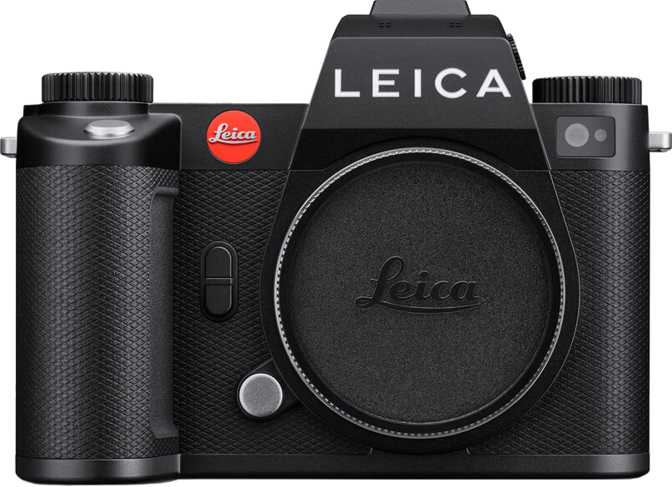
Leica SL3 Full Review: An Uncompromising Full-Frame Mirrorless
CamerasThe Leica SL3 exists in a very specific place in the camera market — one where engineering precision, optical heritage, and an almost philosophical commitment to image quality converge. It is not trying to compete on spec-sheet volume or price-to-performance ratios. It is making a statement about what a full-frame mirrorless camera can be when the pursuit of image quality is treated as an absolute rather than a compromise.
For photographers who have spent years with other full-frame systems — Sony, Canon, Nikon — the SL3 presents a genuinely different proposition. The question is not whether it outperforms on every axis. It does not. The question is whether what it does exceptionally well aligns with what you need. That distinction matters enormously here, and this review will help you answer it honestly.
Design and Build: Precision Over Personality
Physical experience, display, and viewfinder
The Physical Experience
Picking up the Leica SL3 immediately communicates something that specification tables struggle to capture: the camera feels intentional. Its dimensions — roughly 141 mm wide, 108 mm tall, and just under 85 mm deep — place it at the larger end of the mirrorless category. At 850 grams body-only, this is a substantial piece of equipment. It is a working instrument designed for photographers who treat weight as an acceptable trade-off for performance and build integrity, not a camera you will tuck into a jacket pocket.
The body is fully weather-sealed and operates in temperatures ranging from -10°C to 40°C. That range covers most professional shooting environments — from freezing winter outdoor assignments to warm studio conditions. Rain, dust, and humidity are not concerns that need to interrupt a shoot.
Display and Viewfinder
The 3.2-inch touchscreen offers over 2.3 million dots of resolution — enough clarity that reviewing images and navigating menus in the field is genuinely useful. Critically, the screen flips out, opening up shooting angles that a fixed screen cannot accommodate: low-angle street photography, overhead crowd shots, and tripod compositions where putting your eye to the viewfinder is impractical.
The electronic viewfinder delivers 100% scene coverage — what you see through the eyepiece is precisely what the sensor will capture, with no cropped or approximate preview zones. The EVF does not tilt independently, which is a genuine limitation for some shooting styles, but the flip-out rear screen compensates for most of those scenarios in practice.
A hot shoe is present for external flash accessories while no built-in flash is included. The camera is engineered to be expanded through accessories and lenses rather than packed with built-in features — a deliberate philosophy, not an oversight.
Sensor and Image Quality: 60 Megapixels With Purpose
Resolution, low-light performance, stabilization, and pixel shift
What 60 Megapixels Actually Means
The SL3 carries a full-frame, back-illuminated CMOS sensor resolving just over 60 megapixels. A file from this camera contains enough information to produce a flawless, artifact-free print at billboard scale. For commercial photography, large-format fine art printing, or work where clients request aggressive crops after the fact, that resolution provides a margin of safety that lower-resolution cameras simply cannot match.
Back-illuminated sensor architecture — BSI — positions the light-gathering circuitry behind the photodiodes rather than in front of them, allowing more available light to actually reach the sensor. The practical benefit is most visible in low-light conditions: reduced noise, cleaner shadow detail, and better overall rendering when light is genuinely scarce.
ISO Range and Low-Light Capability
The sensitivity ceiling extends to ISO 100,000 — the outer boundary of what the sensor can technically capture. With a BSI full-frame sensor, noise in the upper ISO ranges becomes a creative consideration rather than a technical failure point. Your exact usable ceiling will depend on output size and grain tolerance, but the underlying architecture is strong. Expect clean, publishable files well up the scale under careful exposure discipline.
In-Body Stabilization
Five stops of sensor-shift image stabilization, rated to CIPA's standardized testing methodology, means the SL3 compensates for camera shake across an unusually wide range of handheld scenarios. To put five stops in practical terms: architectural interiors in dim light, evening travel photography, and available-light portraiture — scenarios that traditionally demand a tripod — become realistically handholdable. This changes logistics meaningfully on location.
Pixel Shift Mode
For studio or controlled-environment work, the pixel shift function deserves serious attention. By shifting the sensor in precise micro-increments between sequential exposures and combining the resulting files, this mode produces images with significantly higher spatial resolution and color fidelity than the sensor's native single-shot output. The requirement for a completely static subject limits it to product photography, art reproduction, or fine art landscape work from a tripod — but in those contexts, the detail it reveals is otherwise unavailable from a single exposure.
Technical note: The Maestro IV processor handles the computational overhead of 60 MP files and pixel-shift compositing. At this resolution tier, fast card media, a capable workstation with sufficient RAM, and high-throughput storage are prerequisites for a fluid editing workflow — not optional extras.
Autofocus: Capable, Not Category-Defining
Phase detection, tracking, and real-world performance
The SL3 uses phase-detection autofocus across a 315-point array, active for both stills and video. Phase detection works by comparing light-path angles to estimate focus distance directly — it is faster in most conditions and handles moving subjects more confidently than older contrast-based systems. AF tracking is included, allowing the camera to lock onto a subject and follow it across the frame through continuous shooting sequences. Touch autofocus via the rear screen lets you tap a point of interest directly to drive focus there — particularly useful when using the flip-out display at arm's length.
That said, honesty serves better than enthusiasm here: the SL3's autofocus system is competitive, but it is not the category benchmark. Photographers whose primary work involves fast, unpredictable action — wildlife at full sprint, sports events, performance photography — will find more aggressive tracking and subject-recognition capability in competing systems. The SL3's autofocus performs excellently for portraits, events, documentary, street photography, and any deliberate shooting workflow. For high-speed action specialists, it warrants careful evaluation against alternatives before committing.
AF System Summary
- 315-point phase-detection array — stills and video
- Subject tracking across the full frame
- Touch-to-focus via rear touchscreen
- Continuous AF active during video recording
- Full manual focus override available
- Subject-recognition AI tracking behind category leaders
Continuous Shooting and Mechanical Performance
Burst rate, shutter range, and silent electronic mode
At seven frames per second in mechanical continuous mode, the SL3 is not attempting to be a burst-oriented sports camera. Seven frames per second is a workable rate for capturing expressive moments in portraiture, street photography, event coverage, and moderate action — but dedicated sports shooters targeting peak moments in high-speed disciplines will find this ceiling genuinely limiting compared to competitors capable of 20 or more frames per second.
The mechanical shutter reaches 1/8000th of a second at its fastest, handling virtually every daylight shooting situation including open-aperture work with fast prime lenses in direct sunlight. The electronic shutter extends to 1/16000th of a second — useful for controlling exposure in exceptionally bright conditions or shooting wide open at midday without neutral density filtration. Critically, the electronic shutter operates in complete silence and without vibration, making it the preferred mode for quiet environments: wedding ceremonies, theater performances, or wildlife situations where any shutter sound is a problem.
Flash sync at 1/200th of a second is standard for the mirrorless category. Photographers using high-speed sync flash systems should verify specific lens and flash combination compatibility for above-sync-speed work.
Video: 8K Capability in a Stills-First Body
Resolution, cinema modes, audio, and professional video connectivity
Resolution and Cinema Modes
The SL3 records video at up to 8K — 4320 pixels of vertical resolution — at 30 frames per second. This places it among a small number of full-frame mirrorless cameras capable of native 8K capture. For video professionals, 8K acquisition offers meaningful future-proofing as display technology advances, along with significant reframing flexibility in post-production when delivering 4K or HD outputs. A clean frame grab from 8K footage is a high-resolution still in its own right.
A 24p cinema mode is included, enabling the frame rate aligned with theatrical film conventions and the visual rhythm that cinematographers and narrative filmmakers rely on. Slow-motion recording is also supported for expressive temporal manipulation in the edit.
The SL3 is a stills-first camera with strong video credentials, not a dedicated cinema body. Filmmakers who need built-in ND filters, advanced log profiles, internal RAW video, or broadcast-level video ergonomics should evaluate purpose-built alternatives before deciding.
Audio and Professional Connectivity
The full set of connections working videographers require is present: a built-in stereo microphone with two capsules for ambient capture, a 3.5mm headphone jack for real-time monitoring during recording, and a dedicated microphone input for external audio sources. HDMI 2.1 output connects to external recorders or monitors, supporting the bandwidth required for 8K or high-frame-rate 4K streams. Phase-detection autofocus remains active during video recording, maintaining subject focus without manual intervention — critical for solo or run-and-gun documentary work.
- Native 8K at 30fps
- 24p cinema frame rate mode
- Slow-motion video recording
- Phase-detection AF active during recording
- 3.5mm mic input and headphone monitoring
- HDMI 2.1 for external recorders and monitors
- No internal RAW video recording
Battery Life: A Known Trade-Off
Endurance expectations, real-world planning, and charging options
The CIPA-rated battery life of approximately 260 shots per charge is the most significant practical limitation of the SL3 for working photographers. CIPA ratings are measured under controlled conditions that include powering the camera down between shots — real-world usage with the electronic viewfinder running continuously, burst shooting, or wireless connectivity active will typically fall shorter than that figure in the field.
For a full day of demanding professional shooting, carrying two to three spare batteries is not optional — it is a necessity. The battery is removable and the camera accepts USB-C charging, so top-ups from a power bank or laptop between sessions are possible. But the underlying cell capacity imposes real limits on how long you can shoot continuously. This is a category-wide characteristic of high-resolution full-frame mirrorless cameras; the SL3 is not uniquely weak here, but it is not strong either.
The USB-C 3.1 port also handles fast data transfer to computers and external drives — at these file sizes, connection speed matters for maintaining an efficient editing workflow.
Connectivity and Workflow
Wireless, data transfer, storage, and physical ports
Wireless and Remote Control
Wi-Fi and Bluetooth 5 are both included. Smartphone remote control lets you trigger the shutter, review images, or adjust settings from a connected phone — useful for tripod-based work where returning to the camera body disrupts the composition. Bluetooth 5's low-energy profile maintains a persistent connection to a paired phone without meaningful drain on the camera's battery, enabling geotagging workflows where the phone's GPS location data is logged continuously alongside image metadata. The SL3 carries no onboard GPS; this phone-relay approach is the solution.
NFC is absent, so the tap-to-pair convenience found on some competing bodies is not available. Wireless pairing requires the standard Wi-Fi or Bluetooth setup flow.
Storage and Physical Connections
Dual card slots support simultaneous backup writing to both slots, overflow spillover from one card to the next, or a split workflow separating RAW originals and JPEG copies. For work that cannot be re-shot, this redundancy is meaningful insurance.
| Connection | Spec | Primary Use |
|---|---|---|
| USB-C | USB 3.1 | Fast transfer & in-camera charging |
| HDMI | HDMI 2.1 | External monitor / recorder output |
| Wi-Fi | Wi-Fi 5 (802.11ac) | Remote control, image transfer |
| Bluetooth | Bluetooth 5 | Persistent phone link, geotagging |
| 3.5mm Audio | Input + Output | External mic & headphone monitoring |
Who the Leica SL3 Is For — and Who It Is Not
Matching the camera honestly to the right photographer
This Camera Is For You If...
- You shoot commercial or advertising work and deliver large-format files for high-end print production
- You are a fine art photographer who needs maximum detail for gallery-scale or museum-quality output
- You specialize in portrait, fashion, or beauty photography in studio or controlled outdoor conditions
- You shoot documentary or street photography and value image integrity over burst speed
- You need 8K native video capture in a body that handles professional stills with equal authority
- You are already within the Leica L-mount ecosystem and want to consolidate around one capable body
Look Elsewhere If...
- You primarily shoot sports or high-speed action and depend on aggressive subject-recognition tracking at 20 or more frames per second
- Budget is a primary consideration — the price firmly places this in the professional tier, and L-mount glass reinforces that financial commitment
- You need reliable all-day shooting on a single charge without actively managing a battery rotation
- You are a video-first creator who requires internal RAW video recording or built-in neutral density filtration
How the SL3 Sits Against Its Alternatives
Competitive positioning within the high-resolution full-frame mirrorless category
The SL3's closest comparisons are among full-frame mirrorless cameras in the high-resolution tier. The L-Mount Alliance between Leica, Sigma, and Panasonic is worth understanding before drawing conclusions about ecosystem depth — SL3 owners are not limited to native Leica glass. Sigma's Art series in L-mount delivers world-class optical performance at a fraction of native Leica glass pricing, considerably expanding the practical ecosystem. Sony E-mount and Nikon Z-mount ecosystems still offer broader native lens selections overall, but the gap is narrower than it once was.
| Feature | Leica SL3 | High-Res Full-Frame Competitors |
|---|---|---|
| Resolution | 60.3 MP | 45–61 MP (varies by model) |
| IBIS Rating | 5 stops (CIPA) | 5–8 stops (varies) |
| Continuous Shooting | 7 fps (mechanical) | 10–30 fps (varies) |
| Battery Life | ~260 shots (CIPA) | ~400–700 shots (varies) |
| Video Ceiling | 8K / 30fps | 6K–8K (varies) |
| Weather Sealing | Yes | Yes (most competitors) |
| Lens Ecosystem | Leica L + L-Mount Alliance (Sigma, Panasonic) | Proprietary mounts with larger native selections |
Honest Assessment: Strengths and Limitations
A balanced evaluation of where the SL3 leads and where it concedes ground
The SL3's strengths are concentrated and exceptional. A 60-megapixel back-illuminated full-frame sensor, five stops of CIPA-rated stabilization, 8K video capability, dual card slots, a genuinely useful flip-out screen, full weather sealing across an extended operating temperature range, and a build quality that communicates precision without artifice — these form a cohesive, coherent package. No single feature feels added for a checklist. Each one serves the camera's character and the kind of photographer it is designed for.
The limitations are real and deserve honest weight. Battery endurance is the most practically disruptive — it creates logistical planning demands on every serious assignment. The continuous shooting ceiling and autofocus tracking performance, while not weak in absolute terms, make the SL3 a secondary choice for dedicated action photography rather than the natural first pick. The absence of onboard GPS and NFC are minor but genuine omissions compared to some competitors at this tier.
Performance Category Assessment
The price point is the implicit filter shaping every comparison. The SL3 does not ask you to accept trade-offs because of budget constraints. It asks you to accept trade-offs because of deliberate design choices. That distinction changes how those trade-offs should be interpreted.
Questions Buyers Ask Before Purchasing
Direct answers to the most common real-world questions about the Leica SL3
Final Verdict: A Precision Tool for the Right Hands
Highly Recommended — For the Right PhotographerThe Leica SL3 is one of the finest image-making instruments currently available in the mirrorless category — with the understanding that "finest" is defined by criteria beyond raw specification counts. If your work demands extraordinary resolution, a build that inspires confidence in every environment, strong stabilization for handheld precision, credible 8K video, and the practical and psychological satisfaction of working within the Leica system, the SL3 delivers on all of those dimensions without reservation.
It is not the right camera for everyone. Photographers who need top-tier action tracking, extended all-day battery endurance without active management, or the broadest possible native lens selection will make different choices — and those choices will make sense for them. The SL3 does not ask to be for everyone.
For the photographer who shoots deliberately, values the image above all else, and wants a single body capable of professional stills and serious video with equal authority — the Leica SL3 is not a compromise. It is a commitment. And for the right photographer, it is the correct one.