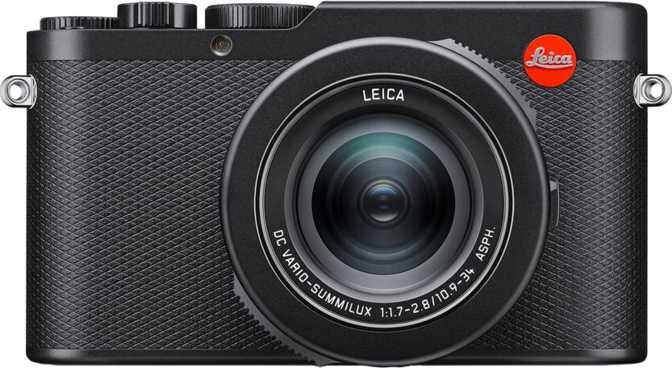
Leica D-Lux 8 Review: Premium Compact With a Lens That Earns Its Keep
CamerasThere's a specific kind of camera buyer who has outgrown smartphone photography but finds a mirrorless kit — with its rotating lenses, heavy bag, and constant decision-making — more burden than joy. For that person, the Leica D-Lux 8 exists. It's a premium compact built around one core promise: exceptional image quality in a body that fits in a coat pocket, sold under the most prestigious name in camera history.
This review examines whether the D-Lux 8 delivers genuine photographic capability or whether you're paying primarily for the red dot on the front.
At a Glance
- f/1.7 lens — exceptional for a compact
- Built-in 2360k-dot EVF
- Full manual control + RAW shooting
- Leaf shutter with full flash sync
- No weather sealing
- Modest battery capacity
- No external mic input
Key Specifications
All specifications sourced from manufacturer data
Design and Build: Compact With Intention
At 130mm wide, 69mm tall, and just 34mm thick, the D-Lux 8 qualifies as a true compact — not the bloated "compact" that still requires a dedicated bag. Weighing in at 397 grams, it has enough heft to feel premium in hand without fatiguing you during a long day's shooting. This is a camera designed to go everywhere.
The body sits well in the palm. Physical controls are laid out for photographers who want direct access to exposure settings without navigating menus — manual shutter speed, ISO, and white balance are all accessible, and the two-stage shutter release gives a satisfying, deliberate feel that's rare at this size.
The 3-inch touchscreen is responsive and has sufficient resolution to evaluate focus and composition accurately. It does not tilt or articulate, which limits shooting from low angles or overhead positions. The screen's fixed position is a concession to the compact form factor, but competing cameras at this price do offer tilting screens, so the trade-off is real.
There is no built-in flash. A hot shoe is provided for attaching an external unit, giving flash users flexibility without cluttering the top plate. For most street and travel photography — the D-Lux 8's natural territory — the absence of a pop-up flash is unlikely to cause problems.
| Width | 130 mm |
| Height | 69 mm |
| Thickness | 34 mm |
| Weight | 397 g |
| Volume | 304.98 cm³ |
| Screen Size | 3 inches |
| Screen Resolution | 1843k dots |
| Touchscreen | Yes |
| Flip-out Screen | No |
| Hot Shoe | Yes |
| Built-in Flash | No |
| Operating Temperature | 0°C – 40°C |
The Viewfinder: A Genuine Advantage for Compact Cameras
Not every compact camera includes a viewfinder at all. The D-Lux 8 has one, and it's a good one. The electronic viewfinder (EVF) resolves at 2360k dots — a figure that translates to a sharp, clear image that allows you to evaluate fine detail, shallow depth of field, and exposure before you press the shutter. It refreshes at 60 frames per second, which keeps motion rendering smooth and avoids the disorienting lag that plagues lower-quality EVFs.
Viewfinder coverage is 100%, meaning what you see is exactly what you capture — no surprises at the edges of the frame when the image is reviewed later. For candid and street photography where precise framing matters, this is a meaningful advantage over compact cameras that omit the EVF entirely or offer partial coverage.
The Lens: Where the D-Lux 8 Earns Its Reputation
The lens is the most important component of any fixed-lens compact, and this is where the D-Lux 8 makes its strongest argument.
Aperture
The widest aperture available — f/1.7 at the short end of the zoom range — is exceptionally fast for a compact zoom lens. A larger aperture opening means more light reaches the sensor and more background blur (bokeh) is possible.
An f/1.7 aperture means the D-Lux 8 can take clean, well-exposed shots in dimly lit restaurants, evening streets, and indoor venues where other compact cameras start producing noisy, soft images. As you zoom in, the aperture narrows to f/2.8 at the telephoto end — still a respectable figure.
Zoom Range
The lens spans from a wide angle suited to landscapes, architecture, and environmental portraits, all the way to a short telephoto that flatters facial portraits and reaches across a table or small room.
The 3.1× optical zoom range isn't designed for shooting subjects at a distance. But for travel, street, food, events, and family moments — the zoom range covers what you actually need.
Stabilization & Focus
Built-in optical image stabilization compensates for camera shake during handheld shooting, allowing slower shutter speeds in low light without blur from hand movement. It's the lens-based variety, standard for this category.
The closest the D-Lux 8 can focus is approximately half a meter — adequate for table-top photography and general close-up work, but true macro photography is beyond this lens.
Sensor Performance: Pixels, ISO, and Real-World Image Quality
Resolution in Context
The 17-megapixel sensor provides more than enough resolution for large prints, extensive cropping, and detailed image review. For social media, digital delivery, and print up to considerable sizes, 17MP is fully adequate.
The sensor uses a standard CMOS design. It lacks the back-illuminated architecture found in some competing sensors, which would offer improved low-light efficiency. This matters primarily at higher ISO values, where a back-illuminated sensor typically produces cleaner results at equivalent settings.
ISO Range and Low-Light Capability
The camera's sensitivity extends to ISO 25600. Combined with the f/1.7 aperture, this gives the D-Lux 8 genuine low-light capability. The practical working range — where noise remains well-controlled — will be meaningful for everyday shooting without flash in typical indoor lighting.
At the extreme upper end of the ISO range, noise and detail loss are expected; this is a limit shared by all cameras with sensors of this size.
Shutter Speed and the Leaf Shutter Advantage
A Sleeper Feature Worth Understanding
The D-Lux 8's fastest mechanical shutter speed and flash sync speed are identical — both at 1/4000th of a second. This alignment strongly suggests a leaf shutter mechanism within the lens, rather than a conventional focal-plane shutter. A leaf shutter can synchronize with flash at all shutter speeds, including the fastest. For photographers who use flash outdoors to balance ambient light (fill-flash), this means you can use flash with fast shutter speeds to control background exposure — something most cameras with focal-plane shutters cannot do without specialized equipment. The electronic shutter extends speed capability further to 1/16000th of a second, useful for shooting at very wide apertures in bright conditions without overexposure.
| Specification | Value | What It Means |
|---|---|---|
| Max Mechanical Shutter | 1/4000s | Freeze most everyday motion cleanly |
| Max Electronic Shutter | 1/16000s | Wide aperture shooting in bright sunlight |
| Flash Sync Speed | 1/4000s | Full-sync at all speeds — leaf shutter benefit |
| Long Exposure | 30 seconds | Night photography and light trails |
| Burst Rate | 11 fps | Enough for everyday timing-sensitive shots |
| Max ISO | 25600 | Usable in low light; noise expected at extremes |
| RAW Shooting | Yes | Full post-processing control |
| Sensor Type | CMOS | Standard (no BSI, no stacked) |
Autofocus: Capable, With One Notable Gap
The autofocus system uses 49 selectable focus points spread across the frame, with AF tracking that follows subjects as they move. Touch autofocus — tapping the screen to set focus on a specific subject — works alongside the viewfinder for flexible control.
What the D-Lux 8 lacks is phase-detection autofocus, for both photos and video. Phase detection is a faster autofocus method that most modern interchangeable-lens cameras use to lock onto subjects quickly, especially moving ones. The D-Lux 8 relies on contrast-detection autofocus, which is accurate but can be slower to acquire focus on unpredictably moving subjects.
For travel, street, portraits, and most everyday situations, contrast AF performs well. For fast, erratic action — sports, wildlife in motion, toddlers in full sprint — the autofocus limitations will become apparent. Manual focus is fully supported for those who prefer precise control.
Autofocus at a Glance
- 49 focus points — broad coverage across the frame
- AF Tracking — follows moving subjects
- Touch AF — tap to focus on screen
- Manual Focus — full manual control available
- No Phase Detection — contrast-detect only; slower on erratic motion
Video: 4K Quality With Audiophile Compromises
What the Footage Delivers
The D-Lux 8 records 4K video at up to 30 frames per second, and a 24-frame cinema mode is included for a more filmic look. The recording bitrate — the amount of data captured per second — is set at 100 Mbps, high enough to preserve detail and hold up under post-production color grading.
Continuous autofocus functions during video recording, keeping subjects in focus as the camera moves or subjects shift position. This is an important convenience for solo shooters without a dedicated focus puller.
Audio Limitations That Limit Creative Work
The camera has no microphone input jack and no headphone monitoring port. It records audio through two built-in microphones that capture stereo sound — perfectly adequate for casual video, travel vlogs, and family documentation.
For any serious video work — interviews, event coverage, or professional-level audio — the inability to connect an external microphone is a significant constraint. There is also no slow-motion video recording capability.
Battery Life: The Most Honest Conversation to Have
The battery capacity is modest — sized for a compact body, not for extended shooting sessions. Expect somewhere between 200 and 350 shots per charge under typical shooting conditions, depending on how heavily you use the viewfinder, screen, and wireless connectivity. Photographers used to DSLRs or larger mirrorless cameras that last a full day on a single charge will find this a genuine adjustment.
The practical solution is straightforward: carry a spare battery. The battery is removable and rechargeable, and the camera charges via USB-C, meaning a power bank can keep it topped up during travel.
Battery level is displayed on-screen so there are no surprises. Managing battery becomes part of the D-Lux 8 workflow — acceptable once expected, frustrating if not anticipated.
- Removable battery
- USB-C charging — power bank compatible
- On-screen battery level indicator
- Carry a spare for full-day shoots
Connectivity: Modern Essentials, Selective Extras
Who the Leica D-Lux 8 Is For — And Who It Is Not
- Travel photographers who want genuine photographic control in a camera that fits in carry-on pockets without camera-specific luggage
- Street photographers who value the fast aperture, quiet operation, and EVF for candid work in unpredictable light
- Advanced hobbyists stepping up from smartphone photography who want manual controls, RAW files, and real optical quality
- System camera owners who want a small companion camera that doesn't compromise heavily on image quality
- Leica ecosystem owners who want a compact that fits within Leica's aesthetic and philosophy
- Sports and wildlife photographers who need fast phase-detection autofocus and long telephoto reach
- Serious video creators who require external microphone input, headphone monitoring, or slow-motion capability
- Outdoor photographers who regularly work in rain, snow, or dusty conditions — no weather sealing is a real risk
- Budget-conscious buyers — this camera competes on quality and brand, not price
- Long-zoom travel photographers who need to cover distant subjects across varying distances
Competitive Positioning: Where the D-Lux 8 Sits in the Market
The D-Lux 8's f/1.7 aperture and included EVF are genuine competitive advantages in the compact category. Its key vulnerabilities are the absence of weather sealing, the lack of audio inputs for video, no slow-motion, and the battery capacity. Premium compact cameras from Japanese manufacturers in a similar performance tier often offer weather sealing, audio inputs, or larger sensors at a lower price point.
| Feature | Leica D-Lux 8 | Typical Premium Compact Competitor |
|---|---|---|
| Sensor Architecture | Standard CMOS | Varies (some BSI) |
| Maximum Aperture | f/1.7 | f/1.8–f/2.0 typical |
| Built-in EVF | 2360k dots | Often absent or lower res |
| Weather Sealing | None | Some competitors offer it |
| External Mic Input | None | Some offer 3.5mm jack |
| Slow-Motion Video | Not supported | Available on some models |
| RAW Shooting | Yes | Yes (at this price tier) |
| Removable Battery | Yes | Varies |
| Leaf Shutter / Flash Sync | Full sync at 1/4000s | Typically limited |
| Brand Premium | Significant | Lower |
The Leica commands a premium for optical quality, build character, brand prestige, and the specific shooting experience the combination of controls and lens quality creates. Whether that premium represents value is a personal calculation.
Strengths and Honest Weaknesses
The D-Lux 8's greatest strength is the lens. An f/1.7 maximum aperture in a compact zoom is rare and genuinely transformative for low-light photography. Pair that with optical stabilization and you have a camera that performs meaningfully better than smaller-sensor competitors when light fades — which is exactly when photography gets interesting.
The EVF is the second major strength. Composing with eye to viewfinder rather than squinting at a screen in bright sunlight is a qualitative difference in the shooting experience. At 2360k dots, the image quality in the finder is good enough to trust for critical work.
The leaf shutter's flash sync advantage is a sleeper feature that flash photographers will appreciate. Full-speed flash sync at any shutter speed opens creative possibilities that most compact cameras simply cannot offer.
Battery capacity is the most pressing daily reality. It doesn't ruin the camera, but it demands planning and the habit of carrying spares. This is non-negotiable for all-day shooting.
The absence of weather sealing is a meaningful constraint for a camera marketed as a go-anywhere companion. A camera that needs shelter from rain is not truly an every-condition camera.
The autofocus, while reliable for the vast majority of subjects, has a ceiling that action and wildlife photographers will bump against quickly. Contrast-detection AF is inherently slower than phase-detection on moving targets.
The video system is capable in image quality terms but stripped of the audio infrastructure that serious video work requires. The D-Lux 8 is a stills camera with capable video, not a hybrid tool.
Questions Real Buyers Ask Before Purchasing
A Specific Answer for a Specific Buyer
The Leica D-Lux 8 is a well-designed, optically strong compact camera built for people who take photography seriously but want to carry less. The f/1.7 lens, the quality EVF, the leaf shutter's flash capabilities, and the combination of manual controls make it a genuinely capable photographic tool — not just a premium accessory.
It asks you to accept real limitations in return: no weather sealing, modest battery endurance, no external audio input, and autofocus that works excellently for most subjects but shows its constraints with fast action.
- Your photography lives in travel, street, and portraits
- Low-light capability matters more than zoom reach
- Carrying less means you shoot more
- You need weather protection or long telephoto
- Serious video audio is part of your workflow
- The price premium feels unjustifiable for your use
The best camera is the one you actually carry. The D-Lux 8 earns its place in your pocket — and the lens means the images you bring home are worth having.