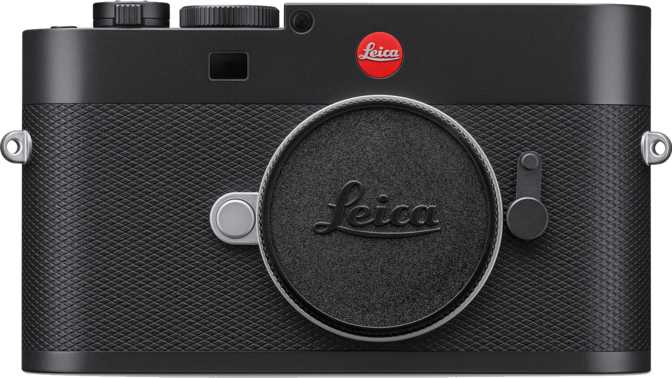
Leica M EV1 Review: The 60MP M-Mount Mirrorless Unpacked
CamerasThere are cameras that take photographs, and there are cameras that change how you think about photography. The Leica M EV1 sits firmly in the second category — but not without deliberate trade-offs that demand honest consideration before purchase. It is the most technically ambitious camera to ever carry the Leica M badge: a full-frame, 60.3-megapixel mirrorless body built around the legendary M lens mount, now paired with an electronic viewfinder instead of the optical rangefinder that defined generations before it. That single decision is the lens through which everything else about this camera must be understood.
Design and Build: Compact Dimensions, Serious Intent
The M EV1 follows Leica's long-standing design language — a camera that looks more like a precision instrument than a consumer product. At 139mm wide, 80mm tall, and just 38mm thick, it occupies approximately the same physical footprint as a hardcover novel. The 495-gram weight sits in a category that rewards deliberate, considered shooting rather than long days of handheld journalism.
The body is compact enough, particularly when paired with pancake or collapsible M-mount lenses, to slip into a coat pocket — the kind of tactile convenience that Leica users historically prize. The construction reflects the M lineage: there is no articulating screen, no tilting viewfinder, and no built-in flash. These omissions are intentional. The camera is engineered for a specific type of shooter, and its physicality makes that clear from the first moment you hold it.
The 2.95-inch rear touchscreen, resolved at 2,333,000 dots, is sharp enough for confident image review and menu navigation. Touch autofocus point selection is a meaningful practical addition. That the screen does not tilt is a genuine limitation for low-angle or overhead shooting, but it is consistent with the camera's philosophy.
The EVF resolution of 5,760,000 dots is exceptional — among the highest in any current mirrorless camera. At a 60fps refresh rate with 100% scene coverage, it delivers a rendering of your subject that is both accurate and smooth under most shooting conditions. The transition to electronic viewing from the traditional optical rangefinder is the most radical thing about this camera, and the EVF quality goes a long way toward justifying it.
| Width | 139 mm |
|---|---|
| Height | 80 mm |
| Thickness | 38 mm |
| Weight | 495 g |
| Screen Size | 2.95 inches |
| Screen Resolution | 2,333,000 dots |
| EVF Resolution | 5,760,000 dots |
| EVF Refresh Rate | 60 fps |
| EVF Coverage | 100% |
| Flip-Out Screen | No |
| Built-in Flash | No |
| Hot Shoe | Standard |
| Touch Screen | Yes |
Sensor and Image Quality: 60 Megapixels Is Not About Pixels
What 60.3 Megapixels Actually Means in Practice
Sixty megapixels on a full-frame sensor is not a specification about detail — it is a specification about freedom. At this resolution, you can crop aggressively and still produce a large-format print. You can extract a vertically framed shot from a horizontally captured scene. You can enlarge a subject to fill a frame it never dominated in the original capture. For architecture, landscape, fine art, and editorial work, this sensor does not just record a scene — it archives it.
The sensor uses back-side illumination (BSI) technology, which means the light-collecting circuitry is repositioned to reduce interference and improve light-gathering efficiency — particularly beneficial at the wider apertures that Leica M lenses are renowned for. The practical result is better tonal gradation and reduced noise in scenes that push the sensor toward its limits. It is not a stacked sensor design, which means it does not carry the read-speed advantages that stacked CMOS chips offer — but at the framerate this camera targets, that is rarely a meaningful trade-off.
Dynamic Range and Low-Light Capability
With a native ISO ceiling of 50,000, the M EV1 has legitimate low-light credentials for a 60-megapixel camera. High pixel density and low-light sensitivity are traditionally in tension — more pixels mean smaller individual photosites and, in principle, reduced light-gathering per site. The BSI architecture partially offsets this, and the real-world implication is that shooting in available light at moderate ISO values should produce files with excellent detail and controlled noise.
The camera also supports an extended exposure time of up to 30 seconds without external intervention — opening the door for long-exposure work in low light, night architecture, and astrophotography from a tripod.
The Leica M Lens Mount: An Ecosystem Rooted in Optics
The M lens mount is one of the oldest active lens systems in photography. Designed around a single-frame standard and maintained with dimensional consistency for decades, it means the M EV1 is compatible with a wide library of current and legacy Leica M optics — lenses that are, without exaggeration, among the most optically revered ever made.
For buyers coming to this camera from other systems, the most important context is this: M-mount lenses are almost entirely manual-focus designs. The mount predates autofocus, and the optical geometry of the system means retrofitting AF at the lens level is physically constrained. The M EV1 does include autofocus capabilities — phase-detection AF, AF tracking, and touch AF are all present — but these function with the camera's own internal mechanisms and are not universally applicable to every M-mount lens the way modern mirrorless AF systems engage with native lenses.
What the M Mount Gives You
- Access to decades of Leica M-mount glass, including legendary rangefinder lenses
- A compact physical standard that keeps the body small even with fast primes
- Optical character — lenses with rendering qualities no modern autofocus system replicates
- 6-bit coded lens recognition for automatic lens profile correction in-camera
What the M Mount Asks of You
- A willingness to engage with manual focus as a primary shooting discipline
- Significant financial investment — M-mount lenses carry premium pricing
- A narrower selection of lenses vs. broad modern mirrorless ecosystems
- AF performance that is not equivalent to native-AF mirrorless systems
Autofocus: Capable, Contextual
Phase-detection autofocus and subject tracking are meaningful additions to an M-body — and their presence here represents a genuine convenience upgrade over prior M-body shooting experiences. In practice, they serve the camera's target shooter well in specific situations: stationary or slow-moving subjects, portrait work, street photography, and documentary capture where the scene is predictable.
The continuous shooting rate of 4.5 frames per second positions this camera for measured, deliberate capture rather than high-speed sport or wildlife bursts. This is entirely appropriate to the M system's design intent — but buyers expecting the kind of sustained burst performance found in sports-focused mirrorless bodies should calibrate their expectations carefully before purchase.
The two-stage shutter and complete manual control over focus, shutter, ISO, white balance, and exposure affirm the camera's identity as a tool built for photographers who want full creative authority over every frame. The autofocus additions are precisely that — additions to a manual-first tool — not a replacement philosophy.
Shutter and Shooting Mechanics
The M EV1 offers both mechanical and electronic shutter options — each serving distinct shooting scenarios. The mechanical shutter reaches a fastest speed equivalent to 1/4,000 of a second, which is sufficient for most natural-light and studio conditions. For photographers working in bright sunlight with fast, wide-aperture Leica lenses, it is worth noting that some modern high-speed alternatives offer faster mechanical tops.
The electronic shutter extends this significantly, reaching approximately 1/16,000 of a second — effectively eliminating exposure concerns even with the fastest M lenses wide open on a sunny day. This is a genuinely practical benefit for anyone shooting with lenses at wide apertures in harsh light without a neutral-density filter.
Flash synchronization is supported at speeds appropriate for most studio and on-camera flash work, and the standard hot shoe accepts a wide range of third-party and Leica flash accessories. There is no multi-pin advanced hot shoe, so fully electronic TTL communication depends on which specific flash units are confirmed compatible with the M system.
| Shutter Mode | Maximum Speed |
|---|---|
| Mechanical | 1/4,000 sec |
| Electronic | 1/16,000 sec |
| Longest Exposure | 30 seconds |
| Flash Sync Speed | 1/180 sec |
Battery Life: A Realistic Expectation
The M EV1's removable battery is rated for approximately 244 shots per charge under standardized CIPA testing conditions. This figure is honest, not aspirational. High-resolution EVF use, continuous shooting, and active wireless functions will reduce real-world endurance from that baseline. For a camera at this specification level, the number sits at the modest end of the full-frame mirrorless category.
For a full day of shooting, carrying one or two spare batteries is not optional — it is expected practice for any serious work. The critical upside: the battery is user-removable, meaning you can cycle a charged spare in seconds rather than tethering the camera to a power source. USB-C charging adds further flexibility when a dedicated wall charger is unavailable.
Battery Life: Category Context
CIPA standard ratings. Real-world results vary based on EVF usage, burst shooting, and wireless activity. Carry at least one spare battery for full-day work.
For photographers who shoot in controlled bursts — portrait sessions, editorial days, architecture surveys — the battery life is fully manageable. For documentary photographers covering long unpredictable events, two batteries is the minimum responsible preparation.
Storage and Connectivity
The M EV1 includes 64 gigabytes of internal storage — a meaningful provision that functions as a practical buffer when no memory card is inserted and as primary storage for shorter sessions. An external memory card slot supplements this for high-volume work. Below is a full breakdown of what is and is not included.
- Wi-Fi 4 & Wi-Fi 5802.11n + 802.11ac dual-band wireless
- Bluetooth 4.2Remote control and image transfer
- USB Type-CData transfer and charging
- 64 GB Internal StorageOn-body buffer and short-session primary storage
- External Memory Card SlotFor high-volume and backup shooting
- Smartphone Remote ControlWireless triggering and transfer via app
- Standard Hot ShoeCompatible with Leica and third-party flash units
- HDMI OutputNo direct external monitor connection
- GPSNo automatic location tagging in EXIF data
- NFCNo tap-to-pair for quick device connection
- Microphone InputNo external audio recording capability
- Headphone JackNo 3.5mm audio monitoring
Video: An Honest Conversation
The M EV1's hardware omissions communicate its priorities clearly. Filmmakers and video-primary creators should look elsewhere without reservation. Photographers who occasionally want to capture a short clip as a visual reference may find basic video functionality acceptable, but no one should purchase the Leica M EV1 with video as a meaningful consideration in their decision.
This is not a criticism of the camera — it is a description of its design philosophy. Every compromise made in the video department represents a choice to concentrate engineering and physical space on what this camera does: capture exceptional still photographs.
Operating Environment
The M EV1 is rated for use between 0°C and 40°C. At the lower end, this means the camera is not designed for extended shooting in freezing temperatures — a relevant consideration for winter landscape photographers or anyone working in cold climates regularly. The specification data does not confirm any explicit weather-sealing rating, which means treating the camera with care in wet or dusty conditions is the prudent approach until confirmed otherwise.
Operating Temperature Range
No weather-sealing rating is confirmed in the available specifications. Exercise caution in rain, dust, or sub-zero conditions.
Who This Camera Is For
- You own or plan to invest seriously in Leica M-mount lenses and need a modern, high-resolution body to pair with them
- You shoot portraiture, architecture, street, fine art, documentary, or editorial still work
- You prioritize image quality, tonal rendering, and optical character over speed or versatility
- You value a compact, unobtrusive form factor that does not signal "professional gear" to subjects
- You want the discipline of manual control with electronic aids available when the scene demands it
- You print large, crop aggressively, or require archival-quality still files from every frame
- You require sustained high-speed burst shooting for sports, wildlife, or fast action
- You need a camera that performs reliably in sub-zero or wet conditions
- You are building a hybrid still/video workflow where footage quality matters
- You want a broad, affordable lens ecosystem with fast, reliable native autofocus across all focal lengths
- You depend on all-day battery endurance without carrying spare cells
- You are new to photography and want a forgiving, versatile camera to learn on
Competitive Positioning
The M EV1 occupies a position genuinely difficult to replicate with other systems. No other manufacturer offers a 60-megapixel full-frame camera in a body this compact with access to decades of M-mount optics. Here is how it sits against its logical alternatives.
| Feature | Leica M EV1 | Medium-Format Alternatives | High-Res Full-Frame Rivals |
|---|---|---|---|
| Sensor Resolution | 60.3 MP | 50–100 MP range | 45–61 MP range |
| Lens Ecosystem | M-mount: legacy + current | Proprietary, limited selection | Broad, native AF lenses |
| Body Size | Compact, rangefinder-class | Significantly larger | Moderate to large |
| AF Performance | Phase-detection, moderate speed | Limited | Extensive subject-tracking |
| Video Capability | Minimal | Limited | Full hybrid |
| Battery Endurance | ~244 shots | Varies | Generally higher |
| EVF Quality | 5.76M dots — class-leading | Limited or absent | Competitive |
Strengths and Weaknesses: The Honest Picture
The M EV1's greatest strength is also its most demanding quality: it insists on a particular kind of photographer. Here is a clear-eyed summary of where this camera excels and where it asks something of you in return.
- Class-leading EVF resolutionAt 5.76M dots and 100% coverage, the viewing experience is among the finest available at any price in mirrorless.
- 60.3MP BSI full-frame sensorExceptional resolution for large-format printing, aggressive cropping, and archival-quality file production.
- Compact, unobtrusive form factorRangefinder-class dimensions that pair beautifully with compact M-mount lenses for discreet shooting.
- Electronic shutter up to 1/16,000 secEliminates exposure problems with fast M lenses wide open in bright conditions — no ND filter required.
- 64GB internal storage + card slotDual-layer storage provides practical flexibility without compromising the compact body.
- M-mount ecosystem accessCompatibility with one of photography's most optically distinguished lens libraries — current and legacy.
- Modest battery endurance244 shots per charge is below category average. Spare batteries are a practical necessity, not a luxury.
- No in-body image stabilizationA steady hand becomes the only stabilization when shooting with slower M lenses in low light.
- Operating temperature floor at 0°CCold-climate photographers cannot rely on this camera for below-freezing winter work.
- Rudimentary video capabilitiesNo audio I/O, no HDMI output. Not a tool for anyone who shoots video, even occasionally.
- 4.5 fps burst ceilingLimits usefulness for any subject moving quickly and unpredictably through the frame.
- No GPS, NFC, or HDMIConnectivity omissions that matter for geotagging workflows, quick pairing, and external monitoring setups.
Frequently Asked Questions
The Verdict on the Leica M EV1
The Leica M EV1 is the most uncompromising still photography tool the M system has ever produced. Its 60.3-megapixel BSI full-frame sensor, paired with one of the finest electronic viewfinders available at any price, represents a genuine photographic instrument — not a feature list dressed as a camera.
It earns that description honestly: it does one thing brilliantly and makes no pretense about the rest. Battery life is limited. Video is rudimentary. Cold-weather use requires caution. The lens ecosystem, while extraordinary in optical quality, demands deliberate investment and a different relationship with autofocus than most modern mirrorless systems encourage.
But for the portrait photographer, the architectural shooter, the documentary practitioner, or the fine art photographer who has already committed to M-mount glass — or is entering the system for the first time — the M EV1 is, without qualification, the body to choose. No other camera offers this combination of resolution, sensor quality, compact form factor, and access to the M-mount library.
The purchase decision is not whether this camera is good enough.
The question is whether you are the kind of photographer it was made for. If the answer is yes, there is nothing else like it.