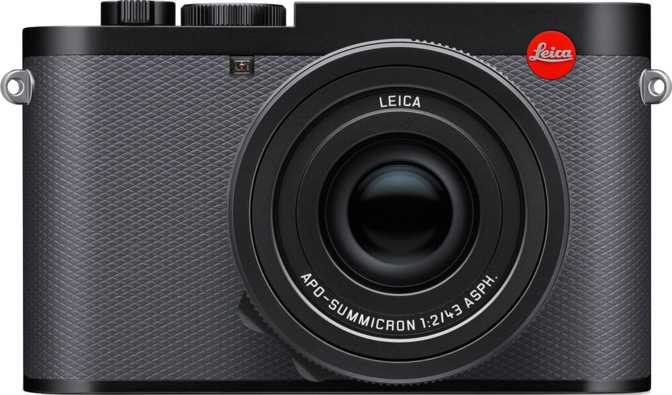
Leica Q3 43 Review: A Full-Frame Compact for the Committed Photographer
CamerasThe Leica Q3 43 is a fixed-lens full-frame compact built for photographers who have chosen a focal length and committed to it. Extraordinary resolution, a class-leading electronic viewfinder, and a weather-sealed metal body make this one of the most technically capable cameras in its category — at a price that demands honest self-assessment before purchase.
Overall Rating
Recommended for committed prime shooters
The compact camera market has no shortage of expensive options, but the Leica Q3 43 occupies a genuinely unusual position within it. This is not simply a Q3 with a different lens screwed on — it represents a deliberate editorial choice by Leica about how photographers see the world. Where the standard Q3 pairs its sensor with a 28mm wide-angle perspective, this variant centers everything around a 43mm field of view: a focal length close enough to the way human vision actually frames a scene that some photographers call it the "honest" perspective.
At over 770 grams in hand and with a price point that places it firmly in professional territory, the Q3 43 is asking for serious commitment. What it offers in return is a fixed-lens, full-frame system of remarkable technical ambition — 60-megapixel resolution, 8K video capability, and a body built to work in real conditions.
Design and Build: Precision That You Can Feel
Form Factor and Materials
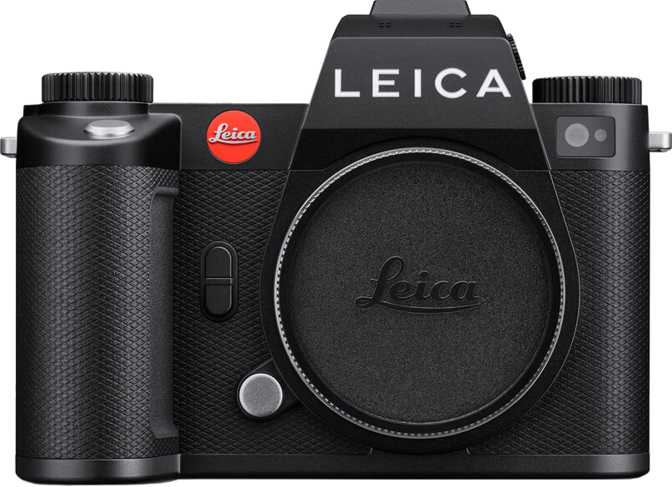
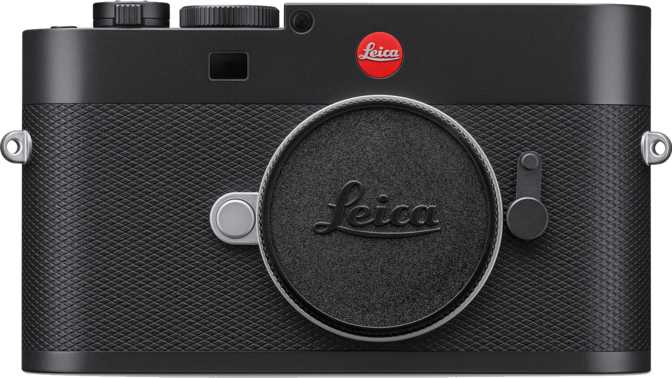
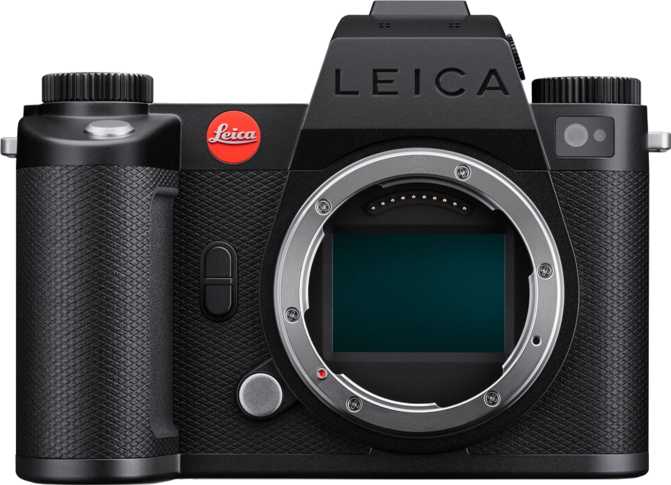
The Q3 43 follows Leica's established Q-series visual language — a rectangular, relatively compact body with clean lines, minimal external controls, and that unmistakable red dot badge. The dimensions place it in an interesting middle ground: larger than a jacket-pocket compact but meaningfully smaller than a mirrorless system camera with a comparable lens attached. The body is constructed to Leica's usual exacting standards, with metal dominating the exterior. Fit and finish are tight — controls move with deliberate precision, and nothing rattles or flexes under hand pressure.
Weather Sealing and Operating Conditions
The Q3 43 carries weather sealing, making it resistant to splashing water and dust ingress. It is rated to operate between freezing point and 40°C, covering the vast majority of real-world shooting environments.
Weather sealing here means splash resistance, not submersion. Extreme cold below zero — alpine or winter sports conditions — falls outside the rated operating range.
Screen and Viewfinder Hardware
Rear Touchscreen
- 3-inch flip-out articulating panel
- Touch-responsive for AF and menu control
- Enables low-angle and overhead compositions
- Resolution is functional, not class-leading
Electronic Viewfinder
- 5.76 million dot resolution — exceptional clarity
- 120fps refresh — fluid, lag-free panning
- 100% frame coverage — no edge surprises
- Among the best EVFs in any compact camera
Physical Specifications at a Glance
| Attribute | Detail |
|---|---|
| Dimensions (W × H × D) | 130 × 80.3 × 98 mm |
| Weight (body with lens) | 772 g |
| Body Construction | Metal, weather-sealed |
| Screen | 3-inch flip-out touchscreen |
| EVF Resolution | 5.76 million dots, 120fps refresh |
| Hot Shoe | Standard hot shoe included |
| Operating Temperature | 0°C to 40°C |
The 43mm Lens: A Character Decision More Than a Spec
Why 43mm Exists
The focal length choice here is the most important thing to understand about this camera. On a full-frame sensor, 43mm sits between the classic 35mm street focal length and the equally classic 50mm standard. The result is a perspective that many photographers find remarkably natural — it approximates how the human eye perceives a scene when paying attention to a specific subject. Subjects rendered at 43mm look neither compressed nor stretched at the edges. It is, in a sense, optically truthful.
Who benefits most from the 43mm perspective?
- Street and documentary photographers
- Environmental portrait photographers
- Travel photographers
- Photojournalists and editorial shooters
- Commercial and fashion photographers
Optical Performance
The integrated lens opens to f/2 — wide enough to produce meaningful background separation from your subject and to work in low ambient light. The aperture blades are rounded, which means out-of-focus highlights render as smooth circles rather than angular polygons. The minimum focus distance of 27 centimeters is genuinely close for a lens of this focal length — at that distance with the aperture wide open, you can fill the frame with small objects like food, jewelry, or documents with substantial background blur.
The lens incorporates optical image stabilization built into the glass itself, compensating for camera shake during handheld shooting. The focus motor operates silently, which matters for video work and for candid photography where an audible lens motor would attract unwanted attention.
| Lens Specification | Value | Real-World Meaning |
|---|---|---|
| Focal Length | 43mm (fixed) | Natural, near-human perspective on full frame |
| Maximum Aperture | f/2 | Strong background blur, capable in low light |
| Minimum Aperture | f/16 | Full depth of field for landscapes and architecture |
| Minimum Focus Distance | 27 cm | Close-up work on food, products, and detail shots |
| Aperture Blades | Rounded | Smooth, circular bokeh highlights |
| Stabilization | Optical (lens-based) | Steadier handheld shots in available light |
| Focus Motor | Silent internal | Discreet operation for street and video use |
Sensor and Image Quality: What 60 Megapixels Actually Means
Resolution in Practice
The full-frame BSI CMOS sensor captures 60.3 megapixels per image. In practical terms: you can print a single image at roughly one meter wide at magazine-quality resolution, or crop heavily into a composition and still retain enough detail for a substantial print. Photojournalists and commercial photographers who need to deliver images at multiple aspect ratios from a single capture will find this resolution genuinely liberating.
BSI (back-side illuminated) sensor architecture means the light-gathering elements of each pixel face the incoming light more directly, improving efficiency in limited light and producing cleaner images at elevated sensitivity settings.
High ISO Performance
The sensor's native sensitivity extends to a very high maximum, giving the camera functional range in near-darkness — candlelit interiors, dimly lit concert venues, nighttime street scenes where most cameras would struggle. At the extreme upper end, noise becomes visible and detail softens, but the camera reaches surprising brightness levels before quality degrades noticeably.
60.3MP
Full-Frame Resolution
100K ISO
Maximum Sensitivity
15 fps
Continuous Shooting
RAW Files and Processing
The Q3 43 shoots in RAW format, giving photographers full access to the sensor's captured data for post-processing. It does not currently offer lossless compressed RAW — files must be stored either uncompressed or in another available format. At this resolution, uncompressed files run approximately 120–130 MB each. High-capacity, fast-write memory cards are strongly advisable for comfortable continuous shooting.
Autofocus and Shooting Speed
Phase-Detection System
The Q3 43 uses phase-detection autofocus across 315 dedicated focus points covering a wide area of the frame. Phase-detection works by comparing the angle of incoming light rays to determine focus direction and distance simultaneously — the result is fast, decisive focusing without the hunting behavior of older systems. AF tracking follows moving subjects across the frame as composition or subject position changes. Touch autofocus allows you to tap the rear screen to direct focus to any frame area. All AF modes operate during video recording.
Manual Focus and Continuous Shooting
Full-time manual focus override is available at any point without switching modes — the silent lens motor responds smoothly to manual input. The mechanical shutter cycles at 15 frames per second during continuous burst shooting. An electronic shutter mode eliminates all mechanical movement, silences the camera entirely, and enables shutter speeds far beyond what any mechanical shutter can achieve — useful for freezing motion in extremely bright conditions. Flash synchronization works at the mechanical shutter's full maximum speed, allowing daylight fill-flash without neutral density filtration.
| Capability | Specification | Implication |
|---|---|---|
| AF Points | 315 phase-detection | Wide-area, accurate subject acquisition |
| AF Tracking | Yes | Follows moving subjects across the frame |
| Touch AF | Yes | Instant off-center focus placement |
| Continuous Shooting | 15 fps (mechanical) | Captures decisive moments in moderate action |
| Electronic Shutter Max | 1/16,000 sec equiv. | Freezes any motion; silent operation |
| Flash Sync Speed | 1/2,000 sec | Daylight fill-flash without ND filters |
| Longest Exposure | 120 seconds | Full astrophotography and light-painting range |
Video: A Serious Tool for Moving Images
8K Resolution and Bitrate
The Q3 43 records video at 8K resolution at up to 30 frames per second. This has practical implications beyond specification marketing: 8K footage downscaled to 4K for delivery retains more detail and cleaner edges than native 4K capture, and allows significant reframing in post-production without resolution loss. At 300 megabits per second data rate, the camera captures substantial fine detail and subtle color gradations.
Cinematic Options and Audio Hardware
A 24fps cinema mode delivers footage that matches theatrical film cadence, avoiding the slightly clinical look of 30fps material. Slow-motion recording is supported for high-frame-rate footage played back at reduced speed. Timelapse recording is also available natively.
The Q3 43 carries two built-in stereo microphones and — critically for serious video work — both a 3.5mm microphone input and a 3.5mm headphone jack. This means external microphone connection and real-time audio monitoring through headphones. Combined with HDMI output for external recorders or monitors, this gives the Q3 43 a complete professional video interface in a compact body.
Video Specifications
- 8K (4320p) at 30fps maximum
- 300 Mbps recording bitrate
- 24fps cinema mode
- Slow-motion recording
- Phase-detection AF during video
- Continuous autofocus while recording
Audio and Output
- Dual built-in stereo microphones
- 3.5mm external microphone input
- 3.5mm headphone monitoring jack
- HDMI output for external recorder/monitor
- Timelapse function built-in
Battery Life and Connectivity
Power Endurance: The Honest Assessment
The Q3 43 delivers approximately 350 shots per charge under standard testing conditions — measured under conservative protocols that include a specific mix of viewfinder and screen use. Real-world usage with aggressive continuous shooting or extended live view will yield fewer shots; lighter use may exceed it. For a full professional shooting day, plan to carry one or two spare batteries.
Battery Endurance (CIPA Standard)
Moderate — carry at least one spare for all-day assignments
The battery is removable — the right decision. You swap a depleted pack for a charged one in seconds without waiting for a USB cycle. Wireless charging is supported for overnight replenishment without connecting a cable. The USB-C connection handles both wired charging and high-speed data transfer for moving large 60-megapixel files.
Wireless and Physical Connections
| Connection | Standard | Notes |
|---|---|---|
| Wi-Fi | Wi-Fi 5 (ac) + Wi-Fi 4 (n) | Smartphone remote control and image transfer |
| Bluetooth | Bluetooth 5 | Persistent low-energy connection; fast wake |
| USB | USB 3.2 Type-C | Wired charging and fast file transfer |
| HDMI | Yes | External monitor or recorder connection |
| Wireless Charging | Yes | Cable-free overnight top-up |
| Memory Card | Single slot | No dual-card redundancy — plan backup workflow |
| NFC | No | Standard pairing required for smartphone setup |
| GPS | No | Location tagging requires smartphone connection |
Who the Leica Q3 43 Is For — and Who It Is Not
- You have committed to a 43mm or 50mm prime as your primary focal length
- You shoot street, documentary, or environmental portrait work
- You need high-resolution files for large prints or heavy post-production cropping
- You want a hybrid camera with professional-grade video audio connections
- A compact, unobtrusive body matters as much as image quality
- You work in unpredictable outdoor environments that demand weather sealing
- You regularly shoot sports, wildlife at distance, or any telephoto subject
- You need interchangeable lenses across a range of focal lengths
- Dual card slots for image redundancy are non-negotiable on assignments
- You regularly work in sub-zero temperatures (alpine, winter sports)
- You are not certain that 43mm is your focal length — this is not a camera for experimentation
- Battery longevity is critical and carrying spares is not practical for your workflow
How It Compares to the Competition
The competitive landscape for a fixed-lens, full-frame compact with a premium price is not crowded, but there are meaningful alternatives. The table below maps the Q3 43 against its most logical rivals.
| Feature | Leica Q3 43 | Sony RX1R II | Fujifilm X100VI | Leica Q3 (28mm) |
|---|---|---|---|---|
| Sensor Size | Full Frame | Full Frame | APS-C | Full Frame |
| Resolution | ~60 MP | ~42 MP | ~40 MP | ~60 MP |
| Focal Length | 43mm | 35mm | 23mm (~35mm equiv.) | 28mm |
| Lens Aperture | f/2 | f/2 | f/2 | f/1.7 |
| Maximum Video | 8K / 30fps | 4K (limited) | 6.2K | 8K / 30fps |
| Weather Sealing | ||||
| Articulating Screen | Flip-out | Tilt only | Tilt | Flip-out |
| External Mic Input | ||||
| Wireless Charging | ||||
| Body Weight | 772g | 507g | 521g | 743g |
The Sony RX1R II is the most direct technical comparison but trails on resolution, video specification, and body features — though it is substantially lighter. The Fujifilm X100VI occupies a different value tier entirely with its smaller sensor. Against Leica's own standard Q3, the choice is almost entirely about which focal length suits your creative vision.
Strengths and Honest Weaknesses
What It Gets Right
- 60-megapixel full-frame files deliver extraordinary resolution for large prints and heavy crops — genuinely among the highest in any compact camera
- The 5.76 million dot EVF at 120fps is one of the most immersive viewfinder experiences available in this camera class
- Weather-sealed metal construction elevates this to a genuine working tool, not a fair-weather luxury item
- 8K video with a 300 Mbps data rate and full professional audio connections — external mic, headphone monitoring, HDMI out
- The 43mm f/2 lens renders a naturally honest perspective with smooth bokeh from rounded aperture blades
- Wireless charging plus a removable battery gives multiple recharging options without workflow compromise
Where It Falls Short
- 350 shots per charge requires planning — professional all-day shooting demands spare batteries, not just a top-up cable
- Single card slot means no dual-recording redundancy — a genuine professional limitation for high-stakes assignments
- No lossless compressed RAW means file sizes are extremely large; storage cards fill faster and transfer times increase
- Rated operating minimum of 0°C excludes sub-zero environments — alpine and winter sports photographers need to look elsewhere
- No GPS — location metadata requires a smartphone connection workaround for photographers who routinely tag images
- At this price, full interchangeable-lens systems offer greater technical flexibility — the Q3 43 must be chosen for the right reasons, not by default
Questions Real Buyers Ask
Final Verdict
The Leica Q3 43 is not trying to be all things. It is a highly specific instrument built around a highly specific creative perspective, and its value proposition stands or falls on whether that perspective matches yours.
Image Quality
9.5
Build Quality
9.4
Value for Money
7.8
Video Capability
9.0
Autofocus
8.8
Battery Life
7.2
If you have internalized 43mm as a focal length — if that field of view is how you see — this camera delivers image quality, build refinement, and operational completeness that very few compact cameras can match. The resolution headroom is extraordinary. The EVF is exceptional. The video specification has crossed into genuinely professional territory. The weather-sealed body and considered control layout make it a tool you can use without friction in almost any environment.
Our Recommendation
Buy with confidence if 43mm is your established prime focal length and you want maximum technical capability in a compact, professional-grade body. Direct your investment elsewhere if you need focal length flexibility, dual-card redundancy, or are still exploring which perspective suits your vision.