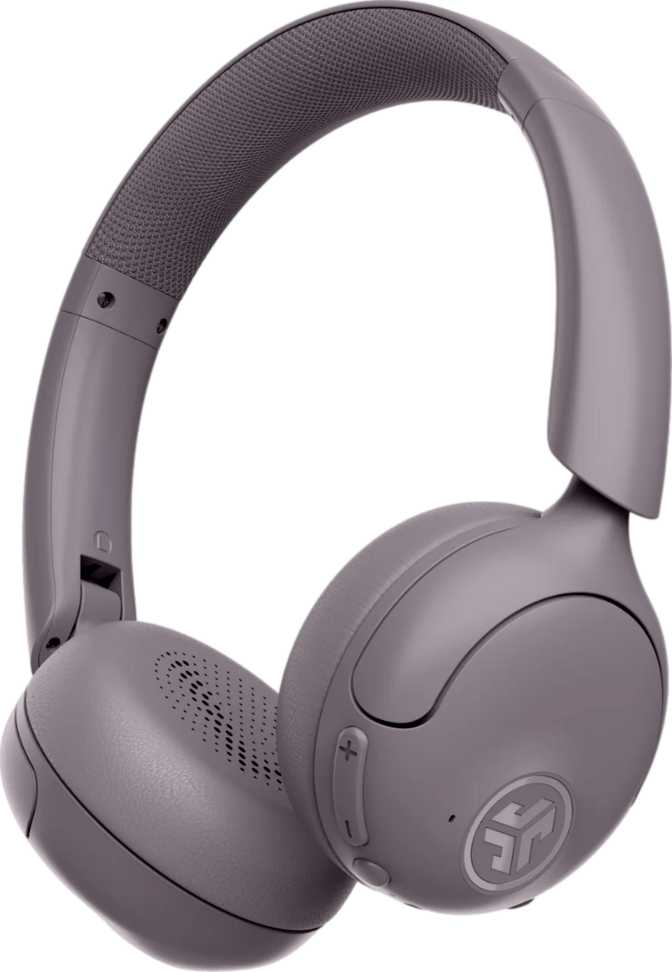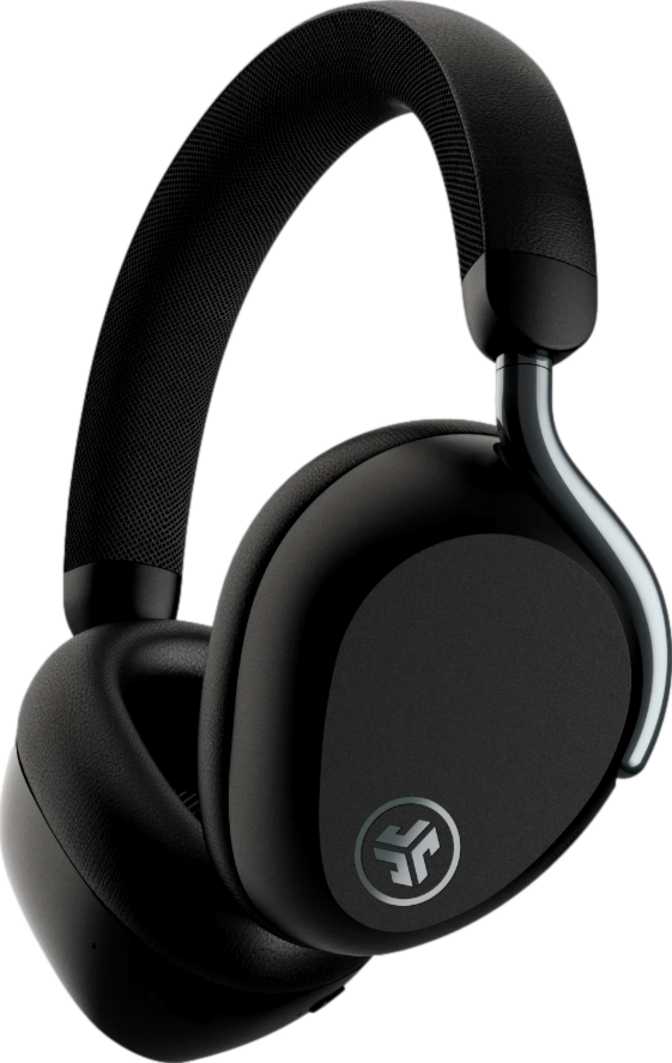
JLab Epic Lux Lab Edition Review - Full Honest Assessment
HeadphonesAt a Glance
The six numbers that define this headphone before you read anything else
Most wireless headphones negotiate a quiet compromise with battery life. Manufacturers offer twenty, maybe thirty-five hours of playback, slap an “all-day” label on the box, and consider the matter closed. The JLab Epic Lux Lab Edition refuses that framework entirely. With wireless playback that stretches to ninety hours without noise cancellation — and sixty hours with ANC running — this over-ear headphone belongs to a very small category of devices that charge on a weekly schedule at most, and often less.
But extraordinary battery life is only the headline. JLab has built the Epic Lux Lab Edition as a feature-rich over-ear that reaches beyond what their brand is typically associated with: wireless charging capability, LDAC high-resolution audio streaming, Bluetooth 5.4, a four-microphone array for calls, and dual-device multipoint connection. The product is clearly aimed at daily commuters, hybrid workers, and anyone who has decided they’re done managing headphone battery anxiety.
The question worth asking — and answering carefully — is where all of those ambitious features land in practice, and what compromises were made to get there.
Design and Build Quality
What it weighs, how it folds, and one engineering choice worth knowing about
Fit and Comfort
At three hundred grams, the Epic Lux Lab Edition sits in the middle of the over-ear weight spectrum. The full over-ear design encircles the ears rather than resting against them, delivering a better acoustic seal, stronger passive isolation, and a more comfortable experience across extended listening sessions. The headphone folds flat for storage, and a travel bag is included in the box — a detail many competing products leave out.
Wired Backup Cable
A detachable, tangle-resistant cable allows fully wired operation as a fallback. With the battery this large, you’ll rarely need it — but it’s there for restricted environments or when the battery eventually drains.
The cable has no inline remote. Wired-mode controls require reaching to the ear cup buttons.
Driver Design Note
The Epic Lux Lab Edition does not use neodymium magnets — the rare-earth material standard in most competing drivers. This is an unusual engineering choice. It doesn’t automatically mean worse sound, but the drivers may rely more on DSP tuning to achieve their output. Worth knowing when comparing sound signatures across headphones at this level.
Sound Performance
Reading the hardware specifications carefully — and what they mean for your ears
Driver Size and Expected Sound Profile
The Epic Lux Lab Edition uses thirty-two millimeter drivers. Over-ear headphones have traditionally settled on forty millimeter drivers as a near-universal norm because the additional surface area helps generate stronger bass response and a wider low-frequency stage. Thirty-two millimeter drivers are more commonly found in on-ear or portable-compact headphone formats.
Smaller drivers can be engineered to sound excellent, particularly in the midrange — vocals, acoustic instruments, detailed arrangements. But generating deep sub-bass impact for electronic music or cinematic scores requires moving a larger volume of air, and larger-diameter drivers hold a structural advantage there. Listeners who prioritize low-end punch should treat this specification as a moderating factor before purchasing.
Sensitivity and Impedance
The sensitivity rating sits significantly above the typical over-ear norm. In practical terms, the Epic Lux Lab Edition will reach very high volume levels from smartphones, tablets, and laptops without needing the volume slider pushed far at all. No external amplifier is required or beneficial.
The impedance sits at thirty-two ohms, placing no unusual electrical demand on any device it connects to. The high sensitivity does mean any hiss from the source device’s output chain can become audible at very low listening volumes in silent environments — relevant for listeners who frequently use headphones quietly for focus work.
Active and Passive Noise Cancellation
The Epic Lux Lab Edition offers both active and passive noise reduction working in concert. The closed-back ear cups create a physical barrier against high-frequency ambient sound — voices, keyboard clicks, office chatter — at all times, with no electronics required. Active noise cancellation adds an electronic layer that targets consistent low-frequency noise: aircraft hum, engine drone, HVAC rumble.
Running ANC shifts the battery estimate from ninety hours down to sixty. Even at sixty hours, the Epic Lux Lab Edition substantially outlasts most competing ANC headphones in this category, which typically deliver between twenty-five and forty hours with noise cancellation active.
Spatial Audio: Not Supported
The Epic Lux Lab Edition renders audio in conventional stereo. Listeners who regularly access spatially mixed audio — Dolby Atmos tracks through Apple Music or other immersive audio formats — should know that the headphone does not process or render dimensional audio. Content arrives as standard stereo regardless of source format.
For most music, podcasts, and traditional media, stereo is entirely adequate. This gap matters primarily to listeners who have invested in spatial audio ecosystems and expect that rendering everywhere they listen.
Battery Life: Where It Redefines the Category
The headline feature that changes your entire relationship with the product
At four hours per day, that’s over three weeks between charges
Roughly double what most mid-range ANC rivals deliver
Battery Endurance at a Glance
Category average figures are general estimates based on commonly available mid-range ANC over-ear headphones. Individual products vary.
The Epic Lux Lab Edition carries a two-year manufacturer’s warranty — exceeding the one-year standard common among competitors. For a daily-use headphone, the extended coverage period provides meaningful confidence against manufacturing defects.
Charging: Wireless Pad and USB-C
Two ways to top up — with one that rarely needs a cable
Wireless Qi Charging
Place the headphone on any Qi-compatible charging pad and it charges without any cable connection. This feature typically appears on premium headphones from Sony and Bose at the top end of the market — finding it here is a genuine differentiator at JLab’s price positioning.
Wireless charging replenishes the battery more slowly than wired, but given the ninety-hour capacity, urgency is rarely the issue. Qi pads are widely available and often bundled with modern smartphones.
USB-C Wired Charging
The headphone charges via USB-C — the universal, reversible standard now common across consumer electronics. No proprietary cable required; the same cable used for a modern phone or laptop works here.
A full charge from empty takes approximately three hours wired. Between wireless charging overnight and USB-C as a backup, there is no scenario in regular use that requires a special or unusual cable.
Connectivity and Codec Support
Bluetooth 5.4, LDAC, dual-device multipoint, and what’s absent
Bluetooth 5.4
Bluetooth 5.4 is the leading-edge version of the standard, offering improved connection stability and power efficiency over the 5.0 and 5.2 versions still common in many competing headphones. In daily use, the outcome is more reliable pairing and reduced susceptibility to interference in crowded wireless environments like airports, offices, and transit hubs.
Effective range is approximately ten meters — sufficient when the source device is in the same room. Walking into another room while leaving your phone behind may challenge the connection. Some competing headphones advertise ranges two to three times this figure.
Bluetooth transmission carries approximately two hundred milliseconds of latency. Music and podcasts: imperceptible. Video: often compensated at the app level. Gaming and interactive audio: noticeably disruptive. This headphone is not suited to gaming use.
Codec Support
Supported
LDAC is Sony’s high-resolution codec delivering up to 3× the audio data of standard Bluetooth. Available on Android 8.0+. AAC is Apple’s preferred codec, providing above-average quality on iPhone and iPad.
Not Supported
Multipoint Connection
Connects to two devices simultaneously. Laptop and phone can both remain paired — the headphone routes audio from whichever is active. A phone call interrupts laptop audio automatically and returns to it when the call ends. Manual switching between devices is eliminated entirely.
Microphone Performance and Call Quality
Four microphones, and one notable gap in the feature set
The Four-Microphone Array
Voice capture is handled by four microphones working in concert. The spatial separation between them allows the electronics to distinguish your voice from background noise with greater precision than a single-mic setup can achieve — making the system more sophisticated at rejecting ambient noise during calls without also cutting your voice.
In busy environments — open offices, cafés, commuter transit — the four-microphone system provides cleaner call audio for the person on the other end. The microphone noise-cancellation operates independently from the ANC mode for listening, meaning call cleanup is active whether or not you have ANC engaged for music.
Conference calls and video meetings benefit directly from this investment. The Epic Lux Lab Edition can also connect to a single device as a call headset, supporting the hybrid work use case its feature set is clearly designed for.
No Physical Mute Button
The Epic Lux Lab Edition does not include a physical mute button on the headphone. During calls, muting the microphone requires using the mute control within the calling application — a tap on a touchscreen or a click in a video call interface rather than pressing a button on the device itself.
For casual phone calls, this is a minor inconvenience. For professionals who spend significant time in back-to-back video meetings and habitually mute and unmute through headphone controls, this is a real workflow disruption. It is the most puzzling feature gap in an otherwise call-forward specification.
Smart Features That Earn Their Place
The details that sound minor on a spec sheet and prove useful every single day
Ambient Sound Mode
Electronically passes external audio through the drivers while the headphone is worn. Useful for hearing a colleague approaching your desk, navigating a transit station announcement, or holding a brief conversation without removing the headphones. It removes the sensory isolation of ANC without breaking the listening experience.
Auto-Pause on Removal
Sensors detect when the headphone is removed from the head and automatically pause playback. When you put them back on, playback resumes from where it stopped. This is a feature that sounds minor on paper and becomes something you notice immediately when using headphones that lack it. Users who move frequently between listening and brief interactions will use it constantly without thinking about it.
Physical On-Ear Controls
All playback, volume, ANC, and mode controls sit directly on the ear cups as physical buttons. No touch-sensitive surfaces means no accidental activation when adjusting the headphone’s position. Physical buttons also perform reliably with gloved hands in cold weather — a practical advantage over capacitive touch controls in variable conditions.
Who Should Buy the JLab Epic Lux Lab Edition
Matching the headphone to the right listener — and naming the wrong ones too
Built For
-
Frequent travelers and daily commuters
who want an ANC over-ear they never have to think about charging. A full week of heavy commuting plus a long-haul flight is a single charging cycle.
-
Hybrid workers managing multiple devices
who need seamless audio switching between laptop and phone, with a capable four-mic array for video meetings and comfortable all-day over-ear fit.
-
Android audiophiles on a constrained budget
who want LDAC-quality wireless audio streaming and find that codec priced out of reach at this tier elsewhere.
-
Anyone upgrading from headphones they constantly charge
who want battery management to be a solved problem rather than a daily consideration.
Not Built For
-
Gamers and latency-sensitive users
Bluetooth transmission delay is not negligible in interactive audio contexts, and there is no low-latency mode to compensate.
-
Bass-first listeners
The driver configuration does not favor the deep sub-bass extension and physical impact that electronic, hip-hop, or cinematic orchestral genres demand.
-
Heavy meeting participants who rely on a headphone mute button
The absence of a physical mute button is a genuine daily friction point for professionals in back-to-back video calls.
-
Spatial audio listeners
Dolby Atmos and other immersive formats play as standard stereo. The dimensional rendering these formats offer is not available here.
Competitive Positioning
How the Epic Lux Lab Edition stacks up against mid-range ANC over-ear rivals
| Feature | JLab Epic Lux Lab Edition | Typical Mid-Range Competitor |
|---|---|---|
| Battery (ANC Off) | Up to 90 hours | Commonly 40–60 hours |
| Battery (ANC On) | Up to 60 hours | Commonly 20–35 hours |
| Wireless Charging | Uncommon at this price tier | |
| LDAC Hi-Res Codec | Often absent or premium-only | |
| Bluetooth Version | 5.4 | Commonly 5.2–5.3 |
| Driver Size | 32 mm | Typically 40 mm |
| Physical Mute Button | Common on call-focused models | |
| Warranty Period | 2 years | Often 1 year |
Category average figures are general estimates based on commonly available mid-range ANC over-ear headphones. Individual products vary.
Honest Assessment
Where it genuinely wins and where it honestly doesn’t
Where It Delivers
Battery performance in the ninety-hour range is genuinely rare at any price point, and sixty hours with ANC makes the category average look modest. Wireless charging at this tier is a meaningful differentiator — not just a box-ticking exercise. LDAC support extends real value to Android audiophiles who typically pay more to access that codec.
Multipoint connection, ambient sound mode, auto-pause, and Bluetooth 5.4 all reflect considered attention to daily usability rather than specification theatre. Fast pairing, USB-C charging, physical on-ear controls, and a four-microphone call array round out a feature list that reads considerably more expensive than it typically costs.
Where It Falls Short
Thirty-two millimeter drivers without neodymium magnets represent a hardware configuration that departs from what is standard at this performance level. Listeners accustomed to the low-end response of larger-driver headphones may find the bass profile different from their expectations — and that difference cannot be confirmed or dismissed from specifications alone.
The two-hundred-millisecond Bluetooth latency prevents the headphone from serving gamers or interactive audio users. The wireless range is functional but conservative. And the absence of a physical mute button — in a headphone investing heavily in a four-microphone array — sits awkwardly against the otherwise call-oriented feature set.
Questions Buyers Ask Before Purchasing
Answers to the searches that lead people to this review
JLab Epic Lux Lab Edition
The JLab Epic Lux Lab Edition earns a confident recommendation for the specific buyer it was built for: someone who wants battery freedom above all else, values wireless convenience at every level including charging, and wants genuine high-resolution audio streaming through Bluetooth without paying a premium price to access it.
If battery anxiety is the thing you most dislike about your current headphones, this solves it more completely than almost anything else available. If you are an Android listener who has wanted LDAC-quality wireless audio without a step up in price tier, this delivers real value. If wireless charging is the quality-of-life upgrade you have been holding out for in an over-ear headphone, it is here.
The honest caveat is equally clear: the driver specification — smaller than the category norm and built without neodymium magnets — is a real hardware difference that distinguishes this headphone from competitors who have invested more conventionally in driver architecture. For audiophiles who critically compare sound signatures, that difference is worth evaluating in person before committing. For commuters, hybrid workers, and daily listeners, that trade-off is unlikely to matter at all.
You want maximum battery life, wireless charging, LDAC, and strong daily-use connectivity in an over-ear ANC headphone — especially on Android.
You game, need a headphone mute button for heavy call use, want spatial audio, or prioritize raw bass performance over feature breadth.