Razer Boomslang 20th Anniversary Edition: Full Review & Verdict
MiceThe Boomslang Anniversary Edition pairs a state-of-the-art sensor and 8000 Hz polling with a heritage design that makes no apologies for what it is — a full-sized, right-handed wireless gaming mouse built for precision above all else.
The original Boomslang occupies a singular place in gaming history. At a time when the concept of a mouse built specifically for gaming was almost radical, Razer's early flagship set the template for what a performance peripheral could be. The Boomslang 20th Anniversary Edition doesn't simply invoke that legacy as a marketing hook — it carries it forward into an era where the competition is fiercer, the technology is genuinely transformative, and enthusiasts know exactly what separates a great mouse from an extraordinary one.
This is not a reissue for collectors to keep in a box. It is a fully specified, wireless gaming mouse with hardware that competes with anything on the market today. Whether you grew up with the original or you're meeting the Boomslang name for the first time, what matters here is performance, feel, and whether this mouse earns its place on your desk.
Design Philosophy: Heritage Without Compromise
Build quality, shape, and physical experience
Shape, Size, and Physical Character
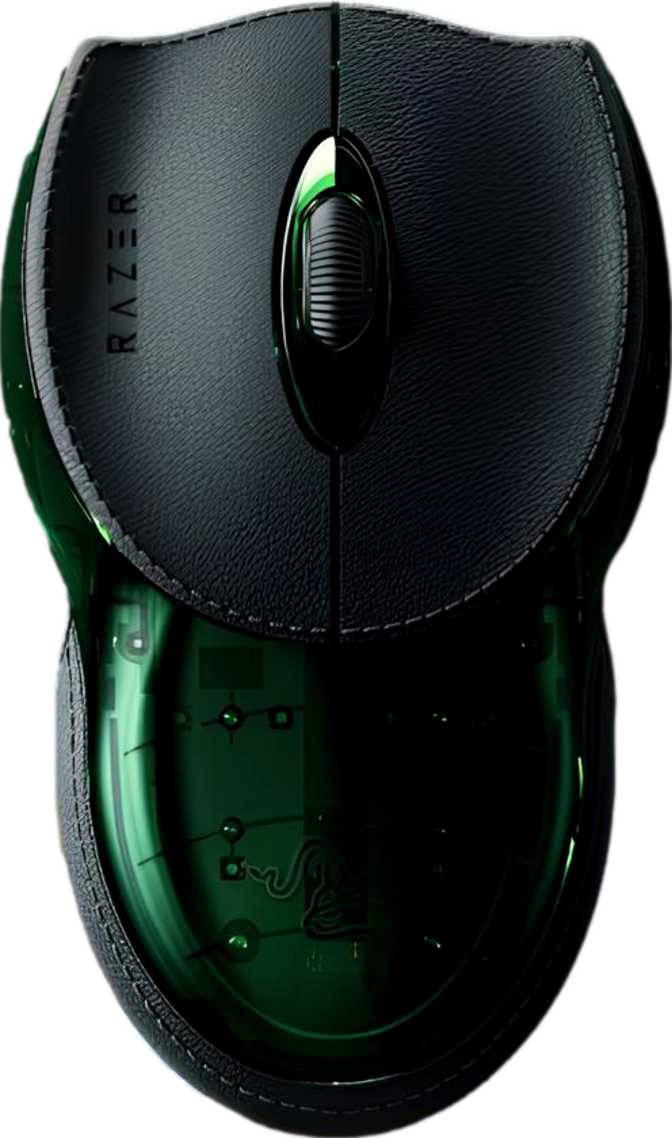
The Boomslang 20th Anniversary Edition is built exclusively for right-handed users, with a silhouette that prioritizes a traditional, ergonomic grip over the ambidextrous symmetry that has become fashionable in the enthusiast market. At 125mm long and 70mm wide, with a height of just over 43mm at its tallest point, this is a mouse that fills the hand — sized for medium to large hands, and shaped to support palm and claw grip styles comfortably.
The physical volume of the shell means there is genuine presence here. This is not a mouse that disappears under your hand; it asserts itself, and that intentionality carries through to how it rewards deliberate, controlled movement.
Weight and What It Means in Practice
At 140 grams, the Boomslang Anniversary Edition sits toward the heavier end of the modern gaming mouse spectrum. This is worth addressing directly, because weight divides the enthusiast community sharply.
The Weight Trade-Off
The ultralight movement has pushed competing mice under 80 grams — some aggressively below 60. The Boomslang's 140g reflects a mouse built without a honeycomb shell, without hollow aesthetics, and with a full internal wireless system and substantial battery. For low-sensitivity, high-precision styles, this weight feels authoritative. For players trained on ultralight mice who favor high-speed flicking, this is a meaningful consideration before purchasing. No additional weights are included — the balance you feel at unboxing is fixed.
The Deliberate Absence of RGB
In a category where lighting effects have become almost default, the Boomslang Anniversary Edition makes the conscious choice to omit RGB entirely. This is a design statement as much as a power decision. The result is a mouse that looks exactly like what the original represented: purposeful, understated, and confident in its identity without needing to glow.
For users who want their setup dark and focused, this is a genuine feature. For buyers who consider lighting a non-negotiable part of their peripheral experience, this is a clear signal that the Boomslang is not designed for them.
Sensor and Tracking Performance
The technical foundation that defines real-world accuracy
Razer Focus Pro 45K Gen-2 — What This Sensor Actually Means
The sensor inside this mouse is Razer's Focus Pro 45K Gen-2. The resolution ceiling is so far beyond what any human or any monitor can utilize that it effectively signals the end of resolution as a limiting factor. The upper DPI ceiling of 26,000 is similarly academic as a daily-use setting; most competitive players operate somewhere between 400 and 3,200 DPI, where the sensor's real qualities — accuracy, consistency, and zero-jitter tracking — are what matter.
The floor is set at 400 DPI, appropriate for any use case from pixel-precise sniping to broad, low-sensitivity sweeps. DPI is fully adjustable in steps, and a dedicated switching button on the mouse body lets you cycle through configured presets without touching software.
Academic ceiling — real use lives between 400–3,200
Outpaces the fastest intentional human movement by a wide margin
Explosive movements register without cursor drift or skipping
8000 Hz Polling Rate — Is It Noticeable?
Standard gaming mice report their position to the computer 1,000 times per second — once per millisecond. The Boomslang Anniversary Edition reports eight times more frequently, at 8,000 Hz. The gap between position updates is reduced to 0.125 milliseconds.
Whether this is perceptible depends on the player, the display refresh rate, and the game type. At 8,000 Hz, cursor movement feels smoother and latency between physical movement and on-screen response is measurably reduced — particularly on 240Hz or 360Hz monitors. For competitive players at the highest level, this matters. For casual players on a 60Hz display, the difference will be imperceptible. What matters is that this represents the current ceiling of consumer mouse technology, and the Boomslang delivers it.
Polling Rate Context
Connectivity: Wired and Wireless in One Package
How the Boomslang handles wireless latency and cable fallback
The Boomslang Anniversary Edition supports both USB wired connection and 2.4GHz wireless operation. The 2.4GHz wireless implementation delivers latency that is indistinguishable from a physical cable connection in competitive gaming conditions — provided the receiver is placed appropriately, within clear line of sight and without heavy wireless interference from other devices. The days when "wireless" meant "lag" are behind us at this performance level.
2.4GHz Wireless
Zero-lag connection; competitive-grade latency indistinguishable from cable
USB Wired Mode
Plug in and play at any time — also enables use while charging
No Bluetooth
Absent by design — Bluetooth introduces latency incompatible with gaming
Battery Life: A Full Week Without Thinking About It
Endurance, charging, and real-world impact
One hundred hours of battery life is not marketing padding — it is a genuinely generous figure that fundamentally changes how you interact with a wireless mouse.
Real-World Charging Frequency
-
Heavy Gamer (6+ hrs/day)
Charge roughly 2–3 times per month
-
Regular Gamer (4 hrs/day)
Charge approximately twice per month
-
Casual User (1–2 hrs/day)
Monthly charging is realistic
Battery Quick Facts
-
100-hour endurance — class-leading in this category
-
Play while charging — a depleted battery never forces you offline
-
Rechargeable, built-in — standard for this form factor and weight class
-
No wireless charging — cable required; noticeable given competitor offerings
Compare this to mice in a similar class that deliver 40 to 70 hours: the difference translates directly into how often you have to remember to charge, and therefore how often you experience the inconvenience of a dead mouse mid-session. The battery is built-in and non-removable, but the combination of 100-hour endurance and play-while-charging support makes hot-swap cells a non-issue for virtually all use cases.
Who This Mouse Is For — And Who It Is Not
Real-world usage scenarios and honest audience targeting
The Ideal Boomslang User
-
Palm and claw grip players with medium-to-large hands who want a full-sized ergonomic shell
-
Competitive players who demand the lowest possible wireless latency and top-tier tracking accuracy
-
Players with lower DPI preferences who benefit from heavier, more stable mice for controlled, sweeping movements
-
Setup minimalists who actively prefer a clean, lighting-free aesthetic
-
Anyone who values battery longevity over the convenience of wireless charging
This Mouse Is Not the Right Answer If...
-
You grip with a fingertip style and prefer ultralight mice under 80 grams — the weight will work against your movement style
-
RGB lighting is a meaningful part of your setup aesthetic — there is no version of this mouse that has it
-
You regularly switch between multiple game profiles and want that managed on the hardware itself
-
You are left-handed — the ergonomic shape is fully committed to right-hand use with no ambidextrous option
Competitive Positioning
How the Boomslang Anniversary Edition compares to logical high-end alternatives
| Feature | Razer Boomslang 20th Anniversary | Typical High-End Competitor A | Typical High-End Competitor B |
|---|---|---|---|
| Polling Rate | 8,000 Hz | 1,000–4,000 Hz | 8,000 Hz |
| Sensor Tier | Top-tier | Top-tier | Top-tier |
| Weight | 140g | 55–75g | 95–110g |
| Battery Life | 100 hours | 60–80 hours | 70–90 hours |
| RGB Lighting | None | Yes | Yes |
| Wireless Charging | No | Some models | Some models |
| Onboard Profiles | 1 | 1–5 | 2–5 |
| Hand Orientation | Right only | Ambidextrous | Right only |
The Boomslang competes on sensor quality and polling rate with the absolute best the market offers. Its differentiation is in its aesthetic restraint, its exceptional battery endurance, and the specific ergonomic identity of its shape. Where it concedes ground is weight and the absence of wireless charging, which competitors at equivalent price points increasingly offer.
Honest Strengths and Real Weaknesses
A balanced assessment from both sides of the argument
The Boomslang Anniversary Edition's greatest strength is coherence. Every specification tells the same story: this is a mouse built to an uncompromising tracking and latency standard, wrapped in a design that respects its own history without turning it into nostalgia merchandise. The Focus Pro 45K Gen-2 sensor and 8,000 Hz polling rate represent genuine state-of-the-art technology, and 100 hours of wireless endurance is class-leading by a meaningful margin.
The absence of RGB is either a strength or a weakness depending entirely on the buyer — but it is a considered choice, not an oversight.
The weight is where the Boomslang requires honest self-assessment. At 140 grams, players accustomed to ultralight mice will notice the difference immediately and may find that high-speed movements feel taxing over long sessions. This is not a flaw in construction — it is a consequence of building a full-featured wireless mouse without skeleton cutouts — but it is real, and it matters.
The single onboard profile is a practical limitation for players who move between machines frequently and cannot rely on Razer's software being installed on every system. It is not a dealbreaker for most, but it is worth factoring in.
Wireless charging would have been a welcome addition. The minor friction of cable charging is mitigated significantly by the fact that charging sessions are infrequent and play-while-charging eliminates downtime entirely. But the omission is noticeable in a market segment where it is increasingly standard.
Common Buyer Questions Answered
The questions real buyers search for before purchasing
Final Verdict
Should You Buy the Razer Boomslang 20th Anniversary Edition?
The Razer Boomslang 20th Anniversary Edition is a confident, well-specified wireless gaming mouse that earns its place through genuine performance credentials rather than brand history alone. The sensor, polling rate, and wireless endurance are all positioned at the top of the current market. The design is intentional and uncluttered. The shape rewards right-handed players with medium to large hands who prefer palm or claw grip.
The weight is the central consideration. If you play low-sensitivity styles and prefer a mouse you can feel under your hand, this is a strength. If you have built your aim around ultralight hardware, the adjustment to 140 grams is significant enough that you should try before committing.
Performance Ratings
Purchase Verdict
For the right player — performance-focused, right-handed, uninterested in lighting effects, and valuing battery longevity in a wireless mouse — the Boomslang Anniversary Edition is a straightforward recommendation. It does exactly what it promises, at a tier of quality that validates the legacy it carries.
Recommended For
Palm/claw grip competitive players with medium-to-large hands who prioritize sensor quality, wireless reliability, and extended battery life over light weight and RGB aesthetics.