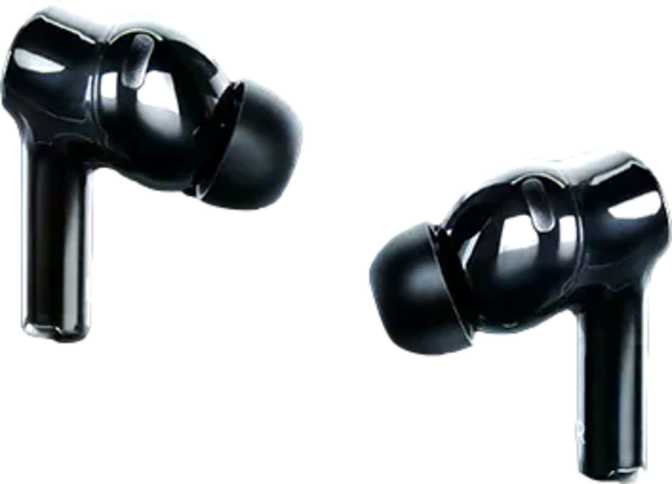
Razer Hammerhead V3 HyperSpeed Review: Wireless Gaming Earbuds Tested
Wireless EarbudsGaming earbuds have spent years fighting the same reputation problem: they look the part, but serious players still reach for a wired headset when it counts. The Razer Hammerhead V3 HyperSpeed arrives as a direct argument against that instinct. With Bluetooth 6 connectivity, active noise cancellation, and compatibility spanning PC and PlayStation, it positions itself as a wireless earbud that does not ask you to compromise on the things that actually matter during a session — spatial awareness, call clarity, and the confidence that your audio will stay locked and synchronized when it needs to be.
Whether it earns that position is a more nuanced conversation. Here is everything you need to make that call.
At a Glance
Build Quality and Physical Design
At just over eleven grams for the pair, the Hammerhead V3 HyperSpeed earbuds sit comfortably at the lighter end of the gaming earbud category. That weight figure matters more than it might seem: heavier earbuds shift and fatigue the ear canal during long sessions, and anything designed for extended gaming use has to solve the comfort problem before it solves anything else.
The fit is a standard in-ear style — the kind that creates a physical seal inside the ear canal rather than resting against the outer ear. That seal is not just about comfort; it directly supports the passive noise isolation, which works alongside the active noise cancellation to block distractions. Razer has not included wingtips, so users with ears that do not grip standard tips securely may want to test fit carefully before committing.
Physical Highlights
- IPX4 sweat resistance — handles intense sessions and light rain without concern. Not a waterproofing rating, but adequate for everyday use.
- 11.2g total weight — light enough to wear for hours without ear fatigue becoming an issue.
- True wireless form factor — no cable between earbuds or to the source device.
- No wingtips included — users with looser ear canals may find standard tips insufficient for high-movement use.
Aesthetic Choices
There is no RGB lighting on the Hammerhead V3 HyperSpeed — a deliberate departure from Razer's signature Chroma aesthetic found across the rest of the lineup. The result is a more understated, travel-friendly look that draws less attention in public spaces.
Brand loyalists who want the full Chroma visual experience on their ears will need to look elsewhere in Razer's catalog. For everyone else, the cleaner exterior is a practical advantage.
Sound Quality: What Those Drivers Actually Deliver
Driver Configuration and Frequency Coverage
Each earbud houses a single 11mm dynamic driver — a size that sits comfortably in the upper range for in-ear monitors of this type. Larger drivers generally move more air, which contributes to fuller low-end response, and 11mm is a meaningful step above the 6mm to 8mm drivers found in many budget wireless earbuds.
The frequency response spans the full range of human hearing — from the lowest bass frequencies to the upper ceiling of what most people can perceive. In practical terms, that means no artificial roll-off at either extreme. The impedance sits at 32 ohms, landing at the upper boundary of the typical consumer earbud range — high enough to resist power spike damage, yet still driven efficiently by the onboard amplification without concern.
The maximum sound pressure level reaches 105 decibels per milliwatt. That is genuinely loud — loud enough to deliver impactful audio cues like explosions, distant footsteps, and environmental audio with real dynamic range, without the driver running out of headroom during intense moments.
Active Noise Cancellation
The ANC works in tandem with the physical seal of the in-ear fit. The passive isolation does significant heavy lifting by blocking mid and high frequency noise mechanically, while the active system handles lower frequencies — air conditioning hum, crowd noise, engine rumble — that physical isolation alone struggles to suppress.
This combination is typically more effective than either approach in isolation. The ambient sound mode flips the equation when needed, allowing external audio to pass through so you can hear a conversation or stay aware of your surroundings without removing the earbuds.
Codec Support: An Important Caveat
No premium Bluetooth codecs supported
The Hammerhead V3 HyperSpeed does not support LDAC, aptX in any form, or AAC. This is a meaningful omission for audiophiles and high-resolution music listeners. For gaming via the HyperSpeed dongle, however, this matters far less — that proprietary connection prioritizes latency reduction over codec overhead. The limitation is most noticeable when pairing via standard Bluetooth for music away from a PC or console.
Connectivity: Bluetooth 6 and the HyperSpeed Advantage
Bluetooth 6 is the most current generation of the standard. The key advancement relevant to earbuds is improved connection stability and reduced interference in crowded wireless environments — busy offices, airports, and gaming setups with multiple wireless peripherals all benefit from the tighter, more reliable link the newer standard provides.
HyperSpeed (USB Dongle)
The USB dongle path — used with PC and PlayStation — is the HyperSpeed connection. This is the low-latency route that keeps audio synchronized with on-screen action during fast-paced gameplay. It bypasses the standard Bluetooth codec stack entirely, prioritizing synchronization over transmission format.
Recommended for GamingStandard Bluetooth
The Bluetooth connection provides flexibility for pairing with phones and other devices for everyday use. The maximum rated wireless range of ten meters covers the typical distance in most room setups. This is the path to use for calls, commuting, and general listening.
General UseUSB-C is the charging standard, which means one cable type for both the earbuds' case and most modern devices. NFC pairing is not supported, so initial pairing follows the standard Bluetooth discovery process.
Battery Life: The Full Picture
How Long These Actually Last
With ANC active — solid for an ANC-equipped earbud where many competitors drop to 6–7 hours
Additional charge stored in the case before any outlet is needed
Roughly 4–5 full days of moderate use without touching a power outlet
Charging Speed and Format
A full charge from empty takes two hours — acceptable but not class-leading on its own. Fast charging support rescues the situation: a short time in the case delivers a meaningful slice of playback time, covering the common scenario of picking up the earbuds without checking the battery first.
No wireless charging. The case charges exclusively via USB-C cable. Users who have built a wireless charging pad into their desk setup will find this a step behind some competitors, though it has no bearing on audio or gaming performance.
Microphone Performance
The built-in microphone system includes active noise cancellation on the input side — the mic works to filter background noise before your voice reaches teammates, not just the other way around. The sensitivity is calibrated to pick up voice at typical speaking distances without being so sensitive it captures keyboard clicks or environmental audio indiscriminately.
Who These Earbuds Are For
- PC and PlayStation players who want a wireless form factor without sacrificing low-latency audio synchronization
- Commuters who game at home and need a single pair to handle transit and desk sessions across different devices
- Users who want genuine ANC alongside a 40-hour combined battery reserve without constant charging anxiety
- Active users who want IPX4 sweat resistance and a lightweight fit that handles gym sessions as well as gaming
- High-resolution music listeners with FLAC or lossless streaming libraries who need LDAC or aptX codec support
- Console players who prioritize spatial or 3D audio processing — no Dolby Atmos or spatial audio engine is present
- Users who depend on auto-pause when an earbud is removed — in-ear detection is not included
- High-movement athletes who need wingtips or a locking fit mechanism for intense physical activity
Competitive Positioning
The Hammerhead V3 HyperSpeed is purpose-built for the gaming use case in a way that general-purpose earbuds are not. The trade-off is that non-gaming audio features are correspondingly narrower in scope.
| Feature | Razer Hammerhead V3 HyperSpeed | Typical Gaming Earbuds | Premium Audio Earbuds |
|---|---|---|---|
| Low-latency wireless (dongle) | Varies | ||
| Active Noise Cancellation | Sometimes | ||
| Bluetooth Version | 6.0 | 5.2 – 5.3 | 5.3 – 6.0 |
| Premium Codec Support | Varies | ||
| Spatial Audio | Sometimes | ||
| PlayStation Compatibility | Limited | ||
| Combined Battery Life | 40 hrs | 24 – 35 hrs | 24 – 36 hrs |
| Wireless Charging | Sometimes | Common | |
| Weight | 11.2 g | 10 – 14 g | 5 – 12 g |
Honest Strengths and Weaknesses
The strongest argument for these earbuds is the end-to-end gaming experience they offer without a cable. The HyperSpeed connection handles the latency concern that makes wireless gaming audio feel risky. Combined with ANC that actually reduces distraction and a battery reserve that eliminates constant charging anxiety, the Hammerhead V3 HyperSpeed resolves the three objections that have historically kept competitive players tethered to a wire.
The on-device controls, mute function, and voice prompts keep interaction tactile and immediate — there is no dependency on a companion app to perform basic functions, which is both a convenience and a reliability feature in a genre where companion app stability varies considerably. The two-year warranty period is above the category average, and the included travel bag is a practical addition that extends the real-world lifespan of the case.
On the other side: the codec situation is genuinely limiting for music listening. Anyone spending meaningful time with these outside of gaming, particularly through a phone over standard Bluetooth, will receive audio quality below what similarly priced earbuds from audio-focused brands can deliver. The absence of wireless charging is not a dealbreaker, but it is a noticeable gap compared to the direction the broader market is moving.
The ten-meter Bluetooth range is adequate but not generous — users who move frequently around a larger space may encounter the boundary. The lack of in-ear detection means music continues playing when an earbud is removed, requiring a manual pause step that most competing earbuds at this level handle automatically.
Questions Buyers Ask Before Purchasing
Final Verdict
The Razer Hammerhead V3 HyperSpeed is a gaming earbud that solves real problems for a specific audience and makes sensible trade-offs to do it. The HyperSpeed connection addresses the most legitimate concern about wireless gaming audio: latency. Combined with ANC that actually performs and a battery reserve that eliminates constant charging anxiety, it resolves the three objections that have historically kept competitive players tethered to a cable.
The price you pay for those gaming-specific advantages is narrower appeal as a general-purpose earbud. Music listening over standard Bluetooth, no spatial audio processing, no wireless charging — these are meaningful limitations if gaming is not the primary use case.
For PlayStation and PC players who want to cut the cable without cutting into their competitive experience, the Hammerhead V3 HyperSpeed is a well-reasoned choice and earns a confident recommendation. For buyers wanting one pair to serve equally at the desk and on a commute for music, the balance of strengths here may not fully align.