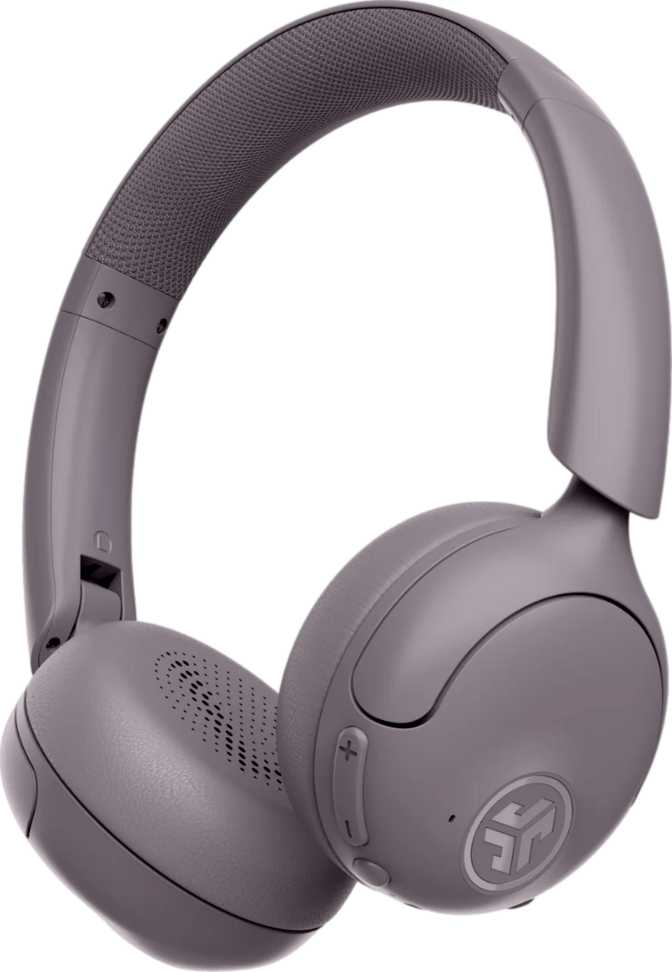
JLab Go Lux ANC Review: Exceptional Battery, Real Trade-Offs
HeadphonesBudget ANC headphones typically ask you to choose between battery longevity and effective noise cancellation — not both. The JLab Go Lux ANC pushes back against that assumption. Its most striking feature isn't its noise cancellation or its audio tuning; it's the sheer number of hours it stays alive. When that number exceeds what most premium headphones offer at twice the price, the conversation changes.
Endurance only matters if everything else holds up. This review breaks down every aspect of the Go Lux ANC — including where it shines and where it makes visible compromises — so you can decide whether it earns a place in your daily rotation.
Design and Build: Compact, Portable, No-Frills
Physical form, cable options, and what the build quality means in daily use
First Impressions and Physical Form
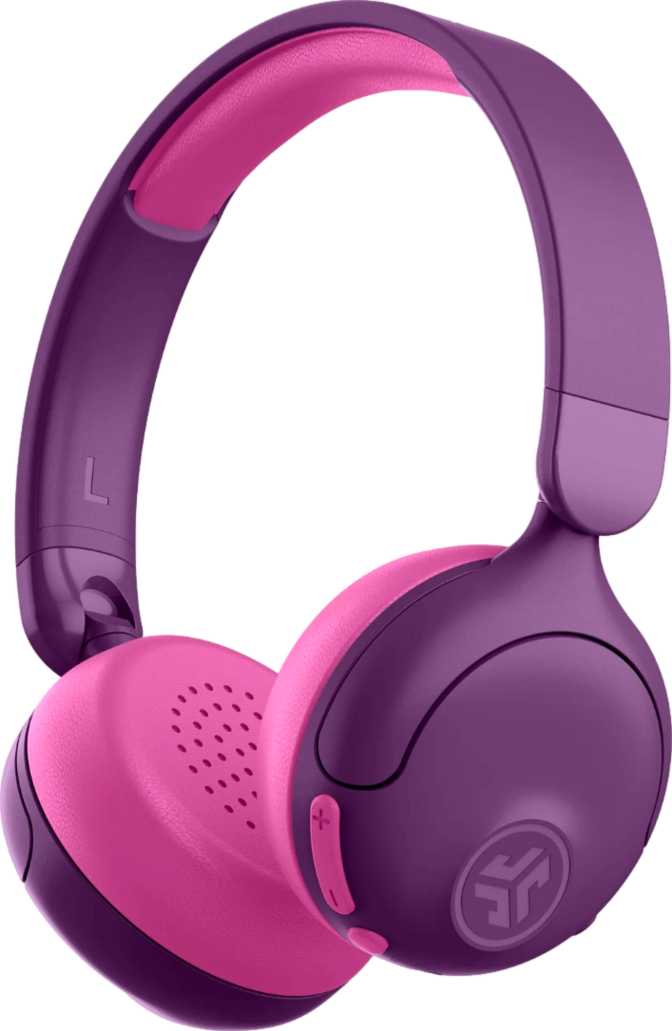
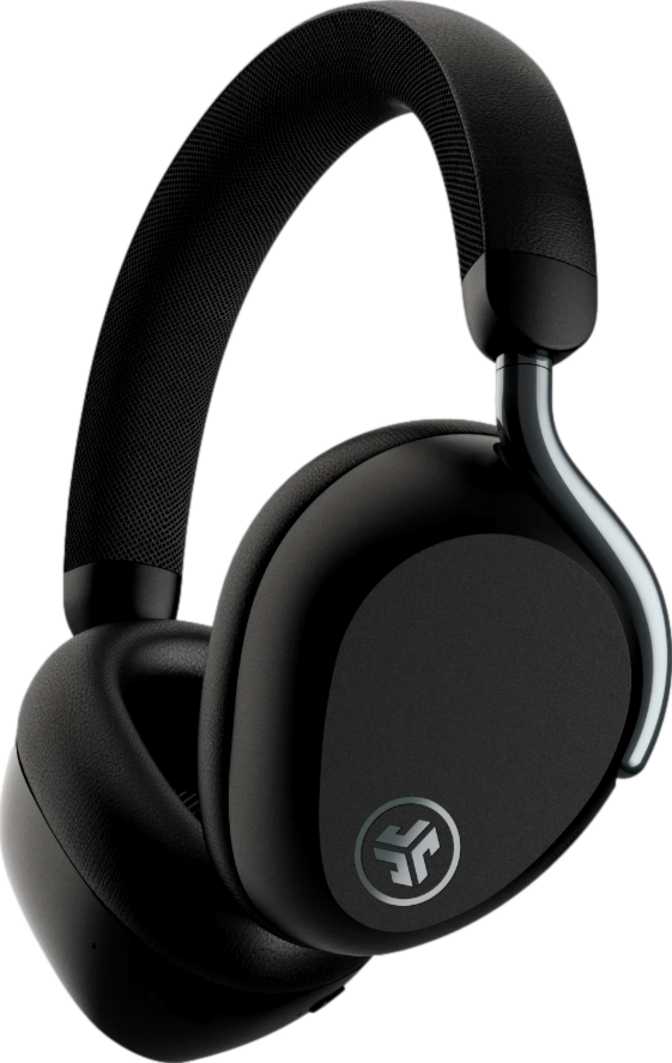
The Go Lux ANC is an on-ear headphone, which immediately tells you something about its design philosophy. Unlike over-ear headphones — where the ear cups wrap entirely around your ears — on-ear models rest directly on the outer ear. The upside is a smaller, more compact footprint and lighter overall weight. The trade-off is that extended wear can feel more fatiguing, particularly for people with sensitive ears or anyone planning marathon listening sessions.
At just under 200 grams, this is a genuinely light headphone. That weight reduction isn't accidental — it directly enables the foldable design that makes the Go Lux ANC pocketable in a way that full-size over-ear models cannot match. The hinges fold the ear cups flat and inward, collapsing the headphone into a form that slides into a jacket pocket or small bag compartment without drama.
Cable Options: Two Modes, One Smart Backup
JLab includes a detachable, tangle-free cable — a combination that matters more than it sounds. Tangle-free cables, typically flat or woven, don't knot themselves into chaos at the bottom of your bag. The detachable connection means that if the cable degrades over time — a common failure point for headphones — you replace a cable, not a headphone.
The cable also means that when the battery runs down, you're not stuck in silence. You plug in and keep going. For commuters, travelers, and anyone reliant on in-flight entertainment systems with headphone jacks, that's a meaningful backstop.
Notable Omission
No travel case or pouch is included. For a foldable headphone designed to be taken places, this feels like a missed opportunity — hinges and ear cups can accumulate scratches at the bottom of a bag.
Water Resistance: Know the Limits
The Go Lux ANC carries no water or moisture protection rating. This makes it a headphone for commuting, office use, studying, and travel — not outdoor workouts, running, or gym sessions where sweat is a factor. Rain and heavy perspiration are situations to avoid.
- Fit Type On-Ear
- Weight 196 g
- Foldable Yes
- Detachable Cable Yes
- Tangle-Free Cable Yes
- Travel Case Not Included
- Water Resistance None
- Open-Back Design No
Sound Quality: What the Hardware Actually Delivers
Drivers, frequency response, and the honest conversation about codec support
Drivers and Frequency Response
The Go Lux ANC uses 40mm drivers — the diameter of the moving element inside each ear cup that converts electrical signals into sound. This is a standard size for on-ear and over-ear headphones, large enough to produce meaningful low-end presence and reasonable high-frequency extension. The frequency coverage spans the full range of human hearing, meaning the hardware isn't artificially limiting what it can reproduce — from deep bass textures to the upper register detail in acoustic instruments.
One specification stands out: the drivers here don't use neodymium magnets — the rare-earth material found in the vast majority of modern headphone transducers. Neodymium magnets produce strong magnetic fields in a compact, lightweight form, which typically supports better efficiency and transient response. Headphones using alternative magnet materials can still sound good, but it's a departure from the category norm that audio enthusiasts should factor into expectations.
Spatial Audio
The Go Lux ANC supports spatial audio processing — a mode that creates three-dimensional sound placement, making content feel like it's emanating from around you rather than pressed directly inside your head. Spatial audio is processed internally and doesn't require advanced codec support to function, so this feature operates fully within the headphone's connectivity constraints.
- Driver Size 40 mm
- Frequency Range 20 Hz – 20,000 Hz
- Spatial Audio Supported
- Neodymium Magnet No
- Stereo Speakers Yes
The Go Lux ANC doesn't support any elevated Bluetooth audio codecs — no aptX, no aptX HD, no LDAC, and no AAC. Without AAC, iPhone users and many Android listeners top out at baseline Bluetooth compression.
- aptX / aptX HD / aptX Lossless
- LDAC / LDHC
- AAC
- Casual listeners won't notice. Audiophiles will.
Active Noise Cancellation and Ambient Sound Mode
How ANC works here, what to realistically expect, and the ambient listening mode
Active Noise Cancellation
Active noise cancellation works by using microphones to detect incoming ambient sound and generating an opposing signal that neutralizes it before it reaches your ears. The Go Lux ANC supports this across both wireless and wired operation — a useful inclusion, since many ANC headphones disable the feature when switched to wired mode.
ANC in this category tends to handle consistent, low-frequency background sounds well — airplane engine hum, train rumble, open-office air conditioning — while performing less reliably against sudden, sharp, or high-frequency intrusions.
Ambient Sound Mode
The ambient sound mode passes filtered external audio through so you can hear announcements, conversations, or approaching traffic without removing the headphones. For commuters, students in libraries, and anyone who cycles in and out of focused and aware states, this is a genuinely practical feature — the kind that earns daily use rather than sitting forgotten in a settings menu.
- Hear announcements without removing headphones
- Safe for pedestrian and cyclist awareness
- Ideal for open-plan offices and transit
Battery Life: The Number That Reframes the Conversation
Where the JLab Go Lux ANC genuinely earns its place in the category
Running in pure wireless mode without ANC, the headphone sustains roughly two weeks of daily use before needing a charge — assuming four to five hours of listening per day. That's a battery presence that makes the charging cable feel like a rarely-consulted accessory.
Even with active noise cancellation running continuously — which draws additional power — the headphone delivers a full work week of listening on a single charge. Most competing ANC headphones, including models at considerably higher price points, reach considerably shorter run times with ANC engaged. The Go Lux ANC's figure sits at the upper range of what the category offers at any price.
Charging uses USB-C, the universal standard now found on most laptops and Android phones. No proprietary cables to track down, no adapter required. A built-in battery level indicator removes the guesswork about where the charge stands mid-day.
- Charging Port USB-C
- Battery Indicator Yes
- Wireless Charging No
- Removable Battery No
- Solar Charging No
Connectivity: Two Devices, Simultaneously, With a Wired Escape Hatch
Bluetooth specs, multipoint pairing, and the case for keeping the cable
Multipoint Connection
The Go Lux ANC maintains active connections to two Bluetooth devices simultaneously. In practice, this means having it paired to both your laptop and phone at the same time — switching between a video meeting on your computer and an incoming call on your phone without triggering a re-pairing process. For desk workers with a phone nearby, this removes a persistent small irritation from the day.
Bluetooth Range
The wireless range is rated at approximately ten meters — roughly the width of a large room or modest apartment. For stationary listening at a desk, on a couch, or in a café, this is sufficient. For moving through a building while leaving a source device in another room, it's likely to create dropouts. Keep your source device within the same general space.
Wired Mode
The wired connection transforms this headphone from a wireless device into one that operates indefinitely regardless of battery state. Airlines, in-flight entertainment systems, gym equipment, and any audio source with a headphone jack all become accessible. Combined with the tangle-free, detachable cable, the wired mode is a genuine option rather than an emergency measure.
| Feature | Status |
|---|---|
| Wireless + Wired | Both |
| Simultaneous Device Pairing | 2 Devices |
| Fast Pairing | Yes |
| NFC Pairing | No |
| Bluetooth Range | ~10 m |
| LE Audio | No |
| Auracast | No |
Microphone and Call Performance
What to expect on calls, video meetings, and voice apps
The Go Lux ANC uses a noise-canceling microphone — one that applies processing to reduce background noise on the far end of a call. This is separate from the listening ANC and specifically addresses the audio quality others hear from your side, filtering out background chatter, air conditioning noise, and environmental sounds.
The headphone functions fully as a wireless headset for calls, video meetings, and voice communication apps. On-device controls allow playback management and call handling directly from the ear cup.
Two Missing Features Worth Knowing
- There is no dedicated mute button on the headphone. Muting during group calls requires reaching for your device's software.
- There is no inline remote on the cable, so mic access during wired calls goes through the device screen.
- Noise-canceling microphone
- Usable as wireless headset
- On-ear control panel
- No dedicated mute button
- No in-line cable remote
- No mute function
Comfort and Long-Term Wearability
Honest assessment of fit fatigue, glasses compatibility, and what happens when you remove them
On-ear headphones occupy a comfortable space for sessions lasting one to three hours. Beyond that, comfort becomes more user-dependent. The on-ear design means pressure concentrates on the outer ear rather than distributing around it, which some listeners find acceptable and others find fatiguing.
The under-200-gram weight works in the Go Lux ANC's favor here — heavier headphones magnify the pressure effect. The lightweight build doesn't eliminate extended-wear fatigue, but it reduces it.
People who wear glasses with thick frames may find that the temples create additional pressure points where the headphone cups press. This is a common challenge for on-ear designs generally, not specific to JLab's execution.
There is no ear detection sensor that pauses music when the headphones are removed. Music continues playing when you set them down — a minor daily inconvenience that accumulates over time.
- Lightweight at 196 g
- Comfortable for 1–3 hour sessions
- May fatigue on-ear for longer wear
- Glasses wearers may notice pressure
- No ear detection / auto-pause
Real-World Usage: Who This Is For — and Who It Isn't
Matching the right buyer to the right headphone
- Prioritize battery life above almost everything else and are exhausted by headphones that need charging every few days
- Work across a laptop and phone simultaneously and want both connected without re-pairing
- Travel frequently and want a foldable headphone that works wired on planes without relying on a charged battery
- Are buying your first ANC headphone and want the feature at a restrained price
- Stream music at standard quality and have no investment in lossless audio formats
- Are an audio enthusiast streaming lossless content — the absence of any elevated codec creates a hard ceiling on wireless audio quality
- Wear headphones for four or more consecutive hours regularly — over-ear designs distribute pressure better for marathon sessions
- Work out or use headphones in wet or sweaty environments — there is no moisture protection here
- Want music to automatically pause when you take the headphones off — there is no ear detection
- Need a one-touch mute during calls — there is no mute button on the device
How It Compares to the Competition
JLab Go Lux ANC measured against budget and mid-range ANC alternatives
| Feature | JLab Go Lux ANC | Budget ANC Category | Mid-Range ANC Category |
|---|---|---|---|
| Battery (Without ANC) | ~70 hours | 20–40 hours | 30–50 hours |
| Battery (With ANC) | ~40 hours | 15–25 hours | 20–30 hours |
| Bluetooth Audio Codec | SBC only | SBC, sometimes AAC | Often AAC or aptX |
| Two-Device Pairing | Yes | Rarely | Often |
| Ambient Sound Mode | Yes | Rarely | Often |
| Water / Sweat Resistance | None | Uncommon | Uncommon |
| Wired Fallback | Yes | Sometimes | Sometimes |
| USB-C Charging | Yes | Increasingly common | Standard |
| Warranty Coverage | 2 Years | Typically 1 year | 1–2 years |
The battery advantage is the clearest competitive differentiator. Headphones matching or approaching the Go Lux ANC's runtime with ANC engaged typically cost more. The trade for that advantage is codec support — a loss that casual listeners won't perceive and that audio purists will find non-negotiable.
The Honest Assessment
The battery life isn't a headline stat that fades in practice — it changes the ownership experience. Headphones that need charging every two or three days become a background task. A headphone you charge once every week and a half becomes infrastructure you stop thinking about. The Go Lux ANC gets you to that place.
Two-device multipoint earns its reputation once you start using it. The friction of constantly re-pairing between a laptop and phone is low-grade but persistent, and eliminating it has outsized daily value relative to how often the feature gets discussed.
The wired option, foldable form factor, and tangle-free detachable cable reflect genuine practical thinking. Two years of warranty coverage is meaningfully better than the one-year standard common across this segment.
The absence of any elevated Bluetooth codec is the most consequential audio limitation. The lack of AAC in particular affects iPhone users and many Android listeners, capping wireless audio quality at baseline Bluetooth compression. For casual listeners this is largely imperceptible. For anyone who has invested in a lossless streaming subscription, it's a ceiling this headphone can't break through.
The on-ear fit creates a comfort conversation that doesn't apply to over-ear alternatives. For extended sessions, it's the right question to ask before buying.
No auto-pause means music plays into empty air whenever you set the headphones down. No mute button means reaching for your device during every call. Neither is a major flaw, but both are daily micro-frictions that competing headphones have solved.
Frequently Asked Questions
Answers to the questions real buyers search before purchasing
The JLab Go Lux ANC is built for a specific buyer: someone who wants functional ANC, two-device connectivity, and a battery that stops being a daily consideration — without spending premium headphone money to get there.
If that describes your situation, the value proposition is strong and the battery performance alone is a genuine standout in the category. The wired fallback, foldable build, and multi-device pairing round out a practical package that will serve commuters, remote workers, and frequent travelers well.
If your priorities point toward audio fidelity — particularly if you've invested in high-quality streaming and want your headphones to honor that investment — the codec situation is a real and permanent limitation. Similarly, over-ear shoppers who need all-day comfort and better passive isolation will find more suitable options elsewhere.
You want endurance and everyday practicality — this headphone turns charging from a routine into a rare event, and the feature set genuinely suits commuters, travelers, and desk workers.
Audiophile-grade wireless audio is your priority, you need all-day over-ear comfort, or you want workout-ready moisture protection. This headphone makes real trade-offs to achieve its battery figures.