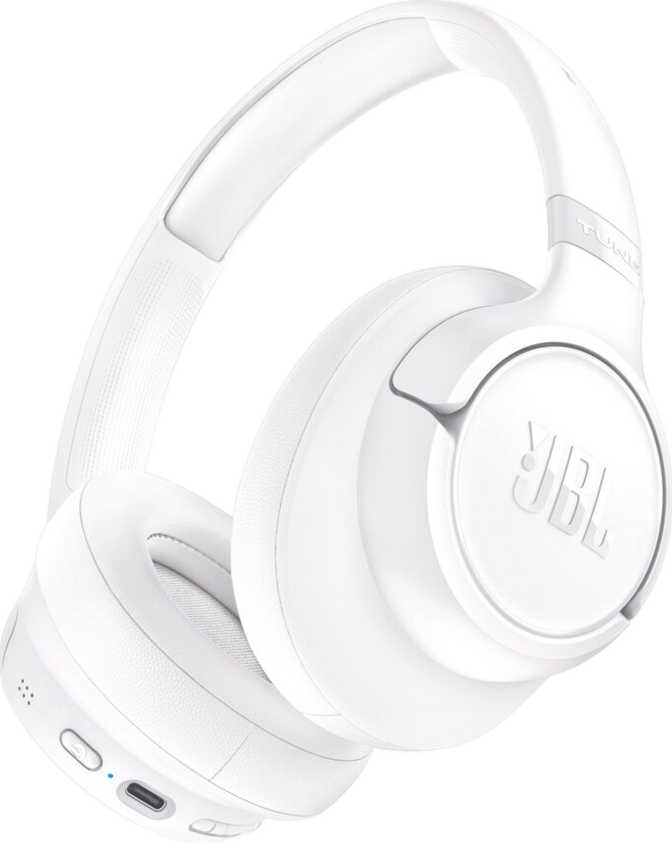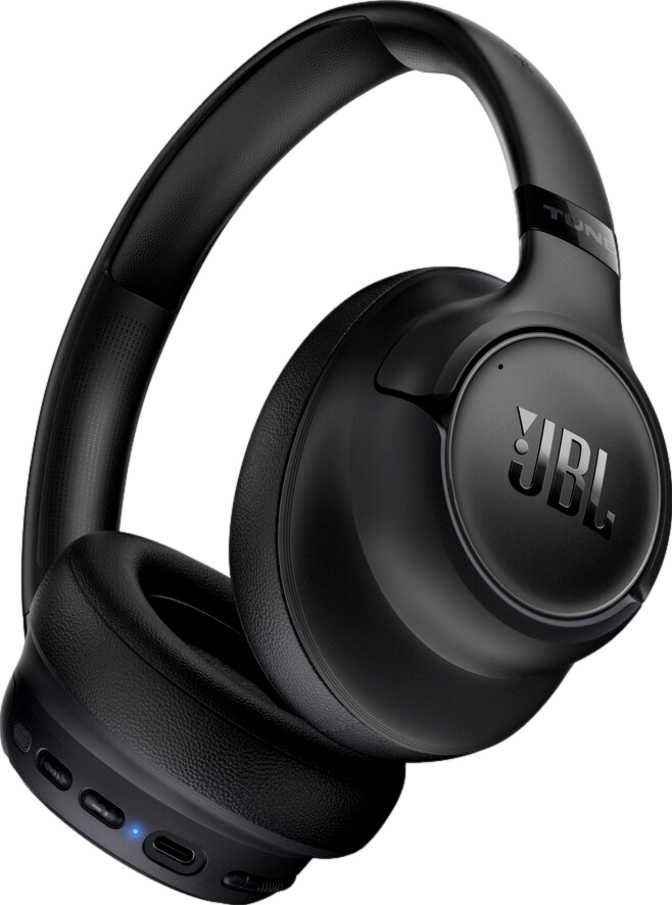
Over-ear wireless headphones with active noise cancellation used to be a premium luxury. These days, the technology has trickled down far enough that mid-range buyers can reasonably expect ANC, long battery life, and multidevice connectivity all in one package. The JBL Tune 780NC targets exactly this buyer — someone who wants meaningful noise blocking, marathon battery performance, and the reliability of a major audio brand without stepping into flagship territory.
What makes the 780NC worth a close look is not any single feature — it is the combination of Bluetooth 6 connectivity, a battery life that borders on extraordinary, and JBL's established track record in the headphone space. Whether those merits hold up under scrutiny is what this review addresses.
At-a-Glance Ratings
Design and Build Quality: Practical Over Precious
The Tune 780NC uses an over-ear fit — meaning the ear cups encircle the ear entirely rather than pressing against it. This creates a physical seal between the ear cup padding and the side of your head, contributing to long-wearing comfort by distributing clamping pressure across a wider surface area, and blocking a meaningful amount of ambient sound before the electronics need to do anything at all.
The headphones are closed-back, meaning the outer shell of each ear cup is sealed rather than vented. This reinforces passive isolation, contains sound internally so it does not leak to people sitting near you, and helps the drivers build the low-end pressure that contributes to bass response. It is the correct design choice for a commuter or office headphone.
Portability was treated as a practical necessity rather than an afterthought. The ear cups fold inward along the headband, collapsing the headphones into a significantly more compact form that fits in a bag without requiring a hard shell case. The included cable is both detachable and tangle-resistant — detachable meaning it can be replaced if damaged and enables wired connection to any audio source, tangle-resistant meaning it behaves like a usable tool every time you reach for it.
Sound Quality: What the Drivers Actually Deliver
The Tune 780NC is built around a pair of 40mm dynamic drivers, one per ear. Forty millimeters is a well-established sweet spot for over-ear headphone design: large enough to move substantial air and produce a present, full-bodied low end, while small enough to remain physically rigid and capable of accurate reproduction through the midrange where voices, instruments, and detail all live.
In terms of frequency coverage, the drivers are engineered to reproduce the full range of audible sound — from the deepest bass through to the upper ceiling of perceivable high-frequency detail. This covers everything from the physical thud of electronic music through to the shimmer of cymbals and high-register acoustic instruments. JBL historically tunes toward a warm, bass-forward, consumer-accessible sound signature.
Technical Note for Audiophiles
The drivers in the 780NC do not use neodymium magnets, which are the standard in most modern headphone transducers across virtually every price tier. Neodymium's strength-to-size ratio makes drivers more efficient — generating more output per unit of power. This is a component cost decision that audio enthusiasts will want to factor into their assessment, though driver tuning, enclosure acoustics, and digital signal processing all shape the final sound experience.
When listening to content encoded for spatial audio, the 780NC simulates a wider, more three-dimensional soundstage than standard stereo. Particularly effective for cinematic content, gaming, and compatible streaming. Not active on standard non-spatial audio content — a bonus for compatible use cases rather than a core differentiator for everyday listening.
Active Noise Cancellation: How the Two-Layer System Works
The Tune 780NC layers active and passive noise reduction — two distinct mechanisms addressing different aspects of the same problem. The passive side comes from the physical design itself, while the active electronics handle what the physical design cannot. Together, they cover a broader noise spectrum than either approach alone.
Layer 1Passive Isolation
The over-ear closed-back design physically attenuates incoming sound through the ear cup padding before any electronics are involved. This handles mid and high-frequency sound effectively — voices, office chatter, mechanical noise at close range. By reducing the ambient noise load, good passive isolation allows the active electronics to work more efficiently against what remains.
Layer 2Active Cancellation
Four microphones analyze the acoustic environment and generate an inverted signal that cancels incoming sound. The array samples ambient noise from multiple reference points, improving accuracy against complex, variable environments — open-plan offices, aircraft cabins, urban transit. The low, constant drone of an airplane cabin engine is precisely the sound profile these systems handle most effectively.
The inverse of noise cancellation — this mode pipes in surrounding audio so you can have a brief conversation, catch a transport announcement, or stay aware of your environment without removing the headphones. Controlled directly from the ear cup in a single gesture.
Battery Life: The Number That Changes Your Charging Habits
The battery performance of the JBL Tune 780NC is its most marketable specification, and for good reason. Without active noise cancellation engaged, the headphones run for over three full days of continuous listening. For someone who listens four hours daily — a reasonable estimate for a combined commuter and desk worker — that is roughly eighteen days between charges.
With active noise cancellation running, that figure decreases, but the remaining endurance still comfortably exceeds what most competing headphones offer with their ANC entirely disabled. The equivalent of a full working week of daily commutes and office sessions is available from a single charge. These are headphones you charge once or twice a week, not every night.
JBL Tune 780NC
Category Average
Connectivity: Bluetooth 6 and What LE Audio Actually Means
The Tune 780NC ships with Bluetooth 6, the latest generation of the wireless audio standard. Bluetooth 6 delivers improvements in connection stability, interference resistance in crowded wireless environments, and radio efficiency — fewer dropouts in transport hubs and conference spaces, and slightly less battery draw from the wireless radio compared to older Bluetooth versions.
The headphones also support Bluetooth LE Audio, a next-generation audio framework built on lower-power Bluetooth architecture. LE Audio uses the LC3 codec, which delivers good perceptual audio quality at significantly lower bitrates than older codecs. As LE Audio adoption grows across smartphones and streaming services, this support positions the 780NC to benefit over time. On older devices without LE Audio, the fallback is SBC — the baseline Bluetooth codec.
What It Has
- Bluetooth 6.0 — Latest generation, stable and power-efficient
- Bluetooth LE Audio — Next-gen framework with LC3 codec
- Multipoint (2 Devices) — Phone and laptop connected simultaneously
- Fast Pairing — Single-tap connection for compatible devices
- Wired Connection — Detachable cable for non-Bluetooth and in-flight use
What It Lacks
- No LDAC — Sony's high-resolution wireless codec is absent
- No aptX / aptX HD — Qualcomm premium codecs not included
- No AAC — Apple's preferred codec unavailable; iPhone users fall back to SBC
- No NFC Pairing — Manual Bluetooth setup required on first connection
iPhone Users: Without AAC support, audio on iOS falls back to the baseline SBC codec on devices that do not yet support LE Audio. For casual streaming at standard quality, the practical difference is minimal. For critical listening from lossless-tier services, this is a meaningful limitation to consider.
Microphone and Call Performance
The Tune 780NC is a fully capable headset, not merely a listening device. Its four-microphone array applies active noise suppression to calls, working to identify and remove background noise — wind, office ambient sound, transit noise — so the person on the other end hears you clearly rather than your environment. Four microphones allow more sophisticated noise-isolation processing than the two-microphone setups common in this category.
The practical benefit is most noticeable in genuinely noisy conditions: on a train platform, in an open-plan office during a busy period, or working from a cafe. Call quality in quieter environments is reliably good across this product class; where a larger microphone array differentiates itself is in degraded acoustic conditions.
No Hardware Mute Button
The 780NC does not include a dedicated physical mute key. For professionals who spend significant time on video calls, muting requires navigating to the call interface in software rather than pressing a dedicated button on the headphone itself. For casual callers this is minor. For full-time remote workers with frequent back-to-back meetings, it is a workflow friction point worth factoring into the purchase decision.
Who the JBL Tune 780NC Is For — and Who It Is Not
Ideal For
- Daily commuters who want reliable ANC and long battery life on public transport
- Remote workers needing multi-device pairing and clear call quality from a desk
- Frequent travelers who need a foldable design, wired fallback, and ANC for long flights
- Students requiring long, uninterrupted listening sessions throughout the day
- Anyone frustrated by daily charging anxiety who wants real-world endurance
Look Elsewhere If...
- You are an audiophile who streams high-resolution audio and needs LDAC or aptX codec support
- You use headphones at the gym or outdoors with heavy sweat or rain — no moisture protection here
- Call-heavy professionals who rely on a physical mute button for back-to-back meetings
- iPhone users who prioritize optimal wireless audio quality above standard streaming tiers
How the JBL Tune 780NC Compares at Its Price Point
In the mid-range ANC headphone market, the typical package includes active noise cancellation, 30 to 40 hours of battery life, Bluetooth 5.x, and basic multidevice pairing. The Tune 780NC exceeds those category norms in several areas while trading off in others. The right question is not which column looks better in aggregate, but which column matters for the specific way you use headphones.
| Feature | JBL Tune 780NC | Typical Mid-Range ANC |
|---|---|---|
| Battery (ANC Off) | ~76 hours | 30–40 hours |
| Battery (ANC On) | ~50 hours | 20–30 hours |
| Bluetooth Version | 6.0 | 5.2–5.3 |
| LE Audio Support | Rarely included | |
| Simultaneous Device Pairs | 2 devices | 1–2 |
| Microphone Count | 4 microphones | 2–3 |
| High-Resolution Codecs | None | Occasionally aptX or AAC |
| Water Resistance | None | Occasionally IPX4 |
Honest Assessment: Strengths and Weaknesses
The JBL Tune 780NC makes its case primarily on value proposition and practical utility rather than technical perfection. These are not accidental oversights — they are engineering trade-offs. JBL made deliberate choices to deliver extraordinary battery life and modern connectivity, and those choices came with component trade-offs elsewhere. Understanding them clearly is what allows the right buyer to make the right decision.
Strengths
- Extraordinary battery endurance — industry-leading at this price tier
- Bluetooth 6.0 with LE Audio — ahead of most mid-range competition
- Effective dual-layer noise cancellation combining passive and active approaches
- Four-microphone call system with active noise suppression
- Two-device simultaneous multipoint pairing
- USB-C charging with battery level indicator
- Foldable, travel-ready form with detachable tangle-free cable
- Spatial audio support for compatible streaming and gaming content
Weaknesses
- No premium audio codecs — LDAC, aptX, aptX HD, and AAC all absent
- No water or sweat resistance — excluded from gym and outdoor athletic use
- No wireless charging — USB-C cable required for every charge cycle
- No dedicated hardware mute button for call users
- Short one-year warranty — below the two-year coverage some competitors offer
- Non-neodymium drivers — a component trade-off audio enthusiasts will note
Questions Buyers Ask Before Purchasing
Final Verdict
The JBL Tune 780NC is a well-built, practically focused over-ear wireless headphone that earns its position in the mid-range ANC category through endurance and modern wireless engineering rather than through audio performance ambitions it does not claim to have.
For the audiophile who demands high-fidelity wireless codec support, the gym user who needs moisture protection, or the call-focused professional who relies on a hardware mute button, the search should continue. For everyone else — the commuter, the business traveler, the student, the remote worker who wants a dependable, long-lasting, modern headphone without premium-tier trade-offs — the JBL Tune 780NC is a strong, specific recommendation.
Bottom line: Buy it if you prioritize battery life, modern wireless, and daily-use reliability over premium audio codec support or moisture protection.