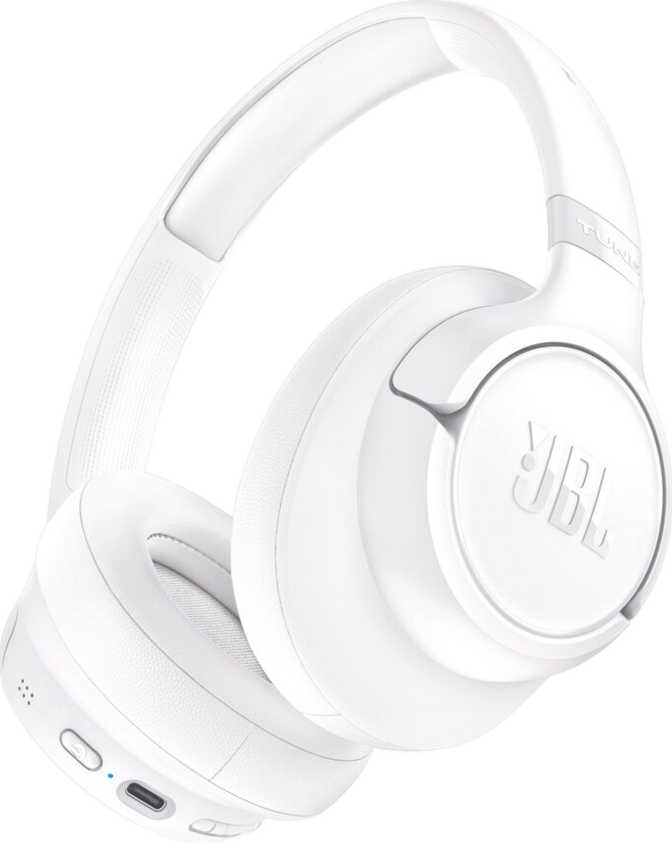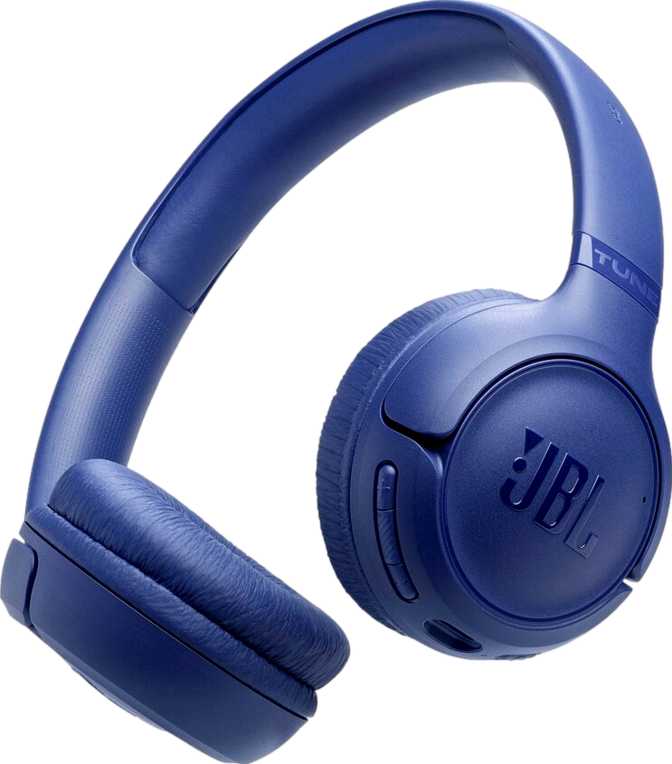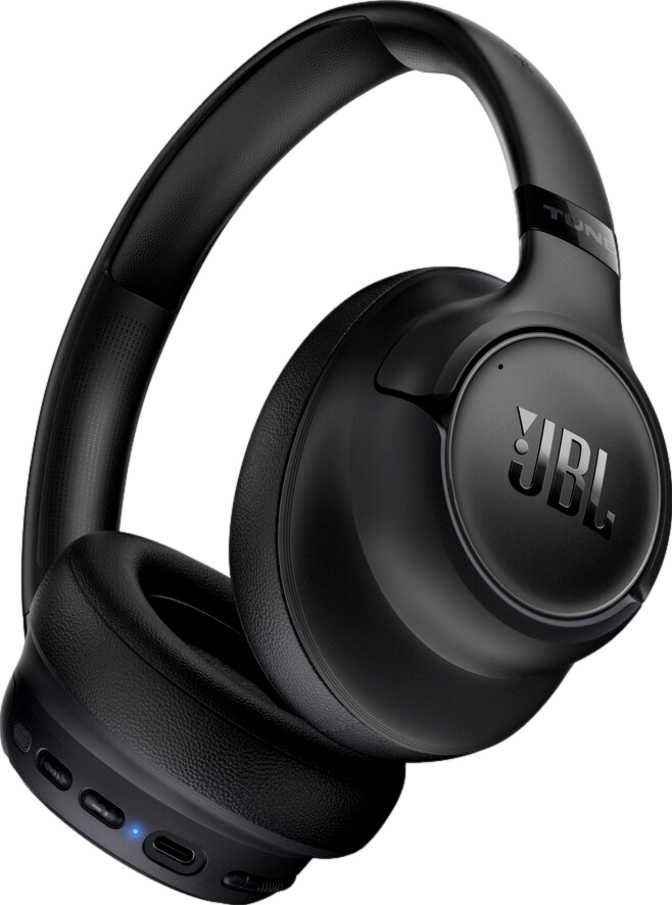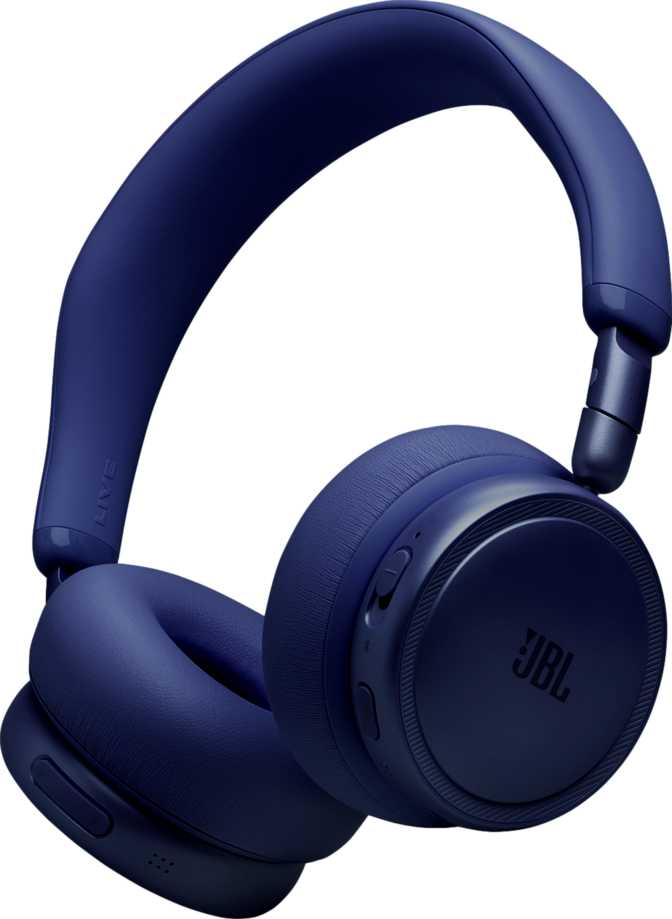
JBL Tune 680NC: An Honest Review of the Battery-First ANC Headphone
HeadphonesMost noise-canceling headphones force a trade-off: genuine ANC with acceptable battery, or long battery with disappointing noise cancellation. The JBL Tune 680NC challenges that balance — arriving with stamina that outlasts practically any scenario you'd throw at it, while still delivering active noise cancellation, spatial audio, and a modern wireless foundation built on the latest Bluetooth generation.
Whether that combination justifies buying one over the alternatives depends entirely on how your priorities align. This review covers exactly what this headphone gets right, where it falls short, and who it was made for.
Quick Verdict
A standout choice for commuters and travelers who want category-leading battery endurance and capable ANC in a compact, foldable design.
Key Specs at a Glance
Battery (ANC On)
50 hrs
Battery (ANC Off)
76 hrs
Bluetooth
v6.0
Microphones
4 mics
Multipoint
2 devices
Design
Foldable
Design and Portability: Built to Go With You
On-ear fit • Foldable frame • Tangle-free detachable cable
On-Ear, Not Over-Ear — Why This Distinction Matters
The Tune 680NC uses an on-ear design, where the earcups rest on the surface of your ears rather than enclosing them. Compared to over-ear headphones, this produces a noticeably lighter and more compact package — but it also changes the comfort equation significantly. On-ear headphones press against your ears rather than around them, which some listeners find perfectly comfortable through full workdays and others find fatiguing after an hour.
Before You Buy
If you have never worn on-ear headphones for extended sessions, this is the single most important factor to verify before committing. Purchase from a retailer with a reliable return policy so you can test the fit.
Fold It, Pack It, Forget It
The earcups fold flat and collapse toward the headband, making the Tune 680NC compact enough for a jacket pocket or small bag. For daily commuters who want to skip a rigid headphone case, this foldability changes day-to-day practicality in a meaningful way.
The cable is both detachable and tangle-free. Leave it home when going wireless. Bring it as a backup when needed. When you do use it, it comes out of your bag ready to connect — no untangling ritual required.
Design Features
-
Foldable Frame
Collapses flat for bag or pocket storage
-
Detachable Cable
Wired fallback always available
-
Tangle-Free Cable
Ready to use straight out of your bag
-
Stereo Speakers
Full stereo soundstage in both earcups
-
No Water Resistance
Not suited for exercise or outdoor use in rain
No Moisture Protection
The Tune 680NC carries no water or sweat resistance rating. These headphones were designed for dry environments — transit, offices, libraries, flights. They were not designed for outdoor exercise, cycling in rain, or gym sessions where sweat exposure is routine. If your use case involves moisture in any consistent form, this is a hard stop.
Sound Quality: What the Tune 680NC Actually Delivers
20 Hz – 20,000 Hz full-range • Spatial audio support • Closed-back design
Driver Character and Tuning
Inside each earcup sits a driver sized appropriately for an on-ear form factor. The driver covers the complete range of human hearing — from the deepest bass notes to the highest treble — so nothing in a standard music mix goes missing.
JBL's Tune-series headphones are broadly known for a consumer-tuned sound profile — warm, with an emphasis on bass presence and energy rather than flat studio-monitor accuracy. If you enjoy music that sounds dynamic and engaging rather than clinically neutral, this character typically lands well.
Spatial audio support creates a perception of sound positioned in space around you — particularly noticeable when watching films or playing games where positional audio contributes to immersion.
The Codec Situation: Read This Carefully
The Tune 680NC supports Bluetooth LE Audio — a newer transmission framework built around a modern codec engineered from the ground up for wireless audio. For everyday listening through standard streaming tiers, LE Audio performs well.
Apple Users: Important Note
The Tune 680NC does not include AAC — Apple's preferred Bluetooth audio codec. iPhone users connect via a different pathway that isn't tuned for iOS optimization. Casual listeners likely won't notice; audio-sensitive listeners should factor this in before buying.
No LDAC, aptX, aptX HD, or other high-resolution codecs are present. This is a deliberate positioning choice at this price point.
Audio Codec Support
| Codec | Supported | What It Means |
|---|---|---|
| Bluetooth LE Audio | Next-gen wireless audio — efficient and future-ready | |
| AAC | Missing — impacts iPhone users who rely on iOS-optimized playback | |
| aptX / aptX HD / aptX Adaptive | Not supported — mid-range positioning choice | |
| LDAC | Not supported — no high-res lossless streaming path |
Noise Cancellation: Two Systems, One Goal
Active electronic ANC + passive closed-back isolation • 4-microphone system
The Tune 680NC deploys both active and passive noise reduction simultaneously. Passive isolation works through physics: the sealed, closed-back earcup design blocks mid-to-high frequency ambient noise simply by creating a physical barrier. Active noise cancellation adds electronics — microphones sample the surrounding environment, and the headphone generates a signal to cancel out constant low-frequency noise like aircraft cabin hum, train rumble, and the persistent drone of HVAC systems.
The Four-Microphone Advantage
Four microphones power this system. Two are positioned to sample external sound for the ANC processing. The remaining microphones handle voice pickup for calls. A four-microphone call system in this price bracket typically delivers noticeably cleaner voice capture than dual- or single-microphone setups — the person on the other end hears you rather than your surroundings.
Awareness Without Removal
Ambient sound mode lets external audio pass through the headphone without physically removing it. Activate it to hear a transit announcement, respond to someone speaking to you, or maintain situational awareness where blocking out the world would be irresponsible.
One feature is absent: automatic ear detection. Lifting the earcup off your ear or pulling the headphones around your neck won't pause your audio — you'll need to pause manually. This is a convenience feature common on premium over-ear headphones that didn't make it into this model.
ANC System Summary
-
Active Noise Cancellation
Targets low-frequency constant noise
-
Passive Isolation
Closed-back physical noise barrier
-
Ambient Sound Mode
Hear your surroundings without removing headphones
-
4-Mic Call System
Noise-canceling voice pickup for clear calls
-
No Auto-Pause
Ear detection not included
Battery Life: The Number That Changes Everything
76 hrs total / 50 hrs with ANC • USB-C charging • Battery level indicator
76 hrs
ANC Off
Maximum playback endurance
50 hrs
ANC On
Category-leading endurance
~3 wks
Typical Commuter Use
Based on 3 hrs/day with ANC active
2+ flights
Long-Haul Travel
Covers back-to-back 12-hour routes
Even with ANC running continuously, the battery supports enough playtime to carry a commuter through roughly two and a half to three weeks of daily three-hour sessions before requiring a charge. Disable ANC in quiet environments, and that window extends considerably further.
A traveler on a pair of consecutive 12-hour long-haul flights would arrive at their destination with significant charge remaining. For frequent flyers, the calculation of "do I have enough battery to get through this flight" simply stops being relevant.
For users who currently check their headphone battery before leaving the house, carry cables to top up during the day, or have been caught mid-commute with dead headphones — this battery capacity changes the ownership experience at a fundamental level. It removes a source of friction that compounds across hundreds of uses.
Charging Details
-
USB-C Charging
Universal connector — same cable as your phone or laptop
-
Battery Indicator
Know your remaining charge — no surprise shutdowns
-
No Wireless Charging
One cable back into the workflow for pad charger users
Connectivity: A Forward-Looking Foundation
Bluetooth 6 • LE Audio • Dual-device multipoint • Wired fallback
Bluetooth 6: What It Actually Means
The Tune 680NC ships with the current generation of Bluetooth, placing it ahead of most competing headphones in this price range, which largely still use the previous generation standard. The practical differences in daily use are incremental — connection stability, interference handling, and power efficiency are all marginally better — but the underlying technology positions the headphone to age more gracefully as adoption widens.
LE Audio, part of the Bluetooth 6 ecosystem, contributes the modern codec framework discussed in the sound section and enables features that will become more relevant as the standard spreads. It's a forward-looking choice that gives this headphone longer practical relevance than one built on older wireless infrastructure.
Multipoint: The Feature Remote Workers Actually Use
Simultaneous connection to two devices means your phone and laptop are both paired and active at the same time. Audio routing between them is automatic — an incoming call on your phone interrupts your laptop's music, you take the call, and the headphone returns to the music without manual intervention. For anyone whose workday involves a computer and a phone running in parallel, this removes a recurring friction point from the day.
Connectivity Specs
-
Bluetooth 6
Current-generation wireless — future-proofed
-
LE Audio
Next-gen codec framework included
-
Wireless + Wired
Detachable cable provides reliable analog fallback
-
Fast Pairing
Connects quickly to new devices without NFC
-
2-Device Multipoint
Phone and laptop simultaneously connected
-
No NFC Pairing
Tap-to-pair not supported; fast pair covers the need
Wireless range note: The maximum range of around 10 metres is standard for the category and covers typical room-scale use. Don't expect a stable connection through walls or across significant distances.
Daily Use Features: Life With the Tune 680NC
On-device physical controls • Headset capable • 1-year warranty
On-device controls use physical buttons rather than touch surfaces. Touch controls look clean in product photography but often fail in practice — triggering accidentally, responding inconsistently in cold weather, or simply being difficult to locate by feel when you can't look at them. Physical buttons are tactile, reliable, and work the same way with gloves or wet hands. Users who have been frustrated by finicky touch controls on previous headphones will appreciate the change.
The Tune 680NC functions as a full headset — not just a listening device. The four-microphone system makes phone calls, video conferences, and voice input genuinely capable rather than a last resort. This is a headphone you can legitimately use for a full day of remote work meetings without apologizing for audio quality.
No Hardware Mute Button
In a meeting-heavy workday, the absence of a single-button mute on the headphone means you'll mute through your meeting application — Zoom, Teams, Google Meet. On dedicated business headsets, hardware mute is standard. Here, muting requires an extra step through software. Not a dealbreaker, but a genuine inconvenience for call-intensive users.
Features Breakdown
-
Physical On-Device Controls
Reliable in all conditions, including gloves
-
Full Headset Capability
Calls, video meetings, voice input all supported
-
Noise-Canceling Microphone
Isolates your voice in noisy environments
-
1-Year Manufacturer Warranty
Standard coverage for manufacturing defects
-
No Hardware Mute Button
Mute via your meeting app instead
-
No Auto-Pause (Ear Detection)
Removing headphones won't pause playback
Who Should Buy the JBL Tune 680NC?
Great Fit For
-
Commuters whose biggest frustration with current headphones is managing battery life and charging cycles
-
Remote workers who need a capable wireless headset for full-day calls and meetings
-
Frequent travelers on long-haul routes who want ANC that doesn't need a recharge mid-journey
-
Flexibility seekers who want wireless freedom day-to-day and a wired backup for edge cases in one package
-
ANC newcomers stepping up from entry-level Bluetooth headphones for the first time
Not the Right Choice For
-
Over-ear newcomers who have never tested on-ear comfort for extended sessions and haven't verified the fit works for them
-
Audiophile streamers who depend on LDAC or aptX HD for near-lossless Bluetooth audio quality
-
Apple power users for whom AAC codec optimization is an audio quality priority
-
Athletes and gym users — no moisture resistance means genuine damage risk from sweat or rain
-
Business call-intensive users who consider a hardware mute button non-negotiable in their workflow
How It Compares to the Competition
JBL Tune 680NC vs. typical mid-range ANC on-ear alternatives
The Tune 680NC occupies the mid-range ANC on-ear segment — above entry-level wireless headphones that offer Bluetooth but no noise cancellation, and clearly below flagship over-ear models from Sony and Bose that command significantly higher prices in exchange for superior passive isolation, over-ear comfort, and more advanced ANC performance. Within this bracket, two differentiators stand out: battery endurance and Bluetooth generation. Both are genuinely ahead of what most competing models at this price deliver.
| Feature | JBL Tune 680NC | Typical Mid-Range Competitor |
|---|---|---|
| Active Noise Cancellation | ||
| Battery Life (ANC On) | 50 hrs — category-leading | Average to good |
| Bluetooth Generation | v6 — current gen | Usually one generation behind |
| Spatial Audio | Varies | |
| Multipoint (2 devices) | ||
| Wired Fallback | Sometimes | |
| Water / Sweat Resistance | Sometimes IPX4 | |
| Auto-Pause (Ear Detection) | Often included | |
| Wireless Charging | Sometimes | |
| High-Res Codec (LDAC / aptX HD) | Varies | |
| AAC Codec | Often included |
The Honest Assessment
Where It Genuinely Excels
The battery runtime isn't just a spec-sheet talking point — it reshapes how you interact with the product across weeks and months of ownership. Stopping to manage a charging cable becomes something you do infrequently rather than routinely. This is the kind of improvement that compounds across hundreds of uses in ways that are hard to articulate until you've experienced it.
The Bluetooth 6 foundation is a smart investment in longevity. While the immediate practical differences over the previous standard are incremental, the technology positions this headphone to age better than most competitors at this price.
The four-microphone call system outperforms what many headphones in this price range can claim. Voice isolation and clarity on calls is a genuine differentiator, not a checkbox feature.
Weaknesses That Deserve Honest Attention
The on-ear design is a comfort variable that entirely depends on individual anatomy and session length. Don't assume you'll adapt well if you've never worn on-ear headphones before. This is the single risk factor most buyers underestimate.
The codec ceiling is a real audio quality limitation — specifically for Apple users and listeners invested in high-resolution streaming. The absence of both AAC and any premium high-resolution codec limits the headphone's audio ceiling in ways that are audible to sensitive listeners.
No water resistance is a genuine constraint on where these headphones can go. This isn't a minor footnote — it's a hard boundary on use cases.
None of these are hidden trade-offs or design flaws. They're the predictable consequences of building a product around a specific set of priorities. Whether you find them acceptable depends entirely on how well those priorities mirror your own needs.
Questions Real Buyers Ask Before Purchasing
Final Verdict
The JBL Tune 680NC Earns Its Recommendation
This headphone makes a deliberate set of choices: prioritize battery endurance, modern wireless technology, and practical portability over premium materials, advanced codec support, and convenience extras like ear detection and wireless charging. That's a coherent and defensible set of priorities for a wide range of buyers.
The weaknesses deserve honest attention rather than footnote treatment. The on-ear design is a comfort variable that depends on individual anatomy. The codec ceiling matters to Apple users and audio-quality-conscious listeners. And no water resistance is a genuine constraint on use cases.
None of these are hidden trade-offs. They're the predictable costs of specific priorities. Whether you find them acceptable depends on how well those priorities mirror your own.
Buy this if:
Battery life and portability define what you need, you work remotely and need a capable daily headset, or you travel frequently and want ANC that outlasts the journey.
Look elsewhere if:
Over-ear comfort is non-negotiable, you're in Apple's ecosystem and care about codec quality, or you need a headphone that handles moisture without risk.
Overall Rating
4.5
out of 5