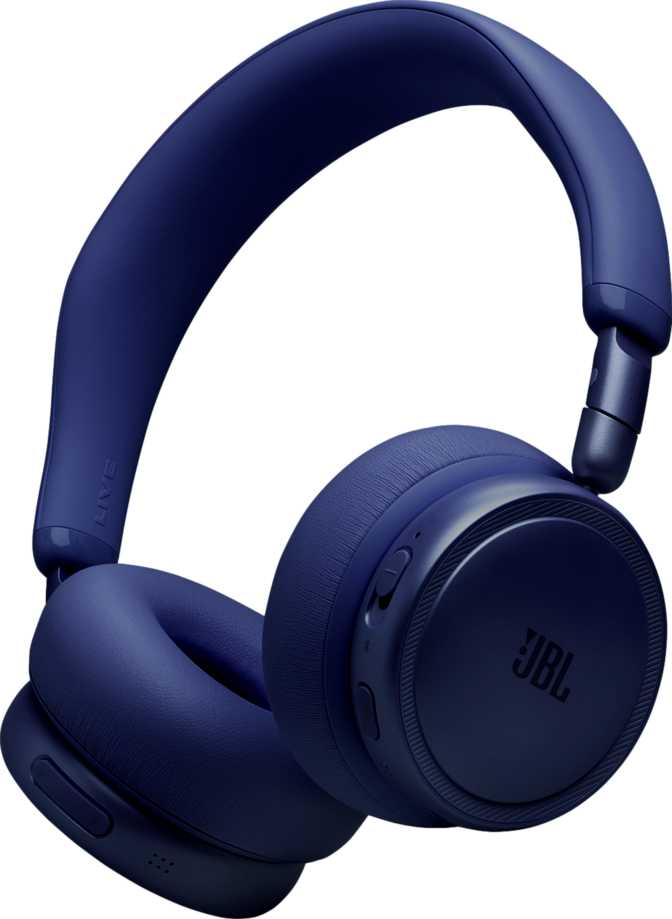
JBL Live 680NC Full Review: Battery Leader, Codec Compromises
HeadphonesThe JBL Live 680NC sits in a crowded middle ground where most buyers make their biggest mistakes: spending enough to expect premium performance, but not enough to guarantee it. It arrives with a headline battery figure that genuinely stops you mid-scroll, active noise cancellation tuned across several generations, and a Bluetooth version ahead of most direct competition. At the same time, its codec support tells a different story — one that matters enormously to some buyers and not at all to others.
Design, Build Quality, and Physical Experience
On-Ear Fit: What That Actually Means for You
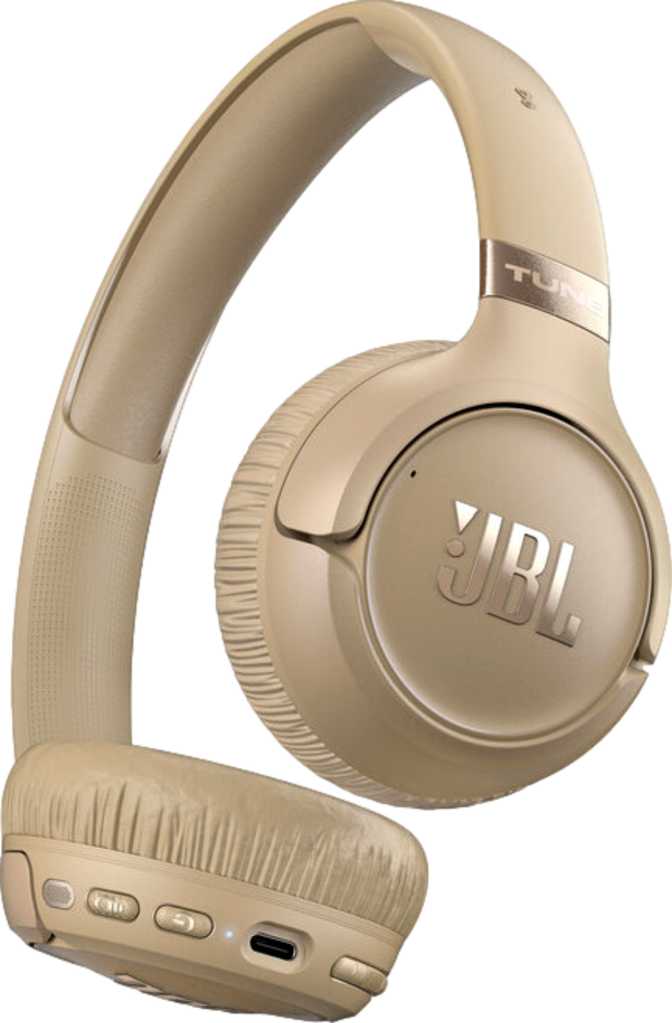
The Live 680NC is an on-ear headphone — the earcups rest directly on your ears rather than surrounding them. This distinction has real consequences. Long sessions past the two-to-four hour mark can create pressure and warmth, and the passive seal against outside noise is inherently weaker than a full over-ear design. For commuters wearing headphones in shorter daily bursts, gym sessions, or focused desk work, this is rarely an issue. For anyone planning six-plus hours of continuous wear, it is worth factoring in carefully before buying.
Weight, Portability, and the Folding Factor
At just over 230 grams, the 680NC is genuinely lightweight for a wireless ANC headphone. That keeps neck fatigue manageable during longer sessions — something you notice most on full workdays or long-haul flights. The headphones fold flat, which is the detail that matters most for daily portability: these slip into a backpack pocket or laptop bag without any fuss. No dedicated travel case is included in the box, so the fold mechanism carries more of the portability burden. It does its job well, but a case is something you will want to source separately if you travel regularly.
The Cable Setup
The 1.2-meter detachable cable is a practical inclusion that serves two purposes. First, it gives you a reliable wired fallback when the battery is depleted or when a wireless connection is not practical — certain airline systems, older gym equipment, and some in-flight entertainment setups still require a physical connection. Second, because the cable detaches, a damaged cable does not mean broken headphones. The cable itself is designed to resist tangling, which is a small but genuinely appreciated detail for bag carry. There is no in-line remote on the cable, so all playback controls happen on the earcup.
Sound Quality: Wide Range, Real Limitations
Frequency Range and Driver Performance
The Live 680NC reproduces audio across an unusually wide frequency range — from the deepest bass registers that many headphones simply cannot reach, all the way to frequencies beyond the limit of human hearing. In practice, this means the headphone handles deep, physical-feeling bass and crisp high-frequency detail without artificial rolloff at either end. JBL's signature sound tends toward the lively and bass-forward, and the 680NC fits that tradition. The 40mm drivers are a standard size for this category, but the sensitivity rating is high enough that these get loud from virtually any source — a phone, a laptop audio jack, or a portable amplifier will all drive them without strain.
Spatial Audio
Spatial audio support creates a more three-dimensional listening experience than standard stereo. Audio that would normally arrive from two fixed points on your head instead feels like it fills the space around you. The effect is most noticeable with films and immersive soundscapes — with standard music, it is a subtler enhancement. Whether it becomes a daily feature or an occasional toggle depends almost entirely on what content you primarily consume.
The Codec Gap — The Most Important Specification to Understand
The Live 680NC uses Bluetooth 6, a genuinely modern connection standard. However, it does not support any high-resolution audio codecs: no LDAC, no aptX HD, no aptX, and no AAC. Audio transmitted wirelessly defaults to the SBC baseline codec. Here is who that matters to — and who it does not.
Who this does NOT meaningfully affect:
- Casual streamers on standard quality tiers (Spotify, YouTube)
- Podcast and audiobook listeners
- Users who primarily watch video content
- Bluetooth call and meeting users
Who this DOES affect:
- Lossless streaming subscribers (Tidal, Apple Music lossless)
- iPhone users — no AAC means lower wireless fidelity
- High-resolution audio file collectors
- Audiophiles prioritizing wireless fidelity above all else
Active Noise Cancellation: Capable, With Context
How the ANC Performs in Practice
Active noise cancellation analyzes incoming ambient sound and generates an opposing signal to neutralize it before it reaches your ears. The Live 680NC deploys four microphones for this — more than most entry-level ANC headphones — which allows for more accurate environmental sampling from multiple directions simultaneously.
However, the on-ear form factor means ANC has to work harder here than it would in a competing over-ear design. Over-ear headphones add a layer of passive noise blocking through the physical seal of the earcup around the ear. On-ear designs rely almost entirely on their ANC electronics to compensate. For steady, consistent noise — plane cabin rumble, train engines, office HVAC — the 680NC's ANC performs well. For chaotic, variable noise environments like busy open offices or loud city streets, the performance gap versus over-ear alternatives becomes more apparent.
Ambient Sound Mode
The ambient sound mode reverses the process: it amplifies environmental sound through the microphones so you remain aware of your surroundings without removing the headphones. This is genuinely useful for catching transit announcements, having a brief conversation, or staying aware of street traffic. The four-microphone array makes this mode sound more natural and less processed than single-microphone implementations common at this price point.
ANC Effectiveness by Environment
Plane / Train Rumble
Strong — steady low-frequency noise handled well
Open Office Background
Moderate — consistent noise managed better than variable
Street Traffic
Partial — on-ear seal limits total attenuation
Variable Crowd Noise
Limited — unpredictable patterns challenge on-ear ANC
Relative editorial assessments based on specification analysis and form factor characteristics. Not derived from measured lab data.
Battery Life: The Headline Spec That Earns Its Place
Eighty hours of playback without ANC is a legitimate standout figure, even in a market where battery claims have become increasingly competitive. A daily commuter listening two hours per day charges these headphones roughly once every five to six weeks. A frequent traveler using them for four to five hours on a long-haul flight finishes an entire trip without worrying about power. With ANC active, the figure drops to 50 hours — still nearly double what most well-regarded ANC headphones in this category offer.
ANC Battery Life vs. The Category
JBL Live 680NC 50 hrs
Category Average ~25 hrs
Budget Alternatives ~22 hrs
Category figures represent typical market averages at this price tier.
Charging and Power Details
- Full charge in 2 hours — fast relative to the battery capacity involved
- USB-C charging — universal standard, works with any modern phone or laptop charger
- Built-in battery level indicator — no guessing, no surprise mid-commute shutdowns
- No wireless charging — a cable is always required to top up
Connectivity: Modern Protocol, Practical Limits
Bluetooth 6 Explained
Bluetooth 6 is ahead of where most headphones in this category currently sit. In practical terms, a newer Bluetooth generation means more stable connections, better handling of crowded wireless environments like airports and coworking spaces, and improved power efficiency. The connection holds up better when your phone is across the room or tucked in a bag, and it handles interference from surrounding devices more gracefully than older protocol versions. For daily commuters navigating dense urban wireless environments, this is a meaningful advantage.
Range and Real-World Wireless Reach
The specified maximum wireless range of 10 meters is on the conservative side for Bluetooth headphones. In an unobstructed space with your phone in clear line of sight, this is never limiting. In real-world conditions — walls between rooms, furniture, crowds — the effective range will be shorter. If you regularly leave your phone in one room and move freely to another while streaming, this is worth factoring into the decision.
Wired Fallback and Pairing Process
The dual wireless-and-wired capability is a practical choice at this price. When the battery runs low, the detachable cable keeps audio running without interruption. The pairing process is standard Bluetooth: hold the pairing button, select the device from your Bluetooth settings, confirm. There is no NFC tap-to-pair, no Android Fast Pair integration, and no indicated multipoint pairing for simultaneous connection to two devices. Switching between a phone and a laptop requires a manual disconnect and reconnect.
Connectivity Specifications
- Bluetooth
- Version 6
- Max Range
- 10 meters
- Wired Mode
- Yes, 1.2m cable
- LDAC
- Not supported
- aptX / aptX HD
- Not supported
- AAC
- Not supported
- NFC Pairing
- Not supported
- Fast Pair
- Not supported
- Multipoint
- Not indicated
Microphone Performance: Four Mics Doing Real Work
The Live 680NC includes four microphones with dedicated noise cancellation applied specifically to call audio output. This is a different function from the ANC that applies to music listening — it processes your voice transmission, filtering out background noise so the person on the other end hears you clearly rather than the environment you are sitting in. For remote workers who use headphones as much for communication as for music, this is often the feature that matters most in daily practice.
Remote Workers
Four-microphone call noise cancellation keeps voice clarity high through back-to-back virtual meetings and long work-from-home days.
Frequent Travelers
Making calls from airports and transit hubs benefits directly from multi-mic noise processing, where ambient noise is high and constantly variable.
Business Users
For anyone whose primary headphone use is communication rather than music, the microphone system here outperforms most single-mic alternatives at this price tier.
Who Should Buy the JBL Live 680NC
- You are a frequent traveler or daily commuter who wants class-leading battery life and never wants to think about charging
- You work remotely and take regular calls that require reliable microphone quality throughout long days
- You are a casual streaming listener on standard quality tiers — Spotify, YouTube, podcasts — not specifically paying for lossless audio
- You need something foldable and lightweight that lives in a backpack without requiring a dedicated carry case
- You want the most current wireless standard for future-proofed Bluetooth connectivity
- You subscribe to lossless streaming tiers and want the codec support to actually deliver that fidelity over Bluetooth
- You use headphones at the gym or outdoors in conditions involving sweat or rain — no water resistance means real risk
- You wear headphones for six or more continuous hours daily — on-ear comfort has a ceiling that over-ear designs handle better
- You need deep passive noise isolation on top of ANC — the on-ear form factor cannot match the passive attenuation of over-ear alternatives
Competitive Positioning: How It Stacks Up
The Live 680NC competes primarily against over-ear ANC headphones at a similar price and budget on-ear alternatives below it. The comparison reveals where JBL has made deliberate trade-offs — and where those trade-offs work in your favour or against it.
| Feature | JBL Live 680NC | Typical Over-Ear ANC Rival | Budget ANC Alternative |
|---|---|---|---|
| ANC Design | On-ear, 4-mic | Over-ear, active + passive | On-ear, 2-mic |
| Battery (ANC Active) | 50 hours | 20–30 hours | 20–25 hours |
| Bluetooth Version | Version 6 | 5.2–5.3 | 5.0–5.2 |
| Premium Codecs | None | LDAC or aptX HD | None |
| Water Resistance | None | IPX4 (common) | IPX4 (common) |
| Foldable | Yes | Varies by model | Yes |
| Travel Case Included | No | Often included | Rarely |
Competitor data reflects category averages across common alternatives at a similar price tier. Specific models may vary.
Honest Assessment: Strengths and Weaknesses
Where It Excels
The case for the Live 680NC rests on two genuine strengths. Battery endurance is not just a marketing figure — 50 hours of ANC playback changes the daily relationship between user and device. These headphones become infrastructure you stop thinking about rather than a battery-anxiety gadget you monitor constantly. That shift in mental load is real and valuable.
Bluetooth 6 adds a layer of connection stability that only becomes noticeable when competing headphones lose sync in busy environments. It is not a headline feature most buyers will mention, but it is one you will quietly appreciate every day.
The four-microphone call system deserves more attention than it typically receives at this price. For remote workers who use headphones as much for communication as for music, this often becomes the deciding feature in day-to-day practice — clearly outperforming single-mic alternatives in comparable price brackets.
Where It Falls Short
The codec support is the most significant limitation and requires no exaggeration to state clearly. The absence of AAC alone — the codec Apple devices default to for better wireless fidelity — is a hard ceiling that affects iPhone users specifically and audio purists generally. Pairing that with no LDAC or aptX HD means the excellent Bluetooth 6 connection is not matched by equivalent audio transmission quality.
The on-ear fit limits both passive noise isolation and extended wearing comfort. This is not a manufacturing flaw — it is a design category trade-off. But it does mean the headphone is not a natural fit for prolonged uninterrupted sessions beyond a few hours.
No water resistance and no included travel case are practical gaps that become more noticeable the more actively you use the headphones outside a controlled environment.
Questions Buyers Ask Before Purchasing
Final Verdict
The JBL Live 680NC is a focused product with a clear identity: it prioritizes battery life and modern wireless connectivity above audio format support and all-day wearing comfort. Within those priorities, it delivers convincingly — and that matters because battery anxiety is one of the most common daily frustrations with wireless headphones.
If you stream from standard-quality sources, take regular calls, commute or travel frequently, and want to charge your headphones once a month rather than every other day, this headphone makes a compelling and logical case for itself. The 50-hour ANC figure alone separates it from most of the competitive field.
If audio fidelity is your primary motivation, if you wear headphones for six or more unbroken hours daily, or if you need sweat or rain resistance, the Live 680NC asks you to compromise on the things you care about most. In those cases, over-ear alternatives with premium codec support deserve a look first, even if the battery figures on paper are less impressive.
Best For
Travelers, commuters, and remote workers who value endurance and call quality above all else
Skip If
You prioritize high-resolution audio, extended all-day wearing comfort, or workout durability