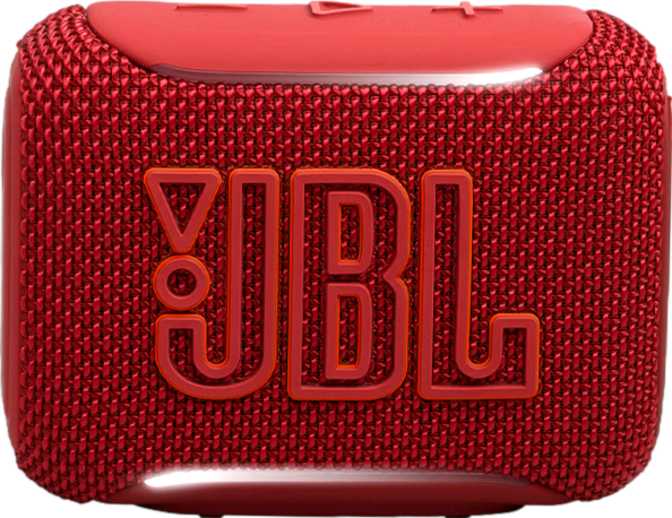
JBL Xtreme 5 Full Review: The Outdoor Speaker That Goes the Distance
Portable SpeakersAt a Glance
Overall Rating
4.0 / 5
Best for outdoor endurance & weather protection
Performance Breakdown
Protection
IP68
Battery
28 Hours
Bluetooth
Version 6
Weight
2.9 kg
The JBL Xtreme 5 in Context: What Kind of Speaker Is This?
The portable Bluetooth speaker market has fractured into two distinct camps: compact, go-anywhere pucks that fit in a jacket pocket, and serious, destination-worthy speakers built to fill outdoor spaces with real sound. The JBL Xtreme 5 plants its flag firmly in the second camp — and it does so with a confidence that demands you take it seriously.
This is not a speaker you clip to a backpack. It is a speaker you carry to the beach, set down on a picnic table, and leave running all afternoon. Understanding that distinction upfront saves a lot of confusion. Evaluated on its own terms — as a high-endurance, weather-resistant speaker for sustained, social listening — it tells a compelling story. Evaluated as a casual carry-anywhere device, it tells a different one.
Build Quality and Physical Design
Size, Weight, and Materials
The Xtreme 5 is a substantial piece of hardware. At just under 2.9 kilograms — roughly the weight of a small dumbbell — and measuring approximately 346mm wide, 165mm tall, and 155mm deep, this is a speaker that occupies real physical space. Those dimensions place it in a category where "portable" means "transportable with intention," not "effortlessly pocketable."
The build quality communicates exactly what JBL intends: durability over minimalism. The housing is solid, the finish resists the casual dings and scrapes that come with outdoor use, and the overall construction feels purpose-built for environments that would destroy lesser speakers.
The detachable cable is a practical addition. Rather than a fixed handle that can fray or fail over time, the swappable design means you are not sending the whole speaker for service if a strap wears out — a small detail that signals thoughtful design for long-term ownership.
IP68 Waterproofing: What It Actually Means
IP68: Full Submersion Protection Explained
The Xtreme 5 carries an IP68 rating — the highest tier of waterproofing in the standard consumer classification system. The first digit (6) signals complete dust protection; the second digit (8) means the speaker can be submerged in water beyond one meter for extended periods. In practical terms: rain, poolside splashes, and accidental drops into shallow water represent no real threat. This is not a speaker that will survive an ocean swim, but it is one you can genuinely use in rain or park beside a fountain without a second thought.
Controls and Usability
All controls are placed directly on the device via an onboard panel — volume, playback, and connection management all within thumb's reach without reaching for your phone. Voice prompts provide audio feedback for key actions, which is far more useful outdoors than a small LED indicator you might miss in bright sunlight. A dedicated battery level indicator keeps power anxiety in check during extended sessions.
There is no touch surface, no RGB lighting, and no remote control here. That is the right call for this category. Mechanical buttons survive water, sand, and impact in ways that touch-sensitive panels simply do not.
Sound Performance: What the Specifications Tell Us
Frequency Response and Stereo Configuration
The Xtreme 5 runs a stereo speaker configuration, meaning left and right channels are physically separated across the cabinet — producing genuine stereo width rather than a single mono point source. For a portable speaker, that separation is the difference between music that sounds like it's coming from a box and music that fills the space around you.
The frequency response extends from 40Hz at the low end to 20,000Hz at the top — spanning the full range of human hearing on the high end, while reaching into meaningful bass territory on the low end. To put 40Hz in perspective: the lowest notes on a standard bass guitar sit around 41Hz, and kick drums in most pop and electronic music occupy the 50–80Hz band. The Xtreme 5 can physically reproduce those frequencies, though perceived bass output at volume depends on cabinet size, driver excursion, and acoustic tuning.
Frequency Response Snapshot
40 Hz
Low End Floor
Stereo
Speaker Config
20 kHz
High End Ceiling
No Passive Radiator — Worth Knowing Before You Buy
There is no dedicated subwoofer or passive radiator in this design. Passive radiators — sealed, unpowered cones that extend bass response through cabinet resonance — are common in competing speakers at this size tier. Their absence does not automatically mean weak bass, but the low end is driven entirely by the active drivers and cabinet tuning rather than supplemented by passive bass extension. Listeners who prioritize deep, room-shaking sub-bass should factor this in.
Signal-to-Noise Ratio
The SNR of 80dB indicates a clean enough signal chain for music listening in typical environments. This figure represents how much louder the desired audio is compared to the background electronic noise floor. In any real-world listening environment — outdoors, at a gathering, or with music at moderate levels — background hiss is effectively inaudible. A competent, practical figure for a speaker in this class.
Connectivity: Bluetooth 6 and What's Missing
Bluetooth 6: The Practical Upside
The Xtreme 5 ships with Bluetooth 6, the most current version of the wireless audio standard. Bluetooth 6 brings improvements in connection stability, channel sounding for enhanced device positioning, and energy efficiency over earlier iterations. In everyday use, this translates to a more reliable connection that holds at range and re-establishes quickly after interruption. The rated wireless range of 15 meters is realistic for open-air, unobstructed use; indoors with walls between device and speaker, that effective range shrinks — a standard caveat for any Bluetooth product.
Auracast: The Feature Worth Understanding
Auracast support is one of the more forward-looking inclusions on the Xtreme 5. Auracast is a Bluetooth broadcast standard that allows a single source to stream simultaneously to an unlimited number of compatible receiving devices — enabling synced multi-speaker audio or shared audio broadcasts without pairing overhead. For most users today, its impact is limited by ecosystem adoption. Its presence here future-proofs the speaker for a standard that is still building out across consumer devices.
Codec Support: AAC Only — A Real Limitation to Understand
The Xtreme 5 supports the AAC audio codec alongside standard Bluetooth audio. Higher-quality wireless audio codecs are absent. This matters more for some users than others — the table below clarifies who it affects and how.
| Codec | Supported | Who It Affects |
|---|---|---|
| AAC | Yes | All users; performs best on iOS devices |
| aptX / aptX HD | No | Android users seeking higher wireless quality |
| aptX Adaptive | No | Android enthusiasts with compatible sources |
| LDAC | No | Hi-res audio listeners streaming from Android |
There is no AUX input and no 3.5mm jack, making the Xtreme 5 a fully wireless-or-nothing proposition. USB-C handles charging only, not audio input.
No NFC, No Wi-Fi, No Stereo Pairing
NFC pairing — tap to connect — is not supported; standard Bluetooth procedure applies. Wi-Fi is absent, ruling out multi-room audio configurations and smart speaker integrations entirely. Most significantly, stereo pairing between two Xtreme 5 units is not supported. This is a notable absence for a speaker designed for social, outdoor use — several competitors allow dual-unit stereo pairing that dramatically expands the soundstage for larger events, which is precisely the scenario this speaker is marketed for.
Battery Life and Charging
28 Hours: Real-World Meaning
A battery rated at 28 hours of playback positions the Xtreme 5 among the endurance leaders in its class. A full camping weekend — Friday evening through Sunday afternoon — with consistent listening could be covered on a single charge, depending on volume. Battery life claims are typically measured at moderate volume; push the speaker to high volume and expect noticeably fewer hours in practice.
For typical use patterns — a few hours of outdoor listening several times a week — most users will charge the Xtreme 5 once a week or less. That charge frequency is the practical metric that matters day-to-day, and at this endurance level, it is genuinely low-maintenance.
28 hrs
Rated Playback Time
3.5 hrs
Full Recharge Time
USB-C
Charging Standard
Charging Notes and Limitations
Recharging from empty to full takes approximately 3.5 hours via USB-C — acceptable for a battery at this capacity and easy to manage with an overnight charge cycle. Wireless charging is not available on the Xtreme 5. The battery is also non-removable and non-swappable, meaning long-term ownership will eventually bring reduced playback range as the cells age. This is a consideration for buyers planning heavy use over several years, not an immediate concern for new owners.
Who This Speaker Is For — and Who Should Look Elsewhere
The Xtreme 5 Makes Sense If You...
- Spend significant time outdoors at beaches, parks, pools, or campsites where weather resistance is non-negotiable
- Need a speaker that runs all day without babysitting a charging cable
- Value connection stability and up-to-date wireless standards over maximum audio codec flexibility
- Listen primarily from an iPhone or iPad, where AAC performs at its best
- Prefer a single, self-contained unit over a system requiring multiple paired devices
Consider Alternatives If You...
- Want to pair two speakers for true dual-unit stereo expansion across a large outdoor space
- Prioritize deep, extended sub-bass and are accustomed to speakers with passive radiators
- Stream lossless audio from an Android device and rely on aptX or LDAC for wireless quality
- Need a wired audio fallback or AUX input for sources without Bluetooth
- Want a speaker light enough to carry casually on a daily commute
Competitive Positioning
The Xtreme 5 occupies a well-defined segment: large-format portable Bluetooth speakers built for outdoor endurance. Its primary competition includes speakers from Sony and Bose, as well as options within JBL's own lineup at comparable sizes. No single competitor wins across every dimension — understanding the trade-offs is what makes the right choice clear.
| Feature | JBL Xtreme 5 | Typical Large Competitors |
|---|---|---|
| IP Rating | IP68 — submersible | IP67 most common |
| Bluetooth Version | v6 — current gen | 5.3–5.4 more common |
| Auracast | Supported | Rare at this price tier |
| Passive Radiator | Not included | Common in category |
| Stereo Pairing | Not supported | Often supported |
| Audio Codecs | AAC only | Some offer aptX / LDAC |
| Battery Life | ~28 hours | Typically 20–30 hours |
| AUX Input | Not available | Sometimes included |
Honest Assessment: Strengths and Weaknesses
Where It Excels
IP68 waterproofing at this level means real peace of mind in genuinely harsh outdoor conditions — not just rain-on-your-patio protection. Combined with a housing that resists casual damage, this is a speaker built to travel and take what comes with it.
The 28-hour battery is a legitimate differentiator. It removes a recurring friction point from outdoor use entirely — you stop thinking about charging until you're back home at the end of a long weekend. That kind of effortless endurance is hard to put a number on.
Bluetooth 6 and Auracast place it ahead of most current competition on wireless architecture. The stereo driver configuration ensures the soundstage feels expansive rather than compressed into a single point source — a meaningful listening upgrade over single-driver designs at this size.
Where It Falls Short
The absence of stereo pairing is the most frustrating omission given the speaker's social, outdoor positioning. The scenario where you'd want two units working together is exactly the scenario this speaker is built for — it reads less like an oversight and more like a deliberate product tier decision.
Codec support capped at AAC will not bother most listeners, but it is a genuine ceiling for audio-conscious Android users. Lossless audio from a high-resolution library loses quality before it even reaches the speaker's drivers.
The weight and size require acceptance upfront — this is a destination device, not a daily carry. The complete absence of any wired audio input further narrows its versatility for edge cases where Bluetooth is unavailable or unreliable.
Answers to Common Questions Before You Buy
Final Verdict
A well-executed speaker for a specific type of listener — and an excellent one at that.
The JBL Xtreme 5 is built for someone who takes outdoor audio seriously, demands real weather protection, and values battery endurance above all else. It delivers on those terms with meaningful competence: IP68 certification that holds up in the real world, a full day of listening time that genuinely outlasts the event, and a Bluetooth 6 foundation that keeps it technically current for years ahead.
It is not a speaker for everyone. The weight and size require acceptance upfront. The missing stereo pairing is a real compromise in a product designed for group outdoor listening. The codec ceiling will frustrate discerning Android listeners. And the complete absence of wired input narrows its versatility.
Our Recommendation
If your pattern is beach trips, pool days, park afternoons, and camping weekends — with an iPhone or iPad as your source and no ambitions for a multi-speaker setup — the Xtreme 5 earns a confident recommendation. For buyers whose needs touch the gaps outlined above, spend time with the comparison table before committing.