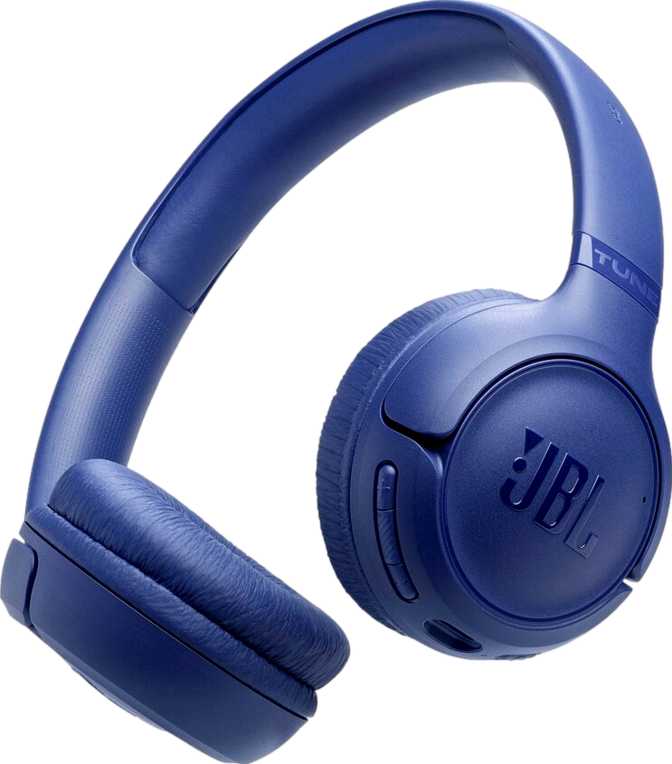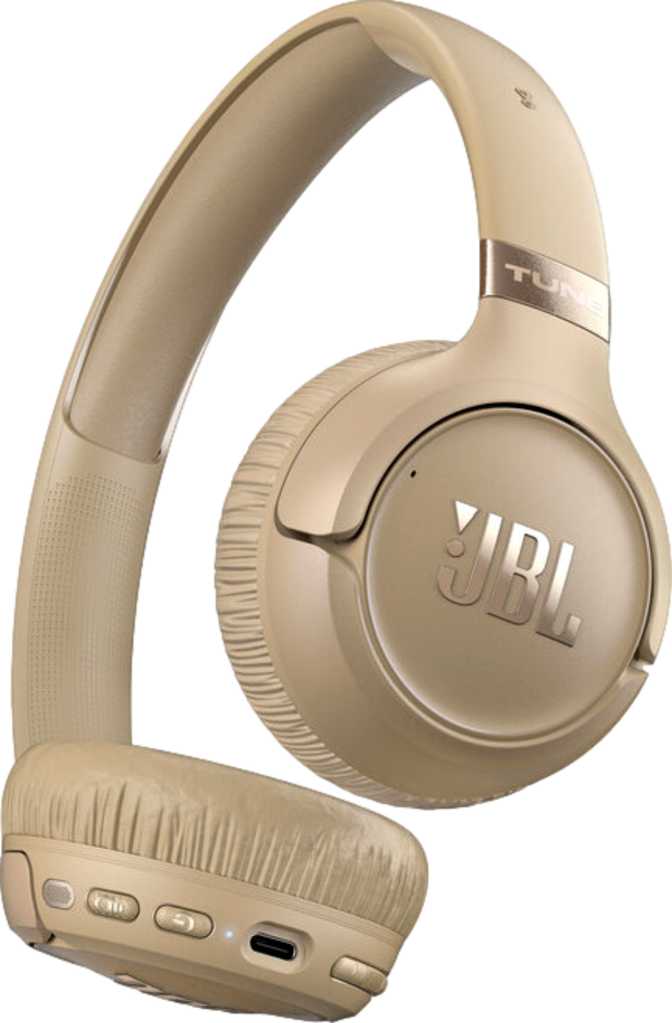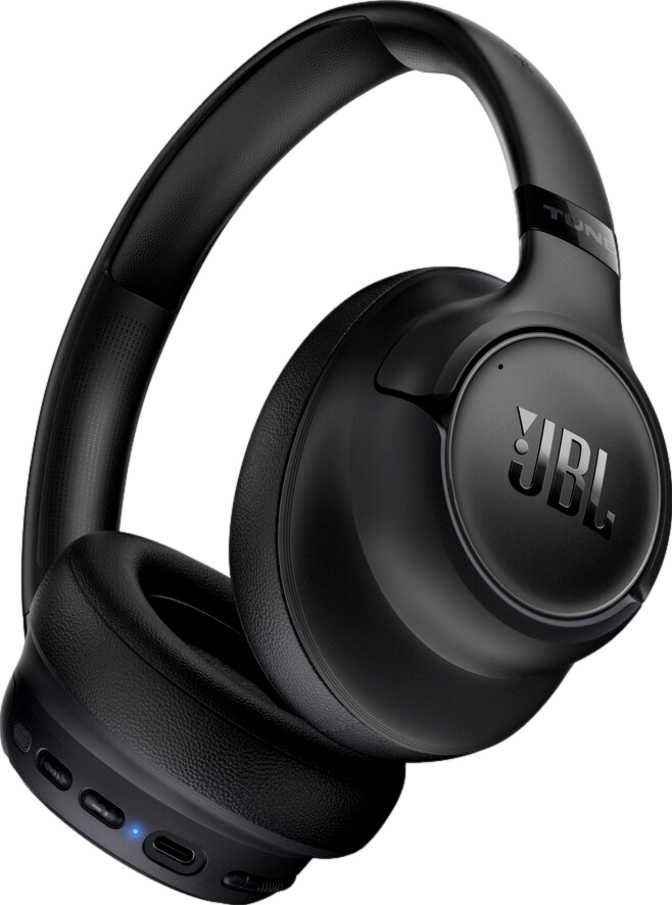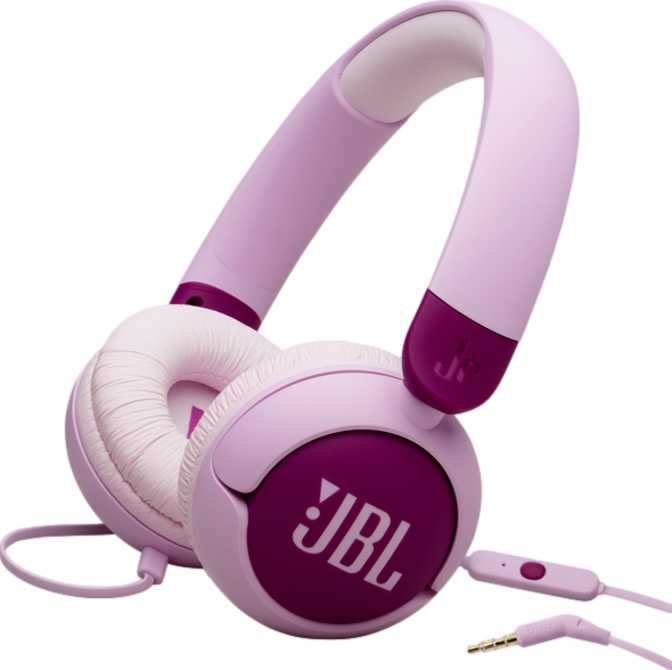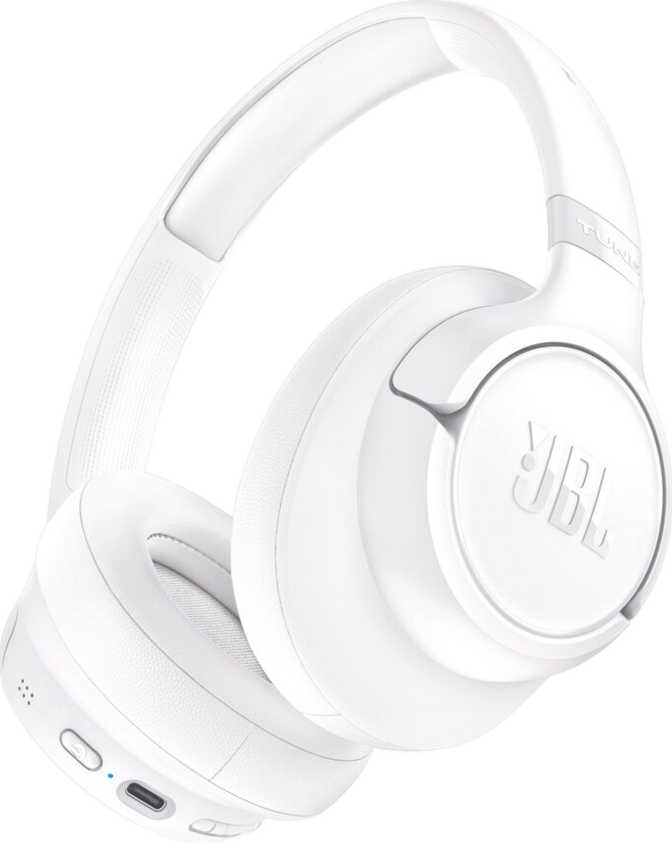
JBL Tune 730BT Review: Extraordinary Battery, Real Compromises
HeadphonesQuick Verdict
Recommended
Best for home & desk use
The JBL Tune 730BT is a desk headphone built around one extraordinary specification. Its battery endurance is category-defining — everything else is a trade-off you must consciously decide to accept.
Design and Build Quality
Physical construction, comfort, and real-world wearability
Physical Construction and Fit
The Tune 730BT is a full-size, over-ear headphone with a closed-back design. Over-ear means the ear cups form a ring around your ears rather than resting on them — a configuration most listeners find more comfortable over extended sessions, and one that typically produces better sound separation than smaller on-ear alternatives.
The ear cups do not fold flat. For a headphone that ships without a carrying case, this is a concrete portability limitation. Many competing over-ear models collapse to roughly the footprint of a small hardback book; the Tune 730BT maintains its full, open structure at all times. At a desk or around the house, this barely matters. In a backpack on the way to a flight, it is an inconvenience worth factoring in before you buy.
Cable Design and Dual-Mode Use
The Tune 730BT ships with a detachable, tangle-resistant cable. Cables are the most failure-prone part of any wireless-and-wired hybrid headphone. With a detachable design, a frayed or shorted cable is a minor inconvenience rather than a hardware writeoff — you replace the cable, not the headphones. The tangle-free construction removes the small daily ritual of unknotting cords every time you open your bag.
The cable also enables passive wired listening — the headphone functions even when the battery is completely depleted. Not all wireless headphones handle this gracefully; this one does.
Durability Limits
There is no water or weather resistance of any kind. Sweat during exercise, rain on a commute, humidity in a challenging climate — each puts the headphone at real risk. This draws a firm boundary: the Tune 730BT is an indoor headphone, and it should be evaluated as one.
-
Over-Ear, Closed-Back FitComfortable long-session wear
-
Detachable CableReplace the cable, not the headphone
-
Tangle-Free Cable IncludedNo daily unknotting ritual
-
Wired + Wireless ModesWorks when the battery is empty
-
No Foldable DesignFull structure maintained always
-
No Carrying CaseNothing provided for travel
-
No Weather ProtectionIndoor use only
Sound Performance
What the hardware delivers — and what it does not
Driver Design and Audio Range
The headphone uses a 40mm driver — a format found across a wide range of over-ear headphones from budget to premium. Driver size alone does not determine audio quality; tuning, construction, and materials matter considerably. The Tune 730BT covers the complete range of human hearing, from the deepest sub-bass frequencies through to the upper ceiling of high-frequency perception — the standard expectation for any music headphone in this category.
The specification data does not indicate neodymium magnets in the driver assembly. This is worth noting because neodymium is the near-universal choice for headphone drivers due to its strength relative to its mass, which translates directly to driver efficiency and transient response. This is an inference from the specification data, not a confirmed detail — but buyers making a close technical comparison should factor it in. Spatial audio processing is not included; this is a conventional stereo headphone.
Critical Limitation: No Noise Isolation
The Tune 730BT provides neither active noise cancellation nor passive noise isolation. Despite the closed-back design, the specification data does not claim passive noise reduction as a feature — suggesting the ear cups are built for comfort rather than acoustic sealing. This headphone is best suited to quiet-to-moderate environments. Commuters, open-plan office workers, and airplane travelers will hear their surroundings clearly throughout every session.
- Driver Size40mm
- Frequency ResponseFull Range
- Audio OutputStereo
- Spatial AudioNot Supported
- Active Noise CancellationNot Included
- Passive Noise IsolationNot Featured
Battery Life: The Case for This Headphone
The specification that changes the conversation about every other trade-off
Single Charge Endurance
vs. 20–40 hours for ANC competitors
What 76 Hours Actually Means
Premium wireless over-ear headphones with active noise cancellation typically deliver between 20 and 40 hours per charge. Well-regarded non-ANC competitors often top out around 50 to 55 hours. A headphone clearing 76 hours is operating in a different category of endurance entirely.
A listener putting in four hours of audio per day would use this headphone for nearly three weeks before the battery indicator demanded attention. A heavy eight-hours-a-day user would still get nine or ten full days between charges. Battery anxiety, as a daily habit, effectively disappears.
4 hrs/day
~19 days per charge
8 hrs/day
~9 days per charge
Charging and Power Management
Charging is handled through USB-C — the universal current standard — meaning the same cable charging your laptop or phone charges these headphones. A built-in battery level indicator lets you verify remaining charge before committing to a session rather than guessing or waiting for a low-battery warning at an inconvenient moment.
- USB-C — no proprietary cable required
- Built-in battery level indicator
- Non-removable rechargeable battery
- No wireless / Qi charging support
Connectivity: Bluetooth 6 and What It Delivers
Current-generation wireless with a modern audio framework and practical daily features
Bluetooth 6
Latest generation — more stable, more efficient
LE Audio
LC3 codec — better quality than SBC baseline
2-Device Multipoint
Phone and laptop connected simultaneously
Fast Pairing
Near-instant setup on compatible devices
The LE Audio Codec Picture
LE Audio includes the LC3 codec, which delivers better audio quality at lower data rates than the SBC standard that older Bluetooth devices fall back to. For source devices that support LE Audio, this is a measurable improvement over previous-generation wireless audio at this price range.
However, the Tune 730BT does not support aptX, LDAC, or AAC — the premium codec options that many Android and Apple source devices strongly prefer. For casual streaming on any major music platform, this distinction is unlikely to be audible to most listeners. For someone who has invested in lossless audio and expects that investment to carry through their headphones, this is a real ceiling.
iPhone users: Without AAC support, Apple devices use SBC or LC3 via LE Audio (if your iOS version supports it). Newer iPhones do support LE Audio, which is a meaningful step up. Android LDAC users: LDAC is not supported — the connection falls back to LC3 or SBC.
Range and Pairing
The stated Bluetooth range is 10 meters — conservative compared to headphones that advertise 30 meters or more. Real-world walls and interference reduce effective range further, so what is already a modest figure may feel constraining if you wander more than a couple of rooms away from your source device. Fast pairing is included; NFC tap-to-pair is not.
-
LC3 (via LE Audio)Modern — improved over SBC
-
SBC (Baseline)Standard Bluetooth fallback
-
AACApple preferred codec
-
aptX / aptX HDQualcomm codec family
-
LDACSony hi-res wireless codec
-
Auracast BroadcastLE Audio broadcast feature
Microphone System
Four mics with purpose-built noise filtering for voice capture
4
Microphones
With active noise filtering for voice capture
The Tune 730BT carries four microphones with a noise-filtering system specifically designed for voice capture. The function is making your voice sound cleaner to whoever you are speaking with by filtering background noise before it reaches the other end — this is separate from and unrelated to the headphone's lack of noise cancellation for the listener wearing it.
A four-microphone array allows the system to isolate voice from directional ambient noise more effectively than single or dual-microphone solutions common at this price point. For call environments that are not perfectly quiet, this hardware commitment matters.
No dedicated mute button. Muting during a call or meeting requires action on the connected device rather than pressing a control on the headphone itself — a friction point when you need it quickly in a fast-moving conversation.
Who Should Buy the JBL Tune 730BT
Honest guidance on whether this headphone fits your specific use case
-
Treat charging as a recurring annoyanceBattery anxiety effectively disappears — nearly three weeks of casual daily use between charges.
-
Work or listen in quiet environmentsHome offices, private rooms, and quiet shared spaces — this is where the Tune 730BT performs as intended.
-
Work across two devices throughout the dayPhone and laptop remain connected at the same time — no manual re-pairing needed when you switch.
-
Want current-generation wireless technologyBluetooth 6 and LE Audio represent the current standard, with efficiency gains that matter in daily use.
-
Value long-term replaceabilityDetachable cable means damage becomes a cable replacement, not a headphone replacement.
-
Commute on noisy public transitNo noise management of any kind — a subway or crowded bus becomes part of every listening session.
-
Exercise or use headphones outdoorsNo weather protection at all — sweat and rain present real hardware risks.
-
Need a portable or travel headphoneNon-folding design with no carrying case — this is a desk headphone, not a travel companion.
-
Prioritize wireless audio codec qualityWithout aptX, LDAC, or AAC, the wireless audio ceiling is lower than many source devices can support.
-
Need a quick physical mute buttonNo dedicated mute control — call-heavy users must mute from the connected device every time.
How It Stacks Up in the Market
JBL Tune 730BT versus comparable categories — typical values across each segment
| Feature | JBL Tune 730BT | ANC Over-Ear Comparable price range |
Non-ANC Competitor Comparable price range |
|---|---|---|---|
| Battery Life | ~76 hours | 20–40 hours typical | 30–55 hours typical |
| Active Noise Cancellation | |||
| Passive Noise Isolation | |||
| Bluetooth Version | v6.0 | 5.3–5.4 | 5.0–5.3 |
| LE Audio Support | Varies by model | Rarely included | |
| Foldable Design | Usually yes | Often yes | |
| Weather Resistance | Some offer IPX4 | Varies | |
| Premium Codecs (aptX / LDAC / AAC) | Commonly included | Varies | |
| Two-Device Multipoint | Usually yes | Varies | |
| Detachable Cable | Rarely | Occasionally |
Category values represent typical ranges across competing products at a comparable price. Individual models may vary.
The Honest Assessment
What this headphone gets right, and where it falls short
-
Category-defining battery enduranceNot a marginal upgrade — a step-change that delivers more practical value than a secondary feature checklist most users barely touch.
-
Bluetooth 6 with LE Audio is a real differentiatorEfficiency improvements partly explain the battery performance. LC3 via LE Audio is a measurable step up from the SBC standard previous-generation headphones fall back to.
-
Four-mic voice capture systemA higher hardware investment in call quality than the microphone count suggests — directional noise filtering produces measurably cleaner voice transmission than budget single-mic solutions.
-
Detachable, tangle-free cableA well-considered practical design choice that increases the headphone's serviceable life — cable damage becomes a cable replacement, not a hardware writeoff.
-
No noise management of any kindThe most significant limitation. The closed-back design implies isolation the spec data does not confirm — buyers who assume otherwise will be surprised in noisy environments.
-
Non-folding with no travel caseFirmly a desk headphone — the lack of portability features limits where this headphone actually goes in daily life.
-
Limited wireless audio codec supportNo aptX, LDAC, or AAC means buyers with high-quality source equipment will find a wireless quality ceiling they can reach quickly.
-
Conservative 10-meter Bluetooth rangeModest by current standards — room-to-room distance in a home or office may test the connection limits.
-
One-year warranty onlyStandard for the category, but some competitors offer two years at a comparable price — a meaningful difference for a product expected to last several years.
Frequently Asked Questions
Answers to what real buyers search for before purchasing
A desk headphone that removes battery anxiety — nothing more, nothing less
The JBL Tune 730BT succeeds at a very specific job: providing a comfortable, wireless listening experience for home and desk use without ever requiring you to think about charging. The battery endurance is the dominant reason to buy it — not a modest improvement on competitors, but a fundamental difference in how often the headphone needs attention.
Noise cancellation, weather protection, portability, and premium codec support are all absent. These are meaningful absences for large segments of the headphone-buying market. The non-folding design without a travel case and the absence of noise isolation firmly position this as an indoor, stationary-use headphone. Buyers who need any one of those missing features should look elsewhere without hesitation.
Overall Score
Recommended
For home and desk listeners who prioritize endurance over everything else.
1-Year Manufacturer Warranty