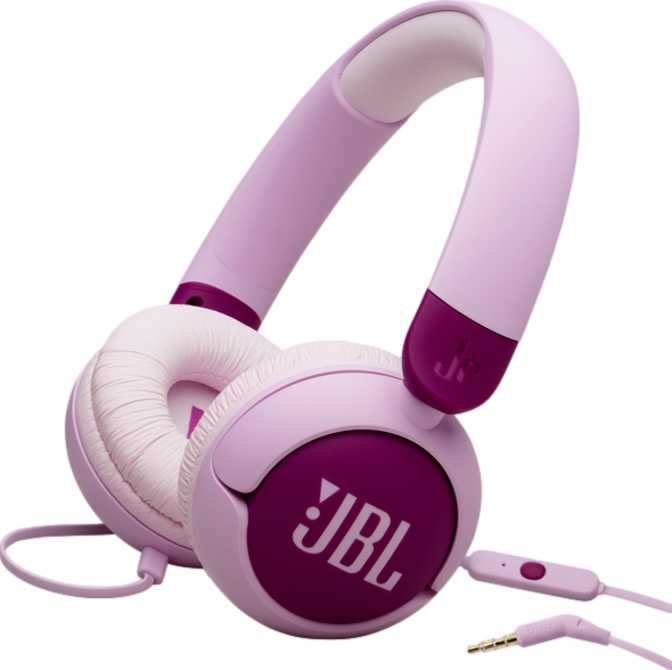
JBL Junior 320 Full Review: Kids' Headphone That Puts Hearing First
HeadphonesMost headphones start from sound quality and work backwards. The JBL Junior 320 starts from something more fundamental — the biological vulnerability of a child's developing auditory system — and builds everything else around that constraint. The result is a wired, over-ear headphone that looks modest on paper but makes several quietly smart decisions that parents searching for a first pair of serious kids' headphones will genuinely appreciate.
This is not a shrunken adult headphone. It is a product with a specific design philosophy, and understanding that philosophy is what separates a satisfied purchase from a returned one.
At a Glance
Six key facts before the full breakdown
Over-Ear Fit
Full ear-cup coverage for comfort and passive isolation
85 dB Volume Cap
Hardware-enforced — cannot be bypassed by any device
Wired, No Battery
Zero charging required — always ready to use
Built-in Microphone
In-line controls for calls and online class
Lightweight Build
A large apple weighs more — designed for small heads
Tangle-Free Cable
Resists knotting and reduces daily cable stress damage
Build and Design: Understated in the Right Ways
Physical Construction
The over-ear fit — meaning the ear cups fully surround the ears rather than resting on top of them — is the correct choice for a child's headphone. It distributes clamping pressure more evenly across the side of the head, reduces fatigue during longer sessions, and forms a physical seal around the ear that has real acoustic benefits discussed in the audio section.
At just under 117 grams, this headphone is genuinely light for its form factor. A large apple weighs more. Children have smaller neck muscles and less tolerance for physical load during extended wear, so this weight discipline matters far more for this product category than it would for adult headphones. A child wearing these for a two-hour online class or a long-haul flight will notice the difference compared to heavier alternatives.
Portability Limitations
In a category where children carry headphones in backpacks, throw them in toy bins, and shove them into small pockets of luggage, the inability to fold the ear cups flat is a genuine inconvenience. No travel bag ships in the box, which compounds this. If your household is chaotic and your child is not careful with gear, this headphone will require a separate protective case to survive the school year intact.
The cable is also fixed and cannot be detached or swapped. This is the single point of failure for the product's longevity. JBL has mitigated this with a tangle-free cable, which resists the knotting that plagues conventional round cables and reduces the yanking stress that causes most cable damage. It is not a perfect solution, but it is a practical one.
The exact threshold audiologists classify as the safe ceiling for extended listening
The Volume Limit: The Feature That Actually Matters Most
Children's ears are not scaled-down adult ears. The hair cells in the cochlea — the sensory structures responsible for converting sound vibrations into electrical signals the brain processes — are still developing, and they are more susceptible to noise-induced damage at high volumes. This damage is cumulative and permanent. There is no medical procedure that restores noise-damaged hearing.
By capping output at precisely 85 decibels — where a normal conversation sits around 60 dB and prolonged exposure above 85 dB is where audio health experts begin classifying sound as potentially harmful — the headphone ensures that even a child who cranks the volume to maximum cannot exceed the level audiologists consider safe for extended listening.
Parents who have purchased unrestricted headphones and simply asked their children "not to turn it up too loud" will understand why this matters. Children do not self-regulate volume. They chase immersion. A hardware-enforced ceiling removes the variable entirely. This is not a marketing claim. It is physics built into the hardware.
Audio Performance: What the Drivers Actually Deliver
Frequency Coverage and Driver Characteristics
The drivers inside the Junior 320 cover the full range of human hearing — from the deep low-end frequencies felt more than heard, all the way through to the upper limits of audible treble. For a child's use cases — streaming video, educational apps, music, video calls — this coverage is entirely sufficient. There are no meaningful gaps in what this headphone can reproduce across the content children actually consume.
The impedance rating means the headphone places a moderate electrical load on its source device. In practical terms: it will reach adequate volume from a phone, tablet, laptop, or Chromebook without requiring any kind of external amplifier or powered headphone jack. Parents worried about the headphone being "too quiet" on school-issued devices can set that concern aside.
The driver diameter is sized appropriately for the smaller ear cups designed to fit a child's head geometry, and does not inherently compromise sound quality — driver size is one of many variables in audio reproduction. JBL's experience in consumer audio lends credibility to the implementation here.
Passive Noise Isolation
The closed-back design — meaning the rear of the ear cups are sealed rather than open — creates a physical barrier between the outside world and the ear. This is passive noise reduction: no electronics, no power consumption, no noise-canceling circuit required.
For children, this matters in two distinct ways. First, it reduces the intrusion of ambient noise — classroom chatter, sibling arguments, television in the next room — which means children can focus at lower volume levels. Second, it contains sound output, so parents and teachers are not subjected to audio bleed from whatever the child is watching.
Why no active noise cancellation?
ANC adds cost, adds battery requirements, and introduces an audio artifact called "pressure sensation" that some children find uncomfortable. Passive isolation accomplishes most of the practical goal without any of those trade-offs, making its absence the correct decision for this product.
Wired and Battery-Free: Why This Is an Advantage, Not a Limitation
The JBL Junior 320 connects via a wired cable only. There is no Bluetooth, no wireless connectivity, and consequently no battery of any kind. For adults accustomed to wireless audio, this might initially read as a product shortcoming. Reframe it entirely for kids' use contexts.
No Battery to Manage
Nothing to charge, forget to charge, or find dead at the worst moment
No Pairing Process
No Bluetooth to pair, troubleshoot, or re-pair after a firmware update
Stable Audio Quality
No dropouts, no codec compression artifacts, no latency during video calls or gaming
Universal Compatibility
Works with any device that has a headphone jack — phones, tablets, laptops, in-flight systems, Chromebooks
For classroom use, distance learning setups, and family travel with a known device ecosystem, wired is often the more reliable architecture. The simplicity is a feature — lower total cost of ownership, no battery degradation over time, and a plug-and-play experience that any child can manage independently.
In-Line Controls and Headset Capability
A single microphone is built into the cable via an in-line control panel — a small hardware module on the cord that handles both audio management and voice input without requiring the child to reach back to the headphone itself.
This makes the Junior 320 functional as a headset, not just a headphone. For video class calls, online tutoring sessions, and voice chat in multiplayer games, a child can speak clearly through the microphone while volume and playback controls remain accessible on the cable. The microphone does not have active noise cancellation, so it will pick up some ambient noise in busy environments, but for typical home or classroom use it performs its intended function.
The in-line controls are a genuinely practical inclusion. Children do not instinctively reach up to ear cup buttons — the physical interaction model of adjusting volume on the cable, where their hand naturally rests, is more intuitive for younger users.
What the In-Line Module Handles
-
Volume ControlAdjust audio output directly from the cable module
-
Built-in MicrophoneSingle mic for calls, tutoring sessions, and online class
-
Full Headset UseWorks as a complete headset for Zoom, Meet, Teams, and gaming voice chat
-
No Noise-Canceling MicStandard mic — adequate for quiet environments, struggles in busy spaces
Who This Headphone Is For — and Who It Is Not
This headphone has a clear, specific audience. Knowing whether you're in it saves time and money.
The Right Choice If...
- You need a reliable, daily-use headphone for a school-age child aged roughly 4 to 12 — for home entertainment, school, or travel
- You have a non-negotiable position on hearing safety and want hardware enforcement, not a policy conversation with your child
- Your child connects to a phone, tablet, Chromebook, or laptop and plug-and-play reliability is preferable to wireless setup
- Durability under moderate roughness is expected — the tangle-free cable and JBL's build reputation are assets here
- You run a distance learning or homeschooling environment where microphone capability is a daily requirement
Look Elsewhere If...
- You need a headphone for older children or teenagers ready for more audio nuance — the volume ceiling will feel limiting during demanding listening
- You need a foldable design that fits neatly in a school backpack without a separate case — portability is this product's weakest point
- Your child walks around while wearing headphones and will frequently encounter cable range limits
- You need a microphone that performs well in noisy environments — the standard single mic is adequate but not optimized for busy backgrounds
Competitive Positioning: Where the Junior 320 Sits
The kids' headphone category breaks roughly into three tiers. Understanding where the Junior 320 sits explains both its value and its trade-offs.
Budget Options
Below the Junior 320's price point, options typically trade audio engineering for printed designs and character licensing. They frequently lack any volume limitation, use fragile cables, and produce sound that would embarrass the drivers. Fine for occasional use and low expectations.
JBL Junior 320
Genuine audio brand engineering, a hardware hearing protection feature, and a price point that does not make replacement financially painful. Competes credibly on durability, cable quality, volume limit implementation, comfort, and headset capability.
Premium Tier
Above this tier, options add Bluetooth, multi-device pairing, and foldable designs — but they also introduce battery management, higher failure points, and meaningfully higher replacement costs if a child loses or damages them.
| Feature | Budget Tier | JBL Junior 320 | Premium Tier |
|---|---|---|---|
| Volume Limiting | Rarely included | Hardware-enforced at 85 dB | Usually included |
| Audio Brand Pedigree | Typically absent | Yes (JBL) | Yes |
| Connectivity | Wired | Wired | Wired + Bluetooth options |
| Folding Design | Sometimes | No | Usually yes |
| Built-in Microphone | Inconsistent | Yes, in-line | Yes |
| Cable Quality | Often poor | Tangle-free, fixed | Detachable or tangle-free |
Honest Strengths and Genuine Weaknesses
Where It Gets Things Right
The Junior 320's strongest attribute is not one that shows up in marketing — it is the coherence of its design philosophy. Almost every specification decision traces back to the same logic: a wired headphone for children, built to protect their hearing and survive daily use without creating ongoing maintenance burden for parents.
- The volume limit, wired connection, tangle-free cable, lightweight build, and in-line controls all serve exactly the same design brief
- Hardware hearing protection that is permanent and unconditional — not overrideable by any app, setting, or device
- JBL audio tuning produces sound appropriate for children's content across all genres
- Universal device compatibility means it works with virtually any hardware a child is likely to use
Where It Falls Short
The portability issue is the one decision that undermines the product's real-world usability, particularly for families who travel or need to fit the headphone into a school bag. It is solvable with a separate case but requires action on the buyer's part.
- Does not fold — a real inconvenience in a category where portability is an expected feature
- The fixed cable is the structural vulnerability of this product — significant damage equals full replacement
- No travel bag included, which compounds the folding omission for mobile families
- The microphone delivers adequacy rather than excellence — it struggles in noisy spaces
Questions Parents Commonly Ask
Answers to what real buyers search for before purchasing
The Verdict
The JBL Junior 320 is a headphone that gets its priorities exactly right for its intended audience, then makes one significant design compromise that buyers should know about before purchasing.
The hearing protection feature alone justifies serious consideration for any parent purchasing a child's first real headphone. Hardware-enforced volume limiting is not a given at this category — many competing products either omit it entirely or implement it as a software preference that can be bypassed. The Junior 320's 85 dB ceiling is a permanent, unconditional feature.
Add to that a lightweight build that children can wear for hours without complaint, a tangle-free cable that survives typical kid-level handling, in-line controls that work intuitively, and JBL's genuine audio engineering behind the drivers — and this is a well-considered children's headphone.
The inability to fold is the one decision that undermines the product's real-world usability, particularly for families who travel or need to fit the headphone into a school bag. It is solvable with a separate case but requires action on the buyer's part.
Quick Verdict
Ratings reflect editorial assessment based on the full review. Hearing Safety is the standout strength; portability is the noted compromise.