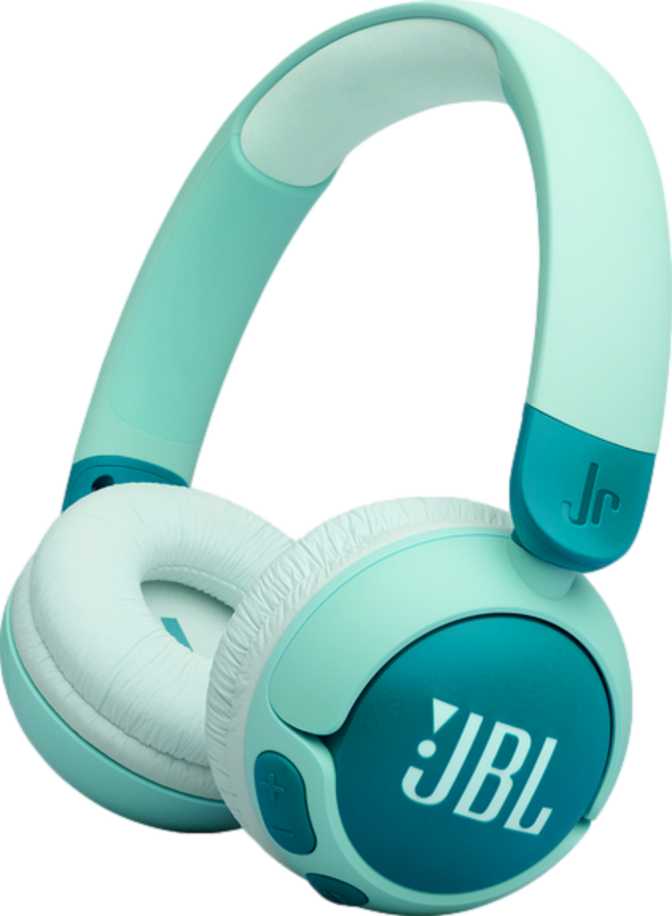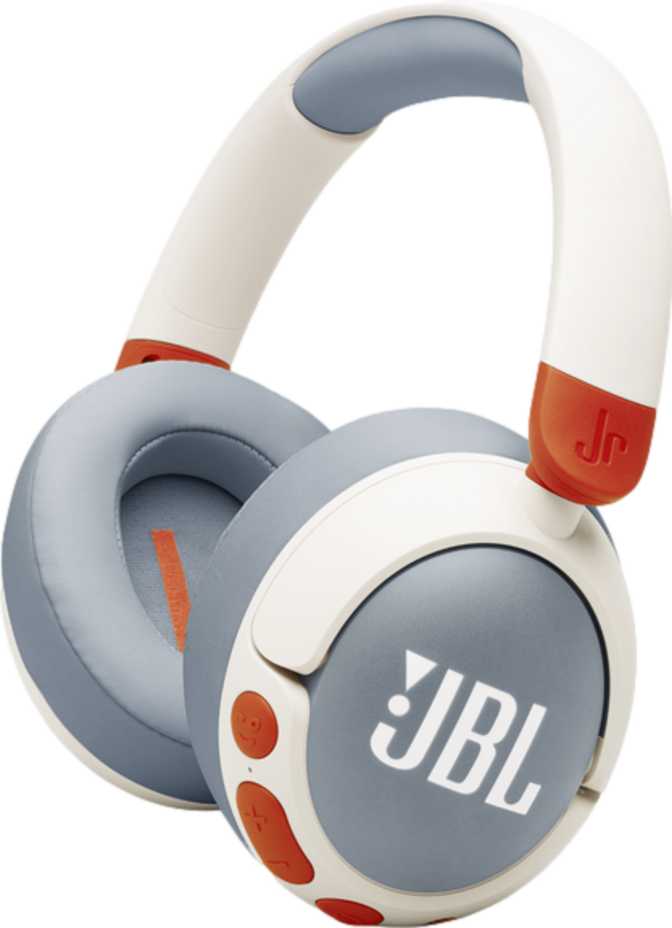
JBL Junior 470NC Review: The Kids' Headphone That Actually Delivers
HeadphonesOverall Rating
4.0 / 5
Editors' Score
Recommended for FamiliesThe JBL Junior 470NC brings genuine noise cancellation, exceptional battery endurance, and hardware-level hearing protection to the premium children's headphone tier. Its two genuine gaps — no water resistance and no carrying case — don't change the core recommendation for families who prioritize study focus, travel comfort, and long-term hearing health.
Design and Fit: Built Small, Built Sensibly
Physical construction, portability, and real-world comfort for children.
Construction and Weight
Weighing well under 200 grams, the JBL Junior 470NC is meaningfully lighter than the majority of adult over-ear headphones, which typically land between 250 and 350 grams. That difference is not subtle during extended wear. A child using these through a two-hour study session, a transcontinental flight, or a long car journey will feel the benefit against heavier alternatives before the session ends.
The over-ear cup design — cups that encompass the ear rather than pressing against it — distributes clamping force around the ear rather than onto it, making prolonged use far more comfortable. The physical seal created around the ear directly contributes to blocking external sound even before any electronic noise cancellation activates.
Portability and Folding
The headphones fold flat, allowing them to slide into a school bag without consuming the main compartment or creating an awkward protrusion. Without this feature, over-ear headphones are poorly suited to daily transport, and children rarely handle them with the deliberate care that would compensate.
JBL does not include a carrying case or travel pouch. For a headphone positioned as a school and travel product for children, this is a genuine oversight. If you're buying these for regular transport, budget separately for a protective pouch before the first day of use.
Cable Flexibility
The headphone ships with a detachable, tangle-free cable. The detachable design means that when the battery runs flat at the worst possible moment — mid-flight, during an exam — you can plug in and continue listening without interruption. The tangle-free construction resists the knots that make standard cables unusable within days in a child's hands.
- Foldable over-ear build
- Lightweight — under 200g
- Detachable wired cable
- Tangle-free cable design
- Sized for children's heads
- Closed-back stereo design
Sound Quality: What the Audio Actually Delivers
Driver performance, frequency coverage, and the hearing safety engineering inside.
Driver Sizing for Young Ears
The JBL Junior 470NC uses drivers sized proportionally for children rather than adults. Premium adult over-ear headphones commonly use larger sound-producing elements — the greater surface area supporting stronger bass and higher volume headroom. Smaller drivers are the correct choice here: matched to the actual ear canal dimensions of a child, they produce accurate, appropriately scaled sound rather than overwhelming output built for adult anatomy. For children's headphones, bigger drivers are not an advantage.
Full-Spectrum Audio Coverage
The headphone covers the complete range of human hearing — from deep bass to the highest treble frequencies — with no part of the audio spectrum artificially truncated. Children's content draws fully on this range: the low rumble of animated film sound design, sharp sound effects in video games, the clarity of a teaching voice in an educational video. The full coverage ensures nothing is lost to a narrow frequency response.
Passive Noise Isolation as a Foundation
Even before active noise cancellation engages, the closed-back over-ear design creates meaningful physical isolation from external sound. The cups form a seal around the ear that attenuates ambient noise — nearby conversations, background TV, wind — without drawing any power from the battery. This passive layer is always present and forms the foundation on which the electronic noise cancellation builds.
Hearing Safety by Design
Hardware-level, not software-based
The JBL Junior 470NC's maximum output is significantly more conservative than adult headphones. This is an engineering decision built into the hardware — not a software toggle that can be disabled or overridden by a connected device running at full volume. The headphone itself enforces safe listening levels for developing ears at all times.
Content It's Built For
- Animated films & streaming video
- Video games with full audio design
- Educational videos & podcasts
- Music across all genres
- Video calls & online classes
Active Noise Cancellation: More Relevant Than It Sounds for Kids
Why ANC belongs in a children's headphone — and what to expect from this implementation.
Why ANC Matters for Children
The assumption that ANC is exclusively a business-traveler luxury underestimates children's environments considerably. A child attempting homework while a younger sibling watches TV nearby, or following an online class while parents work from home, faces exactly the sustained, mid-level background noise that noise cancellation is designed to reduce. The feature is equally valuable on planes and long car journeys — environments where families most need children to be quietly occupied for hours at a stretch.
Understanding the ANC Implementation
The JBL Junior 470NC uses a single microphone for its noise cancellation system — a simpler architecture than the dual or multi-microphone setups found in top-tier adult headphones. Single-microphone ANC is effective at attenuating consistent, steady-state background sounds: aircraft cabin hum, car engine drone, air conditioning murmur. It is less surgical when handling sudden, directional, or rapidly changing noise.
For the environments where children primarily use headphones, this is the right approach. The noise they need to tune out — household ambience, transport hum, background chatter — is precisely the kind of sustained sound that single-microphone ANC handles well.
ANC and the Battery Trade-Off
Running ANC continuously reduces playtime meaningfully compared to listening without it, but both figures remain exceptional for the category. A child using these for two hours daily with ANC engaged would go roughly two weeks before needing to charge. The physical seal of the over-ear design continues to block noise regardless of ANC state — switching it off does not make these headphones suddenly transparent to external sound.
Layer 1: Passive Isolation
The over-ear seal physically blocks ambient sound. Always active — no battery required.
Layer 2: Active Cancellation
Electronically neutralizes steady background sounds like hum, drone, and ambient noise.
ANC Works Best For
- Aircraft & long-haul travel
- Busy home environments
- Focused study sessions
- Uninterrupted listening time
Battery Life: Rarely Needs Charging, Never Needs Babysitting
Endurance figures, real-world expectations, and charging practicalities.
Even accounting for real-world variation — higher volumes, imperfect Bluetooth conditions — expect 35–40 hours of genuine use per charge. At two hours of daily use, that's charging roughly once every two to three weeks.
With ANC running continuously, a child using these two hours daily still charges roughly once a week — exceeding the battery life of most adult wireless headphones sold at any price.
Connectivity and Controls: Practical in Daily Use
Bluetooth performance, codec support, on-device controls, and the built-in microphone.
Bluetooth 5.3: Stable and Current
The JBL Junior 470NC uses the current generation of Bluetooth, delivering a stable, energy-efficient wireless connection. The effective range covers most common children's use scenarios: a child listening in their bedroom with the connected device across the room, or a student using these in a library. It becomes a constraint primarily if a child wants to roam freely across a large building while connected to a device in one fixed location — a scenario uncommon enough for children that it rarely poses a real problem.
Codec Support: Appropriately Simple
The JBL Junior 470NC does not support premium audio codecs such as aptX, LDAC, or AAC — it transmits via the universal baseline Bluetooth audio format. For a children's headphone, this is the right decision. The content children consume — streaming services, YouTube, games, and video calls — is compressed audio that would produce no audible improvement from higher-quality codec transmission. Adding codec support would raise cost and complexity without delivering any perceptible benefit for this use case.
Controls and Microphone
Physical controls are built directly into the ear cups, covering playback, volume, and track navigation without needing to reach for a phone or tablet. For children, on-device tactile buttons are more accessible than screen-based controls during active use. There is no in-line remote on the cable — wired-mode controls require the connected device.
The built-in noise-canceling microphone supports video calls, remote learning, and gaming voice chat. Voice clarity is sufficient for online class participation, and the noise cancellation on the microphone helps reduce background household sounds. The one notable absence is a dedicated mute button on the headphone — muting during a class or call requires doing so from the connected device.
| Wireless | Bluetooth 5.3 |
| Wired Fallback | Yes |
| Premium Codecs | Not supported |
| On-Device Controls | Yes |
| Noise-Canceling Mic | Yes |
| Mute Button | Not included |
| NFC Pairing | Not supported |
| Fast Pair | Not supported |
| Auto-Pause | Not included |
Who the JBL Junior 470NC Is For — and Who Should Look Elsewhere
Matching the right buyer to the right headphone.
Families Who Travel Regularly
ANC and exceptional battery life together are genuinely valuable on long-haul flights, multi-hour car journeys, and train travel — the environments where children most need to be quietly occupied.
Parents Prioritizing Hearing Safety
Hardware-level hearing protection is more reliable than software-based parental controls. If protecting a child's developing hearing is the primary concern, the engineering here addresses it at the source.
School and Home-Study Use
Homework sessions, online lessons, and focused reading benefit from the ambient noise reduction. The noise-canceling microphone covers remote learning as a complete solution.
First-Time Wireless Headphone Buyers
USB-C charging, extended battery, and modern Bluetooth eliminate the common friction points that make maintaining children's electronics frustrating through a full school year.
Child Is Under Five or Six
Even children's over-ear headphones have a practical age floor. Very young children or those with smaller heads may find this form factor unwieldy. A lighter on-ear alternative may be more appropriate.
Active or Outdoor Use Cases
No water resistance means rain, sweat, and accidental spills are genuine risks. For children who wear headphones at sports or outdoors in variable weather, a water-resistant alternative is essential.
Older Teens with Audio Preferences
An older child approaching adult listening preferences may notice the codec limitations and conservative output ceiling more acutely. At that point, an entry-level adult wireless headphone is the better fit.
When a Travel Case Is Non-Negotiable
If daily transport in a school bag without a dedicated protective bag is the plan, the missing case is a meaningful problem. Budget for a separate pouch or look for an alternative that includes one.
How It Compares to the Alternatives
JBL Junior 470NC versus the broader children's wireless headphone market.
| Feature | Budget Kids' Headphones | JBL Junior 470NC |
|---|---|---|
| Active Noise Cancellation | Rarely included | Yes |
| Battery Endurance | 10–20 hours typical | 50 hrs / 28 hrs with ANC |
| Bluetooth Generation | 4.x – 5.0 | 5.3 |
| USB-C Charging | Uncommon | Yes |
| Foldable Design | Sometimes | Yes |
| Detachable Cable | Rare | Yes |
| Noise-Canceling Mic | No | Yes |
| Water Resistance | Occasionally | None |
| Travel Case Included | Sometimes | Not included |
The JBL Junior 470NC's most defensible advantage is the combination of ANC and exceptional battery life in a single package — two features rarely paired in children's headphones at this endurance level. The primary reason to consider competing premium alternatives would be water resistance or an included travel case.
An Honest Assessment
Where the JBL Junior 470NC earns its place — and where it genuinely falls short.
Exceptional Battery Endurance
Fifty hours of playback is the standout achievement — no qualification needed. It removes these headphones from the mental list of devices that need monitoring. A parent who wants a headphone they don't need to think about charging constantly has a genuine answer here.
Well-Calibrated ANC for the Use Case
The noise cancellation isn't the precision engineering of a premium adult headphone — it doesn't need to be. It reduces household ambience, transport drone, and study-room background noise. That's exactly what children's environments demand of it.
Hardware-Level Hearing Protection
Building conservative output limits into the hardware itself — not as a software toggle — is the most reliable approach to protecting children's hearing. It cannot be overridden accidentally, deliberately, or by a connected device at full volume.
Friction-Free Daily Experience
USB-C charging, current-generation Bluetooth, tangle-free detachable cable, and a foldable design individually are unremarkable. Together, they form a headphone that functions without friction through a full school year.
No Water Resistance
The most significant omission for a children's product. Children and moisture coexist constantly — juice, rain, perspiration. Even a basic splash-resistant rating would have meaningfully expanded this headphone's suitability. Its absence is a notable gap.
No Travel Case in the Box
A foldable headphone positioned for school and travel that ships without a protective bag is an incomplete package. It's a low-cost addition that would meaningfully reduce daily wear and accidental damage — JBL should have included it.
No Mute Button on the Headphone
The microphone is functional for calls and classes, but the absence of a dedicated mute button is a consistent inconvenience in remote-learning contexts where muting is frequent throughout a session.
Limited Bluetooth Range
The wireless range covers same-room use reliably but isn't designed for free roaming across a house or building. Children who want to move between rooms while connected to a fixed device will occasionally find the limit.
Questions Parents Ask Before Buying
Answers to the real concerns buyers have before making a decision.
Final Verdict
A Kids' Headphone That Earns Its Recommendation
4.0 / 5 — Recommended for Families
The JBL Junior 470NC makes a coherent, well-reasoned argument for itself. It takes the features that matter most — genuine ANC, exceptional battery endurance, modern charging, safe audio output, and practical portability — and delivers them in a package correctly sized for children. The codec omissions, simpler microphone setup, and single-mic ANC are appropriate trade-offs for the use case rather than corners cut carelessly.
The two genuine shortcomings — no water resistance and no included travel bag — are real and worth weighing against your child's specific use pattern. Factor in a separate protective pouch and consider whether outdoor or sport use is in the picture before deciding.