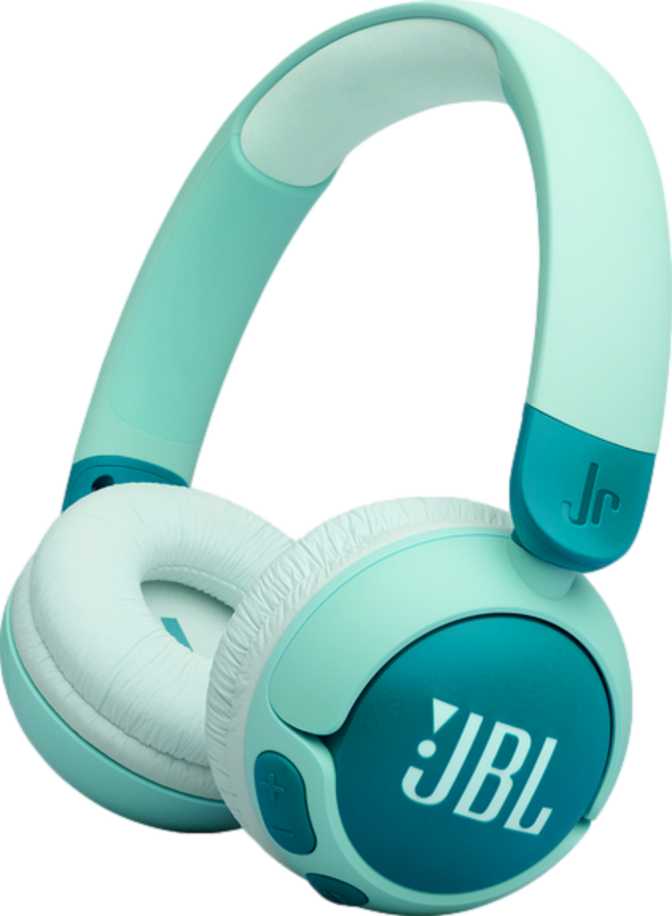
JBL Junior 320BT Review: Built for Kids, Not Just Scaled Down
HeadphonesShopping for headphones for a child usually means picking between two bad options: a flimsy toy-store pair that breaks within a month, or an adult Bluetooth headphone scaled down with none of the durability or safety thinking a young listener actually needs. The JBL Junior 320BT sits in a different category entirely — engineered from the ground up as a kids' product, not retrofitted from a grown-up design. Every major specification on this headphone points toward the same set of priorities: longevity, simplicity, and sensible listening levels over flashy audiophile features.
Design and Comfort: Made for Smaller Heads and Rougher Hands
Physical experience, build quality, and everyday durability
Weight and Fit
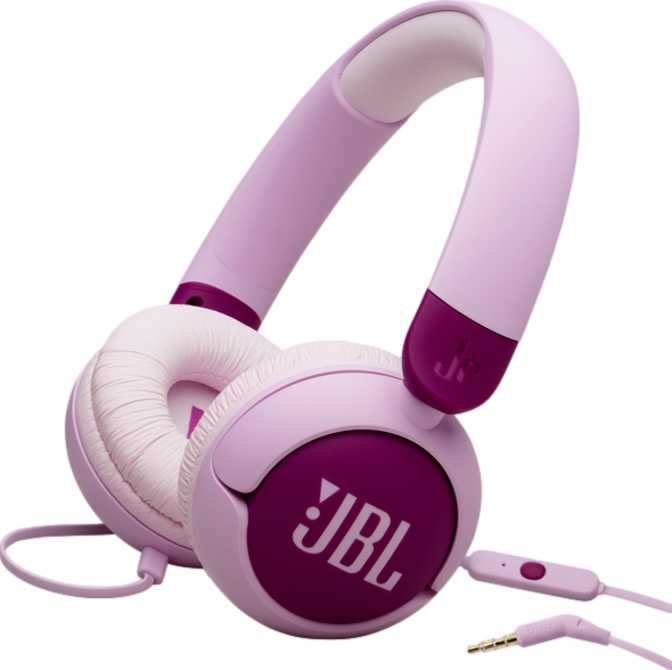
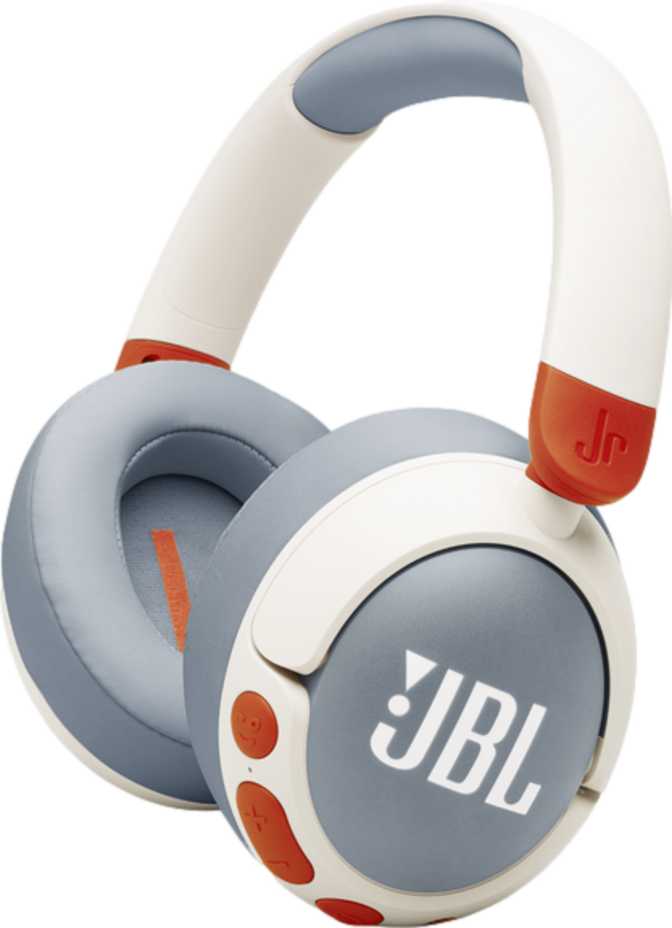
At just over 122 grams, the Junior 320BT sits meaningfully lighter than most adult wireless headphones, which typically weigh between 200 and 250 grams. On an on-ear fit sized for smaller heads, that difference translates directly into fewer complaints and longer periods of actual use. On-ear cups also sit more naturally on younger head shapes than adult over-ear designs never intended for smaller ears.
Built to Survive
A foldable design means it survives the realistic storage conditions a kids' headphone actually lives in — backpacks, car door pockets, and school bag bottoms. Because this is wireless-only, there's no cable to yank, tangle, or get caught in a car door, removing one of the most common failure points in children's audio gear entirely.
Closed-Back Design
Closed-back construction keeps sound contained inside the ear cup rather than bleeding outward. A child can listen on a flight, in a classroom, or in the back seat of a car without disturbing everyone nearby. No travel bag or carrying case is included in the box — a convenience gap worth knowing for families who want dedicated storage.
Sound Quality: Full-Range Audio With Sensible Output Levels
Driver performance, frequency response, and hearing-safe design
Driver and Frequency Response
The Junior 320BT covers the complete range of human hearing from the lowest to the highest audible frequencies. In practical terms, it can reproduce deep bass tones as well as crisp high-end detail, rather than sounding thin or one-dimensional like many budget children's headphones. A 30mm driver powers that range — a respectable size for this category that gives the sound more body and fullness than the smaller drivers typically squeezed into junior audio products.
A Volume Rating That Tells a Story
The headphone's output sensitivity sits notably lower than the figures common in adult headphones built for maximum loudness. Combined with its kids-specific engineering, this strongly suggests the driver was tuned to avoid ear-damaging volume spikes — not as an accidental limitation but as a deliberate design choice. The absence of a high-output neodymium magnet reinforces this, pointing toward a product that prioritizes safe, moderate output over peak volume capability.
Noise Handling: Active and Passive Working Together
Active noise reduction and passive isolation from the ear cushion seal work together to soften the drone of airplane cabins, busy classrooms, or highway road noise. This means a child doesn't need to raise the volume just to hear over ambient sound — a meaningful layer of hearing protection in real-world listening environments. The effect works best against steady, low-frequency background noise, which is exactly the profile for environments young listeners actually encounter every day.
Battery Life: Engineered to Outlast the Listener
Playtime, charging speed, and power management
How 50 Hours Translates to Real Life
The standout specification on this headphone is its battery rating — approximately 50 hours of continuous wireless playback. To put that in context: most wireless headphones, kids' or otherwise, top out somewhere in the 20–30 hour range. At 50 hours, a child using these for two hours daily can go more than three full school weeks between charges. For road trips and long-haul flights, multiple trips are easily covered on a single charge.
Parents effectively skip the nightly charging ritual almost entirely. A built-in battery level indicator lets anyone check remaining power before heading out the door, avoiding the familiar surprise of a dead headphone mid-trip.
Charging That Fits Modern Households
When the battery does need topping up, a full recharge takes approximately two hours via USB-C — a connector now shared across most phones, tablets, and laptops. Families deal with one fewer unique cable to track, a genuine convenience gain over older charging connector designs. The battery is sealed rather than removable, which removes the risk of a curious child opening a battery compartment or losing a cell — a practical advantage that outweighs the inability to replace the battery further down the line.
Battery Life Comparison
Connectivity: Bluetooth 5.3, Kept Deliberately Simple
Wireless performance, codec support, and pairing behavior
The Junior 320BT runs on Bluetooth 5.3, the most current generation, which brings genuinely practical benefits: more stable connections with fewer dropouts, lower power consumption (a contributing factor to the standout battery life), and faster reconnection to a previously paired device. A 10-meter operating range covers all typical usage distances — a child walking around a room, moving through the back seat of a car, or sitting in a classroom — with room to spare.
What the headphone doesn't include is equally revealing. There's no support for any named premium audio codec — no aptX in any form, no LDAC, no AAC, no LDHC. This points to standard SBC baseline transmission, which is compatible with virtually every phone, tablet, and laptop on the market. For a child listening to audiobooks, educational apps, cartoons, or children's music, this is a complete non-issue. Those premium codecs are designed to preserve subtle detail in high-resolution music — not something a young listener needs or would notice.
Codec Compatibility at a Glance
| Codec | Supported | Who It Matters To |
|---|---|---|
| SBC (standard) | Yes | All users — universal baseline |
| AAC | No | Apple device users, streaming apps |
| aptX / aptX HD | No | Android high-fidelity listeners |
| aptX Adaptive | No | Low-latency gaming and video |
| LDAC | No | Hi-res audio enthusiasts |
| LE Audio | No | Next-gen multi-stream use |
Everyday Usability: Controls, Calls, and What's Missing
How the headphone performs in a child's daily routine
What Works Well
-
Physical button controls
Rather than touch-sensitive panels — unreliable and prone to accidental triggers from small fingers, hair, or hats — the controls are physical buttons on the device. They give clear tactile feedback, are far less likely to trigger accidentally, and are simpler for a child to operate without looking.
-
Built-in microphone for calls
A single onboard microphone lets the headphone function as a headset for virtual schooling, family video calls, and voice assistant use — not just one-way music and video playback.
-
Full stereo sound
Both ear cups deliver independent stereo channels, giving proper left/right separation for music, educational content, and games rather than the mono audio found in cheaper kids' headphones.
What's Not Included
-
No ambient sound mode
A child can't let outside sounds back in without physically removing the headphone. Parents who want their child to remain aware of nearby voices or surroundings while listening should weigh this limitation carefully.
-
No auto-pause on removal
There's no in-ear detection sensor, so audio keeps playing when the headphone is taken off. A simple pause habit before removing is needed — a minor inconvenience rather than a dealbreaker.
-
Basic microphone only
The single microphone lacks active noise processing, so background sounds in loud environments may be picked up during voice calls. Adequate for home use, less ideal in noisy settings.
Who the JBL Junior 320BT Is Really For
Matching the right listener to the right headphone
Strong Fit For
- Parents who want a wireless headphone that lasts a full school week or a long trip without daily charging
- Families prioritizing lightweight comfort and hearing-safe design over premium sound features for a young child
- Anyone who wants a headphone with moderated volume output rather than an adult product simply turned down
- Frequent travelers — road trips, flights, and long commutes where battery anxiety and tangled cables are recurring frustrations
- Families who prefer simple, physical button controls over touch interfaces for younger users
Less Ideal For
- Older kids or teens who want higher audio fidelity from streaming music — no premium Bluetooth codecs are supported
- Families who need a backup wired connection — this headphone is wireless-only with no auxiliary input option
- Parents who specifically want ambient sound mode so a child can hear surroundings without removing the headphone
- Anyone expecting a bundled carrying case out of the box — none is provided
How It Stacks Up Against the Alternatives
JBL Junior 320BT versus typical wired kids' headphones and standard adult wireless headphones
| Category | Typical Wired Kids' Headphone | Standard Adult Wireless | JBL Junior 320BT |
|---|---|---|---|
| Battery Life | Not applicable (wired) | Often 20–30 hours | Around 50 hours |
| Weight and Fit | Often heavier, generic sizing | Sized for adult heads | Light, on-ear fit |
| Volume Output | Often uncapped, inconsistent | Tuned for max loudness | Moderated output |
| Cable-Related Risk | Cord can tangle, snap, or be chewed | Not applicable (wireless) | Eliminated |
| Premium Audio Codecs | Rarely present | Frequently included | Not included |
| Charging | Not applicable | Varies (micro-USB or USB-C) | USB-C, 2-hour charge |
| Headset / Call Use | Sometimes, via inline mic | Usually yes | Yes, built-in mic |
Strengths and Weaknesses, Honestly
A balanced assessment without the spin
Where It Earns Its Place
The standout strength here is battery life — a 50-hour rating is genuinely exceptional for any wireless headphone, let alone one positioned for the kids' category, and it solves the single most common parental headache with wireless gear in one sweep.
The cable-free design and foldable build address real, everyday durability concerns rather than chasing spec-sheet bragging rights. When most kids' headphone failures come from cable damage or rough storage, eliminating the cable outright is a meaningful engineering choice, not a convenience feature.
The lower output sensitivity combined with the absence of a high-output neodymium driver suggests a product that was actually engineered with a child's hearing in mind — a different approach than simply taking an adult headphone and marketing it toward families, and one the specifications reflect clearly.
Where It Falls Short
The complete absence of premium Bluetooth codecs means this headphone won't keep pace with a child as their listening habits mature. It's built for the elementary and early-tween years, not as a long-term audio companion into the teenage years when audio fidelity starts to genuinely matter.
The lack of an ambient sound mode is a legitimate gap for safety-conscious parents who want their child to remain aware of nearby voices or traffic while listening. This feature is increasingly expected in the kids' category, and its absence is more than a minor oversight.
The absence of any included carrying case feels like a missed opportunity for a product that leans heavily into a travel-friendly, daily-use positioning. Families need to source their own storage solution — a small but real inconvenience to an otherwise considered package.
Questions Buyers Ask Before Purchasing
Straight answers to the most common pre-purchase concerns
The Verdict
A clear, direct recommendation based on real specification analysis
The JBL Junior 320BT earns its recommendation by doing the unglamorous things right: it lasts an exceptionally long time on a single charge, it's light enough to wear comfortably for hours, it eliminates the cable-related accidents that plague many kids' headphones, and its output appears deliberately tuned with a child's ears in mind rather than borrowed from adult engineering.
It isn't trying to be an audiophile product, and parents shouldn't expect codec sophistication or ambient-awareness features that aren't here. Those are real limitations worth acknowledging — but they're the trade-offs that come with a product tightly focused on its core mission rather than trying to do everything.
For families looking for a dependable, long-lasting, comfortable wireless headphone built specifically around a child's daily routine — school, travel, video calls, and everyday listening — this is a genuinely well-considered choice. If the priority is future-proofing for a teenager's growing audio demands, or a carrying case included in the box, it's worth setting expectations accordingly.
Recommended For:
Young children in the elementary to early-tween range, families prioritizing battery endurance and hearing-safe design over audio fidelity, and anyone tired of charging a kids' headphone every other day.