80h
Battery Life
Category-leading endurance
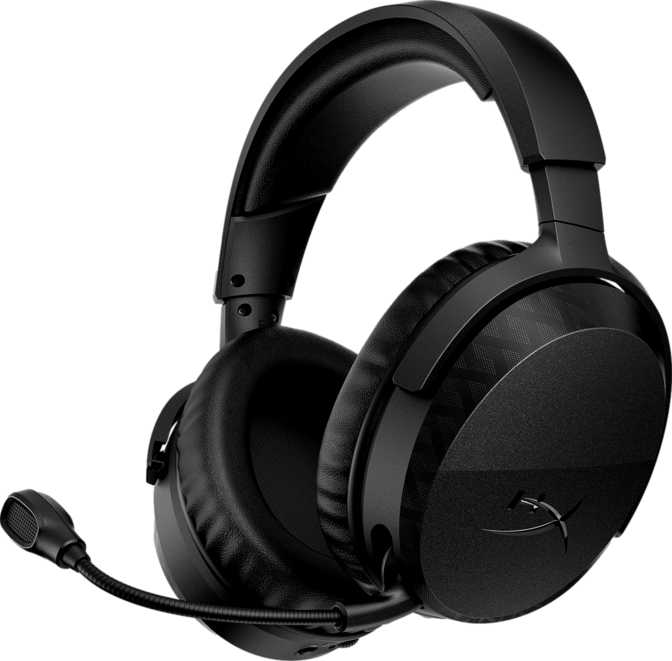
Most wireless gaming headsets make you choose: great battery life or multi-platform flexibility. Pay more and you get both. The HyperX CloudX Stinger 3 Wireless challenges that assumption by stacking an extraordinary 80-hour battery, dual wireless modes, and four-platform compatibility into a mid-range package. Whether it actually delivers on that promise — or quietly sacrifices too much to hit those numbers — is exactly what this review unpacks.
What it looks like, how it handles, and what the hardware choices actually mean
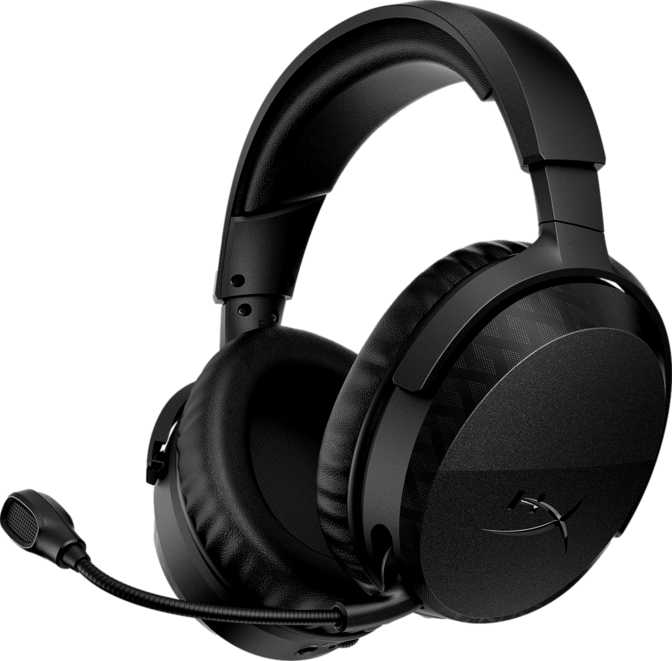
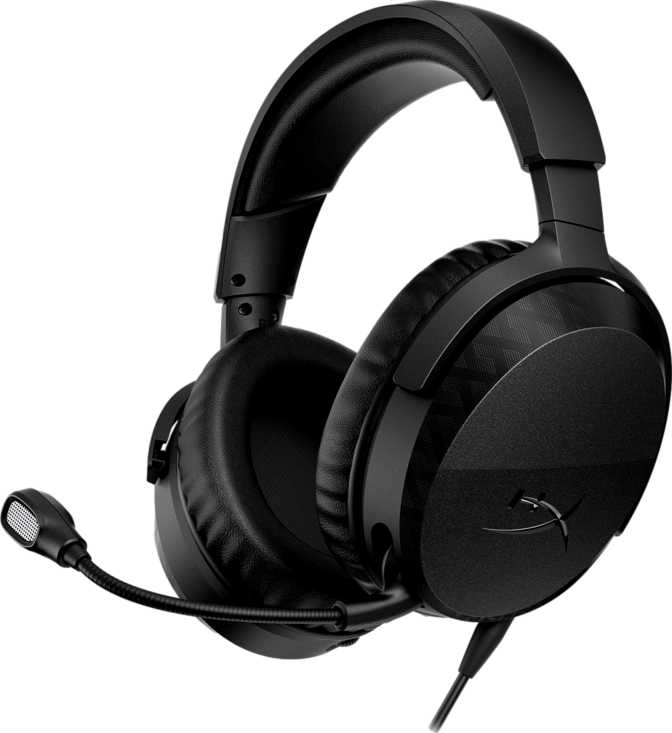
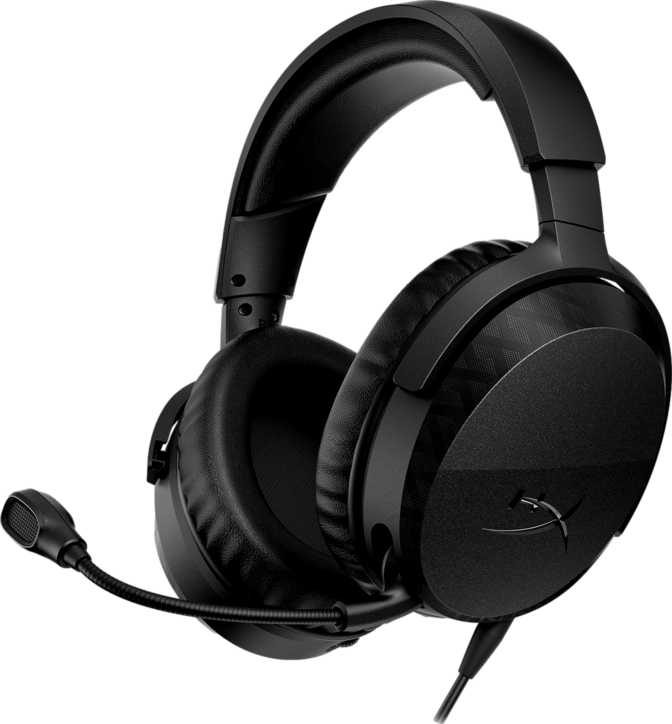
The CloudX Stinger 3 Wireless is a closed-back, over-ear headset — meaning the ear cups fully enclose your ears rather than resting on them. This physical choice matters for two practical reasons: extended comfort during long sessions, and passive sound isolation from your environment. The cups rotate and fold flat, making it straightforward to toss the headset into a bag without worrying about it. For a gaming headset, this is a genuinely useful detail that many competitors skip.
There is no RGB lighting here. HyperX made a deliberate engineering trade: battery endurance over illuminated aesthetics. If your setup demands glowing peripherals, this headset will look understated next to them. If you game in a living room, a library, or anywhere RGB would stand out awkwardly, that restraint is welcome. The on-device controls sit directly on the ear cups — volume and mute handled from the headset itself, not a dangling cable slider. Muscle memory sets in within a day, and from that point the control layout feels entirely natural.
The drivers do not use neodymium magnets, which is the industry standard in premium audio hardware. Neodymium allows stronger magnetic fields in a lighter, smaller form. Alternative magnet materials can still produce quality sound — but the engineering ceiling is lower. At this price tier the omission is understandable and does not automatically hurt audio output, but it is a relevant detail for buyers comparing this headset against higher-tier alternatives.
50mm drivers, frequency response, isolation, and the spatial audio question — explained in plain terms
The Stinger 3 Wireless uses 50mm dynamic drivers — the largest common size in gaming headsets. Larger drivers can physically move more air, which translates to more physical bass presence and a wider perceived soundstage. This is not a guaranteed quality indicator on its own, but it is a starting advantage for immersive gaming and cinematic audio reproduction.
The headset reproduces audio from 10Hz at the low end — well below what most speakers can reach — to 50,000Hz at the top, extending far beyond the range of human hearing. The practical meaning: deep bass is fully represented, and the drivers were not tuned to artificially cut off at the frequency edges. This results in natural-sounding audio without the hollowed-out quality common in cheaper gaming headsets.
At 114dB per milliwatt of input power, the headset is highly efficient — it reaches listening volume without drawing much current. For wireless devices, this efficiency contributes directly to the long battery runtime. Listeners benefit too: comfortable listening levels are reached at lower power settings, reducing fatigue in long sessions and leaving ample headroom if you need to push the volume in noisier environments.
There is no active noise cancellation (ANC) here. ANC uses microphones and processing power to electronically counter ambient sound. The Stinger 3 Wireless provides passive noise reduction instead — the physical seal of its closed-back over-ear design blocks ambient noise by placing a barrier between your ears and the room. This works well for consistent background noise like HVAC systems or office hum. It is less effective against variable or sudden sounds, and for a persistently loud household the absence of ANC is a real limitation.
No Spatial Audio Support
This headset delivers stereo sound from its two drivers and does not support virtual surround processing or HRTF simulation. Competitive FPS players who rely on directional audio pinpointing may find this a notable omission. If platform-level spatial audio — such as PlayStation Tempest or Windows Sonic — is central to your gaming experience, this limitation warrants careful consideration before purchasing.
Voice clarity, noise filtering, and practical communication quality assessed
The single built-in microphone uses noise-canceling technology — a separate concept from the ANC discussed in the sound section. Microphone noise cancellation filters out background sounds from your voice signal before it reaches your teammates. In practice: your keyboard, nearby television, and room echo are reduced in what others hear, leaving your voice cleaner and more intelligible during voice chat.
The microphone sensitivity is tuned for typical conversational distances. You do not need to lean in or speak loudly to be heard clearly — the mic captures speech at a natural range without overdriving on ambient noise. This is appropriate sensitivity for gaming communication and casual content creation, though it is not a figure associated with studio-grade recording equipment.
The microphone is fixed and cannot be detached. If you want the headset to look like a standard consumer pair of headphones during video calls, that option is not available. The mute function is accessible directly from the on-device controls — the right placement for a gaming headset. Muting mid-match or mid-call requires no hunting for a cable slider or secondary button.
What 80 hours of wireless runtime actually means in your daily routine
Eighty hours of wireless playback is a category-leading figure at this price point. If you game for three hours every evening, that is roughly 26 gaming sessions before you need to reach for a charging cable. Weekly charging becomes something you might do out of habit rather than necessity. For the user who resents both cables and battery anxiety equally, this is the headline feature — and it genuinely earns that status rather than just reading well on a spec sheet.
The 20:1 usage-to-charging ratio is practical by any measure. The USB-C charging port means the same cable you use for a phone or laptop handles the headset — no proprietary connector to lose or replace. A built-in battery level indicator keeps you informed without guessing. The internal battery is not removable or swappable, which is standard for this product category and not a practical concern given the runtime figures.
Daily Usage Context
Two wireless modes, four platforms — and what each connection actually delivers
The primary gaming connection. The included USB dongle plugs into your console or PC and establishes a dedicated low-latency wireless link. Audio sync to on-screen action is tight enough to be imperceptible in gameplay. This is the connection to use for any session where timing matters — competitive multiplayer, action games, cinematic sequences. Signal stability is strong and the connection does not compete with Bluetooth device pairing.
The flexibility connection. Bluetooth 5.2 extends the headset's usefulness to phones, tablets, laptops, and smart TVs — any device that pairs wirelessly without needing the dongle. The 20-meter range is generous enough for typical room movement. The supported codec is AAC — a solid mid-tier option better than SBC but below the higher-quality codecs audiophiles prefer. For casual music playback and voice calls, AAC is completely adequate.
| Platform | 2.4GHz Dongle | Bluetooth | Notes |
|---|---|---|---|
| PC | Full support on both modes | ||
| PlayStation (PS4 / PS5) | Dongle preferred for lowest latency | ||
| Nintendo Switch | Docked | Handheld | Bluetooth ideal for portable play |
| Xbox | Bluetooth only — Xbox blocks third-party 2.4GHz audio |
Xbox Users: The USB dongle is not recognized as an audio device on Xbox consoles — this is a platform-level restriction, not a headset defect. Bluetooth works, but introduces higher latency compared to the 2.4GHz experience on other platforms. For single-player games and media consumption this is barely noticeable. For latency-sensitive competitive multiplayer, it is a factor worth weighing before purchasing.
Match the headset to the right buyer before committing to a purchase
Where the Stinger 3 Wireless wins, ties, and concedes against typical mid-range alternatives
| Feature | HyperX CloudX Stinger 3 Wireless | Mid-Range Alternative A | Mid-Range Alternative B |
|---|---|---|---|
| Battery Life | ~80 hours | ~30–40 hours | ~20–25 hours |
| Wireless Mode | 2.4GHz + BT 5.2 | 2.4GHz only | Bluetooth only |
| Platform Support | PC, PS, Switch, Xbox | PC, PS | PC, PS, Xbox |
| Active Noise Cancellation | |||
| Spatial Audio | |||
| Foldable Design | |||
| RGB Lighting | |||
| Removable Microphone |
Competitor data represents typical specifications within the same market tier and is intended for general positioning reference only.
What this headset does well, and where it consciously cuts corners
The CloudX Stinger 3 Wireless has a clear, defensible identity: dependable multi-platform wireless gaming engineered around endurance. The 80-hour runtime is not a marketing figure dressed up to look impressive — it represents a meaningful daily-life improvement for the type of gamer who finds even weekly wireless charging a chore, let alone daily.
The dual-wireless approach is executed properly. The 2.4GHz dongle provides genuinely low-latency audio for gaming, while Bluetooth 5.2 makes the headset useful away from the desk. Four-platform compatibility is legitimately broad — this headset works without a secondary purchase on your PC, PlayStation, and Switch.
The foldable form factor, USB-C charging port, and on-device controls are practical additions that most competitors at this tier do not offer together. These are the kind of details that only reveal their full value after a week of daily use.
The omissions are real and worth stating plainly. No spatial audio means competitive FPS players lose directional precision that some rivals at this price now include as standard. The fixed microphone limits flexibility for users who want to separate their gaming and professional audio scenarios.
Bluetooth codec support stops at AAC. For gaming this is fine. For serious music listening over Bluetooth, buyers who care about audio fidelity will notice the ceiling. Non-neodymium drivers mean the sound hardware starts at a lower engineering baseline — the output can still be good, but the potential is capped compared to premium alternatives.
Xbox users face a platform-imposed Bluetooth-only scenario that HyperX cannot solve. These are not failures — they are trade-offs made in service of a battery target and price point. A buyer who goes in understanding them is unlikely to feel shortchanged.
Answers to the most common concerns before committing
The HyperX CloudX Stinger 3 Wireless earns its place in the mid-range wireless gaming headset conversation with one dominant argument: no headset at this price offers more time between charges, and that advantage is genuine and daily. Pair that with four-platform compatibility, a flexible dual-wireless architecture, and a foldable form factor, and the practical case is strong.
The concessions — no spatial audio, no premium Bluetooth codecs, a fixed microphone, and non-neodymium drivers — are real, and buyers should weigh them against their own priorities. For the casual-to-committed multi-platform gamer who values freedom from charging anxiety above all else, this is a confident recommendation.
Recommended For
Multi-platform gamers who switch between PC, PlayStation, and Switch — and anyone who prioritizes battery endurance, clean wireless flexibility, and portability over spatial audio or premium codec support.
Look Elsewhere If
Spatial audio, premium Bluetooth codecs, or a removable boom microphone are non-negotiable — or if Xbox is your primary platform for competitive multiplayer.