HyperX CloudX Stinger 3: Full Review for Multi-Platform Gamers
PC and Gaming HeadsetsQuick Verdict
Editor's Score
The HyperX CloudX Stinger 3 is a focused wired gaming headset that earns its price through cross-platform versatility and rare-at-this-price active noise cancellation. It does not try to be everything — and what it chooses to do, it does reliably.
Budget gaming headsets have a reputation problem. Most land in one of two camps: they look the part but sound hollow, or they sound decent but fall apart within a year. The HyperX CloudX Stinger 3 positions itself as the exception — a wired, multi-platform headset aimed at gamers who want dependable performance across every console they own without paying premium prices. Whether it earns that trust depends entirely on what you need from a headset, and that is exactly what this review unpacks.
Design and Build Quality
Physical experience, construction, and everyday ergonomics
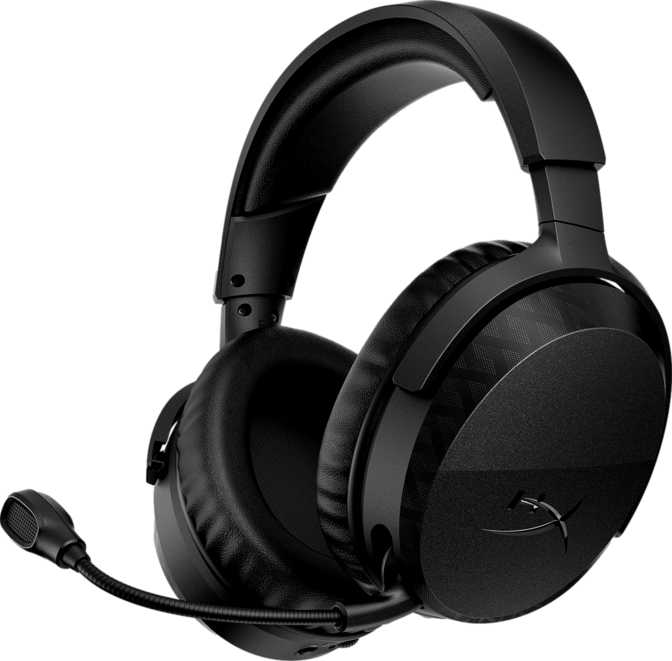
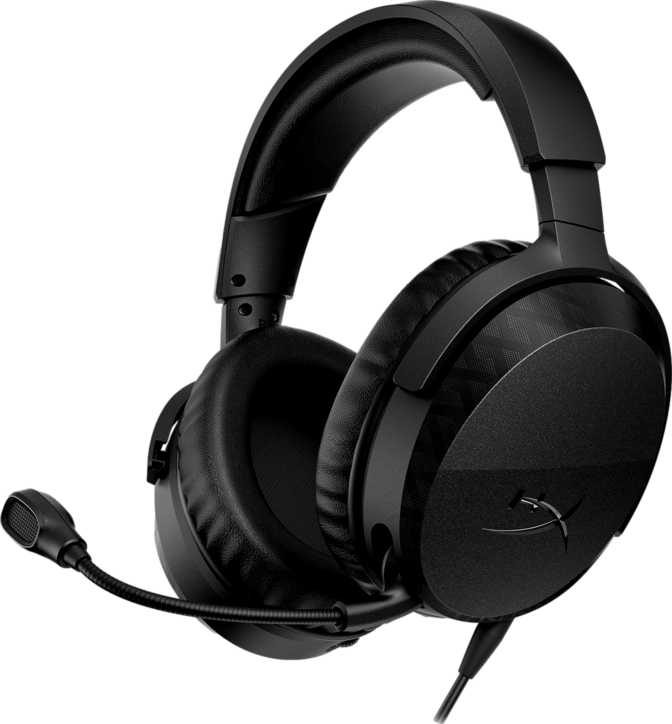
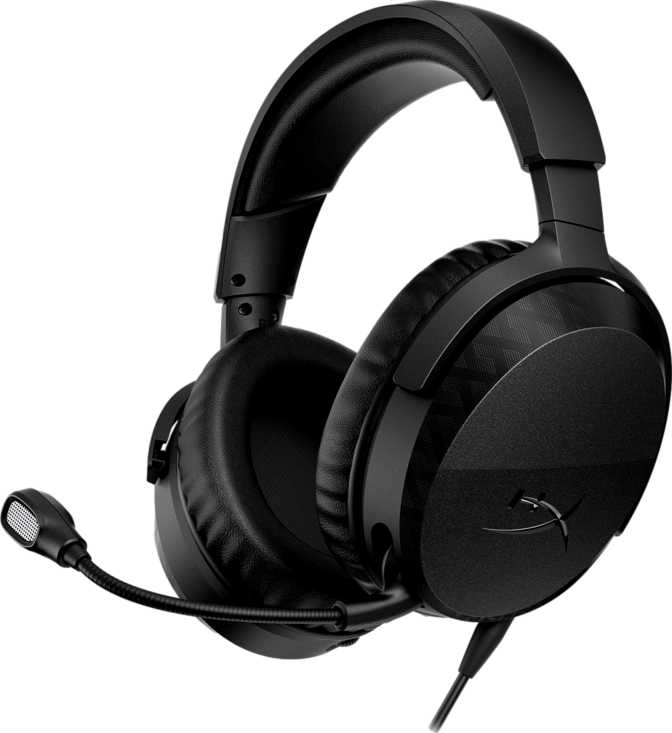
The Stinger 3 makes no attempt to impress through aesthetics. There is no RGB lighting, no aggressive angular styling, and no illuminated logo demanding attention on your desk. What you get instead is a clean, understated design built around function — which, depending on your setup, is either a relief or a disappointment.
The over-ear fit surrounds the ear entirely rather than resting on top of it. This matters more than most people realize: over-ear designs distribute clamping pressure across the head rather than concentrating it on the ear cartilage, making extended sessions significantly more comfortable. For gamers who regularly play for three or four hours at a stretch, this construction choice pays dividends.
The headset folds flat — a practical detail that often gets overlooked until you need it. Packing the Stinger 3 into a bag for a gaming session away from home, or simply storing it in a drawer without risk of damaging the headband, is straightforward.
The cable is fixed and cannot be detached or swapped out. If the cable develops a fault over time, replacement means replacing the headset. That said, the tangle-free cable construction mitigates everyday wear, resisting the knotting and coiling that eventually fray wired cables — particularly useful for players who frequently move between setups.
-
Over-Ear FitFull ear surround for extended comfort
-
Foldable ConstructionFlat-fold for compact storage and travel
-
Tangle-Free CableResists knotting and coil-related wear
-
Closed-Back DesignPhysically seals audio in and ambient noise out
-
No Detachable CableCable fault requires full headset replacement
-
No RGB LightingClean, minimal aesthetic — desk clutter-free
Audio Performance
Driver analysis, frequency coverage, and noise management
What 50mm Drivers Actually Mean for Gaming
The Stinger 3 uses a pair of large-format drivers — one per ear — that are notably bigger than what most headsets at this price use. Driver size in headphones functions roughly like engine displacement in a car: a larger driver moves more air, which generally translates to a fuller low-frequency response and more physical presence in the sound. For gaming specifically, this matters when you are trying to hear footsteps, distant explosions, or the ambient environmental audio that smaller drivers tend to compress or lose entirely.
The frequency range spans from the absolute floor of what human hearing can detect all the way to the upper ceiling — covering the complete audible spectrum. In practical terms, this means the headset is tuned to reproduce everything a game's sound designers intended, from subsonic rumbles to the crisp high-frequency audio cues that signal position and distance. No frequency tier is cut short by hardware limitation.
Important Limitation
The Stinger 3 does not support surround sound or spatial audio processing. Audio is delivered in stereo — left and right channels only. Competitive players who depend on precise three-dimensional positional audio to locate enemies should weigh this carefully before purchasing.
Audio Specs Decoded
- Driver Size
- 50mm — larger than the typical 40mm found on most budget rivals, enabling richer bass and fuller overall sound
- Frequency Coverage
- Full human hearing range — nothing cut from the top or bottom of the audible spectrum
- Driver Configuration
- Stereo (two drivers) — clean, unprocessed output without artificial spatial simulation
- Audio Output
- Stereo only — no virtual surround, no spatial audio engine
Passive Noise Isolation
The closed-back construction keeps your audio in — preventing sound from leaking out and disturbing people nearby — while simultaneously keeping ambient sound out. This passive noise isolation works by physically blocking sound waves rather than electronically canceling them, and it functions without any power draw. In practice, it dampens background noise like fans, air conditioning, or household activity even when no audio is playing.
Active Noise Cancellation
On top of the physical isolation, the Stinger 3 includes active noise cancellation. ANC works by detecting ambient noise and generating an opposing sound wave that neutralizes it before it reaches your ears. Combined with the closed-back design's physical blocking, the result is a notably quiet listening environment — beneficial for players in shared living spaces, offices, or anywhere concentration matters.
ANC performs best against consistent, low-frequency noise: HVAC systems, engine hum, crowd murmur. Sharp, sudden sounds are harder to cancel electronically — and this is true of all ANC implementations, not just this headset.
Microphone: Communication Quality
Voice pickup, noise filtering, and in-game communication
The Stinger 3 ships with a built-in microphone that is fixed to the headset body — it does not detach or retract. The microphone includes active noise cancellation processing on the transmission side, meaning it works to separate your voice from background noise before it is sent to your teammates. For squad communication in multiplayer games, this is the feature that determines whether your callouts arrive clearly or arrive buried in room noise.
The microphone's sensitivity is calibrated to capture voice at close range without being so broad that it picks up keyboard clicks, desk vibrations, or distant conversation. A single-mic configuration keeps the design clean, and the sensitivity level is appropriate for the headset's intended use case: in-room gaming rather than professional streaming or broadcast content creation.
A hardware mute function is integrated directly into the control panel on the earcup — accessible instantly without navigating software menus or in-game settings. In competitive play, the ability to cut your mic in one physical action rather than two software steps is a practical advantage worth noting.
-
Noise-Canceling ProcessingFilters background noise before transmission
-
Hardware Mute ButtonOne-action mute directly on the earcup
-
Close-Range SensitivityTuned for voice pickup, not ambient room audio
-
Not RemovableFixed mic — cannot be detached when not in use
-
Single Mic OnlyNot designed for streaming or broadcast quality
Connectivity and Platform Compatibility
How it connects and where it works
The Stinger 3 connects via a standard 3.5mm audio jack. This single connection method is both the headset's most universal feature and its most obvious constraint.
The broad upside is genuine: a 3.5mm connection works natively with PC audio jacks, PlayStation controllers, Xbox controllers (modern generations), the Nintendo Switch in handheld mode, and any mobile device that retains a headphone port. A single headset that moves between platforms without dongles, drivers, or Bluetooth pairing is a real convenience in multi-platform households.
The constraint is equally clear: this is a wired-only headset. There is no wireless mode, no Bluetooth, no USB-C connection point. Players who prioritize freedom of movement or a cable-free desk environment are not the intended audience.
There is no in-line control panel on the cable itself. All accessible controls — including the mute function — sit on the earcup. The cable stays clean, but adjusting anything requires reaching the headset directly.
Connection Type
3.5mm Analog Jack — Plug and Play
No drivers, no software, no pairing required on any supported platform
Who Is the HyperX CloudX Stinger 3 For?
Matching the headset to real-world buyer profiles
- A multi-console gamer who wants one headset that works on everything — PS, Xbox, Switch, and PC — without buying adapters
- Someone gaming in a shared or busy environment who needs the noise management combination to stay focused
- A player who prioritizes clear squad communication over spatial audio immersion
- Anyone who stores or transports their headset regularly — the foldable build and tangle-free cable support this directly
- Gamers who find RGB lighting, complex software, and wireless setup more friction than feature
- A competitive shooter player who depends heavily on three-dimensional positional audio to track enemy movement
- A content creator or streamer who needs broadcast-quality microphone output — the fixed single-mic setup is not built for that
- Anyone for whom wireless freedom is non-negotiable — a wired connection is the only option here
- Players who want a detachable cable for long-term serviceability and customization
- Buyers who want spatial audio or surround sound processing for immersive single-player game worlds
How It Compares to the Alternatives
HyperX CloudX Stinger 3 versus logical competitors at similar price points
| Feature | HyperX CloudX Stinger 3 | Wireless Budget Rival | Surround-Focused Competitor |
|---|---|---|---|
| Connection Method | 3.5mm Wired | Wireless (USB dongle) | USB / 3.5mm |
| Platform Compatibility | PC, PS, Xbox, Switch | Often platform-restricted | Often PC-primary |
| Active Noise Cancellation | Rarely at this price | Varies | |
| Surround / Spatial Audio | Sometimes | ||
| Detachable Cable | N/A (wireless) | Sometimes | |
| Foldable Design | |||
| RGB Lighting | None | Sometimes | Sometimes |
The Stinger 3 trades surround audio processing and wireless freedom for broader platform support and active noise cancellation. At this price tier, finding ANC in a wired headset that works across four platforms natively is genuinely uncommon — that combination defines its competitive position.
Strengths and Weaknesses: An Honest Assessment
What this headset genuinely delivers — and where it falls short
Where It Earns Your Trust
The combination of active noise cancellation and passive isolation in a wired headset at this price point is unusual. Most budget competitors offer one or the other — not both. For gamers in noisy environments, that combination changes the experience in a way that affects every single session.
The cross-platform 3.5mm compatibility is genuinely useful for multi-console households. The alternative — buying separate headsets for PlayStation and Xbox, or carrying adapters — adds cost and friction that the Stinger 3 sidesteps entirely through a single cable.
The foldable construction and tangle-free cable are details that add real-world value over time. Headsets that cannot fold get damaged in bags and storage. Cables that tangle develop kinks and fraying faster. Both design choices extend the useful life of the product in ways that only become obvious after a year of ownership.
Where It Falls Short
The lack of surround sound or spatial audio support is the most significant functional gap. Players in tactical shooters or open-world games where directional awareness provides a competitive edge will notice this absence in real sessions. Stereo is accurate, but it does not replicate the three-dimensional awareness that spatial processing provides.
The non-detachable cable is a long-term durability consideration that matters more the longer you own the headset. Cables are typically the first point of failure in wired headsets, and when the cable fails on the Stinger 3, there is no user-serviceable path to repair. This is a reasonable trade-off at the price, but it is worth factoring into your purchase decision.
The microphone, while functional for team communication, is not designed for users with recording or streaming ambitions. A fixed, single-microphone configuration handles squad callouts cleanly — but it is not a component you would choose if voice quality for an audience is part of your requirements.
Questions Real Buyers Ask Before Purchasing
Common concerns answered directly
Final Verdict
The HyperX CloudX Stinger 3 earns its place in the market by solving a specific problem well: it gives multi-platform gamers a single wired headset with genuine noise-handling capability that works reliably across every major console without added hardware, extra setup, or software complexity.
It is not the right choice for players who need positional audio advantages in competitive play, nor for those who want the freedom of wireless. But for the player who bounces between a PlayStation, an Xbox, and a PC — or who games in a busy household and needs to block out the room — this headset delivers on the promises that matter most.