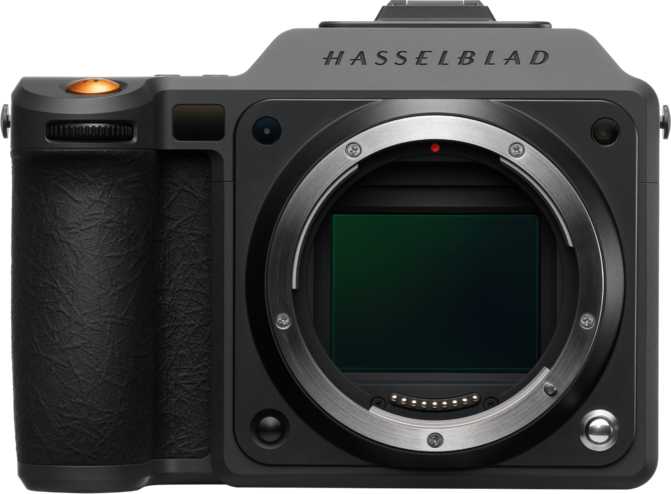
Hasselblad X2D II 100C: Full Review of a Medium Format Mirrorless
CamerasMedium format photography has long carried a reputation for being the exclusive domain of well-funded studios and commercial photographers willing to haul heavy, finicky gear through laborious workflows. The Hasselblad X2D II 100C challenges that premise — not by cutting corners to reach a lower price point, but by rethinking what a medium format mirrorless camera should feel like to use daily. This is a camera built for photographers who have already outgrown the ceiling of full-frame image quality and are ready to make the leap, without leaving behind the modern conveniences they depend on. Whether that description fits you, or whether you should be looking elsewhere, is exactly what this review is here to settle.
Build, Design, and Physical Presence
| Type | Mirrorless |
|---|---|
| Width | 148.5 mm |
| Height | 106 mm |
| Thickness | 75 mm |
| Weight (body only) | 840 g |
| Operating Temperature | −10°C to 45°C |
| Screen Size | 3.6 inches |
|---|---|
| Screen Resolution | 2,360,000 dots |
| EVF Resolution | 5,760,000 dots |
| Viewfinder Coverage | 100% |
| Articulating Screen | Flip-out |
| Touch Interface | Yes |
Size and Weight in the Real World
At 148.5mm wide and 106mm tall, the X2D II 100C occupies a noticeably larger footprint than any full-frame mirrorless body. It is not a camera you slip into a jacket pocket. Weighing 840 grams body-only, it sits in a range that demands either a solid wrist strap or a shoulder system for extended carry — and that is before a lens is mounted.
That said, 840 grams is genuinely restrained for a medium format instrument. Previous generations of digital medium format cameras routinely exceeded a kilogram before a lens was attached. Hasselblad has engineered this body to be as compact as the sensor physics allow, and field photographers will notice the difference over a long day.
Build Quality and Environment
The camera is rated for operation between −10°C and 45°C, meaning it handles freezing winter shoots and hot outdoor summer assignments with equal confidence. Photographers covering weddings in cold climates, landscape shooters at altitude, or editorial teams working on location will find the thermal tolerance reassuring. There is no built-in flash — the correct decision at this level. In its place, a standard hot shoe accepts professional speedlights, triggers, and Profoto or Godox receivers.
Ergonomics and Interface
The 3.6-inch rear touchscreen, rendered at 2,360,000 dots, is both large and sharp enough for critical image review in the field. It flips out — a significant practical addition for photographers who shoot from the hip, low to the ground, or overhead on a raised arm. Full touch functionality means navigating menus, selecting focus points, and reviewing images all work through the screen without requiring the rear directional controls.
The electronic viewfinder resolves at 5,760,000 dots, placing it among the highest-resolution EVFs available in any camera category. At this density, the practical difference between a digital viewfinder and an optical one effectively disappears. Framing is accurate, fine detail is visible in areas like hair and foliage, and the 100% coverage means what you see is precisely what you capture.
The Sensor: 100 Megapixels of Medium Format Real Estate
What 100 Megapixels Actually Means
One hundred megapixels sounds like a marketing superlative until you encounter the files. A single image from this sensor contains roughly five times the spatial information of a 20-megapixel full-frame shot. In practical terms, this means cropping aggressively into an image and still having enough resolution to produce a large print; it means capturing scenes with intricate detail — stone walls, woven fabric, forest canopies — where each individual element remains sharply resolved; and it means that images delivered at 20 to 30 megapixels for web use are effectively downsampled, which increases per-pixel sharpness and reduces noise in the output.
For portrait, product, architecture, landscape, and fine art photographers, this level of resolution is not excess — it is the whole point.
Sensor Architecture and Low-Light Capability
The sensor uses back-illuminated (BSI) CMOS technology. In a BSI design, the light-gathering portion of each photosite faces outward without the wiring layer of a conventional sensor partially blocking incoming light. The result is improved light collection efficiency per pixel — which matters considerably when working with a 100-megapixel sensor where individual pixels are physically smaller than those on lower-resolution full-frame cameras.
The maximum native sensitivity extends to ISO 25600. While medium format sensors are not typically optimized for extreme high-ISO performance, the X2D II 100C's BSI architecture closes much of that gap. In practical terms, this camera produces clean, usable files at the sensitivities where fine art and landscape photographers regularly work — ISO 800 to 3200 — and extends usably into higher ranges for controlled studio environments.
In-Body Image Stabilization: A Genuine Differentiator
10 Stops of CIPA-Rated Stabilization
A photographer who would otherwise need 1/500s for a sharp handheld shot can theoretically achieve the same result at around half a second. Real-world gains of five to seven stops are consistently achievable — transformative for a medium format camera that previously required a tripod for almost every scenario.
For a 100-megapixel camera, this matters more than it would on a lower-resolution body. At extreme megapixel counts, even slight camera movement that would be invisible on a 24MP file will resolve as motion blur. IBIS at this level of effectiveness makes handheld medium format shooting genuinely practical — a capability the previous generation of medium format cameras largely lacked.
Autofocus System
425
Phase-Detection Focus Points
Phase detection AF works by comparing two versions of an image formed on split portions of the sensor, determining both the direction and magnitude of focus error simultaneously. This makes it meaningfully faster and more decisive than contrast-detection systems, which must hunt back and forth to find focus.
3 fps
Continuous Shooting Rate
Three frames per second is a consequence of the enormous data volume each 100-megapixel frame generates — not a design oversight. For portrait, commercial, and architectural photographers who shoot decisively rather than in bursts, this rate is entirely sufficient.
Phase Detection and Subject Tracking
AF tracking is included, allowing the camera to identify a subject and follow it across the frame as it moves — critical for portraits where subjects turn their heads, events where people move unpredictably, and any scenario where locking focus once is not sufficient. Touch autofocus through the rear screen enables pinpoint subject selection: tap the area you want sharp, and the camera acquires and holds focus there. For photographers coming from smartphones or consumer mirrorless cameras, this feels natural immediately.
Honest Expectations Around Speed
Sports and wildlife photographers who depend on rapid burst capture will find 3 fps insufficient. Medium format sensors process enormous quantities of data with each frame, and this rate is an unavoidable physical constraint of the format. The AF system excels in decisive, accurate single-shot acquisition for the deliberate shooter — not high-speed action sequences.
Shutter System and Flash Capabilities
Mechanical and Electronic Options
The fastest mechanical shutter speed is 1/4000 second, and the electronic shutter extends that to 1/6000 second. The mechanical shutter covers virtually every daylight shooting scenario with full confidence. For photographers shooting wide open in bright conditions, the electronic shutter option provides additional headroom. A maximum long exposure of 30 seconds is available for nightscape, astrophotography, and light painting work.
1/4000s Flash Sync — A Category-Defining Advantage
Most cameras — including flagship full-frame bodies — max out mechanical flash sync at 1/200 or 1/250 second. The X2D II 100C syncs at 1/4000 second. This means using flash to freeze motion or overpower ambient daylight at speeds other cameras cannot achieve without high-speed sync workarounds that compromise flash power output.
For studio photographers, this changes how strobe and ambient light can be balanced in-frame. For outdoor portrait photographers, it means achieving background separation with a wide aperture even in direct sun — with flash used to fill or key the subject — all without resorting to power-reducing workarounds. The implication for creative control is significant and extends this camera's range well beyond the studio.
Storage: The 1 TB Internal Drive
External Memory Card Slot
One of the most practically significant specifications on this camera is the 1 terabyte of internal built-in storage. A 100-megapixel RAW file is large — substantially larger than a full-frame RAW at the same quality setting. At typical file sizes for uncompressed or lightly compressed 100MP RAW captures, a terabyte of internal storage accommodates thousands of images on the body itself, before a single memory card is inserted.
An external memory card slot is also present, providing both overflow capacity and a backup path for critical shoots. This dual-storage arrangement — massive internal buffer plus external card — significantly reduces the workflow friction that has historically accompanied medium format photography. Photographers no longer need to manage card capacity anxiously during long shoots, which changes how freely and confidently you can work on location.
Connectivity and Workflow
Wireless and Data Transfer
Wi-Fi and Bluetooth are both built in, enabling remote camera control through a smartphone and wireless image transfer to a mobile device or tethered workstation. The companion smartphone app allows the camera to be triggered remotely — useful for self-portraits, wildlife setups where the photographer needs to stand back, and any scenario where physically touching the shutter is impractical.
USB Type-C connectivity operates at USB 3.2 speeds, meaning fast tethered shooting to a laptop and rapid file transfer when offloading the internal storage. At 100 megapixels per file, transfer speed is a genuine workflow concern, and USB 3.2 addresses it meaningfully — transfers that would take minutes on older connections complete in seconds. RAW shooting is fully supported, with manual controls available for ISO, white balance, shutter speed, and exposure. A built-in HDR mode addresses scenes where contrast range exceeds what a single exposure can capture cleanly.
What Is Absent — and Why It Matters
The following features are intentionally absent. Each omission reflects deliberate design priorities rather than oversight, and they collectively define who this camera is not built for:
- No HDMI OutputLimits direct monitor connection; tethered video monitoring workflows are not supported.
- No Microphone InputA firm signal about the camera's intended purpose. This is a still photography instrument without apology.
- No GPSLocation data is not embedded in file metadata automatically. Photographers requiring this for editorial or documentary work will need to geotag manually or sync via a smartphone GPS log.
- No NFCShort-range wireless pairing is absent; connection is handled via Wi-Fi and Bluetooth pairing through the app.
- No First-Party TimelapseBuilt-in timelapse capture is not available. These omissions reduce body complexity and size without affecting the target photographer's workflow in any meaningful way.
Battery Life and Power Management
3,400 mAh — Removable & Rechargeable
The CIPA-rated battery life of 327 shots per charge is the honest, standardized measurement of what the battery delivers under consistent, controlled conditions. Portrait photographers who shoot tightly and deliberately, capturing 200 to 300 frames in a full day's sitting, will find a single charge sufficient. Event photographers or those on long documentary assignments will need a spare battery or a mid-day charging strategy.
Compared to 35mm-format mirrorless cameras that often rate at 300 to 500 shots per charge on similarly dense sensors, this falls within an expected range for a large, high-resolution sensor platform. The battery is removable — swapping in a fresh cell takes seconds — and the battery level indicator on the camera's interface ensures there are no surprises mid-shoot.
For any shoot expected to exceed 250 to 300 exposures, carrying a spare battery is strongly advisable. This is standard practice for professional medium format work regardless of camera brand.
Real-World Usage Scenarios
Ideal for These Photographers
Fine Art and Gallery Photographers
The 100-megapixel medium format sensor produces files with tonal gradation and spatial resolution that translate directly into large-format prints with unmatched fidelity. The color rendering depth of medium format sensors is consistently noted in professional print contexts.
Commercial and Product Photographers
Resolution for catalog and advertising work where clients routinely crop into images, require multiple format deliveries from a single frame, and expect file quality that holds through aggressive post-production retouching.
Portrait and Wedding Photographers
Stepping up from full-frame, you will immediately notice the larger sensor's shallower depth of field at equivalent apertures produces a subject separation quality — often described as a three-dimensional look — that full-frame cameras approximate but do not fully replicate.
Landscape and Architecture Photographers
High resolution combined with sensor-shift stabilization enabling handheld capture in challenging light, plus a 30-second exposure ceiling for long-exposure work — this is an extremely capable platform for demanding location photography.
Consider Other Options If…
You Shoot Sports or Fast Action
Three frames per second is insufficient for tracking fast, unpredictable motion. Sports and action photographers need burst rates this camera cannot provide — this is a hard boundary that definitively excludes that use case.
You Prioritize Hybrid Photo-Video Shooting
The absence of a microphone input, HDMI output, and timelapse function restricts video utility significantly. The camera's video capability should be treated as a secondary convenience, not a genuine working feature.
You Need a Light Travel Camera
At 840 grams body-only — before lens — and with its larger footprint, photographers on a tight carry weight budget will feel this camera more acutely over long walking days than those shooting in controlled environments.
You Depend on a Wide Lens Ecosystem
The Hasselblad X-mount lens selection, while high in optical quality, is narrower than full-frame alternatives. Photographers transitioning from a broader ecosystem will need to rebuild their glass selection over time.
Competitive Context
The X2D II 100C earns its position differently against full-frame flagships versus traditional medium format platforms. Here is how it stands across the metrics that matter most to the photographers it targets:
| Feature | Hasselblad X2D II 100C This Camera | Full-Frame Flagship | Phase One IQ-Series |
|---|---|---|---|
| Sensor Format | Medium Format | Full Frame (35mm) | Medium Format |
| Resolution | 100 MP | 40–61 MP | 100–150 MP |
| IBIS Rating | 10 stops (CIPA) | 5–8 stops | Typically none |
| Continuous Shooting | 3 fps | 10–30 fps | 1–3 fps |
| Internal Storage | 1 TB | None | None |
| Portability | Compact for medium format | Smaller & lighter | Significantly larger |
| Lens Ecosystem | Hasselblad X (curated) | Wide third-party options | Proprietary, very limited |
Full-frame flagship specifications are representative of common parameters in that category. Phase One values reflect typical specifications across current IQ-series digital backs.
Honest Assessment: Strengths and Limitations
No camera performs perfectly in every direction. The X2D II 100C makes deliberate choices that favor still image quality, modern portability, and studio-ready workflow above all other considerations. Here is the complete, unvarnished picture:
Core Strengths
100MP medium format image quality ceiling. Resolving power and tonal depth that no full-frame system can match for still photography — the fundamental reason to consider this platform.
10-stop IBIS. Opens shooting scenarios that would have required a tripod on every previous medium format camera, enabling genuine handheld practicality at extreme resolution.
1TB internal storage. Eliminates persistent workflow friction; card capacity management anxiety during a long shoot becomes a non-issue for the first time on a medium format body.
1/4000s flash sync speed. Gives studio and outdoor photographers creative control that most cameras — including full-frame flagships — simply cannot offer without workaround compromises.
5.76-million-dot EVF. Among the highest-resolution viewfinders available in any camera category; framing accuracy and fine detail visibility are exceptional.
425-point phase-detection AF with subject tracking. Decisive, accurate single-shot acquisition for portrait, commercial, and architectural work; touch AF adds practical ease.
Real Limitations
327 shots per charge. Adequate but not generous. A serious working day often requires a spare. This is not a unique weakness for medium format, but it is a real constraint that demands planning.
3 fps burst rate. Not a limitation for the photographer this camera addresses, but a hard boundary that definitively excludes sports, action, and fast-moving documentary work.
Limited video capability. No microphone input, no HDMI, no timelapse. Video capability should be treated as a secondary convenience, not a working feature of this camera.
Narrow Hasselblad X-mount ecosystem. High optical quality within the system, but photographers transitioning from a broader full-frame ecosystem must budget to rebuild their lens collection from scratch.
Common Questions Buyers Ask Before Purchasing
Final Verdict
The Hasselblad X2D II 100C is a medium format mirrorless camera that earns its position at the top of the still photography quality hierarchy. For portrait, commercial, fine art, and landscape photographers who have reached the resolving limit of full-frame systems, it offers a clear and meaningful step forward — not just in resolution, but in the fundamental imaging character of a larger sensor, the practical usability enabled by 10-stop stabilization, and the workflow comfort of 1TB internal storage.
Its limitations are not flaws — they are definitional. This camera is built for photographers who value image quality and deliberate shooting above speed and versatility. Those choices are internally consistent and serve a specific photographer very well. If that description matches how you work, the X2D II 100C will not disappoint. If you need burst shooting, serious video capability, or a compact travel-first form factor, a different system serves you better.
Buy This Camera
You have outgrown full-frame image quality and you are ready to commit to a medium format workflow. You understand what a larger sensor physically provides — and you need it.
Look Elsewhere
Burst rate, video features, or lens ecosystem breadth are priorities for you. A full-frame system from a major manufacturer will serve those needs far better at a lower total investment.