Fujifilm GFX100 II Review: The Most Complete Medium Format Mirrorless
CamerasMedium format photography has long carried a reputation for being the exclusive territory of studio professionals with deep pockets and deeper patience. The Fujifilm GFX100 II challenges that reputation without abandoning what makes medium format worth pursuing: a sensor so large that the images it produces have a quality ceiling that full-frame cameras simply cannot reach.
This is not a camera for everyone, and it does not pretend to be. For the commercial photographer, the studio professional, or the serious landscape shooter looking for a mirrorless medium format body that keeps pace with modern demands — including 8K video, genuine autofocus tracking, and a burst speed that opens up new shooting scenarios — the GFX100 II is the most complete argument Fujifilm has yet made for the format.
Overall Score
out of 10
Quick Ratings
At a Glance
- 102 MP medium format BSI CMOS sensor
- 8K video at 30fps, 720 Mbps max bitrate
- Weather-sealed, rated to -10°C
- 425-point phase-detection AF with tracking
- 8-stop CIPA in-body image stabilization
- Fujifilm G mount lens system
Build Quality and Physical Design
Size, Weight, and Handling
The GFX100 II is a substantial camera. At just over a kilogram before a lens is attached — with a footprint 152mm wide, 117mm tall, and 99mm deep — this body makes no apology for its presence. That depth translates into a deep, commanding grip that large-handed shooters will appreciate immediately, though smaller-handed photographers may find extended handheld sessions tiring.
For a medium format mirrorless body, however, the GFX100 II is genuinely compact. Previous generations required dedicated system bags as standard kit. Pair this body with a moderately sized G-mount lens and you can carry it over a shoulder for a full day of location work — something that previous medium format systems could not honestly claim.
Weather Sealing and Environmental Tolerance
Sealing runs throughout the body's construction, protecting against splashes, dust, and light rain in temperatures from -10°C through 40°C. This covers cold-morning winter landscape shoots through summer outdoor commercial sessions. For professionals working on location, the ability to continue shooting through changing weather without reaching for a rain cover changes the practical calculus of the shoot day.
Screen
The 3.2-inch touchscreen offers 2.36 million dots of resolution and fully articulates — not just tilts. This distinction matters in practice: ground-level, overhead, and awkward-angle shots become workable without contortion.
Touch AF and touch navigation are both fully functional.
Viewfinder
The electronic viewfinder delivers 100% frame coverage — precisely what you compose is what the sensor captures. No viewfinder blockage, no surprises at the edges when reviewing files.
The viewfinder does not tilt independently — a noted limitation for low-level EVF shooting.
The viewfinder does not tilt separately from the main body. Photographers who habitually use the EVF for waist-level or low-angle composition will need to rely on the articulating rear screen instead.
Sensor and Image Quality: What 102 Megapixels Means
The Medium Format Advantage
The sensor in the GFX100 II is a back-illuminated CMOS chip in the medium format size class — substantially larger than the sensors found in full-frame cameras. This size difference is not primarily about megapixel count alone. It is about the physical area available to gather light, and the rendering character that comes from larger individual photosites.
In practical terms, medium format sensors produce images with a depth and tonal gradation in the midtones and highlights that is difficult to articulate and immediately recognizable in print. Skin tones at base ISO look different — more nuanced, more three-dimensional — than equivalent shots from a full-frame camera, even when both are printed or displayed at the same output size.
Files large enough to print at billboard scale, or crop aggressively and still deliver a commercially viable image.
CIPA-rated stabilization — one of the highest figures available in any handeheld camera currently shipping.
Phase-detection coverage across the frame — a meaningful generational shift for medium format AF performance.
Sensor Architecture: BSI, Not Stacked
The back-illuminated (BSI) design improves light-gathering efficiency compared to front-illuminated predecessors, contributing meaningfully to clean high-ISO performance. However, the sensor is not a stacked CMOS design. Stacked architecture enables faster data readout — it is the technology behind the minimal rolling shutter found in cameras built for sport and action.
For a medium format camera, the BSI approach is a logical choice that prioritizes image quality and dynamic range over raw speed. The practical consequence is that at very high electronic shutter speeds, fast-moving subjects may show some rolling shutter distortion. Mechanical shutter operation eliminates this entirely.
Sensitivity Range in Real-World Terms
The native sensitivity range covers everyday shooting through moderate low-light work with confidence. Extended sensitivity pushes the upper limit into territory usable for interior and available-light scenarios — up to 102,400 ISO in expanded mode. These upper limits exist as emergency options, not everyday working ISOs. At base sensitivity, the output from this sensor is exceptional by any measure currently available in a handheld camera.
Autofocus System
Speed and Coverage
The phase-detection autofocus system covers 425 points across the frame. Phase detection reads focus error directly rather than hunting back and forth, resulting in fast, confident acquisition. AF tracking follows moving subjects across the frame for both stills and video, and touch autofocus through the rear screen allows intuitive tap-to-focus operation in both modes.
Phase-detection autofocus remains active during video recording, maintaining focus without switching to a slower contrast-detect mode. For solo operators or interview setups without a dedicated focus puller, this represents a meaningful operational advantage.
Honest Performance Expectation
The autofocus on the GFX100 II is impressive for medium format — but it is not the equal of dedicated sports cameras from Canon, Sony, or Nikon for chaotic, unpredictable subject tracking. Wildlife photographers requiring the very fastest tracking should benchmark this system against their specific use case. For portrait, fashion, commercial, and architectural work, it is more than adequate.
Continuous Shooting and Image Stabilization
8 FPS: What It Actually Unlocks
Eight frames per second via the mechanical shutter is a rate that opens up shooting scenarios previous medium format cameras categorically could not support. This is fast enough for capturing expressions in portrait sessions, movement in fashion and dance photography, and moderate action in documentary work. It is not fast enough for motor-racing or bird-in-flight sequences where 20+ fps bodies hold the advantage.
The electronic shutter adds silent operation — useful in ceremonies, performances, and interview setups. Maximum electronic shutter speed reaches into territory that freezes nearly any motion in controlled conditions.
8-Stop IBIS: Why It Matters More Here Than Anywhere
Eight stops of CIPA-rated stabilization means that a shot which would normally require 1/500s to guarantee sharpness can potentially be captured at something approaching 1/2s under favorable conditions. Combined stabilization — IBIS working in coordination with optical stabilization in compatible G-mount lenses — is supported for further reach.
This matters specifically for medium format because longer native focal lengths and the extremely high resolution of the sensor both amplify the visible effect of camera shake. An unsteady handheld shot at 102 megapixels reveals movement blur that a 24-megapixel file would partially mask. The 8-stop IBIS directly expands what is achievable without a tripod.
Pixel Shift Mode
By using coordinated sensor movement to capture and synthesize multiple frames, Pixel Shift produces a single image with dramatically enhanced color accuracy and effective resolution. This requires a static subject and typically a tripod — but for studio still life, product photography, and architectural interiors, the output quality is remarkable and has no equivalent in a full-frame mirrorless body.
Video Capabilities
8K Recording on a Medium Format Sensor
The GFX100 II captures video at up to 8K resolution (4,320 pixels vertical) at 30 frames per second. The 720 Mbps maximum bitrate is high enough that the camera is not discarding significant detail to compression — internal recording at this quality level reduces dependence on external recorders for most workflows.
A 24-frames-per-second cinema mode provides the frame rate standard for theatrical and narrative film work. Slow-motion recording is supported for commercial and editorial use cases where controlled motion effects are required.
Audio Implementation
Both a 3.5mm microphone input and a 3.5mm headphone monitoring output are present on the body. The built-in stereo microphone (two microphones) handles run-and-gun situations without additional gear, while the input accommodates professional directional microphones for controlled recording environments. No adapter is required for standard audio accessories — this is a complete, professional implementation.
Battery Life and Power
Fujifilm rates the battery at approximately 540 shots per charge under standardized CIPA testing. CIPA ratings use a defined methodology that is consistent and comparable across manufacturers, though actual shot counts vary based on EVF usage, screen brightness, image stabilization activity, and whether video is being recorded.
For studio sessions, 540 shots is a workable number — battery swaps between setups are easy to plan. For extended outdoor location shooting or event work where swapping is impractical, carrying multiple charged batteries is not optional planning — it is standard professional practice for this body.
Charging and Connectivity
- USB-C charging — single cable solution for travel
- Compatible with USB power banks for field top-ups
- Battery level indicator on body and in viewfinder
- Fully removable, rechargeable battery
Field Planning Note
Activities that accelerate drain:
- Continuous 8K video recording sessions
- Extended EVF use in cold weather
- Active IBIS during handheld telephoto work
- Continuous Wi-Fi tethering during a shoot
Connectivity and Storage
The GFX100 II ships with a feature set designed for professional studio and location workflows. Dual memory card slots allow simultaneous redundant backup shooting — an essential safeguard for professional commissions. USB 3.2 via Type-C enables fast tethered shooting data transfer to a connected computer. HDMI output handles external monitoring and recording.
| Feature | Specification | Practical Implication |
|---|---|---|
| USB | USB 3.2 Type-C | Fast tethered shooting; charges from power bank |
| Wi-Fi | Wi-Fi 4 (802.11n) | Functional but slower than Wi-Fi 5/6; use USB for bulk RAW transfer |
| Bluetooth | Bluetooth 4.2 | Smartphone pairing for remote control and location tagging |
| Memory | Dual Card Slots | Redundant backup or RAW/JPEG separation |
| HDMI | HDMI Output | External monitoring and recording |
| GPS | None (phone bridge) | Location tagging via Bluetooth-paired smartphone only |
The Wi-Fi 4 standard is behind current best practice for fast wireless file transfer. Photographers transferring large RAW files wirelessly will notice this. Tethered USB is the recommended workflow for bulk transfer. No NFC and no native live streaming support are present on this body.
The Fujifilm G Mount Lens Ecosystem
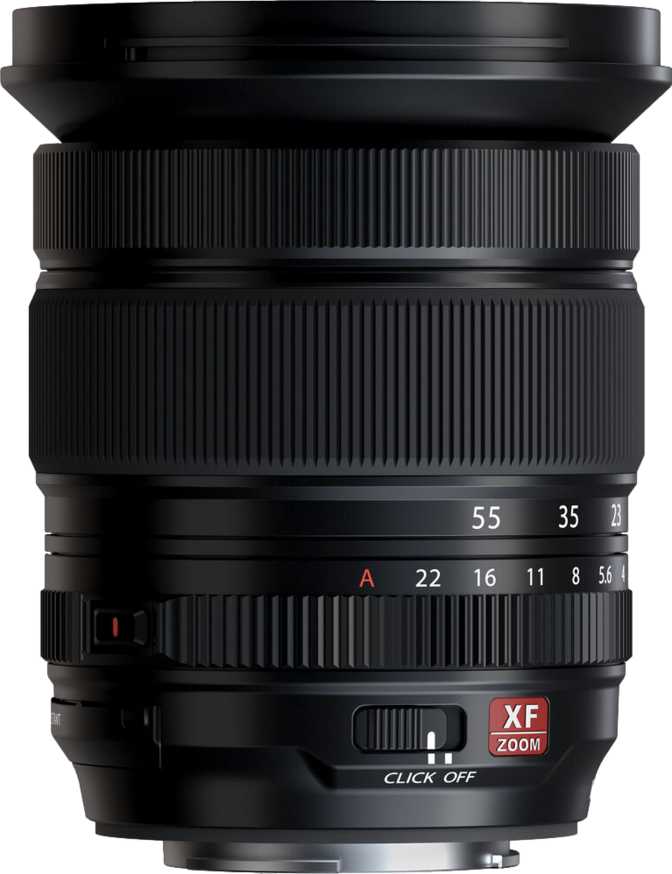
The GFX100 II uses the Fujifilm G mount — the proprietary lens standard designed specifically for the GFX medium format mirrorless system. G-mount glass ensures the full 102-megapixel sensor is properly covered without vignetting, and native lenses maintain full electronic communication for autofocus, image stabilization cooperation, and EXIF data.
Third-party lenses via adapters — including adapted large-format and legacy medium format glass — are possible but typically forego phase-detection autofocus, IBIS integration, and electronic control. The G-mount native range covers the core professional focal lengths from ultra-wide through portrait telephoto with high-quality prime and zoom options. It is not yet as expansive as mature full-frame mounts from Canon, Nikon, or Sony, and specialty focal lengths may require adapted glass or waiting for future releases.
Who Should Buy the GFX100 II — and Who Should Not
-
Commercial and advertising photographers
Producing work for large-format print campaigns where output quality is a direct business asset. -
Fine art photographers
Printing at large or exhibition scale where tonal depth and resolution differentiate the work. -
Fashion and editorial photographers
Where skin rendering and medium format tonal character are a deliberate creative choice. -
Architectural and interior photographers
Needing resolution sufficient for aggressive cropping and large final outputs. -
Hybrid stills and video professionals
Who need top-tier 8K video and 102MP stills capability in a single body.
-
A sports or wildlife photographer
Full-frame bodies purpose-built for action have faster tracking and sustained burst speed advantages. -
A weight-conscious travel photographer
Full-frame mirrorless cameras offer excellent quality at significantly reduced size and burden. -
A video-first shooter
Dedicated cinema cameras or full-frame video-centric bodies may offer more tailored codec and log flexibility. -
A budget-first medium format newcomer
The used GFX 50-series or lower-tier medium format options are more accessible entry points to the format.
Competitive Comparison
How does the GFX100 II stack up against the most logical alternatives a buyer at this level would consider?
| Feature | Fujifilm GFX100 II | Hasselblad X2D 100C | Phase One IQ4 | Full-Frame 45-61MP |
|---|---|---|---|---|
| Sensor Size | Medium Format | Medium Format | MF (Larger) | Full Frame |
| Resolution | 102 MP | 100 MP | 150 MP | 45–61 MP |
| Video | 8K / 30fps, 720 Mbps | No video | No video | 4K–8K (varies) |
| IBIS | 8-stop CIPA rated | 7-stop (claimed) | None | 5–8 stops |
| Burst Speed | 8 fps | 3 fps | N/A | 10–30 fps |
| Autofocus | Phase detect, 425pt | Phase detect | Contrast detect | Phase detect, advanced |
| Weather Sealing | Body dependent | |||
| Form Factor | Mirrorless handheld | Mirrorless handheld | Technical/Studio | Mirrorless handheld |
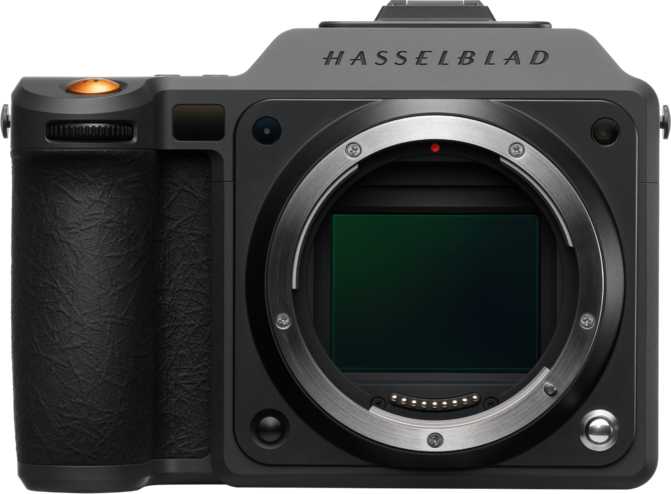
The Hasselblad X2D 100C is the most direct competitor, but its complete absence of video capability makes the GFX100 II the clear choice for hybrid shooters. Phase One remains the studio quality benchmark but at dramatically higher cost and without handheld operational flexibility. Full-frame cameras close the resolution gap slightly more each generation; the tonal and rendering advantage of medium format remains clearest at output sizes that matter to professionals printing large or delivering for premium campaigns.
Common Questions Before You Buy
Honest Assessment: Strengths and Limitations
The GFX100 II gets so much right that its limitations are easy to overlook — which is precisely why they deserve clear statement alongside the strengths.
What Stands Out
The image quality ceiling is this camera's defining characteristic. No mirrorless camera in a handheld form factor produces files that exceed it, and very few match it. The 8-stop IBIS rating combined with 102 megapixels represents a genuine technological achievement that expands where and how medium format photography can happen — including handheld telephoto work that would have required a tripod from any previous medium format body.
The addition of 8K video at high bitrate makes this the first medium format body where video is a serious professional capability rather than a checkbox feature added to justify the product category. The 720 Mbps bitrate, stereo audio with monitoring output, and continuous phase-detection AF during recording add up to a video toolkit that production companies and hybrid shooters can work with seriously.
The weather sealing, the fully articulating screen, the dual card slots, and the USB 3.2 tethering together form a professional operational infrastructure that required multiple separate accessories on previous medium format systems.
What Requires Honest Consideration
The camera is heavy, and a full kit with native G-mount glass is heavier still. This is not a body that disappears on a shoulder strap over a twelve-hour shooting day. Photographers who move fast, travel light, or shoot in physically demanding environments will notice the mass in a way that studio and controlled location photographers generally will not.
Battery endurance requires deliberate management. Carrying multiple charged batteries is not a contingency plan — it is standard operating procedure. The Wi-Fi 4 standard for wireless file transfer is a genuine limitation for photographers who work wirelessly between body and computer. Tethered USB is faster and more reliable.
The autofocus, while genuinely good for medium format, does not reach the tracking capability of dedicated action systems — and at 102 megapixels, a slightly soft frame from imprecise tracking is more visually apparent than it would be on a lower-resolution body. The absence of native GPS is a minor inconvenience for location photographers who rely on embedded metadata.
Final Verdict
The Most Complete Medium Format Mirrorless Camera Available
The Fujifilm GFX100 II is built for photographers who require the absolute highest output quality from a handheld digital camera system, and who work in disciplines where that quality translates directly into commercial or artistic value. What sets this body apart from every previous medium format mirrorless option is that it no longer asks you to sacrifice video capability, autofocus performance, or stabilization effectiveness to access medium format quality. It offers all of these things together.
The price places it firmly in professional tool territory, and it earns that positioning. If your work demands output quality that full-frame cameras cannot deliver, and you need a body that can also serve as a serious video platform, the GFX100 II has no direct equivalent in the current market. For photographers working at the highest levels of commercial, fine art, fashion, or architectural photography, it is the body the work demands.
The core question to answer before buying:
Will your clients, your prints, or your creative output benefit in measurable ways from what this sensor produces? If the answer is yes, no camera currently available does it better in a handheld mirrorless form.