Fujifilm X100VI Full Review: One Fixed Lens, Extraordinary Results
CamerasThere's a persistent frustration common to photographers who care about their work: the camera left at home because it's too heavy, replaced by a phone that's always there. The Fujifilm X100VI is an answer to that frustration built from first principles — a weather-sealed compact body carrying a high-resolution APS-C sensor, a hybrid viewfinder found in virtually no other camera at any price, and six stops of built-in image stabilisation, all packed tight enough to fit in a large jacket pocket.
This camera has opinions. It has a fixed lens that cannot be swapped. It asks you to commit to one way of seeing the world, and it offers in exchange a level of image capability and portability that previously required a much larger and more expensive system. Whether that trade is right for you is the central question this review answers — and it starts with understanding exactly what you're getting.
Design and Build: A Small Body With Serious Intentions
Physical Character and Proportions
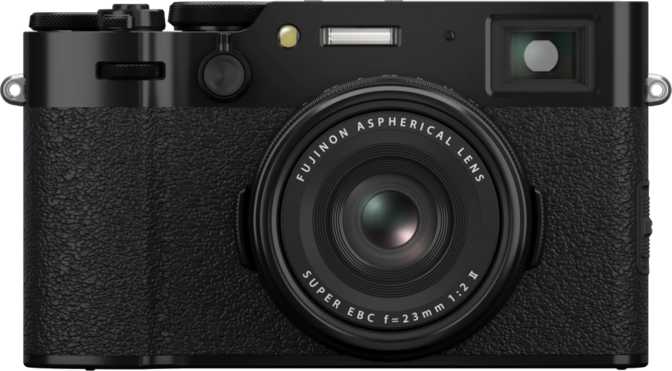
The X100VI is genuinely compact — a little over 12.8cm wide, roughly 7.5cm tall, and just under 5.5cm deep. It slips into a jacket pocket without demanding its own compartment. At around 520 grams, it has meaningful heft for its size — not so heavy that a full day of shooting fatigues, but substantial enough to feel like precision equipment rather than a consumer gadget.
The top plate carries dedicated dials for core exposure controls. This is not aesthetic nostalgia — it is a functional design philosophy. When a moment is unfolding in front of you, reaching for a dial is faster than navigating a menu, and photographers who develop muscle memory for physical controls gain a real speed advantage in reactive situations.
Weather Sealing That Changes Your Behaviour
The X100VI carries weather sealing that handles rain showers, splashing water, dusty environments, and humid conditions that would sideline most compact cameras. The real value of sealing on a daily-carry camera is psychological as much as practical: once you trust that light rain does not require sheltering the camera, you stop making decisions based on weather and start making decisions based on the photograph. The operating temperature range covers everyday conditions from a cold morning through a warm summer day.
Screen and Display
The rear display is a fully articulating, flip-out touchscreen — a three-inch panel with high-enough resolution for accurate composition and image review. The flip-out design enables overhead shots, low-angle work, and forward-facing video setups without contorted posture. Touch functionality extends to tap-to-focus and touch-triggered capture, which suit deliberate shooting particularly well.
The Hybrid Viewfinder: What Makes This Camera Singular
No other compact camera provides both an optical viewfinder and a high-resolution electronic one in the same body. This dual system is the X100VI's most distinctive characteristic and, for the photographers it was designed for, one of the most practically valuable features in the category.
Optical Viewfinder
Looking through the OVF is looking through actual glass at the real scene — no refresh lag, no electronic processing, and no power draw. Coverage is 100% of the frame. For street photography and documentary work, this changes how you interact with the world: you see subjects approaching, watch the frame's edges while the centre develops, and observe the scene continuously rather than only at the instant of capture. No electronic system fully replicates that quality of presence.
Electronic Viewfinder
The EVF delivers a rendered preview — live exposure simulation, focus highlighting, and a real-time histogram. Its resolution is exceptionally high for a compact camera, which matters because evaluating critical sharpness and precise depth of field requires fine enough pixel density to see the distinction. What you review in the EVF before pressing the shutter is a reliable representation of what you will actually capture.
In practice: Most photographers develop a strong preference for one viewfinder mode. The OVF dominates for fast, reactive street work; the EVF for deliberate, technically controlled shooting where live exposure preview prevents wasted shots. The ability to switch between them on the fly is the genuine, irreplaceable advantage.
Sensor and Image Quality: 40 Megapixels, Serious Consequences
Resolution as a Creative Tool
Forty megapixels on an APS-C sensor is not incremental — it reshapes how you can use images after capture. Most working professional photographers operate daily with 24 to 26 megapixels and produce files large enough for billboard printing and magazine covers. The X100VI's sensor takes that ceiling substantially higher.
The practical consequence is cropping latitude as a legitimate compositional technique. The fixed focal length means optical zoom is not available — but at this resolution, cropping a significant portion of the frame still leaves enough image data for large-format printing and professional use. The camera effectively carries some of the framing flexibility that its non-removable lens removes. This is not a workaround — it is an engineered solution to a constraint.
Low-Light Performance
The APS-C sensor format collects substantially more light than any smartphone sensor and more than most compact interchangeable-lens sensors. At native sensitivity values up to 12,800 ISO, the X100VI produces images in dim indoor environments, evening streets, and candlelit venues that are genuinely usable without heavy noise reduction. An expanded range pushing close to four times that ceiling exists for situations where securing any shot outweighs technical perfection — these highest settings introduce visible noise, but they may produce images that would otherwise be impossible.
Six Stops of Stabilisation: The Number That Matters Most
Sensor-shift stabilisation rated at six stops under CIPA measurement standards is the specification most worth understanding. Six stops means the camera can, under favourable conditions, produce sharp hand-held images at shutter speeds sixty-four times slower than would otherwise be required to freeze camera motion.
In practical terms: scenes that previously demanded a tripod — dim museum interiors, dusk street photography, low-lit restaurants — become achievable hand-held without reaching for higher sensitivity settings that compromise image quality. For a camera designed to be carried daily without a bag of accessories, this level of stabilisation changes the range of situations where it can produce clean results.
The Fixed Lens: 23mm f/2 — A Deliberate Commitment
Understanding the Fixed Lens Philosophy
The X100VI has one lens. It cannot be removed, exchanged, or replaced. This is not an oversight — it is the foundational design decision of the entire product. If you accept it, everything else about this camera makes sense. If you cannot, no other specification will compensate for it. Knowing which applies to your photography is the most important question to resolve before purchasing.
One Focal Length, Deliberately Chosen
At 23mm on an APS-C sensor, the X100VI produces a field of view equivalent to 35mm on a full-frame camera — a perspective historically associated with street photography, photojournalism, and documentary work. It is wide enough to establish environmental context, tight enough to give subjects presence in the frame, and it renders distances and proportions with an approximation of how the human eye naturally perceives a scene.
Working consistently with one focal length is a discipline. You move physically — closer or further — rather than rotating a zoom ring. Photographers who commit to this working method consistently report that their compositional eye sharpens over time, because the camera offers no shortcut around deliberate framing. If you regularly need long telephoto reach for wildlife, sports, or distant subjects, this camera cannot serve that work. That is not a flaw — it is the product's foundational design decision.
Aperture, Rendering, and Close Focus
The lens opens to f/2 — a fast maximum aperture that enables subject separation and background defocus in a way that slower compact lenses cannot match. Nine rounded aperture blades mean that specular highlights — bright points of light in a nighttime scene, candles in a dark interior, sunlight through foliage — appear as smooth circular shapes rather than harsh polygonal artefacts. This is a rendering quality detail that distinguishes images with genuine optical care behind them, and it is easy to notice once you know what to look for.
The minimum focusing distance is approximately 10 centimetres, enabling close-up capture of textures, food, small product details, and intimate portrait proximity. The lens closes to f/16, providing full depth-of-field and exposure control across a wide range of conditions. The electronic shutter compensates for the extra light that wide apertures admit in bright sunlight, making wide-open shooting outdoors a non-issue.
Autofocus and Shooting Performance
Autofocus System
Four hundred and twenty-five phase-detection focus points provide wide spatial coverage across the sensor — a practical consideration for street and documentary work, where well-framed subjects rarely sit at the frame's centre. Subject tracking autofocus locks onto a subject and follows it as both camera and subject move.
- 425 phase-detection points with broad frame coverage
- Subject tracking that follows motion across the frame
- Touch autofocus for precise tap-to-focus placement
- Full-time manual focus override without mode switching
Speed and Shutter Range
The continuous shooting rate reaches eleven frames per second — a figure that competes with cameras positioned explicitly for action photography. For street photographers capturing decisive moments, eleven frames per second means the peak of a gesture or expression is more likely captured than missed in any burst sequence.
- 11 fps continuous burst — action-camera territory
- Electronic shutter for completely silent operation
- Ultra-fast electronic shutter speeds freeze extreme motion
- Built-in HDR mode for high-contrast scenes in-camera
The electronic shutter's silent operation is practically significant for documentary, street, and event photography where shutter noise changes how subjects behave — or is simply inappropriate in a quiet environment. In concert halls, courthouses, and intimate social events, silent shooting is not a novelty; it is an essential working tool. The X-Processor 5 chip handles all AF computation, and this generation of Fujifilm processing represents a meaningful step forward in tracking reliability and speed over earlier platform iterations.
Video: 200 Mbps and the Filmmaker's Compact
High-Throughput Recording
The X100VI records video at a data rate of 200 Mbps — a figure that places it alongside compressed cinema camera formats rather than consumer video standards. Higher data rates preserve more image information per second of recorded footage, translating to richer colour grading flexibility in post-production and greater resilience to banding and compression artefacts in complex, detail-rich scenes.
A 24p cinema mode records at the frame rate of theatrical film production, producing motion cadence with the organic quality that distinguishes cinematic content from the smoother, more video-like appearance of higher frame rates. Continuous autofocus during recording tracks subjects through a scene without manual intervention — removing one of the most technically demanding aspects of solo video production.
Video Capabilities
- 200 Mbps recording — cinema-grade data throughput
- 24p cinema mode for filmic motion cadence
- Continuous autofocus during recording
- Built-in stereo microphone array (two microphones)
- Dedicated external microphone input
- In-camera timelapse — no external hardware required
The Key Limitation
No Headphone Monitoring
The X100VI has no headphone output. Real-time audio monitoring during recording is not possible from the camera body. For solo creators who need to confirm audio levels live, an external audio recorder is required. This is the primary video limitation of the camera — everything else about the video system is genuinely capable.
Battery Life and Connectivity
Battery: The Honest Accounting
The X100VI is rated for approximately 450 shots per charge under standard testing conditions. That covers a focused street session or a selective travel day without issue, but does not accommodate a full travel day with heavy shooting without discipline or a backup power solution.
The battery is removable — carry a spare and swap in the field. USB-C charging means any modern charger or portable battery bank can refuel the camera without a proprietary dock. For any full-day outing, a second battery is strongly recommended rather than optional.
Connectivity at a Glance
- USB-C: Fast wired charging and file transfer without adapters
- HDMI output: External monitor for review and tethered work
- Wi-Fi 5 (802.11ac): Wireless transfer and remote smartphone control
- Bluetooth: Persistent low-power link for remote control and location logging
- Lossless compressed RAW: Full editing headroom with reduced file size
- Single card slot only: No dual-card backup — a professional limitation for assignment work
Who This Camera Is For — and Who It Is Not
Suited For
- Street, documentary, and travel photographers who prioritise a camera they'll actually carry over one that technically offers more
- Those who want weather sealing without moving to a larger, heavier interchangeable-lens system
- Creatives who appreciate working within constraints and want a camera that rewards intention over convenience
- Solo content creators who need capable video alongside serious stills, and can work around the audio monitoring limitation
- Those who recognise the 35mm-equivalent perspective as a natural working focal length for their photography
Not Suited For
- Wildlife, sports, or any discipline where telephoto reach is central to the work — the fixed lens simply cannot provide it
- Professionals who require dual card slots for data redundancy on assignment work where image loss is unacceptable
- Filmmakers who need real-time headphone audio monitoring directly from the camera body
- Photographers planning to build a growing lens ecosystem over time — this is a closed, fixed-lens system
- Budget-primary buyers — the pricing reflects the sensor, stabilisation, viewfinder, and sealing it delivers, and the premium is real
How It Compares to the Alternatives
The X100VI does not have many direct equivalents. Understanding where it sits relative to adjacent camera categories is more useful than a feature-by-feature comparison with a single named competitor — the real choice is usually between camera philosophies, not between specific models.
| Feature | Fujifilm X100VI | APS-C Mirrorless + Kit | Premium Travel Compact |
|---|---|---|---|
| Sensor Size | APS-C | APS-C | Typically smaller |
| Resolution | Very High — 40 MP | Mid-range, 24–26 MP | Moderate |
| Lens Options | Fixed prime only | Interchangeable | Fixed zoom range |
| Weather Sealing | Body only, sometimes | Rarely | |
| Viewfinder System | OVF + EVF | EVF only | EVF or none |
| Body Stabilisation | 6-Stop CIPA | Varies by model | Rarely this strong |
| Portability (lens on) | High | Moderate to low | High |
| Dual Card Slots | Sometimes | Rarely | |
| Continuous Burst | 11 fps | Varies | Typically lower |
Choosing the X100VI over an interchangeable-lens mirrorless system is choosing intentionality over adaptability. The mirrorless system grows with you — new lenses extend capability across focal lengths and disciplines. The X100VI does not grow. It asks you to decide upfront that this one focal length will serve your needs, and offers in return a more portable, weather-sealed, optically unique experience that the mirrorless equivalent simply cannot match in the same form factor.
Strengths and Limitations: The Unvarnished Assessment
The X100VI's most significant strength is the coherence of its design. Every major component — sensor resolution, stabilisation, viewfinder system, weather sealing, fast prime lens, processor generation — points toward the same photographer, doing the same kind of work, in the same conditions. There are no features included to fill a specification category. The camera is what it is, without compromise in the directions it chose to pursue.
The pairing of a forty-megapixel sensor with six stops of stabilisation is the core technical achievement. Stabilisation at this level enables hand-held shooting in conditions that should require a tripod; resolution at this level enables creative cropping as a deliberate post-capture tool. Together, they expand photographic possibility in low-light and available-light scenarios in ways that represent a genuine step forward for compact cameras. The hybrid viewfinder compounds that advantage — seeing the world continuously through glass, not only at the moment of capture, is a qualitatively different working experience that no specification number fully conveys.
Where It Excels
- The sensor-plus-stabilisation pairing is exceptional and unavailable in any other compact camera at this size and price tier
- The hybrid OVF and EVF system is genuinely singular — no other compact camera provides both in a switchable, pocketable body
- Design coherence — every specification supports a clear and consistent use case without filler or compromise
- Weather sealing in a jacket-pocket body is a genuine engineering achievement with meaningful daily-use consequences
- Fast f/2 prime with nine rounded aperture blades and close-focus capability that deliver distinctive optical rendering
Where It Asks Compromises
The limitations are equally specific and deserve equal clarity — none of them undermine the camera for its primary use case, but each will matter to certain photographers:
- Battery endurance requires active management — a spare is essential, not optional, for any serious full-day outing
- Single card slot is a professional limitation — no backup redundancy for assignment-critical image files
- No headphone output narrows video utility for anyone who monitors audio live during recording
- The fixed lens is both the defining characteristic and the most decisive constraint — photographers who need reach will find it disqualifying
Real Buyer Questions, Answered Directly
These are the questions photographers most commonly search before purchasing the X100VI, addressed here without hedging.
Yes, with the right expectations. This is a camera that teaches as it goes — the manual controls, prime lens, and viewfinder options reward engagement and experimentation rather than automation. Beginners who approach it with curiosity will develop faster here than on a fully automated alternative. Those expecting maximum automation with minimum learning curve may initially find the control philosophy demanding. The camera does not hide what it does; it invites you to understand it.
As a photographic tool in challenging conditions, yes — the APS-C sensor and fast prime produce results in difficult light that smartphone computational photography handles differently and often less naturally. As an always-available casual capture device, a smartphone wins by default. The X100VI is the camera you choose to carry, which is a different proposition from the camera you happen to always have with you. That distinction is worth being honest about before purchasing.
For some photographers, yes — particularly those who discover they regularly encounter situations where the camera's perspective is simply wrong for the subject at hand. For most photographers who choose this camera deliberately, the fixed focal length becomes a creative framework rather than a frustration. Photographers who adopt fixed-lens working methods consistently report that compositional thinking sharpens over time. The best test is spending a few weeks shooting exclusively with a 35mm-equivalent perspective on your current camera before deciding.
Yes. Rain showers, splashing, dusty markets, beach environments, and humid outdoor conditions fall well within what the sealing handles. It is not designed for submersion or sustained heavy rain in extreme conditions. For the range of outdoor scenarios most photographers actually encounter — including conditions that typically prompt camera hesitation — the protection is genuine and meaningfully confidence-building in daily use.
For solo creators — travel filmmakers, documentary shooters, interview-based content producers — it is a capable primary or strong secondary camera. The high data rate, built-in stereo microphones, external mic input, cinematic 24p mode, and continuous AF during recording cover the production essentials well. The absence of a headphone output is the primary limitation: real-time audio monitoring requires either an external recorder or acceptance that monitoring from the camera body is not possible. Creators who work in controlled audio environments, or who monitor separately, will find the video tools sufficient for professional-quality output.
Both paths are well supported. Lossless compressed RAW preserves full image data for post-processing without the file-size penalty of uncompressed formats, giving editors maximum headroom. In-camera JPEG processing via the X-Processor 5 — particularly using Fujifilm's film simulation modes — produces finished images that many photographers use directly without further processing. Shooting both simultaneously is supported for those who want both options from every capture.
Fujifilm X100VI
The Fujifilm X100VI earns a direct and unambiguous recommendation — for the photographer it was designed for. If you want a camera you will carry everywhere because it is compact enough to justify the daily habit, capable enough to trust with serious work, and weather-sealed enough to use in rain without hesitation, buy it.
The combination of sensor resolution, stabilisation depth, dual viewfinder, weather sealing, and fast prime lens in this form factor has no precise equivalent in the current compact camera market. The premium pricing reflects a set of capabilities that required genuine engineering to deliver at this size, and the price is justified by what it delivers.
If you are uncertain about committing to a fixed focal length, resolve that uncertainty before purchasing — spend time shooting with a 35mm-equivalent perspective on your current camera. The focal length is the one element that cannot be adjusted, upgraded, or worked around. It will determine whether you are still enthusiastic about this camera six months after buying it.
Buy It If You...
- Want a daily-carry camera with genuinely serious image quality
- Shoot street, travel, documentary, or portrait photography
- Embrace working with one deliberate, intentional focal length
- Value weather sealing and a unique dual-system viewfinder
Skip It If You...
- Regularly need telephoto or ultra-wide focal lengths for your work
- Require dual-slot redundancy for professional assignment shooting
- Need headphone monitoring while recording video in the field
- Want to build a growing, interchangeable-lens system over time
The X100VI is confident enough in what it is to make clear what it is not. Buy it for what it is — and only for that.