Fujifilm X-M5 Review: An Honest Look at This Hybrid Mirrorless Camera

Fujifilm X-M5 Review: An Honest Look at This Hybrid Mirrorless Camera

Cameras

A Mirrorless Camera Built Around the Way People Actually Shoot Today

The conversation around mirrorless cameras used to center entirely on resolution and burst speed. That conversation has shifted. A growing share of buyers now split their time evenly between stills and video, often shooting both in the same afternoon, and they want a camera that doesn't force a compromise between the two. The Fujifilm X-M5 was clearly engineered with that buyer in mind. It pairs a familiar APS-C sensor format with a feature set that leans noticeably toward video creators while still holding its own as a capable everyday stills camera. The question this review answers is simple: does that balance actually work in practice, and for whom?

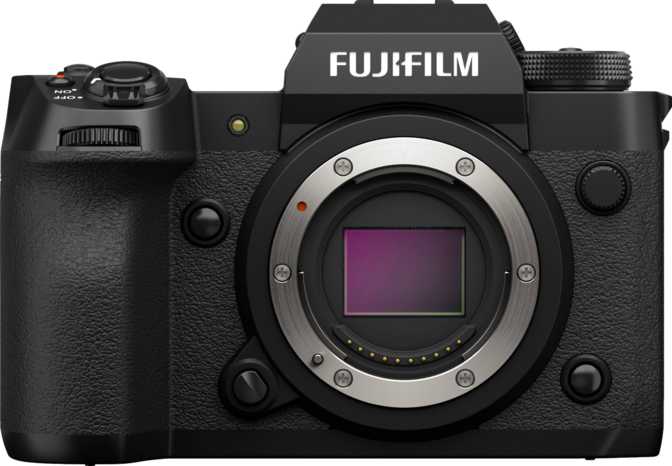
Mirrorless Body APS-C Sensor Fujifilm X Mount 355g Compact Body

Design, Build Quality, and Handling

Size, Weight, and Portability

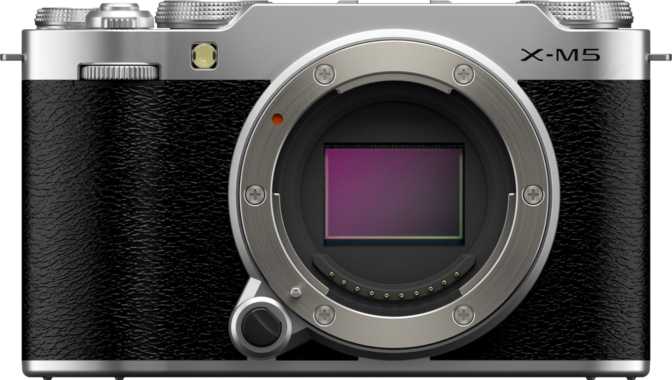
At 112mm wide, 67mm tall, and 38mm thick, the X-M5 occupies a footprint closer to a thick smartphone than a traditional camera body. Combined with a weight of 355 grams — lighter than a full water bottle and barely heavier than a tablet — it's a camera that disappears into a daily bag without becoming a burden. A camera that's genuinely comfortable to carry every day gets used every day; one that feels like a chore to pack tends to stay home, and the best camera is always the one you actually have with you. For travelers, students, and anyone documenting daily life rather than working professional assignments, the X-M5's compactness is a real, tangible advantage rather than a marketing line.
The Flip-Out Touchscreen: Your Framing and Control Hub

The 3-inch rear display, with a resolution around 1,040,000 dots, is sharp enough to judge focus and exposure confidently without squinting or second-guessing what you're seeing. More importantly, it's a fully articulating flip-out panel, meaning it can rotate forward to face the same direction as the lens. That single design choice tells you a lot about who this camera was built for: anyone who records themselves talking, presenting, or demonstrating something needs to see their own framing in real time, and a fixed or tilt-only screen simply can't do that. Touch functionality extends throughout the interface — tapping to set focus points, swiping through menus, and pulling focus during video are all handled with a finger rather than a directional pad, shortening the learning curve for anyone coming from a smartphone.

Weatherproofing: What You Need to Know Before You Shoot in the Rain

This is one area where buyers need realistic expectations going in: the X-M5 is not weather-sealed. There's no splashproof gasketing protecting the body from rain, dust, or moisture intrusion.

Light drizzle, beach environments with blowing sand, or humid, condensation-prone settings call for a rain cover or genuine caution. Fujifilm also rates the operating range between 0°C and 40°C — comfortable for the overwhelming majority of everyday shooting, but not built for sub-freezing ski trips or scorching desert shoots without protective consideration.

Inside the X-M5: Sensor, Processor, and Image Quality

The APS-C Sensor and What 26.1 Megapixels Actually Means

The X-M5 uses an APS-C format sensor — meaningfully larger than what you'll find in a smartphone or a compact point-and-shoot, and the format Fujifilm has built its entire X-series reputation on. At 26.1 megapixels, resolution sits in a genuinely useful middle ground: high enough to crop in aggressively after the fact, print at large sizes, or deliver client work with confidence, but not so high that file sizes balloon or ordinary lenses get pushed past their optical limits.

Stacked BSI Sensor: Why Readout Speed Quietly Matters

Two sensor technologies are working together here that are easy to skim past but genuinely affect real-world results. The sensor is back-illuminated (BSI), a design that restructures the wiring layer behind the photosites rather than in front of them, letting more light reach the sensor — the practical payoff is cleaner images in dim rooms, evening events, and low-light interiors. It's also a stacked design, which speeds up how quickly the sensor can be read out, reducing the "jello" distortion that warps fast-moving subjects when using the electronic shutter.

Mechanical Shutter Top Speed

1/4,000s

Electronic Shutter Top Speed

1/32,000s

That extreme electronic top speed has a specific, useful purpose — shooting wide open at bright apertures in harsh daylight without a physical neutral density filter, and freezing fast motion in complete silence.

ISO Performance and Low-Light Confidence

Native sensitivity runs up to ISO 12800, with an expanded option reaching ISO 51200 for genuinely dark, difficult situations. The native ceiling is where image quality stays most trustworthy — usable for dim restaurants, indoor events, and evening street photography without excessive grain. The expanded range exists as a safety net rather than a daily setting; expect more visible noise up there, which is normal for any APS-C sensor pushed to its outer limits.

Autofocus and Shooting Speed

The X-M5 relies on phase-detection autofocus for stills, paired with continuous tracking that follows a moving subject across the frame rather than locking focus once and hoping it stays put. Tap-to-focus on the touchscreen makes selecting a subject genuinely intuitive, and the two-stage shutter button — a light half-press to lock focus and exposure, a full press to fire — gives photographers the tactile control that touchscreen-only cameras often lack.

Continuous shooting tops out at 8 frames per second mechanically. That's well beyond what's needed for casual action — kids running around, pets mid-play, street photography — but it's not the 15-to-30fps territory of dedicated sports and wildlife bodies. Buyers chasing competitive sports or fast wildlife sequences should see this as a soft ceiling, not a dealbreaker.

  • Manual Exposure
  • Manual Shutter Speed
  • Manual ISO
  • Manual White Balance
  • Built-In HDR Mode
  • Touch Autofocus

This manual depth means the camera scales with a photographer's growing skill rather than locking beginners into automatic-only shooting. One notable absence: there's no in-body sensor-shift stabilization, so handheld shooting in lower light will lean more on shutter speed, technique, or a stabilized lens to avoid blur.

Video Performance: Built for Creators

Resolution, Bitrate, and Frame Rates

Video capture runs at a resolution around 4160 pixels wide at 30 frames per second — solidly in 4K-class territory, delivering footage with the fine detail and cropping flexibility that standard HD simply can't match. Recording at a bitrate of 200 Mbps is the more telling number for anyone who edits and color-grades footage afterward: less compression artifacting is baked into the file, giving editors more room to push contrast, saturation, and shadow recovery before the footage falls apart. A built-in 24p cinema mode adds the classic, film-like motion cadence, and slow-motion recording is supported for stretching action or detail shots.

Autofocus carries over into video with phase-detection tracking and continuous AF during recording, actively keeping a moving or talking subject in focus — genuinely significant for solo creators with nobody behind the camera to pull focus for them.

Audio: Three Built-In Microphones and External Inputs

Audio quality is where this camera quietly reveals its priorities. Rather than the single built-in microphone found on most cameras in this class, the X-M5 uses a three-microphone stereo array, allowing more directional, intentional audio capture that better isolates a speaker's voice from ambient room noise or wind.

When built-in audio isn't enough, a 3.5mm input lets you connect a dedicated external microphone, and a matching 3.5mm jack supports wired headphone monitoring — letting you confirm audio levels are actually clean while still recording. An HDMI output rounds out the toolkit, enabling a clean feed to an external monitor or recorder.

Battery Life and Real-World Endurance

Rated for roughly 330 shots per charge under CIPA standard testing — the industry's standardized but conservative testing method — the X-M5's battery life sits on the modest side. CIPA numbers are deliberately conservative and most real-world shooters will see noticeably more frames per charge in practice, especially when not chimping through every shot on the rear screen. Still, buyers should plan accordingly: a full day of mixed stills-and-video shooting, a wedding, or a long travel day will likely call for a spare battery or access to a charge during the day, particularly since video recording draws power faster than stills alone.

The battery itself is removable and rechargeable, with a battery level indicator keeping you informed rather than guessing. A 1260 mAh capacity is on the smaller side for the category, which directly explains the shot count above — a smaller cell keeps the body compact and light, at the cost of needing more frequent charging or a backup battery for extended outings. Given the USB-C port, in-camera charging from a portable battery pack is a realistic workaround for travel days without easy outlet access.

Connectivity and Everyday Usability

Getting images and footage off the camera and onto a phone or computer is handled through a few different paths, each with its own practical implications.

Wi-Fi 4 (802.11n)
Reliable for transferring stills to a phone; slower for large 4K video files.

Bluetooth 5.2
Low-power link to the companion app; no NFC, so pairing is manual.

USB-C (USB 3.2)
Fast file transfers and reliable tethered shooting.

HDMI Output
Clean feed to an external monitor or recorder.

Single Card Slot
No dual-slot backup redundancy for irreplaceable shoots.

No Built-In GPS
Location tagging requires pairing with a smartphone app.

Standard Hot Shoe
Mounts a flash, mic, or light — not an advanced digital hot shoe.

X-Processor 5
Drives autofocus, high-ISO cleanup, and video encoding.

Who Should Buy the Fujifilm X-M5 (And Who Shouldn't)

This camera is built for content creators first and traditional photographers second — and that ordering matters when deciding if it's right for you.

Ideal For

  • Vloggers and YouTubers who need to see themselves while filming and want clean audio without an external mic.
  • Hybrid creators splitting time between casual stills and short-form video for travel, lifestyle, or small business content.
  • Anyone who wants one light, capable body instead of carrying two separate cameras.

Not Ideal For

  • Sports and wildlife photographers needing burst speeds well beyond 8fps.
  • Photographers shooting regularly in unpredictable or harsh weather without protection.
  • Event and wedding shooters needing in-body stabilization or dual-card backup redundancy.

How the Fujifilm X-M5 Compares to Similar Cameras

Rather than measuring against specific competing models — which varies by region and changes constantly — it's more useful to see where the X-M5 sits relative to the two broad tiers of APS-C mirrorless cameras it sits between.

Comparison reflects typical patterns within each camera tier, not specific competing models.
Consideration Entry-Level Vlogging Cameras (Typical) Fujifilm X-M5 Enthusiast / Mid-Tier APS-C (Typical)
Sensor stabilization Usually absent Absent Often included (in-body)
Weather sealing Rarely included Not included Frequently included
Card slots Single slot standard Single slot Often dual slots
Built-in microphones Typically one, basic Three-microphone array One or two, variable quality
Video bitrate Often lower, more compressed 200 Mbps Comparable or higher
Body weight / size Compact, lightweight Compact (355g) Often larger, heavier
Continuous shooting Modest, 5-8fps range 8fps Often 10fps and above

The pattern that emerges is consistent: the X-M5 punches above its weight specifically on video-oriented features — its microphone array and bitrate genuinely compete with higher-tier cameras — while accepting the same trade-offs that define the entry-level tier it's sized around.

Strengths and Weaknesses: An Honest Assessment

Strengths

The clearest strength here is how deliberately the X-M5 has been tuned for video creators without sacrificing meaningful stills capability. The flip-out touchscreen, three-microphone array, headphone monitoring, and 200 Mbps recording bitrate are a genuinely thought-out toolkit a creator could build an entire content workflow around, all inside a body light enough to carry all day.

The 26.1-megapixel sensor and full manual control suite mean stills photography isn't an afterthought either; this isn't a video camera that happens to take photos, it's a body that does both with real intention.

Weaknesses

The honest weaknesses sit mostly around durability and endurance rather than image quality. The absence of weather sealing means outdoor and travel shooters need to plan around weather rather than shoot through it, and the lack of in-body stabilization shifts more responsibility onto lens choice and technique for low-light handheld stills.

Battery life will require spare batteries or charging breaks during longer days, and the single card slot removes the safety net that some professional use cases genuinely require. None of these are surprising trade-offs for a camera at this size — but buyers should walk in with eyes open.

Frequently Asked Questions

No. The camera does not include sensor-shift stabilization, so steady handheld shots in low light depend on a stabilized lens, a faster shutter speed, or careful technique.

It isn't weather-sealed, so it isn't built to handle rain, dust, or sand exposure without protection. Light, brief exposure to mild conditions is generally fine with sensible care, but sustained moisture or sand calls for a protective cover.

Yes — this is arguably its core strength. The forward-flipping touchscreen, three built-in microphones, headphone monitoring, continuous video autofocus, and high-bitrate 4K-class recording are all specifically suited to solo video creation.

The camera records at a 4K-class resolution at 30 frames per second, with a 24p cinema mode for film-like motion and support for slow-motion recording.

Officially rated around 330 shots under standardized CIPA testing, which tends to be conservative compared to real-world use. A full day of heavy mixed shooting, especially with video, will likely require a spare battery.

No, the X-M5 uses a single memory card slot. This is standard for cameras in this class but worth noting if you need instant in-camera backup redundancy.

It uses the Fujifilm X mount, giving access to Fujifilm's full native APS-C lens lineup as well as compatible third-party X-mount lenses.

Not built in. Location tagging is handled through Bluetooth and Wi-Fi pairing with a smartphone app rather than an internal GPS chip.

Up to 8 frames per second mechanically — enough for casual movement and everyday action, though dedicated sports and wildlife shooters chasing faster subjects may find this a limiting ceiling.

Final Verdict: Is the Fujifilm X-M5 Worth Buying?

The Fujifilm X-M5 succeeds at exactly what it sets out to do: give content creators a genuinely capable, compact APS-C camera without forcing them to choose between strong video tools and competent stills photography.

Its three-microphone array, flip-out touchscreen, and high-bitrate 4K-class video put it ahead of typical entry-level expectations, while its 26.1-megapixel sensor, full manual controls, and phase-detection autofocus keep stills photography credible rather than secondary.

It's the right choice for vloggers, hybrid creators, students building a portfolio, and travelers who want one light, capable body rather than two specialized ones. It's the wrong choice for sports shooters who need faster bursts, photographers who shoot regularly in harsh weather, or professionals who require dual-card backup as a non-negotiable safety net. Buyers who fall into that first group should feel confident moving forward — this camera was built with their workflow specifically in mind.

Carlos Mendez Mexico City, Mexico

Cameras & Imaging Lead

Professional photographer and gear reviewer who has spent a decade testing cameras, lenses, and drones across three continents. Known for rigorous real-world field tests and honest long-term ownership reports.

Cameras Lenses Drones Video Production Imaging Software
  • Professional Photography Certification – PPA
  • BSc in Media Technology
View Full Profile