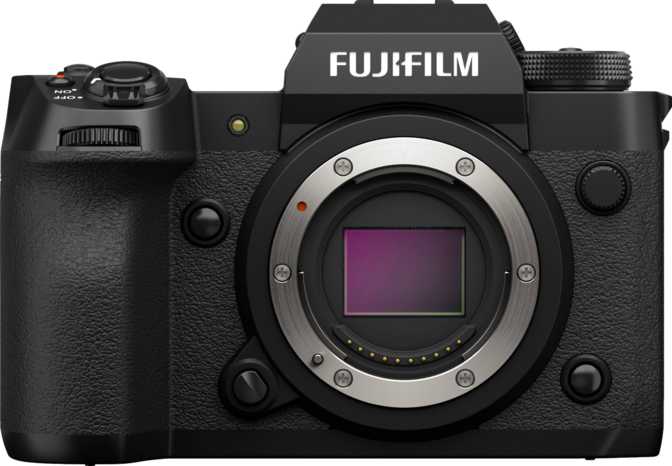
Fujifilm X-H2 Review: The 40MP APS-C Mirrorless Examined
CamerasQuick Verdict
The Fujifilm X-H2 is the most resolution-capable camera in the Fujifilm X system. Forty megapixels, 8K video, and a 7-stop stabilization system combine in a weather-sealed body built for professional workloads. For the right buyer, nothing else in the APS-C category delivers this combination of specifications.
Expert Rating
4.5 / 5
Key Specifications at a Glance
Design and Build: Serious Tools Feel Serious
Physical profile, ergonomics, and environmental resilience
Physical Profile and Handling
The X-H2 is unmistakably a professional-grade body. At 136.3mm wide, 92.9mm tall, and 84.6mm deep, it has a more substantial grip and deeper frame than the smaller X-T and X-S series cameras in Fujifilm's lineup. The weight sits at 660 grams — heavier than most APS-C competitors, but this is not a camera that pretends to be something it isn't. That mass is largely justified by the engineering inside.
The proportions make it well-suited to pairing with larger, pro-grade X-mount lenses. Shooters who favor compact primes may find the balance front-light, but for telephoto zooms or the faster f/1.4 primes, the grip depth pays dividends during long shooting sessions.
Screen and Viewfinder
The rear display is a 3-inch fully articulating touchscreen at 1,620,000 dots of resolution. The flip-out mechanism — swinging fully to the side rather than simply tilting — is a deliberate design choice for video shooters and content creators who need to frame from awkward angles, including direct-to-camera setups. Touch autofocus functions on this screen, making subject selection intuitive in both stills and video workflows.
The electronic viewfinder offers 100% frame coverage and features a tilting design — it can be angled upward for low-angle shooting without forcing you flat on the ground. The combination of a tilting EVF and a fully articulating rear screen covers nearly every compositional scenario a working photographer encounters.
Physical Dimensions
- Width
- 136.3 mm
- Height
- 92.9 mm
- Depth
- 84.6 mm
- Weight
- 660 g
- Lens Mount
- Fujifilm X
- Body Type
- Mirrorless
- Screen
- 3″ Flip-out Touch
- EVF Coverage
- 100%
Environmental Protection
- Full weather and dust sealing
- Operating range: -10°C to 40°C
- Suitable for rain, dust, and cold-weather work
- Not rated for submersion
The 40MP Sensor: What That Resolution Actually Means
Resolving power, autofocus architecture, and low-light capability
Resolving Power in Practice
Forty megapixels on an APS-C sensor is a genuinely unusual specification. This is the same pixel count found on high-end full-frame cameras until quite recently — and significantly more than the 24–26MP that most APS-C competitors offer.
At full resolution, you can crop aggressively — removing perhaps half the frame — and still retain 20 megapixels of usable image for print or editorial use. Wildlife photographers, sports photographers who shoot wide to track fast action, and landscape photographers wanting very large prints all benefit directly from this.
The sensor uses a back-illuminated (BSI) design, which improves light collection by repositioning the wiring layer behind the photodiodes rather than in front of them. The result is better performance in low light than a conventional front-illuminated sensor of the same pixel density. This is not a stacked sensor design — a distinction that matters primarily for video, addressed in its own section below.
Autofocus System
The X-H2 deploys 425 phase-detection autofocus points across the frame with subject tracking and touch-to-focus support. Phase-detection AF works by analyzing incoming light directly at the sensor level, providing a speed and predictive capability advantage over contrast-detection systems. Coverage of 425 points means you can place your focus target nearly anywhere in the frame without recomposing.
Touch AF on the rear screen lets you tap to set a focus point or initiate tracking — particularly fluid in video work where repositioning your subject mid-shot needs to feel natural and immediate.
ISO Performance in Context
A native ISO ceiling of 51,200 is a reasonable range for a 40MP APS-C sensor. In practical terms, the X-H2 handles evening events, indoor sports, and dim environments without strain — though photographers specializing in astrophotography or extreme high-ISO work will find a full-frame alternative more suitable on a per-pixel basis.
Image Stabilization: The 7-Stop Claim Examined
In-body stabilization rating, real-world effectiveness, and known limitations
The in-body image stabilization (IBIS) system carries a CIPA-rated 7-stop effectiveness rating — one of the highest figures in any camera at any sensor size. To translate that concretely: if the minimum handheld shutter speed for your focal length is 1/200s without stabilization, 7 stops of correction theoretically allows you to capture sharp images at speeds as slow as 1/1.5s.
Real-world results typically land below the theoretical ceiling, but even at 4–5 stops of practical gain, the implications are substantial. Low-light photography without a tripod becomes far more viable. Telephoto shooting handheld at longer exposures becomes workable. Video shooters filming without a gimbal benefit from noticeably smoother footage.
One Limitation to Know
The X-H2 does not support combined stabilization — where in-lens OIS and in-body IBIS work simultaneously in tandem. If you shoot with Fujifilm's OIS-equipped lenses, you'll use one system or the other, not both at once.
IBIS Effectiveness Scale
Speed and Mechanical Performance
Continuous shooting, shutter speeds, and burst-mode capability
Continuous Shooting
The mechanical shutter delivers 15 frames per second in continuous burst mode — competitive with the upper tier of mirrorless cameras and more than adequate for most sports and action scenarios. Wildlife photographers tracking birds in flight or motorsport shooters at pit lane will find this sufficient for capturing decisive moments.
The two-stage shutter — half-press to lock focus and exposure, full press to fire — gives predictable control over capture timing, the ergonomic standard expected in professional-grade bodies.
Shutter Speed Range
The mechanical shutter reaches 1/8,000s — fast enough to stop most action in bright conditions without neutral density filtration. The electronic shutter extends this dramatically to 1/180,000s, enabling wide-open aperture shooting in full sunlight and freezing genuinely extreme high-speed subjects.
Flash sync at 1/125s is standard for this camera class, meaning studio and speedlight lighting workflows transfer without friction for photographers with existing setups.
Video Capability: 8K Is Real, but Context Matters
Resolution, bitrate, cinema modes, audio setup, and the stacked sensor question
Resolution and Bitrate
The X-H2 records video at up to 8K — specifically 7,680 × 4,320 pixels at 30 frames per second from the full sensor. This positions the camera among a very small group capable of this resolution regardless of price point. The maximum recording bitrate of 720 megabits per second means a large volume of data is preserved per second: richer color information, smoother gradients, and fine detail that holds up to heavy post-production editing and color grading.
Cinema Modes and Audio
A dedicated 24p cinema mode supports the frame rate standard for narrative film and commercial video. Slow-motion recording extends the creative toolkit for interview coverage, product campaigns, and documentary work. Below 8K, the camera records 4K footage with additional flexibility in frame rate and format selection.
The audio setup handles run-and-gun video production without adapters: a 3.5mm microphone input, headphone monitoring jack, and built-in stereo microphone are all included. Real-time headphone monitoring surfaces audio problems during recording rather than during review — a professional expectation the X-H2 meets out of the box.
The Stacked Sensor Question
The X-H2 uses a standard (non-stacked) BSI sensor. Without a dedicated memory layer, data readout is slower — which increases rolling shutter susceptibility during fast panning or high-intensity action video. For interviews, documentary, landscape, and controlled commercial work, this is not a meaningful issue. For fast sports video with heavy lateral panning, the X-H2S or a stacked-sensor alternative is the more suitable tool.
Video Feature List
- 8K / 30p from full sensor
- 720 Mbps maximum bitrate
- 24p cinema mode
- Slow-motion recording
- Phase-detect AF in video
- Continuous AF during recording
- 3.5mm mic + headphone jacks
- Built-in stereo microphone
- HDMI output for external monitors
- Timelapse function
- Non-stacked sensor (rolling shutter risk)
Pixel Shift and Advanced Imaging Modes
Specialized tools for extracting maximum image data from the sensor
Pixel Shift Multi-Shot
The pixel shift mode physically moves the sensor in sub-pixel increments between exposures and combines the resulting images in post-processing into a composite with effectively much higher resolution than any single capture. This is the right tool for product photography, architectural imaging, museum digitization, and any scenario where maximum fine-detail capture of a completely static subject is the priority.
Pixel shift requires a motionless subject, a sturdy tripod, and Fujifilm's desktop software for processing. Used in appropriate conditions, it elevates the X-H2's output to a level that no single-shot camera at this price can match.
RAW, HDR, and In-Camera Processing
Built-in HDR mode, in-camera panorama stitching, and full manual control over ISO, shutter speed, white balance, and exposure give the X-H2 a complete feature set for every creative workflow. HDR handles complex mixed-lighting automatically when manual exposure blending isn't the priority.
RAW shooting is supported in both standard and lossless compressed formats. The lossless option provides meaningful file size reduction without discarding any image data — practical when filling dual card slots with 40-megapixel captures over a full shooting day.
Connectivity and Workflow
Storage, wireless, wired connections, and professional workflow features
Dual Card Slots
Redundant backup or overflow recording — the professional workflow standard for paid work where a card failure means unrecoverable images.
Wi-Fi 5 + Bluetooth
Fast wireless transfer to smartphone or computer. Bluetooth 4.2 handles persistent low-power connections for remote control and smartphone GPS tagging.
USB-C 3.2
High-speed tethered shooting, fast wired file transfer, and in-camera charging from a power bank — all via one port, one cable.
HDMI Output
Clean video output to external recorders or monitors on set — for productions where an external recorder handles the capture duties.
Full Connectivity Checklist
Battery Life: A Known Limitation
Endurance ratings, real-world expectations, and how to manage it
The battery is rated for approximately 680 frames per charge under CIPA standardized test conditions. In real-world shooting — with the electronic viewfinder active, continuous autofocus running, and wireless connectivity enabled — expect figures in the 400–600 range as a practical working estimate.
For a full day of event shooting or fieldwork, carrying at least one spare battery is advisable. The removable, rechargeable battery design makes this a simple solution, and USB-C charging means you can top up from a power bank between sessions without a separate charger.
For video-intensive work, where the screen and sensor draw continuous power, consumption climbs further still. Video professionals should budget two spare batteries as a minimum for full shooting days.
Estimated Battery Performance
Removable battery swappable in seconds. USB-C charging compatible with any power bank.
Who Should Buy the Fujifilm X-H2
Matching the camera to the photographer — and being honest about the mismatch
This Camera Is Ideal For
Commercial and Editorial Photographers
Maximum resolution for large-print deliverables, heavy cropping latitude, and pixel-level detail in product or architectural work.
Hybrid Photo-Video Shooters
Photographers who deliver video professionally and need one camera capable of serious output in both disciplines.
Landscape and Travel Photographers
Resolution-focused shooters who work with a tripod and value the 7-stop IBIS as a safety net for handheld work in demanding conditions.
Independent Video Producers
Documentary and narrative producers in the Fujifilm ecosystem who want 8K capability without the bulk of a full-frame system.
Existing Fujifilm X-Mount Users
Photographers already invested in Fujifilm X-mount glass, for whom the resolution upgrade is a direct and straightforward improvement.
This Camera Is Not Right For
Sports and Wildlife Action Specialists
Maximum burst speed and action-tracking performance favor the X-H2S, which uses a lower-resolution stacked sensor built specifically for this use case.
Low-Light Specialists
Astrophotographers and extreme high-ISO photographers will find a full-frame camera's per-pixel light-gathering performance more suitable.
Minimal-Weight Travel Photographers
At 660g before a lens — with the system's pro-grade lenses adding further weight — the X-H2 is not a light kit. Compact travel systems serve this need better.
Beginners
The X-H2 is capable of excellent images in auto modes, but its real value is only fully realized by photographers who understand how to use what it offers.
How the X-H2 Compares to Its Closest Competitors
Side-by-side with the most common alternatives buyers consider
| Feature | Fujifilm X-H2 This Camera |
Fujifilm X-H2S | Sony A7R V | Nikon Z8 |
|---|---|---|---|---|
| Sensor Size | APS-C | APS-C | Full-Frame | Full-Frame |
| Resolution | 40 MP | 26 MP | 61 MP | 45 MP |
| Sensor Type | BSI (non-stacked) | Stacked BSI | BSI | Stacked BSI |
| Continuous FPS | 15 fps | 40 fps | 10 fps | 20 fps |
| Max Video | 8K / 30p | 6.2K / 30p | 8K / 25p | 8K / 60p |
| IBIS Rating | 7 stops | 7 stops | 8 stops | 6 stops |
| Lens Ecosystem | Fujifilm X | Fujifilm X | Sony E | Nikon Z |
| Built-in GPS | ||||
| Body Weight | 660 g | 660 g | 724 g | 910 g |
The X-H2 occupies a distinct position: the highest resolution in the Fujifilm X ecosystem by a considerable margin, with a significantly smaller and lighter body than full-frame alternatives, at a lower price point. Against its sibling the X-H2S, the choice is resolution versus speed — a clean trade-off with no objectively correct answer; only the one that fits your shooting priorities.
Honest Assessment: Strengths and Weaknesses
A balanced account of what the X-H2 delivers and where it falls short
What It Gets Right
The X-H2's most compelling strength is the intersection of resolution and video capability at its price and size point. No other APS-C camera offers 40 megapixels alongside 8K video and 7-stop stabilization. For the target buyer, this isn't a compromise — it's a camera purpose-built for exactly this combination of requirements.
The stabilization system is genuinely exceptional. Seven CIPA-rated stops is not a marketing figure to be discounted; it meaningfully expands what is possible without a tripod or gimbal, and for photographers working in unpredictable conditions, this is a practical daily advantage.
The dual card slots and complete audio setup reinforce the camera's professional workflow credentials. These are not features that add to the experience — they are features that prevent professional failures: the kind of failure that costs a client relationship or a once-in-a-lifetime shot.
Where It Falls Short
The lack of a stacked sensor is a real limitation for video work involving fast motion or aggressive panning. This is not a flaw in the design — the stacked architecture is precisely what the X-H2S exists to address — but buyers who don't understand the distinction before purchase may be disappointed by rolling shutter behavior in demanding video scenarios.
Battery capacity is modest relative to the camera's power demands. This is not unusual for cameras at this tier, but it requires planning, particularly for video-heavy shooting days. Two spare batteries should be considered baseline kit.
The absence of GPS and NFC are minor omissions. The GPS gap is mitigated by smartphone geotagging via the companion app; the lack of NFC has minimal real-world impact for photographers already comfortable with Wi-Fi transfer. Neither should be a deciding factor, but informed buyers should know what is absent.
Answers to Common Pre-Purchase Questions
What real buyers search for before committing
The X-H2 Earns Its Position
The Fujifilm X-H2 earns its place at the top of the X-series lineup. If your work demands maximum resolution, genuine hybrid capability, and professional-grade weather resistance within the Fujifilm ecosystem, there is no better option in the current APS-C market.
It is not a speed demon. It is not optimized for astrophotography. It is not the most compact camera Fujifilm makes. But for commercial photographers, landscape and travel professionals, documentary video shooters, and serious enthusiasts who want the best image data their system can produce, the X-H2 delivers exactly what it promises.
Buy it if resolution and video quality are your priorities. Buy the X-H2S if burst speed and action performance matter more. Know which one you are — and either choice is excellent.