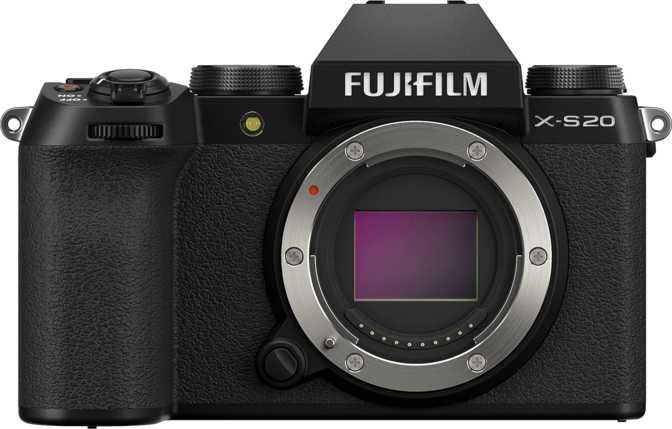
Fujifilm X-S20 Review: A Powerful Mirrorless Built for Creators and Enthusiasts
CamerasOverall Score
4.2
out of 5.0
Performance at a Glance
The mirrorless camera market is crowded with options that either overwhelm beginners or bore enthusiasts. The Fujifilm X-S20 refuses that compromise. It sits at a meaningful crossroads: a camera that hands first-time mirrorless shooters a genuinely capable tool, while also offering enough depth — in image quality, video performance, and creative control — to satisfy photographers who know exactly what they are doing. If you have been waiting to make the jump from a smartphone or an entry-level DSLR, or if you are a content creator who needs one camera that handles both stills and serious video, the X-S20 makes a compelling case for itself.
Design and Build Quality
Physical dimensions, ergonomics, screen, viewfinder, and what is missing
Physical Dimensions and Handling
At roughly 128mm wide, 85mm tall, and 65mm deep, the X-S20 is genuinely pocketable in a jacket and comfortable in a small bag. It weighs just under 500 grams with battery and card inserted — light enough for all-day carry, substantial enough that it does not feel like a toy. The grip is noticeably deeper than many of Fujifilm's flatter, more retro-styled bodies, which is a deliberate design choice: this camera prioritizes ergonomics and accessibility over aesthetic minimalism.
The physical dial layout gives you tactile, direct access to key exposure controls without needing to dig through menus — a hallmark of Fujifilm's design philosophy that carries over from the X-T series. For those new to manual exposure, this encourages learning by doing in a way that touchscreen-only interfaces simply do not.
Screen and Viewfinder
The fully articulating rear screen flips out completely to face forward, making self-recording, video logging, and waist-level street photography natural rather than awkward. At 3 inches with a resolution of 1,840,000 dots, it is sharp enough to accurately judge focus and color. Touch response allows you to tap to set focus or navigate menus intuitively.
The electronic viewfinder provides 100% frame coverage — exactly what you frame is exactly what you capture. This is particularly valuable when composing tightly or shooting in bright outdoor conditions where the rear screen is harder to read. Users coming from optical viewfinders may need a brief adjustment period, but the 100% accuracy quickly becomes a genuine advantage.
Physical Specifications
- Width127.7 mm
- Height85.1 mm
- Depth65.4 mm
- Weight491 g (with battery & card)
- Screen Size3 inches
- Screen Resolution1,840,000 dots
- Viewfinder TypeElectronic (EVF)
- Viewfinder Coverage100%
- Flip-Out ScreenYes
- TouchscreenYes
- Hot ShoeYes (Standard)
- Operating Temperature0 °C to 40 °C
No Weather Sealing — A Real Limitation
The X-S20 carries no splash or dust resistance rating. Its operating temperature range covers 0°C to 40°C, which suits most normal shooting environments but excludes cold-weather adventures, coastal conditions, and industrial settings. If reliable weather protection is non-negotiable for your use case, explore other bodies in the Fujifilm lineup or budget for a quality rain cover.
Sensor and Image Quality
What the 26 MP APS-C BSI sensor actually delivers in daily shooting
Resolution You Can Actually Use
The 26-megapixel APS-C sensor uses a back-side illuminated (BSI) design — a distinction worth understanding. In a BSI sensor, the light-gathering circuitry sits behind the light-sensitive elements rather than in front of them. The practical result is improved light capture efficiency, which translates to cleaner images when the light gets challenging. For a camera aimed partly at beginners, this is quietly significant: you get more forgiving performance at dusk, indoors, and in mixed lighting without needing to think about it.
26 megapixels on an APS-C sensor delivers files large enough for significant cropping in post-production — useful for wildlife photographers who cannot always get as close as they would like — while remaining manageable in terms of file sizes and storage. For prints, 26 megapixels handles poster-sized output with ease.
Autofocus: Responsive and Intelligent
The 425-point phase-detection autofocus system covers a wide area of the frame. Phase-detection AF predicts where a subject is moving rather than reacting after the fact — which is why modern mirrorless cameras feel snappy and confident rather than hesitant.
Subject tracking locks onto a moving subject — a person walking, an athlete mid-stride, a pet bounding across a room — and holds focus across a burst of frames. Touch AF via the rear screen lets you point your finger where you want focus and the camera responds immediately. For portrait photographers and parents photographing active children, the combination of tracking and touch AF removes one of the biggest technical barriers to consistently sharp results.
ISO Performance in Plain English
The native ISO range reaches to 12,800 — meaningfully usable for indoor and low-light work when paired with the BSI sensor design. The expanded range extends to 51,200, which exists for emergencies rather than regular use; significant digital noise becomes apparent at those upper extremes. Think of it as a safety net: available when you need it, not a routine tool.
7-Stop IBIS: Why This Matters
Seven stops of in-body image stabilization is a substantial figure, verified under the CIPA standard. In practical terms: IBIS allows you to shoot handheld at shutter speeds approximately 128 times longer than would otherwise cause blur. For available-light photography, architectural interiors, travel without a tripod, and handheld video, this is one of the X-S20's most valuable attributes. It can also combine with optically stabilized lenses for even greater effect.
Speed and Burst Performance
Shutter speeds, burst rates, and what they mean for action photography
At 20 frames per second continuous shooting, the X-S20 operates at a rate more commonly associated with enthusiast and professional bodies. To put that in perspective: at 20 fps, holding the shutter for one second produces 20 distinct frames — a full sequence of a jump, a facial expression changing, a ball leaving a pitcher's hand. This is not a spec that only sports photographers care about; it also builds confidence that you will not miss the decisive moment in any fast-moving situation.
The fastest mechanical shutter speed reaches 1/4000s, while the electronic shutter pushes to an extremely brief 1/32,000s — useful in bright sunlight when you want to shoot wide open with a fast lens to achieve background blur without overexposing the image.
Flash synchronization is supported up to 1/180s, which is standard for mirrorless cameras of this class. A built-in flash handles quick-fill lighting, while the standard hot shoe accepts external flashes and radio triggers for those building a more controlled lighting setup.
20
fps Burst Rate
425
AF Points
1/32k
Electronic Shutter
1/180
Flash Sync Speed
Video Capability
4K quality, audio control, and why this is a genuine content creation tool
Resolution and Recording Quality
The X-S20 records video up to 4K at 30 frames per second — specifically at 4,160 pixels horizontally, which slightly exceeds the conventional 4K standard and delivers marginally more detail. The data rate at which that video is recorded reaches 360 megabits per second. Without getting buried in numbers: that is a high-quality recording that retains substantial tonal and color information, which matters significantly if you intend to color-grade your footage in post-production.
A 24p cinema mode is available for filmmakers who prefer the motion characteristics associated with theatrical films. Slow-motion recording is also supported, allowing you to produce dramatic slowed footage from faster real-world action.
Phase-detection AF remains active during video recording, with continuous autofocus maintaining focus as you or your subject moves. On lesser systems, video AF can hunt visibly on-screen, a problem that is immediately obvious to viewers. The X-S20 keeps that issue at bay.
Audio: Ready for Professional Sound
A 3.5mm microphone input accepts external microphones — a feature that separates serious video cameras from basic ones. The built-in stereo microphone pair handles casual recording adequately, but anyone doing interviews, YouTube content, or documentary work will plug in a dedicated microphone through that jack. A headphone output allows real-time audio monitoring during recording: you can hear exactly what is being captured, which is the only way to catch audio problems before they ruin a take.
3.5mm Microphone Input
Connect professional external microphones for broadcast-quality audio
Headphone Monitoring Jack
Real-time audio monitoring catches problems before they ruin a take
24p Cinema Mode
Cinematic frame rate for filmmakers who want theatrical motion aesthetics
Battery Life and Charging
Real-world endurance and what USB-C charging means for travel shooters
The CIPA-rated battery life of 750 shots per charge is a healthy figure for a mirrorless camera of this size. CIPA ratings are measured under standardized — and somewhat conservative — conditions, so real-world usage varies depending on how heavily you use the EVF, live view, and wireless features. For a full day of moderate shooting, most users will not need to reach for a spare battery. For longer events, travel days, or video-heavy sessions, carrying a second battery is sensible precaution.
The battery is removable and rechargeable via USB-C, and the camera displays remaining charge level so you are never surprised by a dead battery at a critical moment. USB-C charging means you can top up from a laptop, a power bank, or any modern phone charger — a genuinely useful convenience when traveling without dedicated camera chargers.
750
Shots per charge (CIPA)
USB-C Charging
Level Indicator
Removable
Connectivity and Ecosystem
Wireless features, ports, memory, and the Fujifilm X mount lens system
Wi-Fi support covers both the 802.11n and the faster 802.11ac standards, enabling quick wireless image transfer to a smartphone. Bluetooth 4.2 maintains a persistent low-power connection to a paired phone, enabling remote control and seamless image transfer without manually initiating Wi-Fi each time.
No NFC for one-tap pairing and no built-in GPS for geotagging. Location data requires the companion smartphone app.
- USB-C (USB 3.2) for fast data transfer and charging
- HDMI output for external monitors and recorders
- 3.5mm mic input and headphone jack
- Standard hot shoe for external flash accessories
- Single card slot only — no in-camera backup recording
The X-S20 uses the Fujifilm X mount, one of the most mature and diverse APS-C lens systems available. From compact primes to professional zooms to specialty lenses, the lineup is broad enough to serve any photographic direction.
This matters for long-term investment: your lenses follow you across future Fujifilm bodies, making the X-S20 a reasonable entry point to a system you can grow within rather than outgrow.
The X-Processor 5 and Film Simulations
The creative differentiator that sets Fujifilm apart from every other camera brand
The X-Processor 5 is Fujifilm's current generation image processor. Beyond raw computational speed — which enables the 20 fps burst rate and the demanding 4K video pipeline — it powers Fujifilm's Film Simulation modes: a distinctive creative feature unavailable on most competing brands.
These simulations recreate the color science and tonal characteristics of specific Fujifilm film stocks. The vivid, saturated look of Velvia. The muted, cinematic quality of ETERNA. The high-contrast punch of Acros. For photographers and videographers who want to establish a visual style without extensive post-processing, or who simply prefer film-like rendering to clinical digital accuracy, this is a meaningful differentiator and not marketing language.
RAW file shooting is fully supported, including lossless compressed RAW — meaning you retain maximum image data for post-production without filling cards at an excessive rate. In-camera HDR and panorama creation round out the options for those who prefer finished files straight from camera.
Velvia
Vivid, Saturated
Acros
High-Contrast Mono
ETERNA
Cinematic, Muted
Classic Chrome
Faded Documentary
How the X-S20 Compares to Its Closest Rivals
Side-by-side comparison against the most logical alternatives at this price point
| Feature | Fujifilm X-S20 | Sony ZV-E10 II | OM System OM-5 | Nikon Z30 |
|---|---|---|---|---|
| Sensor Size | APS-C | APS-C | Micro Four Thirds | APS-C |
| Resolution | 26 MP | 26 MP | 20 MP | 20.9 MP |
| In-Body Stabilization | 7-Stop | Yes | 5-Axis | |
| Weather Sealing | Yes | |||
| Articulating Screen | Flip-Out | Flip-Out | Tilting | Flip-Out |
| Dual Card Slots | ||||
| 4K Video | 360 Mbps | Yes | Yes | Yes |
| Mic Input | ||||
| Film Simulations | Exclusive | |||
| Lens Ecosystem | X Mount (Mature) | E Mount (Largest) | MFT (Broad) | Z Mount (Growing) |
vs. Sony ZV-E10 II
Sony's E mount offers the largest third-party lens ecosystem of any mirrorless system. The X-S20 counters with Fujifilm's film simulation rendering, a longer history of APS-C refinement, and a superior grip design. Both are strong content creation choices; lens ecosystem size gives Sony a long-term edge for some buyers.
vs. OM System OM-5
The OM-5 is the only weather-sealed option in this comparison — a gap that outdoors-focused photographers cannot overlook. Its Micro Four Thirds sensor captures somewhat less light than APS-C, but the mature MFT ecosystem is wide and capable. If you shoot in rain or dust regularly, the OM-5 wins that specific argument.
vs. Nikon Z30
The Nikon Z30 forgoes in-body stabilization entirely — a significant gap for handheld video shooters. Its Z mount is growing but still smaller than X mount at this price point. For content creators who depend on stable handheld footage, the X-S20's IBIS advantage is hard to overlook.
Honest Assessment: Strengths and Weaknesses
Industry-leading stabilization for its class
Seven stops of IBIS is a level of performance more commonly found in higher-tier bodies. For handheld video and low-light stills, it fundamentally changes what you can achieve without a tripod.
Thorough and professional video specification
4K at 360 Mbps, proper audio inputs, headphone monitoring, and continuous phase-detection AF combine into a package content creators can rely on rather than work around.
Film simulations as genuine creative tools
Available during video recording and for stills, these produce meaningfully different, often beautiful color science straight from camera — not a marketing addition.
Ergonomics designed for extended shooting
The deep grip, physical dials, and articulating touchscreen make extended shooting sessions comfortable and intuitive for both beginners and experienced photographers.
Mature, expandable X mount ecosystem
Entering the Fujifilm X system means access to a deep and well-regarded lens library that grows with your ambitions over multiple body generations.
No weather sealing
For outdoor photographers who shoot in unpredictable conditions — rain, dust, beach spray — the absence of any splash or dust resistance rating is a meaningful gap that competing bodies fill.
Single memory card slot
No backup recording, no overflow between cards. For professional work where data redundancy is critical, this creates risk that a second slot would eliminate.
No NFC or built-in GPS
Bluetooth pairing requires more steps than a simple NFC tap, and geotagging images requires routing through the companion smartphone app rather than happening automatically.
Older Bluetooth specification
Bluetooth 4.2 is functionally capable but not the current standard. For most use cases this goes unnoticed, but it is a sign of a spec that could have been refreshed.
Who Should Buy the Fujifilm X-S20 — and Who Should Not
Matching the right buyer to the right camera is more valuable than any spec comparison
The X-S20 is ideal for:
- Content creators and YouTubers who need strong 4K video, a self-facing flip-out screen, excellent in-body stabilization for handheld shooting, and proper audio inputs in one camera.
- First-time mirrorless buyers stepping up from a smartphone or entry-level DSLR who want a camera that will grow with them rather than limit them within a year.
- Travel photographers who value compact size, all-day battery life, and USB-C charging without needing to carry dedicated chargers across time zones.
- Creative photographers who want to develop a distinct visual style through film simulations without spending hours in post-production software.
Look elsewhere if you:
- Shoot regularly in rain, dust, or marine environments and need a sealed body you can trust without a rain cover.
- Require professional data redundancy through dual card slots, such as wedding photographers or documentary filmmakers for whom lost footage is unacceptable.
- Operate in extreme cold regularly — below freezing point conditions for winter sports or polar environments push beyond the camera's specified operating range.
- Have significant investment in another mount system — adapting lenses from other mounts works but may affect autofocus performance and overall reliability.
Common Buyer Questions Answered
Answers to what real buyers search for before making a purchase decision
Final Verdict
Fujifilm X-S20: A Firm Recommendation
The Fujifilm X-S20 is the right camera for a specific, clearly defined buyer. If you are a content creator who needs strong 4K video with proper audio, excellent in-body stabilization for handheld shooting, and a flip-out screen for self-recording, the X-S20 delivers on all of those without compromise. If you are a photographer stepping into APS-C mirrorless for the first time and want a camera that will grow with you rather than limit you within a year, the X-S20 offers the depth, the lens ecosystem, and the image quality to carry you a long way.
The people who should look elsewhere are those who need weather protection for outdoor and adventure shooting, photographers who require dual card slots for professional data security, or buyers whose entire existing lens investment is in another mount system.
For the majority of its intended audience, the X-S20 is not a compromise — it is a deliberate, well-executed tool that gets a lot right and asks for very little in return.
Overall Rating
4.2
Best For
Content creators & vloggers
First-time mirrorless buyers
Travel photographers
Hybrid photo & video shooters