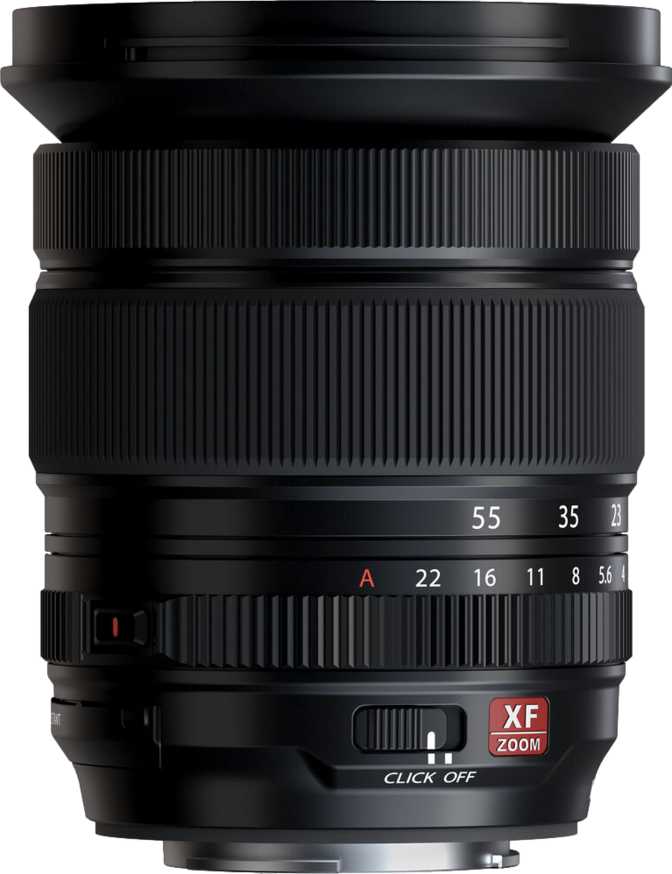
Fujifilm XF 16-55mm f/2.8 R LM WR II – Full Review & Real-World Test
Camera LensesThe definitive standard zoom for Fujifilm X-mount professionals. A constant f/2.8 aperture, weather sealing, and — finally — built-in optical stabilization make this second generation the complete package.
Build Quality and Physical Design
Construction, materials, and handling
A Lens Built to Last
Pick up the XF 16-55mm f/2.8 R LM WR II and the first thing you notice is that it feels like a professional tool. The barrel is constructed with a metal mount at the base — not the plastic-threaded fittings found on consumer lenses — which matters enormously when you're swapping lenses frequently in the field. Metal-on-metal contact maintains consistent alignment and survives the wear that eventually degrades plastic mounts.
The lens weighs 410 grams, which places it firmly in the "substantial" category. This isn't a lens you forget is on your camera. Paired with a mid-size X-series body, the combination is front-heavy enough that shooting one-handed for extended periods becomes tiring. That said, the weight is a direct consequence of the optical formula, the weather sealing, and the internal stabilization mechanism — all things you actually want.
Weather Sealing That Works
The weather resistance on this lens is genuine, not marketing language. Seals are built into the construction to resist moisture and dust infiltration, which means you can shoot in light rain, near ocean spray, or in dusty environments without protective covers. Paired with a weather-sealed Fujifilm body, you get a system that holds up where lesser equipment retreats to a camera bag.
- Weight 410 g
- Filter Thread 72 mm
- Weather Sealed Yes
- Metal Mount Yes
- Front Element Rotation Fixed
- Reversible Hood Yes
- Lens Mount Fujifilm X
Focal Range: What 16-55mm Actually Means
Coverage, field of view, and real-world versatility
The Most Useful Zoom Range, Period
On Fujifilm's APS-C sensor format, the 16-55mm focal range translates to approximately 24-84mm in terms of the field of view you'd get from a full-frame camera. That's not an accident — it's the most versatile span in photography. At the wide end, you have genuine wide-angle coverage for interiors, landscapes, architecture, and group shots. At the long end, you're into portrait-flattering compression territory ideal for headshots, detail shots, and moderate telephoto work.
The range between those two extremes covers the classic "normal" focal length that approximates natural human vision, and the 50mm equivalent — the gold standard for street and documentary work. In practical terms, this single lens covers what many photographers carry as three or four primes.
The Angle of View in Practice
At its widest setting, the lens captures an 83-degree angle of view — wide enough to make small spaces feel open and to fit a full landscape scene without stepping back. At 55mm, the angle narrows to 29 degrees, compressing subjects in the characteristically flattering way that makes people look their best in portraits. The transition between these two extremes is smooth and continuous.
| Focal Length | FF Equivalent | Angle of View | Best For |
|---|---|---|---|
| 16 mm | ~24 mm | 83.2° | Architecture, landscapes, interiors |
| 24 mm | ~36 mm | ~63° | Street, documentary, travel |
| 35 mm | ~53 mm | ~45° | Everyday, reportage, events |
| 55 mm | ~84 mm | 29° | Portraits, details, compression |
Constant f/2.8 Aperture: Why It Changes Everything
Aperture performance, low light capability, and background separation
What "Constant" Means
Many zoom lenses have variable maximum apertures — they stop down automatically as you zoom in, robbing you of exposure without warning. This lens holds f/2.8 at every focal length from 16mm through 55mm. Set your exposure at 16mm, zoom to 55mm, and your settings remain valid. In fast-moving or low-light situations, that consistency is the difference between getting the shot and missing it.
Low Light Performance
f/2.8 on APS-C is a meaningful aperture. It lets in enough light to shoot in dimly lit restaurants, evening events, and indoor venues without pushing sensitivity high enough to introduce significant noise. It also produces genuine background blur — the kind that separates a subject cleanly from a busy background — particularly at the 55mm end where focal length compounds the effect.
Nine Rounded Blades
The diaphragm uses nine rounded blades rather than simpler straight-bladed designs found in budget lenses. The result is that out-of-focus light sources — candles, streetlights, fairy lights — render as smooth circular shapes rather than harsh polygons. For portrait, event, and lifestyle photographers, this contributes directly to the aesthetic quality of the final image.
Optical Image Stabilization: The Upgrade That Defines This Generation
The feature the original lacked — and why it matters
The original version of this lens had no stabilization at all — a significant compromise for a professional zoom in this price category. The XF 16-55mm f/2.8 R LM WR II corrects that entirely. Built-in optical stabilization physically compensates for camera shake before it reaches the sensor, allowing sharper handheld images at slower shutter speeds than would otherwise be possible.
In low light, you can use slower shutter speeds to maintain a lower sensitivity setting, preserving image quality. For video, stabilization reduces the micro-vibrations that make handheld footage look amateurish. For photographers who rarely carry a tripod, it expands the practical range of conditions where this lens performs confidently.
| Feature | Gen 1 | Gen 2 (This Lens) |
|---|---|---|
| Optical Stabilization | None | Built-in OIS |
| IBIS Coordination | No | Yes |
| Weather Sealing | Yes | Yes |
| Constant f/2.8 | Yes | Yes |
| Metal Mount | Yes | Yes |
Focusing System: Fast, Silent, and Flexible
Autofocus motor, manual control, and close focus capability
Internal Autofocus Motor
The lens houses its own dedicated focus motor rather than relying on a drive mechanism in the camera body. This motor is silent in operation — quiet enough that it causes no disruption during video recording, a critical consideration for hybrid photographers and filmmakers using an external microphone.
Focus speed benefits from the linear motor design, which responds quickly to tracking demands — moving subjects, sudden recompositions, and the fast-paced situations that define event and documentary photography.
Full-Time Manual Focus Override
At any point during shooting, you can reach for the focus ring and override the autofocus without pressing a button or flipping a switch. This full-time manual focus capability is the preferred workflow for portrait photographers who want precise control over exactly which part of the face is sharp, and for any situation where autofocus might chase the wrong element in a complex scene.
Close Focus Capability
The minimum focus distance of 30 centimeters — measured from the sensor plane — means you can get reasonably close to small subjects. At 55mm and maximum aperture, this produces 0.21× magnification, which is enough for detailed product shots, food photography, and botanical close-ups. It falls short of dedicated macro territory, but for the incidental close-up work that comes up in travel, lifestyle, and commercial photography, the capability is genuinely useful.
Real-World Usage: Who This Lens Is For
Matching the lens to your photography style and needs
-
Wedding and event photographers who need wide venue shots at the ceremony and tight portraits during the reception — without swapping lenses.
-
Photojournalists and documentary shooters who move quickly in unpredictable environments and depend on weather sealing.
-
Commercial photographers shooting products, interiors, and environmental portraits across varying light conditions.
-
Hybrid video creators who need consistent exposure during zoomed recordings with silent autofocus transitions.
-
Travel photographers who want to leave most of their kit behind without feeling optically limited.
-
Shoot primarily at a single focal length. A prime at that focal length will offer a larger aperture, smaller body, and often sharper output at lower cost.
-
Prioritize compact portability. At 410g, this lens pushes against one of the core appeals of the X-mount system.
-
Have a tight budget. The XF 18-55mm f/2.8-4 delivers strong results at a fraction of the price for casual and outdoor daylight shooting.
-
Need dedicated macro capability. The 0.21× magnification is useful but not a substitute for a true macro lens.
-
Need extended telephoto reach. The 55mm ceiling leaves wildlife and sports photographers wanting more.
Competitive Positioning
How it stacks up against the logical alternatives in the X-mount ecosystem
| Lens | Aperture | Stabilization | Weight | Key Trade-off |
|---|---|---|---|---|
| XF 16-55mm f/2.8 R LM WR II This Lens | f/2.8 constant | OIS | 410 g | Premium price, full professional capability |
| Fujifilm XF 18-55mm f/2.8-4 R LM OIS | f/2.8–4 variable | OIS | 310 g | Lighter and cheaper; loses f/2.8 at longer focal lengths |
| Fujifilm XF 16-80mm f/4 R OIS WR | f/4 constant | OIS | 440 g | Longer reach, but a full stop slower throughout |
| Third-party f/2.8 zooms for X-mount | Varies | Varies | Varies | Often lighter or cheaper; may lack sealing or native AF performance |
The XF 18-55mm is the clearest comparison because many X-mount shooters already own it. The decision comes down to whether constant f/2.8 across the full range matters for your work. For event and low-light photographers, it does. For outdoor daytime shooters, it may not justify the price gap. The XF 16-80mm f/4 offers more useful zoom reach at the cost of a full stop of light — photographers who prioritize range over low-light performance should consider it seriously.
Honest Assessment: Strengths and Limitations
A balanced look at what this lens delivers — and where it asks for compromise
The strengths of the XF 16-55mm f/2.8 R LM WR II are genuine and significant. The focal range is the most practically useful in photography. The constant f/2.8 aperture eliminates a real-world frustration that affects lesser zoom lenses — the exposure shift that catches photographers off guard mid-zoom.
The addition of optical image stabilization in this generation addresses the single most legitimate criticism of its predecessor. For a professional-grade zoom at this price, the absence of OIS in the first version was an unusual gap that this lens closes decisively.
The weather sealing and metal construction are not aesthetic choices — they extend the working life and working conditions of the lens in ways that matter on real assignments. A lens that performs reliably in rain, dust, and extreme temperatures is a lens you can depend on professionally.
At 410 grams, this lens will make itself felt on smaller Fujifilm bodies. Shooters who value compactness — one of the core reasons people choose the X-mount system over full-frame — will find it pushes against that philosophy. The combination of body and lens leans front-heavy in a way that longer shooting sessions make noticeable.
The 72mm filter diameter means any existing filter collection built around smaller lenses will need to be extended or adapted. That's a practical and financial consideration for photographers who shoot heavily with polarizers or ND filters.
The price positions this lens as an investment rather than a casual purchase. It sits at the premium tier of the Fujifilm lens lineup, and the jump from more affordable alternatives is meaningful. Whether it's justified depends entirely on how much you depend on the specific capabilities it provides.
Questions Real Buyers Ask Before Purchasing
Straightforward answers to the searches that brought you here
The Fujifilm XF 16-55mm f/2.8 R LM WR II earns its place as the benchmark standard zoom for the X-mount system. The core formula — the most versatile focal range, a constant wide aperture, weather-sealed professional construction — was already strong in the first generation. Adding optical stabilization completes what was always an incomplete picture.
This is the right lens for photographers who work professionally or who shoot enough to justify a serious investment in a single versatile optic. Wedding photographers, event shooters, commercial photographers, documentary workers, and video-oriented hybrid creators will find it handles the majority of their work with no excuses and no caveats.
If you've reached the point where your lens is your limiting factor — where you need to know it will perform in rain, in dim light, in fast-moving situations, with the full aperture open even at the long end — this is the answer.
-
Build Quality
4.8
-
Optics
4.7
-
Autofocus
4.6
-
Versatility
4.8
-
Value
4.6