40.2 MP
Stacked APS-C Sensor
7-Stop
CIPA-Rated IBIS
360 Mbps
Max Video Bitrate
438 g
Body-Only Weight
Overall Score
Ratings at a Glance
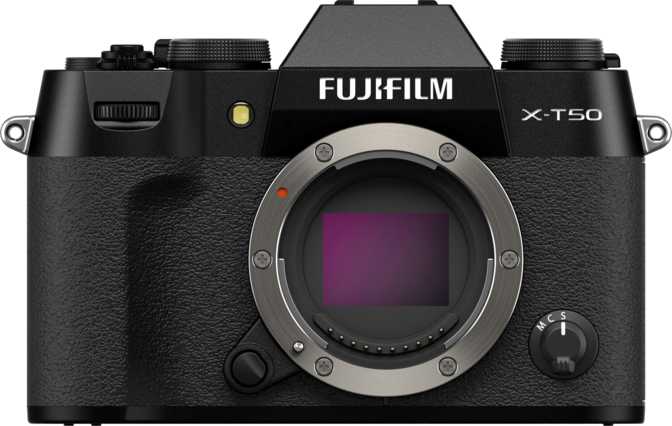
The Fujifilm X-T50 occupies a rare position in the mirrorless market: a body compact enough to carry everywhere, yet housing a sensor resolution that rivals dedicated studio cameras. For photographers who have always felt forced to choose between portability and image quality, this camera makes a serious argument that the trade-off is no longer inevitable. What makes it worth close attention is not any single specification — it is the combination. A high-resolution stacked sensor, in-body image stabilization rated to a class-leading seven stops, and a fully articulating touchscreen are features that typically appear across separate camera bodies from most manufacturers. Fujifilm has compressed them into a chassis lighter than a typical compact zoom lens — and that compression comes with real costs that deserve honest examination.
Design and Build Quality
Physical experience, form factor, and build considerations
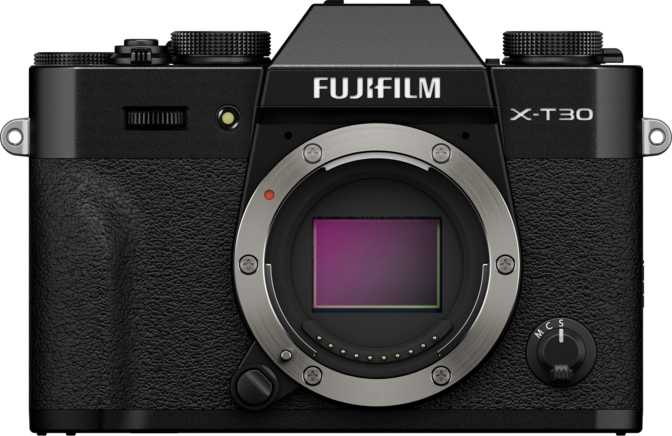
At 123.8 mm wide, 84 mm tall, and just under 49 mm deep, the X-T50 is genuinely small for what it contains. Weighing 438 grams body-only, it sits comfortably in one hand without the top-heaviness that plagues many mirrorless bodies when fitted with larger lenses. The body follows Fujifilm's X-T design language — a rectangular, rangefinder-influenced form with physical dials prominent on the top plate. The tactile control layout means you can check and adjust exposure settings by feel without pulling your eye from the viewfinder, which has genuine practical value in fast-moving shooting situations.
Body Dimensions
- Width
- 123.8 mm
- Height
- 84 mm
- Depth
- 48.8 mm
- Weight (body)
- 438 g
- Hot Shoe
- Yes (standard)
- Built-in Flash
- Yes
Screen and Viewfinder
- Screen Size
- 3 inch
- Screen Resolution
- 1,840k dots
- Touch Screen
- Yes (full)
- Screen Type
- Vari-angle flip-out
- EVF Coverage
- 100%
- Tilting EVF
- No
The flip-out rear screen is a full vari-angle design, rotating on a side hinge so it can face forward for self-shooting, angle upward for low-level compositions, or tuck flat against the body when not in use. For photographers who shoot from unconventional angles — street work from the hip, documentary coverage in tight spaces, architecture requiring ground-level framing — this is significantly more useful than a basic tilting mechanism. Touch operation is comprehensive: focus point selection, menu navigation, and full playback control are all supported.
No Weather Sealing — A Critical Limitation
The X-T50 carries absolutely no weather sealing. No gaskets, no splash protection, no dust resistance. The 0–40°C operating temperature range confirms this is a camera designed for controlled, dry environments only. If you shoot regularly in rain, dusty conditions, or near water, this is a hard constraint that image quality cannot compensate for. This single omission disqualifies the X-T50 for a significant portion of outdoor photographers.
Sensor and Image Quality
Resolution, sensor architecture, and real-world image output
The X-T50 uses a 40.2-megapixel back-side illuminated, stacked CMOS sensor — and each of those descriptors carries practical weight. Most APS-C mirrorless cameras ship with sensors in the 24–26 megapixel range, meaning the X-T50 delivers roughly 60% more pixel data per frame than typical competition in this size class. Powered by the X-Processor 5, the camera handles the demands of that pixel count without degrading responsiveness.
The Resolution Advantage
The extra resolution delivers three direct benefits: large-format prints that stay sharp at gallery scale, aggressive post-crop flexibility that lets you recompose after the shot, and fine-detail capture in complex scenes — fabric textures, architectural details, dense foliage — that lower-resolution sensors simply cannot fully resolve.
Stacked CMOS Explained
In a stacked sensor, the processing circuitry layers beneath the photodiodes rather than beside them, enabling dramatically faster data readout. This reduces rolling shutter distortion in video and fast-action stills, and makes the electronic shutter viable for subjects that would defeat conventional sensors. The BSI architecture additionally improves light-capture efficiency across all lighting conditions.
Sensitivity in Context
The native sensitivity ceiling reaches ISO 12,800, with an expanded mode extending to ISO 51,200. For web publishing, screen display, and standard print sizes, the expanded range provides real flexibility. For large-format print work where pixel-level detail is the priority, staying within the native range is where this sensor performs at its best.
Full Sensor Specifications
| Specification | Value |
|---|---|
| Sensor Format | APS-C |
| Resolution | 40.2 Megapixels |
| Sensor Architecture | Stacked BSI CMOS |
| Image Processor | X-Processor 5 |
| Native ISO Range | Up to ISO 12,800 |
| Expanded ISO | Up to ISO 51,200 |
| Lens Mount | Fujifilm X |
| RAW Output | Yes |
| Lossless Compressed RAW | Not supported |
| Built-in HDR Mode | Yes |
| In-Camera Panorama | Yes |
Autofocus System
Phase detection, subject tracking, and focus accuracy in stills and video
The X-T50 deploys 425 individual autofocus points covering the frame, using phase-detection technology for both stills and video. Phase detection calculates subject distance by comparing two slightly offset images simultaneously — it is inherently faster and more decisive than the contrast-based systems older mirrorless cameras relied on. The X-Processor 5 handles AF calculations, keeping the system responsive even during demanding shooting scenarios.
Subject tracking is present and functional: the camera locks onto a subject and maintains focus as it moves through the frame. Touch autofocus lets you instantly reposition the focus point by tapping the rear screen — particularly useful when composing on the flip-out display at an angle. Smartphone remote triggering via the Fujifilm companion app adds further flexibility for travel self-portraits and remote setups.
Autofocus Features
- 425 phase-detection focus points
- Phase detection active in both stills and video
- Subject tracking and continuous AF lock
- Touch autofocus via full touchscreen
- Continuous AF tracking during video recording
- Manual focus with full manual override
- Smartphone remote trigger support
Image Stabilization: 7-Stop IBIS
What class-leading in-body stabilization actually means for your photography
In-body image stabilization rated at seven stops by CIPA testing standards is genuinely exceptional for a camera in this size and price class. To make this tangible: a CIPA rating of seven stops means that a shutter speed which would produce motion blur in an unstabilized camera — say, 1/8 of a second when hand-held — can theoretically yield a sharp, blur-free frame on the X-T50. Real-world results vary based on subject movement, focal length, and individual technique, but even being conservatively optimistic, this level of stabilization changes what is achievable in low light.
Hand-holding at longer exposures in dim interiors, shooting handheld at extended focal lengths without a tripod, and capturing sharp frames under available light all become meaningfully more achievable. The system can also combine with optically stabilized Fujifilm X-mount lenses, stacking compensation beyond what either system provides in isolation — a real advantage when using longer glass.
7 Stops
CIPA-Rated Stabilization
Combinable with optically stabilized Fujifilm X-mount lenses for additional compensation beyond either system alone.
Viewfinder and Screen Experience
EVF coverage, display quality, and composing your shots
The electronic viewfinder provides 100% frame coverage — what you see through the eyepiece is precisely what the sensor captures, with no hidden edges. This eliminates the subtle compositional inaccuracies that partial-coverage viewfinders introduce, which matters most in architecture, tight portrait framing, or any situation where exact edge placement is required. There is no tilting viewfinder mechanism, which is a minor note for shooters who rely on that feature.
The 3-inch rear touchscreen resolves at 1.84 million dots — sufficient for composition and menu navigation, though not the ultra-sharp panels found on some higher-tier bodies. The vari-angle flip-out design adds meaningful flexibility: it covers self-shooting, low-angle framing, and overhead composition without awkward camera positioning. Touch operation is comprehensive rather than partial — focus point selection, menu navigation, and playback all respond to touch input.
Shutter System
Mechanical shutter, electronic shutter, flash sync, and continuous shooting speed
The X-T50 offers both mechanical and electronic shutter paths. The mechanical shutter tops out at 1/4000 of a second, covering the vast majority of everyday shooting scenarios. The electronic shutter extends to a far higher maximum — approaching 1/180,000 of a second — enabling shooting in very bright light at wide apertures without requiring neutral density filtration. This is directly useful for portrait photographers who want background-separating wide apertures in bright outdoor sun.
The stacked sensor's fast readout speeds make the electronic shutter viable for more subjects than conventional sensors, where rolling shutter distortion limits its usefulness. Continuous mechanical shooting runs at 5 frames per second — workable for casual action but not suited to demanding sports or wildlife requiring sustained high burst rates. Flash sync operates at 1/180 second, a standard value compatible with most external flash units.
Shutter Specifications
- Mechanical Max Speed
- 1/4000 s
- Electronic Max Speed
- 1/180,000 s
- Longest Exposure
- 30 s
- Flash Sync Speed
- 1/180 s
- Continuous Shooting
- 5 fps (mech.)
- Two-Stage Shutter
- Yes
Video Capabilities
Resolution, bitrate, audio connectivity, and what this camera offers hybrid shooters
Resolution and Data Rate
The X-T50 records video at up to 4,160 pixels wide at 30 frames per second — a horizontal resolution that exceeds conventional 4K (3,840-pixel width). The maximum recording bitrate of 360 Mbps is high for a camera at this size and price tier. Higher bitrates preserve more image data per frame, which directly affects how footage holds up under color grading and post-production adjustment. Slow-motion recording, timelapse, and a 24p cinema mode are all included — the latter targeting the frame rate most associated with cinematic aesthetics.
Audio for Serious Video Work
The X-T50 includes both a 3.5mm microphone input and a 3.5mm headphone monitoring output. This combination supports proper audio production workflows without adapters or workarounds — and it is not a universal offering at this form factor and price point. Phase-detection continuous autofocus remains active during recording, which matters for solo shooters and run-and-gun videographers who cannot simultaneously manage manual focus and other production responsibilities.
Video Feature Summary
Battery Life
What to expect and how to manage power in the field
Plan for a Spare Battery Before Your First Shoot
The X-T50's CIPA-rated figure of 305 shots per charge is below average for this class. In practice, heavy EVF use, burst shooting, and active stabilization will reduce real-world counts further. A second battery is not optional for full-day shoots — it is standard operating procedure for this camera.
CIPA figures are standardized test results, not field reality. Actual counts vary significantly depending on whether you use the EVF or rear screen, how frequently you shoot in burst mode, and how actively the IBIS system operates. Photographers migrating from larger-bodied cameras with higher-capacity batteries will notice the difference on extended sessions.
The practical saving grace is USB-C charging. The X-T50 can be topped up from a power bank, a laptop, or any standard USB-C wall adapter — no proprietary charger required. For travel photographers, this simplifies kit substantially. A battery level indicator ensures you always know your remaining capacity before it becomes a problem.
Battery Specifications
- CIPA Rating
- 305 shots
- Battery Capacity
- 1,260 mAh
- Removable Battery
- Yes
- USB-C Charging
- Yes
- Battery Indicator
- Yes
Connectivity and Ecosystem
Wireless options, ports, and the Fujifilm X-mount lens system
The X-T50 uses the Fujifilm X lens mount — one of the most mature and well-regarded APS-C lens ecosystems available. From compact pancake primes to weather-sealed telephoto zooms, the range is comprehensive. Because X-mount has been Fujifilm's mirrorless standard for well over a decade, the used lens market is deep and accessible, meaningfully lowering the total cost of building a capable kit.
Wi-Fi 5 (802.11ac) enables fast image transfer to smartphones and computers, remote trigger control via the Fujifilm app, and field backup workflows. Bluetooth 4.2 handles persistent low-power connection for location logging through a paired phone. USB-C with USB 3.2 speeds covers both rapid file transfer and charging from a single cable. There is no GPS, NFC, or dual card slot.
Who Should Buy the Fujifilm X-T50?
Matching the right photographer to the right camera
This Camera Is For You If…
- You are a travel photographer who wants high-resolution files and class-leading stabilization in a body you can carry all day without fatigue.
- You shoot street photography and value tactile dial-based controls and a compact form factor for discreet, reactive work.
- You are a content creator who needs one device that handles stills and video credibly, with proper audio connectivity including mic input and headphone monitoring output.
- You are upgrading from a lower-resolution APS-C body and want a meaningful image quality step without committing to the weight and cost of a full-frame system.
- You already own Fujifilm X-mount lenses and want a new body that maximizes your existing investment.
Look Elsewhere If…
- You shoot outdoors in rain, snow, or dusty environments. The complete absence of weather sealing is an absolute disqualifier for this use case.
- You photograph sports or fast wildlife and need sustained high-frame-rate burst performance. Five frames per second on the mechanical shutter is a genuine limitation.
- You are a working professional where dual card slot redundancy is a non-negotiable requirement for event or assignment work.
- You need higher video frame rates at full resolution — the ceiling is 30fps at maximum output.
- You shoot very high volumes in RAW and need lossless compression to manage storage efficiently. At 40 MP per frame, file sizes accumulate fast.
How It Compares to the Competition
X-T50 versus comparable APS-C mirrorless alternatives at a similar price tier
| Feature | Fujifilm X-T50 | APS-C Competitor A | APS-C Competitor B |
|---|---|---|---|
| Resolution | 40.2 MP | 24–26 MP | 32–33 MP |
| IBIS Rating | 7 stops (CIPA) | 5–6 stops | 5.5 stops |
| Sensor Architecture | Stacked BSI CMOS | BSI CMOS | BSI CMOS |
| Weather Sealing | Not present | Some models | Some models |
| Card Slots | 1 slot only | 1–2 slots | 1–2 slots |
| 3.5mm Audio I/O | Both in & out | Varies by model | Varies by model |
| Max Video Bitrate | 360 Mbps | 100–200 Mbps | 150–250 Mbps |
| Vari-Angle Screen | Yes | Some models | Yes |
Competitor specifications represent typical values across models in this class. Individual models vary. Trophy icon marks where the X-T50 leads its competitive category.
Honest Assessment
A clear-eyed look at where this camera excels and where it genuinely falls short
The X-T50's strengths are real and substantial. The resolution advantage is not marginal — it is genuinely transformative for photographers who print large, crop aggressively, or produce commercial work. The stacked sensor architecture means speed and image quality reinforce each other rather than trade off. The seven-stop IBIS rating changes what is achievable in low light in a way that incremental stabilization improvements simply do not.
- 40.2 MP stacked sensor leads the APS-C compact class by a clear margin
- Seven-stop CIPA IBIS is class-leading and genuinely transforms low-light handheld shooting
- 360 Mbps video with full mic input and headphone output serves serious hybrid creators
- Vari-angle touchscreen adds meaningful flexibility over simpler tilting designs
- Compact 438 g body with access to the full, mature Fujifilm X-mount lens ecosystem
- USB-C charging from any standard adapter removes the proprietary charger dependency
The weaknesses are equally real. The absence of weather sealing at this price and resolution level reads as a deliberate product-line decision rather than an engineering constraint — Fujifilm clearly wants buyers who need environmental protection to step up to higher X-T tiers. The single card slot is a constraint that professionals feel acutely, even if most enthusiast photographers rarely encounter it as an operational problem.
- No weather sealing of any kind — a complete disqualifier for outdoor and adventure shooters
- Single card slot only — no file redundancy for professional event or assignment work
- 5 fps mechanical shutter is modest for sports, birds, or any fast-movement subject
- 305-shot CIPA battery rating demands a spare for any serious full-day session
- No lossless compressed RAW support — large uncompressed files at 40 MP per frame
- Video is capped at 30 fps at full resolution — no higher frame rate option above that
Common Questions Before You Buy
Answers to the questions real buyers search for before purchasing
The Compact APS-C Champion — For the Right Photographer
The Fujifilm X-T50 is the right camera for a specific type of photographer: one who values image resolution, in-body stabilization, and compact portability above weather resistance, continuous burst speed, and dual-card redundancy. That is not a flaw in the design — it is a clear editorial decision that defines exactly who this camera serves.
Overall Score
If your shooting conditions are temperate and predictably dry, your subjects are not primarily high-speed action, and you want the highest-resolution APS-C files available in a body you can carry everywhere, the X-T50 delivers on its core promise without reservation. The sensor, stabilization, and video capabilities are top-tier for this size class.
If weather sealing is non-negotiable, or if you shoot professional events where losing files from a single-slot failure would be professionally catastrophic, look at the broader X-T range or a competing body that addresses those specific needs directly.
Best-in-Class Resolution
7-Stop IBIS
Pro Audio I/O
Carry-Anywhere Body
One final note: buy the spare battery before your first shoot. You will need it.