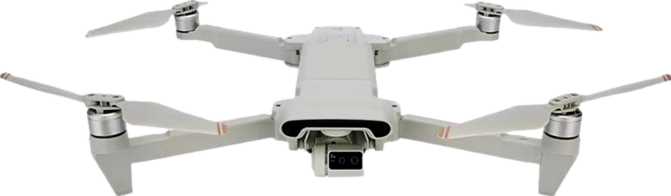
Fimi X8 Tele Max Full Review: Does the 47-Min Flight Time Deliver?
DronesFimi X8 Tele Max — Key Numbers
Core specifications translated into real-world flying impact
There's a specific frustration shared by anyone who has ever piloted a consumer drone: the battery runs out just as the light gets perfect. You're mid-shot, golden hour is peaking, and your aircraft is already descending. The Fimi X8 Tele Max is built around solving that problem. Its near-50-minute flight endurance, paired with a transmission range that genuinely covers the distance a working photographer or videographer needs, places it in a category where most drones simply cannot compete on stamina alone.
But flight time is only part of the story. This aircraft packs a 48-megapixel imaging system capable of 4K/60fps video, a dedicated FPV navigation camera, and a host of intelligent flight tools — all in a frame that holds up to light moisture and real-world weather conditions. Whether you're a landscape shooter, a real estate professional, or a recreational pilot who wants more sky time per outing, this review covers everything you need before making a decision.
Design and Physical Build
Form Factor and Weight
The X8 Tele Max occupies a distinctive position between the consumer and prosumer tiers. At 832 grams, it sits substantially above the sub-250-gram category that has become popular among travelers hoping to sidestep registration requirements — but that weight comes with proportional capability gains. Most countries that mandate registration for heavier drones treat it as a minor administrative step, not a barrier. If you're evaluating an aircraft of this specification, registered-pilot status is almost certainly already your expectation.
The folded dimensions sit comfortably in the mid-size category. It packs down for transport, and while it won't disappear into a daypack the way the lightest mini drones do, a standard drone backpack accommodates it without any awkward compromises. It travels as carry-on luggage without drama.
Splashproof Construction
Weather sealing on a consumer drone is still far from standard. Coastal shooting, morning mist, light rain — conditions that would ground many alternatives — won't automatically end your session.
Think of the sealing as a buffer against unpredictable conditions, not clearance to fly through storms. For pilots who regularly work in coastal, lakeside, or mist-prone environments, that buffer is worth real money.
Operating Temperature Limit
The aircraft is rated down to 0°C at its lower limit. Sub-zero conditions push the X8 Tele Max outside its designed operating range.
Battery chemistry delivers less capacity as temperatures approach the lower boundary. Expect shorter effective flight times in cold conditions — this is a drone optimized for temperate to warm climates.
Flight Performance
Where the X8 Tele Max genuinely separates itself from the field.
47-Minute Endurance
Near-50-minute maximum flight time is a shift in creative workflow. You hold a position longer. You fly further to find the composition you actually want. Real-world practical time sits between 35 and 40 minutes in normal conditions — still far ahead of the 25–35 minute category average for drones in this class.
20 km Transmission
Regulations cap practical range, but a system engineered for 20 kilometers has enormous headroom at the distances most pilots actually fly. Signal dropouts, interference, and video latency become genuinely rare. The real benefit is stability and resilience — not the headline number.
65 km/h Top Speed
Fast enough to track ground vehicles, cyclists, or athletes in motion — scenarios where slower aircraft visibly struggle to keep pace. Combined with intelligent flight mode support, it handles both automated tracking and demanding manual maneuvers without hesitation.
Return to Home
GPS-enabled RTH activates when the pilot triggers it manually, when the battery reaches a critical threshold, or when the control signal is interrupted. The aircraft navigates back to launch coordinates and descends autonomously. Always set RTH altitude above local obstacles before each flight.
Camera System
48-Megapixel Still Photography
The main camera's 48-megapixel sensor captures enough image data to crop aggressively in post-processing and still deliver a commercially usable result. For real estate, construction documentation, land mapping, or any application where edge-of-frame detail matters, that resolution headroom is a genuine tool. Large-format printing at billboard or gallery scale is viable in a way that lower-resolution systems don't support. High pixel counts also enable reframing 4K footage in post without any output quality penalty.
Three Distinct Video Modes
Toggling between three frame-rate approaches within the same shooting day, without changing equipment, is exactly the flexibility working videographers build their gear decisions around:
Bit Rate, Low Light, and HDR
Recording at 100 megabits per second preserves substantial color information and dynamic range in the footage file — critical for any workflow involving color grading. The ISO sensitivity ceiling reaches an unusually high value for a drone in this category, allowing continued capture in dawn, dusk, and overcast conditions where many competing aircraft produce murky results. At moderate sensitivity levels expect clean, detailed imagery; maximum ISO introduces manageable grain. The built-in HDR mode blends multiple exposures to retain detail across bright sky and shadowed ground simultaneously, solving one of aerial photography's most persistent challenges.
Full Camera Specs
- 48 MP CMOS sensor
- 4K/60fps at 100 Mbps
- 24p cinema mode
- Built-in HDR mode
- ISO up to 25,600
- In-camera panorama stitching
- Dedicated FPV camera
- External memory card slot
The main camera handles all publishable photography and video. The FPV camera provides a real-time forward-facing pilot view during flight. Both operate independently and simultaneously.
Battery and Endurance Planning
The 4,650mAh removable battery powering the X8 Tele Max is the correct engineering choice for serious aerial work. A single battery supports a single extended shoot; a second battery doubles the day's potential. Three batteries essentially eliminate downtime for all but the most extended professional sessions.
Removable battery design also extends the drone's useful service life. Battery cells lose capacity over charge cycles — it's a chemical inevitability. In a drone with a removable pack, you replace the battery when it degrades. In a sealed design, you replace the aircraft. Over a multi-year ownership period, that difference matters both financially and practically.
For pilots planning commercial shoots — multi-location days, events, lengthy documentation projects — the combination of long flight time per charge and the option to carry spares makes the X8 Tele Max genuinely practical as a working tool, not just a recreational device.
Multi-Battery Session Planner
Maximum rated values. Real-world results vary with wind, temperature, and flight style. Two batteries are the practical standard for professional sessions.
Intelligent Flight and GPS Integration
The X8 Tele Max supports a range of automated flight modes that reduce the manual workload on complex creative shots. GPS integration underpins all of them, providing precise positioning data that makes automated maneuvers accurate and repeatable regardless of environmental drift.
For solo operators — which describes the majority of drone pilots, who are simultaneously the aircraft controller and the creative director — these modes are what make cinematically complex footage achievable without a dedicated pilot assistant. Automated tracking, orbital moves around a subject, and programmed flight paths turn technically demanding shots into executable procedures.
Who Should Buy the Fimi X8 Tele Max
A specific type of pilot gets the most from this aircraft.
This Drone Is For You If...
- You shoot real estate or property professionally and need extended windows to catch the right light, plus video that holds up for client deliverables.
- You're a travel or landscape photographer working in coastal, lakeside, or mist-prone environments where moisture resistance changes what you can shoot.
- You create video content and want cinematic frame-rate control — 24p, 60fps — and a bit rate that supports serious color grading.
- You're upgrading from an entry-level drone and want substantially longer flight time and better image quality without commercial-grade complexity.
- You work solo and rely on intelligent flight modes to execute tracking shots and complex aerial moves without a second crew member.
Look Elsewhere If...
- You need a lightweight travel companion that stays below registration thresholds. At 832 grams, registration is mandatory in most jurisdictions and the form factor is larger than ultra-compact alternatives.
- You regularly fly in sub-zero temperatures. The 0°C operating floor is a firm limit, and battery performance degrades noticeably as temperatures approach it.
- Your post-production pipeline demands maximum video bit rates, broad codec options, or the most sophisticated multi-directional obstacle avoidance available in the category.
How It Compares to the Competition
Where the X8 Tele Max leads, matches, and falls behind alternatives in its segment.
| Specification | Fimi X8 Tele Max | Typical Mid-Range Rival | Premium Segment Alternative |
|---|---|---|---|
| Max Flight Time | ~47 min | ~28–35 min | ~43–46 min |
| Transmission Range | 20 km | ~10–12 km | ~15–20 km |
| Camera Resolution | 48 MP | 20–48 MP | 20–50 MP |
| Max Video | 4K / 60fps | 4K / 30fps typical | 4K / 60fps |
| Video Bit Rate | 100 Mbps | 50–100 Mbps | 150–200 Mbps |
| Splashproof Build | Yes | Rarely at this tier | Often yes |
| Aircraft Weight | 832 g | 250–900 g | 700–900 g |
| Removable Battery | Yes | Varies | Yes |
| Dedicated FPV Camera | Yes | Uncommon | Varies |
| Operating Temp Floor | 0°C | 0°C | ~-10°C typical |
Competitor figures represent typical category ranges, not specific models. The flight time advantage is the X8 Tele Max's sharpest competitive edge — few drones in its price bracket approach 47 minutes. Where premium alternatives pull ahead: higher video bit rates, broader codec choices, and more sophisticated multi-directional obstacle sensing.
Honest Assessment
Genuine Strengths
The X8 Tele Max does what matters most: it keeps you in the air long enough to capture what you came for. Endurance is its most differentiating quality, and everything around it is at minimum genuinely competitive.
- Category-leading flight time that outperforms most mid-range alternatives and matches premium rivals at a lower price point.
- Camera system delivers professionally in typical daylight. 4K/60fps, 48MP stills, HDR, and 100 Mbps produce results indistinguishable from professional-standard equipment in most shooting scenarios.
- Splashproof build — unremarkable until the moment you're flying over coastal spray and the camera keeps rolling where competitors would have grounded.
- Removable battery design extends service life and makes multi-battery professional sessions practical without downtime.
Real Limitations
These are tradeoffs inherent to the position this drone occupies — not engineering failures. The X8 Tele Max isn't trying to be a sub-250-gram travel companion or a cinema-production tool.
- Weight mandates registration in most jurisdictions — this matters to casual fliers who value minimum friction over expanded capability.
- Cold-weather operating limit at 0°C excludes sub-zero environments for part of the year in many climates, with degraded battery performance approaching that boundary.
- Video ceiling for demanding professionals — 100 Mbps and the absence of broad codec options will limit those whose pipelines need maximum data density or advanced structural obstacle avoidance.
Frequently Asked Questions
Real questions from buyers, answered directly.
Our Verdict
The Fimi X8 Tele Max earns its position on the basis of the one quality that most competing drones compromise on: time in the air. Near-47-minute endurance, a 20-kilometer transmission range, and a 4K imaging system with splashproof construction combine into an aircraft that outperforms the mid-range field on the metrics that most directly affect the quality of a day's shooting.
It is not the lightest option available. It is not the easiest to travel with internationally. And it will not satisfy operators whose production pipelines demand maximum bit rates or comprehensive obstacle sensing.
For the photographer or videographer who wants more sky time per charge, better range than their current equipment allows, and an imaging system that handles both stills and cinematic video without compromise — the X8 Tele Max makes a well-justified case. The flight endurance advantage alone, which effectively doubles the air time of many mid-range alternatives, is sufficient reason to evaluate this aircraft before buying anything else in its class.