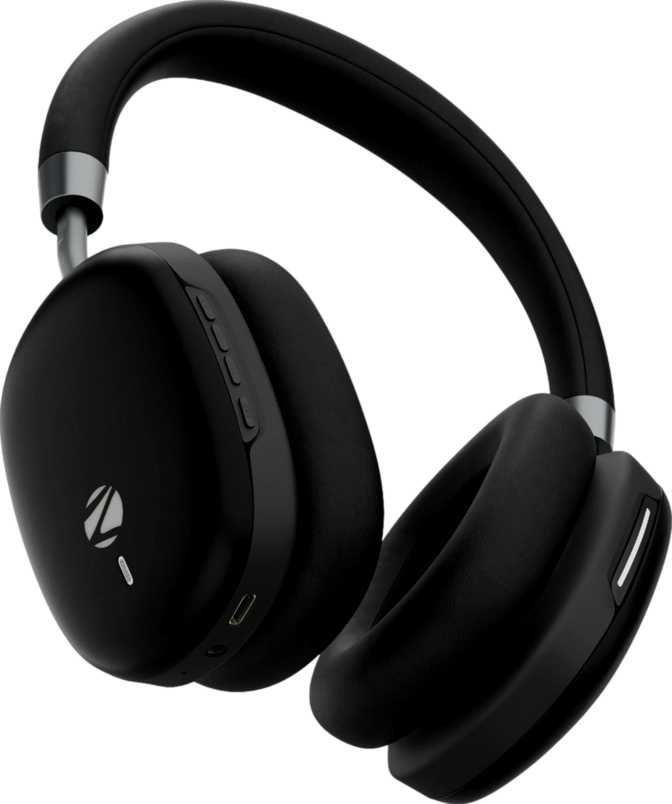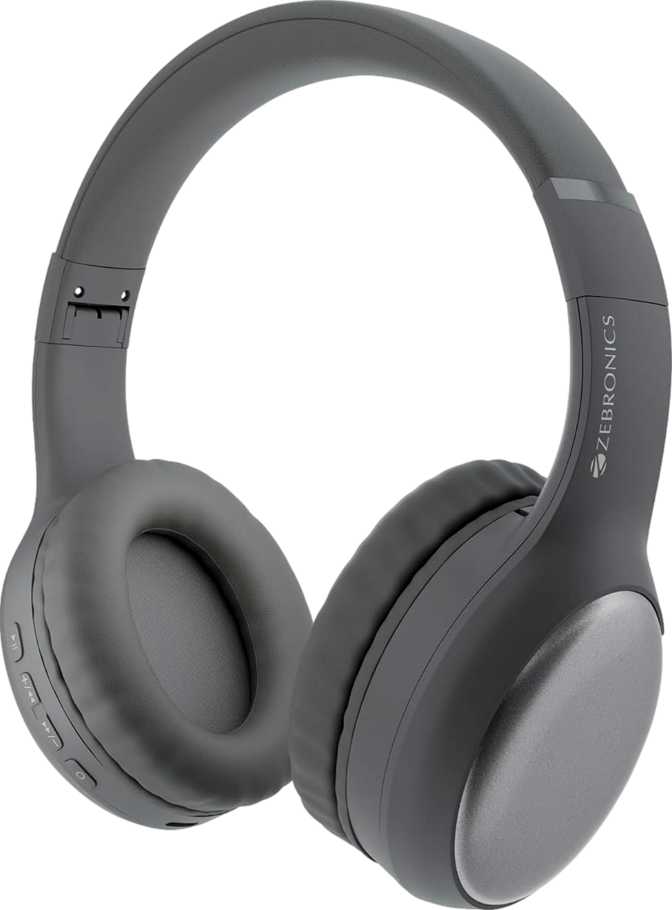
Zebronics Zeb Thunder Max Review: An Honest Look at This Headphone
HeadphonesZebronics Zeb Thunder Max
Editorial Score
out of 10
Best For Battery-First UsersBattery Life
~120 Hours
Bluetooth
Version 5.3
Multipoint
2 Devices
Water Rating
IPX5
Form Factor
Over-Ear
Charging
USB-C
Connection
Wired + Wireless
Design
Foldable
The Case for a Headphone That Outlasts Everything in Its Class
The budget wireless headphone market is one of the most crowded shelves in consumer electronics. Every month brings another wave of products promising studio-quality sound and premium features at entry-level prices — and most of them fail to deliver on those claims in any meaningful way. The Zebronics Zeb Thunder Max does not make those kinds of promises. Instead, it makes a quieter, more defensible pitch: a practical, durable, genuinely portable over-ear headphone built around an extraordinary battery life that makes every competing number in its price tier look modest.
That focus is both its greatest strength and the source of its limitations. Understanding which side of the ledger matters more to you is precisely what this review is designed to help you figure out.
Build, Design, and the Physical Experience
Weight and Wearability
The Zeb Thunder Max sits in the lighter half of the over-ear category — well below the threshold where fatigue typically becomes a concern during extended sessions. For students on marathon study runs or remote workers grinding through back-to-back calls, that weight advantage accumulates meaningfully over a full day.
The closed-back construction seals each ear cup, contributing to passive sound isolation and protecting the driver hardware from dust and moisture in a way that open-backed designs cannot match.
Portability and Folding
The Thunder Max folds flat for storage and travel — a feature budget-friendly over-ear headphones do not always include. It reduces significantly enough to fit inside a medium-sized bag without dominating the compartment, making it a genuine commuter companion.
Cables Done Right
The audio cable is detachable and tangle-free — a pairing that eliminates two of the most frustrating ownership experiences with cheaper headphones.
A detachable cable means a frayed or broken cable — the single most common headphone failure point — results in a cable swap rather than a full headphone replacement. The tangle-free design makes packing and unpacking a low-friction daily ritual.
Sound: What to Expect from the Drivers and Passive Isolation
The Drivers and What They Produce
The Thunder Max uses a driver size consistent with the vast majority of consumer over-ear headphones across all price segments. Driver size alone does not determine sound quality — the magnet assembly, housing acoustics, and tuning matter equally. For a headphone at this price, the expectation should be competent consumer-oriented sound: accessible bass, reasonably clear mids, and treble that is forgiving rather than analytical.
Note for Audio-Focused Buyers
The specification sheet does not confirm a neodymium magnet, which is the standard type in most modern headphones and is associated with stronger magnetic flux, higher efficiency, and cleaner transient response. This implies the sound output is tuned for everyday listening comfort rather than audiophile-grade resolution — entirely adequate for casual music, podcasts, and video calls.
Passive Noise Isolation Without the Electronics
There is no active noise cancellation on the Zeb Thunder Max. At this price that is an honest expectation-setter rather than a failure. What it offers instead is passive noise isolation: the natural reduction in ambient sound that comes from physically sealing the ear inside a cushioned cup.
This works well against consistent background noise — HVAC hum, distant traffic, office ventilation. It does very little against sharp or impulsive sounds. If quietening a moderately busy study or work environment is the goal, passive isolation handles that adequately. If you need the silence that ANC headphones deliver on a commute or flight, this headphone cannot provide it.
Sound Profile at a Glance
-
40mm Driver Unit
Standard size for full-range stereo reproduction -
Closed-Back Design
Delivers passive noise isolation naturally -
Stereo Speakers
Full stereo field for music and media -
No Active Noise Cancellation
Cannot suppress noise electronically -
No Spatial Audio
Not suitable for immersive or surround content -
Neodymium Not Confirmed
May affect maximum volume headroom and fine detail
Battery Life: Where the Thunder Max Changes the Conversation
Rated Wireless Playback
~120 hrs
Measured under controlled conditions at moderate volume
Most wireless headphones in the budget tier cap out between 20 and 40 hours before needing a charge. Mid-range options with more features often land between 30 and 60 hours. The Thunder Max's rated figure roughly triples the category norm — and that gap has real implications for daily life.
If you use these headphones for four hours every weekday, you would be reaching for the charging cable approximately once every six weeks. For a light listener — a few hours on weekends and occasional calls during the week — the interval could stretch to an entire month or more. You stop thinking about charging entirely.
Charging happens through the USB-C port — the current universal standard shared by most modern smartphones, tablets, and laptops. A built-in battery level indicator means you are never blindsided by an unexpected drop to zero. What this headphone does not support is wireless charging — you will need to plug in, which is a standard expectation at this price.
Battery Life Comparison
All figures are manufacturer-rated. Real-world results vary with volume and usage patterns.
Connectivity: Wired, Wireless, and Two Devices at Once
Bluetooth: Current Generation, Modest Range
Wireless audio runs on the current mainstream generation of Bluetooth — the same version found in most newly released smartphones and tablets. This translates to stable initial pairing, a reliable active connection, and improved coexistence alongside other wireless signals in environments where many Bluetooth devices compete simultaneously.
Dual-Device Multipoint: A Daily Practical Win
The Thunder Max maintains simultaneous Bluetooth connections to two paired devices. Audio priority shifts automatically — a phone call takes over from laptop audio and releases it cleanly when the call ends. No manual reconnection required.
This feature adds genuine daily value for hybrid workers who move between a work device and a personal phone, and it is not universally offered at this price tier.
Wired Mode: More Than a Backup
The wired connection via the detachable cable provides uncompressed analogue audio, eliminates latency entirely, and works in environments where Bluetooth is restricted. For gaming, this is the recommended mode — and it sidesteps the codec limitations of the wireless connection completely for quality-focused sessions.
Codec Support: The Honest Picture
Bluetooth audio quality depends partly on the codec used for wireless transmission. The Thunder Max supports SBC — the universal baseline — and nothing beyond it. The absence of AAC, aptX, and LDAC places a hard ceiling on wireless audio quality.
| Codec | Status | Practical Impact |
|---|---|---|
| SBC | Supported | Universal baseline — works on all devices |
| AAC | Not Supported | Notably affects iPhone audio quality |
| aptX | Not Supported | Better wireless quality for Android |
| aptX Low Latency | Not Supported | No low-latency wireless for gaming |
| aptX HD | Not Supported | No hi-res wireless audio |
| LDAC | Not Supported | No Sony hi-res wireless support |
| LDHC | Not Supported | No Huawei hi-res wireless support |
Calls and the Microphone Experience
The Zeb Thunder Max is headset-capable — it handles both audio output through the drivers and voice input through a single built-in microphone. For regular voice calls and video meetings in reasonably quiet environments, a single microphone performs adequately. Most users will not notice the difference from multi-mic headsets on standard home or office calls.
What it will not match is the multi-microphone arrays found in headphones specifically engineered for call-heavy professional use, which apply dedicated processing to suppress background noise and deliver cleaner voice pickup in louder settings. If open-plan office calls or consistently noisy environments are central to your use case, a headset with dedicated call-quality engineering is worth the step up in cost.
Call Feature Checklist
- Built-in microphone for calls and meetings
- On-device controls for call management
-
No hardware mute button. Muting requires going to device software — a friction point for frequent group call users.
-
No auto-pause on ear removal. Audio continues playing until manually paused when the headphone is taken off.
- No in-line remote — all controls sit on the ear cup
Durability and Weather Resistance
Water Resistance Certified
Tested against sustained water jets from any direction
The Thunder Max carries an IPX5 water resistance certification — tested to withstand sustained water jets from any direction. That covers heavy rain, splashing, and sweat from physical activity. The headphone is not rated for submersion — pool-adjacent use is off the table — but everything short of that is covered.
For an over-ear headphone, this level of protection is above what most users expect in the category and considerably more than the unrated or minimally rated alternatives at the same price. Outdoor commuters, gym users doing lower-intensity workouts, and anyone caught in unpredictable weather will find genuine peace of mind here.
Who Should Buy This — and Who Should Look Elsewhere
The Zeb Thunder Max Is Ideal For
-
Students and Remote Workers
Exceptional battery removes mid-day charging interruptions. Dual-device connection handles laptop-to-phone switching without any manual effort throughout the workday. -
Casual Everyday Listeners
Want wireless convenience at a low price without critically analysing codec fidelity, frequency response, or audio compression artefacts. -
Budget-Conscious Multipoint Users
Need simultaneous two-device connectivity and USB-C charging without paying for ANC or premium codecs they will not use. -
Commuters and Light Outdoor Users
IPX5 protection and a foldable build make this a resilient commuter companion that handles unpredictable weather without complaint.
Look Elsewhere If You Need...
-
Active Noise Cancellation
No ANC hardware whatsoever. Loud commutes, flights, and open-plan offices require electronic noise suppression this headphone cannot deliver. -
Quality Wireless Audio
SBC-only codec support caps the wireless audio ceiling. Audiophiles and anyone sensitive to compression artefacts will find this insufficient. -
Wireless Gaming
Without a low-latency codec, SBC Bluetooth creates perceptible lip-sync delay and audio lag during gameplay. Wired mode is the only viable option. -
Professional Calls in Noisy Environments
A single microphone without dedicated noise-cancelling processing struggles against constant background noise on important professional calls.
How the Zeb Thunder Max Compares to Its Competition
| Feature | Zeb Thunder Max | Typical Entry-Level (Budget Tier) |
Mid-Range with ANC (Higher Price Tier) |
|---|---|---|---|
| Battery Life (rated) | ~120 hours | 20–40 hours | 30–60 hours |
| Bluetooth Generation | v5.3 (Current) | v5.0 – 5.1 | v5.2 – 5.3 |
| Simultaneous Devices | 2 Devices | Rarely included | Sometimes |
| Charging Port | USB-C | Micro-USB common | USB-C |
| Active Noise Cancellation | No | No | Yes |
| Wireless Audio Codec | SBC Only | SBC Only | AAC / aptX |
| Water Resistance | IPX5 | IPX4 or Unrated | IPX4 – 5 |
| Detachable Cable | Uncommon | ||
| Foldable Design | Varies | ||
| Carrying Case Included | No | No | Sometimes |
Where It Excels and Where It Falls Short
Genuine Strengths
- Extraordinary battery endurance that genuinely eliminates battery anxiety — by a margin that doubles or triples the category norm.
- USB-C charging with a battery indicator — modern, convenient, and free from the cable compatibility issues that still plague many budget alternatives.
- Dual-device multipoint that works silently and automatically — a feature you notice every time it switches cleanly between your laptop and your phone.
- IPX5 water resistance — above average for the category and genuinely useful for commuters and outdoor users who face unpredictable conditions.
- Foldable and lightweight build that offers real portability without sacrificing the full over-ear form factor and its comfort advantages.
- Detachable tangle-free cable for wired backup and easy replacement if the cable ever fails — a thoughtful inclusion at this price.
Honest Weaknesses
- SBC-only wireless audio — the absence of even AAC is a disappointing codec ceiling that affects wireless sound quality, particularly for iPhone users.
- ~10-metre wireless range is tight for a current-generation Bluetooth headphone — competing devices regularly claim significantly more.
- No active noise cancellation — the noise isolation story ends at whatever the ear pads can block passively.
- No hardware mute button — a small but genuinely daily inconvenience for anyone on frequent group calls who needs to mute quickly.
- No carrying case — an inconsistency when the design investment goes into foldability but the box lacks a protective pouch to follow through on portability.
- Neodymium magnet not confirmed — the magnet specification implies tuning for comfort over precision, limiting appeal for quality-focused listeners.
Questions Real Buyers Ask Before Purchasing
Final Verdict
The Zebronics Zeb Thunder Max is a headphone with a clear identity: a practical, endurance-first everyday option for users who want wireless freedom without the low-level stress of constantly managing battery life. On that singular priority, it delivers more than anything in its tier — not marginally more, but structurally more than you would expect from a product at this price.
The dual-device connection, USB-C charging, IPX5 protection, folding design, and detachable cable reinforce the practical, no-fuss character of the product. These are daily-use features that reduce friction in a tangible, noticeable way — not spec-sheet entries that go unnoticed in practice.
The trade-offs are real and should be stated without softening. SBC-only codec support caps wireless audio quality at a level that audiophiles will find limiting. The absence of ANC means it cannot serve noise-intensive commutes or loud work environments. The Bluetooth range is tighter than it should be at this Bluetooth generation. The missing mute button is a genuine daily inconvenience for call-heavy users. These are gaps, not minor quibbles.
Buy the Zeb Thunder Max
If long battery endurance is your primary criterion, you listen casually without chasing audio fidelity, and you want a durable, dual-device capable headphone that simply stays out of the way. It earns its price cleanly for this profile of user.
Look Elsewhere If...
You care about wireless audio quality, active noise cancellation, or plan to use it seriously for gaming or professional calls. The budget is better directed at a headphone built specifically around those goals.