Zebronics Zeb PixaPlay 77G Review – Full HD Smart Projector Tested
ProjectorsBudget projectors have a long history of overpromising and underdelivering — pixelated images, apps that barely work, and speakers that sound like they belong on a toy. The Zebronics Zeb PixaPlay 77G tries to change that conversation. It arrives with a native 1080p image, a full smart TV platform, wireless casting from virtually any device, and a lamp rated for years of daily use. Whether it actually delivers on those promises — and who it is genuinely right for — is exactly what this review addresses.
Quick Specs
- Resolution1080p Full HD
- Contrast5,000:1
- Max Screen200 inches
- Lamp Life30,000h (eco)
- Weight1.4 kg
- HDR SupportNone
Design and Build: Compact, Clean, and Desk-Ready
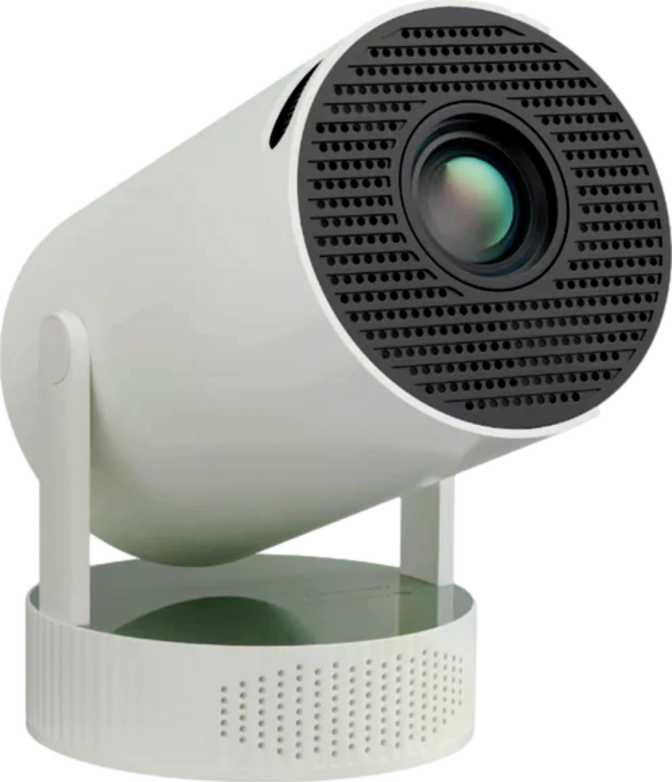
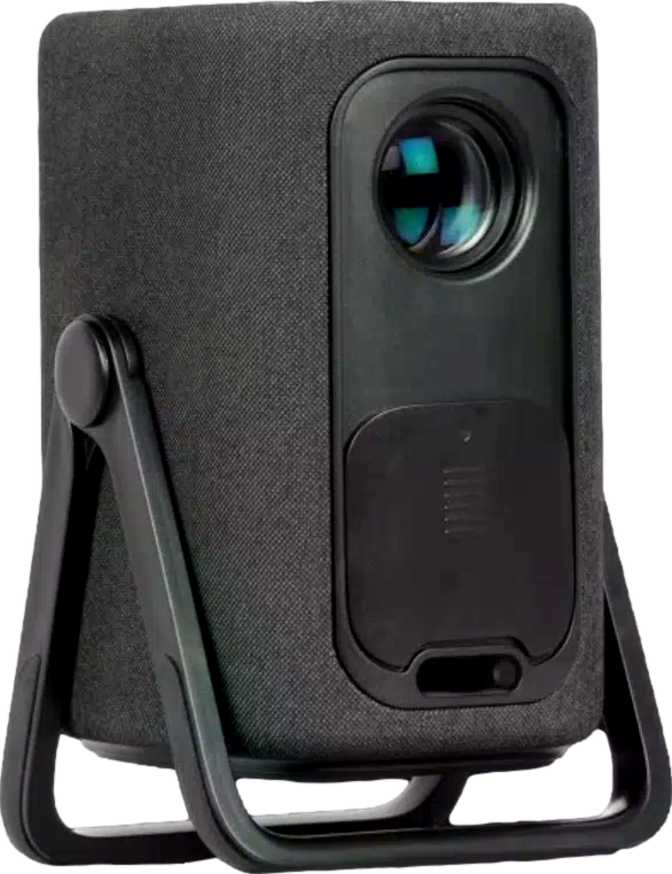
At roughly the size of a thick hardcover book, the PixaPlay 77G is smaller than many people expect from a projector with this capability set. Weighing in at just over 1.4 kilograms, it is light enough to carry between rooms without a bag and compact enough to fit on a crowded media shelf without dominating the space.
The footprint — approximately 220mm front to back, 138mm wide, and 143mm tall — is proportioned more like a modern streaming box on a stand than a traditional presentation-room projector. This form factor matters: it sits naturally on a coffee table, a bedside dresser, or a low cabinet without requiring a dedicated projector stand.
The physical design is functional rather than flashy, which fits Zebronics' approach to the value segment. The unit feels solid and purposeful in hand, controls and ports are logically laid out, and the included remote keeps the most-used functions accessible without hunting through menus.
Physical Dimensions
- Depth
- 220 mm
- Width
- 138 mm
- Height
- 143 mm
- Weight
- 1,400 g
- Volume
- ~4,341 cm³
Image Quality: What 1080p Really Means at This Price
Resolution That Actually Counts
The PixaPlay 77G outputs at Full HD — the same resolution as a standard Blu-ray disc or most streaming services at their mid-to-high quality tier. At a comfortable 10-foot viewing distance, the image holds enough detail for movie text, sports graphics, and gaming HUDs to remain legible. This is the baseline resolution serious home cinema setups require, and the PixaPlay 77G meets it natively — no upscaling, no interpolation tricks.
Contrast and Perceived Depth
With a 5,000:1 contrast ratio, the projector produces a meaningful separation between bright highlights and dark shadows. In a darkened room, this translates to images that feel three-dimensional rather than flat and washed out. Shadows in night scenes retain detail, and bright sky shots do not blow out into a uniform white wall. Many entry-level projectors at this price point offer 3,000:1 or less — 5,000:1 is a genuine differentiator here.
Screen Size: Up to 200 Inches
The projector can fill a screen up to 200 inches diagonally — that is a 16-foot wall. In practice, most living rooms max out between 100 and 150 inches before throw distance becomes a constraint, which means you will likely never hit the ceiling of what this unit can project. Even at 120 inches, the image remains bright enough for comfortable viewing in a properly darkened space.
HDR: A Known Trade-Off
The PixaPlay 77G does not support any HDR format — not HDR10, not HLG, not Dolby Vision. This is the single most significant image quality limitation to understand before buying.
HDR content — which now includes most premium streaming titles — will still play, but it will be tone-mapped to a standard dynamic range image, losing some intended visual depth. For movie enthusiasts who care deeply about colour accuracy and peak highlights, this matters. For everyday TV, sports, YouTube, and casual movie nights, the gap is less noticeable than manufacturers of HDR projectors would have you believe.
The Lamp: Built for the Long Haul
Unlike laser projectors — which use a solid-state light source — the PixaPlay 77G runs on a traditional lamp. In its energy-saving mode, the lamp is rated for 30,000 hours of use. Run this projector for four hours every evening and the lamp theoretically outlasts a decade of use before needing replacement.
The trade-off versus laser is that lamp brightness can very gradually decline over time, and lamps can occasionally fail early. Laser projectors never have this concern, but they typically cost significantly more. For the PixaPlay 77G's price category, a 30,000-hour lamp rating is an excellent result.
Lamp Life Perspective
Based on rated 30,000h eco-mode life. Actual results vary with usage conditions.
Smart TV Platform and Connectivity: The Real Star of the Show
Built-In Smart TV
The PixaPlay 77G runs a built-in smart TV platform — meaning no external streaming stick, no HDMI dongle, and no separate remote to manage. You can open streaming apps directly from the projector's interface, exactly as you would on a modern smart television. Combined with voice command support, navigating to content requires little more than asking for it.
Wireless Casting: Every Platform Covered
This is where the PixaPlay 77G genuinely stands out in its class. It supports all four major wireless casting standards — a combination that is rare at this price.
- Chromecast built-in — Cast from Android phones, Chrome browser, or any Chromecast-compatible app
- AirPlay — Mirror or cast from iPhones, iPads, and Macs without any adapter
- Miracast — Wireless screen mirroring from Windows PCs and compatible Android devices
- DLNA — Stream locally stored media from a NAS, computer, or compatible device on the same network
Wired Connections
| Port / Interface | Available | Notes |
|---|---|---|
| HDMI | 1 port | Standard full-size HDMI — one device at a time |
| USB | 1 port | Local media playback or power delivery |
| 3.5mm Audio Out | Yes | Connect headphones or external speakers directly |
| Bluetooth | Yes | Pair wireless speakers, soundbars, or headphones |
| Ethernet (RJ45) | None | Wi-Fi only — no wired network option |
| VGA | None | No legacy PC support |
| S/PDIF Optical | None | No optical audio output |
| Memory Card Slot | None | Use USB or DLNA for local media |
Built-In Speaker and Audio
The PixaPlay 77G includes an integrated speaker, which handles casual use — background music, YouTube, or a relaxed movie night — acceptably. It ensures the projector is usable straight out of the box without hunting for additional hardware.
For a proper home cinema experience, connecting external speakers via Bluetooth or the 3.5mm audio jack is the better path. Both options are present, and both are cable-free if you prefer wireless. The flexibility is there — use it whenever audio quality matters to you.
Audio Output Options
- Built-in speaker (out of box ready)
- Bluetooth wireless speakers/soundbar
- 3.5mm wired headphones or speakers
Who This Projector Is For
Ideal Buyers
- First-time projector buyers
Who want a true big-screen experience without a steep learning curve or a complex setup - Apartment dwellers and renters
Who cannot mount a large TV but want 100+ inches of watchable image from a device that stores in a cabinet - Mixed-device households
Where some members use iPhones and others use Android — AirPlay and Chromecast are both present simultaneously - Casual gamers and sports fans
Who want a large image for game nights or match days without home cinema-level spend - Parents
Who want a backyard or kids' room movie setup that is not precious or expensive to run
Look Elsewhere If You Are...
- An HDR enthusiast or cinephile
The lack of any HDR format support is a real limitation for premium content — colours and highlights will not render as the director intended - A multi-source wired user
One HDMI port handles one device at a time — a switcher adds complexity and cost if you regularly toggle between sources - Bright-room users
Like all lamp projectors, the PixaPlay 77G performs best in a darkened space — ambient daylight will significantly reduce perceived image quality - Wired-network-only setups
No Ethernet port means Wi-Fi is the only network option — not ideal for users who insist on a wired connection for streaming stability
How It Compares to the Alternatives
The PixaPlay 77G sits at a well-defined crossroads in the projector market. Understanding where it outperforms and where it concedes helps position it against typical alternatives a buyer at this price point would also be considering.
| Feature | Zebronics PixaPlay 77G | Typical Budget 720p Smart Projector | Mid-Range Laser Smart Projector |
|---|---|---|---|
| Native Resolution | 1080p | 720p | 1080p |
| HDR Support | None | None | HDR10 (typically) |
| Light Source | Lamp (30,000h eco) | Lamp (shorter rated life) | Laser (20,000–30,000h) |
| AirPlay | Rarely | Sometimes | |
| Chromecast | Sometimes | Typically | |
| Wireless Standards | 4 Standards | 1–2 | 2–3 |
| Lens Shift | Sometimes | ||
| Price Tier | Budget-to-Mid | Budget | Mid-to-Upper Mid |
Comparisons are against typical category products. Individual models vary. HDR availability depends on specific alternative model chosen.
Strengths and Weaknesses: An Honest Assessment
Where It Delivers
The PixaPlay 77G is a thoughtfully configured product for its target price. Its 1080p resolution is the floor for any setup you will enjoy regularly — anything lower starts to show its limitations quickly at the screen sizes this projector can produce.
The 30,000-hour lamp rating removes the lamp-anxiety that older projectors carried. This is a figure that effectively means the average owner will never replace the lamp during their period of ownership — a meaningful long-term cost advantage over units with shorter-rated lamps.
The complete wireless ecosystem — four casting standards simultaneously available, a full smart TV platform with voice commands, Bluetooth audio output, and Wi-Fi connectivity — means this device is ready to use without a box of adapters or dongles. This is the area where the PixaPlay 77G outperforms most rivals in its class most convincingly.
Where It Falls Short
The weaknesses are real and should be weighed seriously. The absence of HDR support — in any form — is a meaningful gap for anyone building a streaming setup around premium content. Most major streaming services now grade their best content for HDR, and a projector that cannot respond to those signals will render that content differently than intended. This is not a dealbreaker for casual viewers, but it is a genuine limitation for anyone who cares about the technical quality of their picture.
The single HDMI port is workable but creates friction for users with multiple wired sources — a games console, a streaming stick, and a laptop simultaneously connected requires a switcher and additional cost.
The lack of lens shift means you need to position the unit carefully at setup. After that it is fine, but the initial placement leaves no room for optical correction — angled or off-centre mounting is simply not an option here.
Questions Real Buyers Ask Before Purchasing
Final Verdict
Our Recommendation
The Zebronics Zeb PixaPlay 77G earns its place in the market by making smart choices where they count. Full HD resolution, a lamp that will not need replacement anytime soon, and one of the broadest wireless connectivity suites available at this price tier — this is a projector that removes friction rather than adding it.
The HDR limitation is a genuine trade-off, not a minor footnote. If your streaming diet consists primarily of prestige films on premium tiers and you care about the visual experience at a technical level, budget up to a projector with HDR10 support.
But if you want a large, sharp, easy-to-use home cinema experience — movie nights, sports, gaming, family viewing — without complexity and without a high-end price, the PixaPlay 77G delivers honestly and reliably. It is the right projector for a buyer who knows what they are paying for and is not chasing a spec sheet they do not actually need.
Verdict Summary
- True 1080p at an accessible price
- Best-in-class wireless casting breadth
- Decade-plus lamp life in eco mode
- Full smart TV — no dongles needed
- No HDR in any format
- Single HDMI port only
- No lens shift for placement flexibility
Overall Rating
8/10
Great Value for Casual Home Cinema