Zebronics Zeb-PixaPlay 76B Review: Compact Laser Projector Tested
ProjectorsThe home projector market has quietly split into two very different worlds: the premium segment, where established brands charge accordingly for every feature, and the accessible segment, where manufacturers like Zebronics are rewriting the value equation. The Zeb-PixaPlay 76B sits in the second camp — a laser-based smart projector that fits in the palm of your hand, connects to virtually everything in your home, and can throw an image the size of a small wall. Whether that combination earns a spot in your living room depends on a few things this review makes clear.
Quick Verdict & Key Specifications
Overall Score
Value Pick
Strong wireless connectivity and a near-permanent laser light source at an accessible price. Best for casual home cinema, portable use, and users who value flexibility over maximum image sharpness.
Design and Build: Compact and No-Nonsense
Physical experience, dimensions, and portability
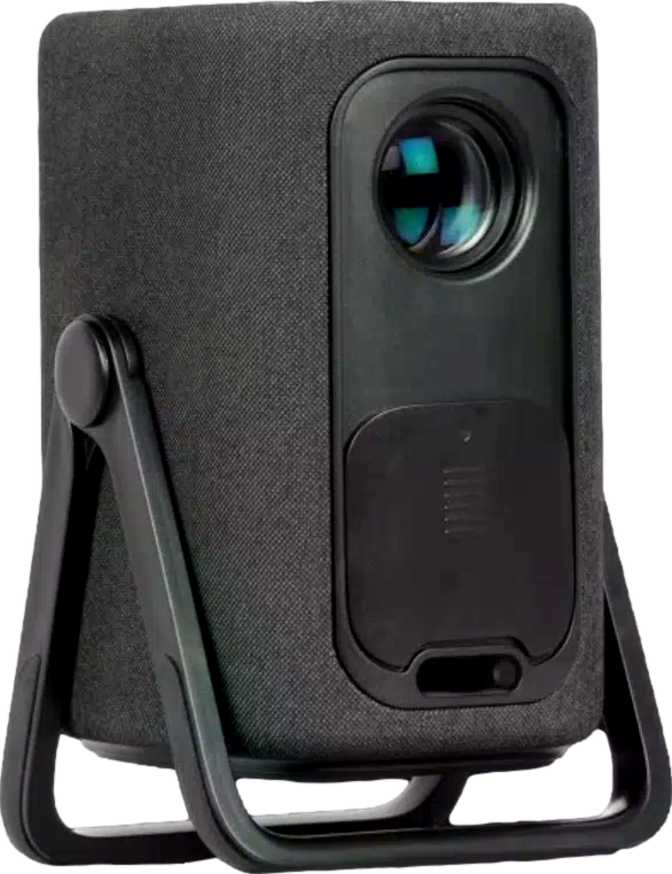
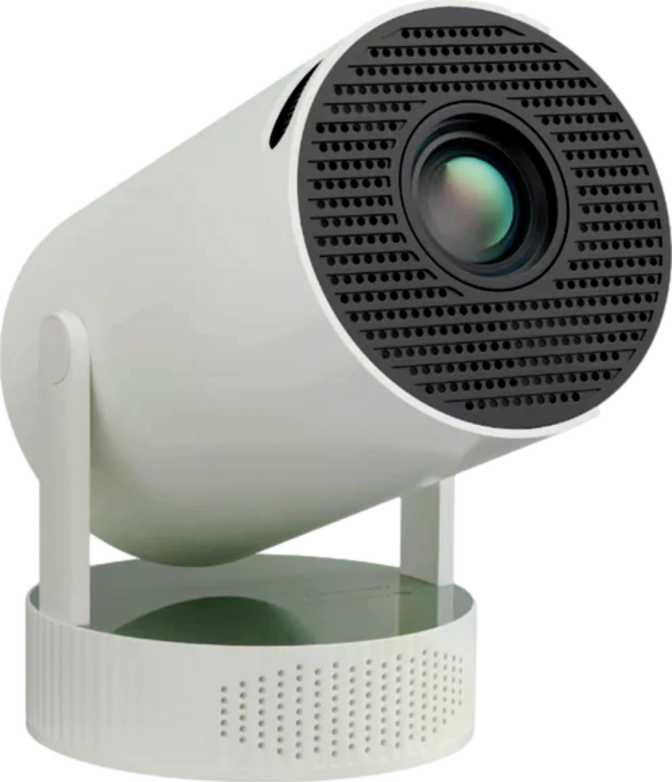
The first thing you notice about the PixaPlay 76B is how small it is. At roughly 105 mm wide, 155 mm tall, and 144 mm deep — approximately the size of a thick hardcover novel — it weighs just 682 grams. That is lighter than most 1-litre water bottles. For a projector with a laser light source and built-in smart TV functionality, that footprint is genuinely impressive.
Roughly the volume of a thick hardcover book, the PixaPlay 76B occupies minimal surface area on a shelf, desk, or coffee table — and does not dominate the room.
At 682 grams, this projector travels as easily as a camera. Bedrooms, living rooms, outdoor evenings with a portable power source — repositioning takes seconds.
Not engineered for permanent ceiling-mounting, the PixaPlay 76B is designed to sit on a surface, be picked up, and moved freely — making it a flexible, multi-room solution.
Build quality at this price tier will not rival premium brands, but the PixaPlay 76B's compact chassis feels solid enough for everyday home use. It does not feel like something you should hesitate to pick up and relocate regularly — which is precisely the point.
The Laser Light Source: Why It Changes Everything
Light source technology, longevity, and colour consistency
Most projectors at this price point use LED lamps that dim noticeably after a few thousand hours and eventually require an expensive bulb replacement. The PixaPlay 76B uses a laser light source, and this single specification changes the ownership experience significantly.
Rated Laser Lifespan
50,000
hours
At four hours of use every single day, that is over 34 years before the laser reaches the end of its rated life. In practice, most owners will outgrow the projector long before the light source becomes a concern.
Laser also means more consistent brightness and colour accuracy over time. Unlike LED lamps, which gradually fade and shift in colour temperature as they age, laser maintains its output characteristics for dramatically longer. The quality you see on day one is essentially what you will have years later — and that matters if you plan to keep this projector for the long term.
Image Quality: An Honest Look at 720p
Resolution performance, contrast ratio, and HDR support
The PixaPlay 76B outputs at 720p resolution — 1,280 × 720 pixels. This is the specification that requires the most honest discussion, because it is the one most likely to determine whether this projector belongs in your home.
How 720p Performs at Different Screen Sizes
720p is a legitimate HD standard. On smaller projection sizes — roughly 80 to 100 inches viewed from across a normal room — the image looks clean and watchable for streaming video, gaming, and casual movie nights. Pixel density at those distances is sufficient for comfortable, enjoyable viewing.
Where 720p begins to show its limits is when you push toward the projector's maximum 150-inch throw size and sit relatively close. At that scale, individual pixels become more visible, and fine detail — text, facial features, intricate backgrounds — starts to soften. For a 150-inch screen, a 1080p source would reveal noticeably more sharpness.
Contrast, Colour, and What HDR Absence Means
The 3,000:1 contrast ratio is a reasonable figure for a laser projector at this price point. Contrast determines how different the darkest shadows and the brightest highlights in an image can appear simultaneously. At this level, dark scenes retain some shadow detail and bright highlights carry punch. It is not the 10,000:1-plus figure found on premium units, but it is adequate for a properly dimmed room.
No HDR Support — Important to Know
The PixaPlay 76B does not support HDR10, HDR10+, or Dolby Vision. High Dynamic Range content — increasingly the default on streaming platforms — will be tone-mapped and displayed in standard dynamic range. The image remains watchable, but the expanded colour and brightness range the content was graded for will not be reproduced. If HDR is a priority, this projector will not deliver it.
3D content with compatible glasses is also unsupported, though this is a niche requirement for the vast majority of home viewers today.
Connectivity: Impressively Well-Connected
Wireless casting standards, physical ports, and network features
This is where the PixaPlay 76B earns considerable goodwill. For a compact, accessible projector, the connectivity suite is comprehensive — and includes a combination of wireless standards rarely found together at this price tier.
Wireless — All Major Standards
- Chromecast Built-InCast directly from any Android device, Chrome browser, or compatible app — YouTube, Netflix, Hotstar, Spotify — all natively, without additional hardware.
- AirPlayiPhone and Mac users can mirror their screen or cast compatible apps wirelessly, without cables or additional dongles.
- MiracastWindows laptops and Android phones can mirror their displays directly, covering devices that neither Chromecast nor AirPlay can reach natively.
- Wi-FiThe backbone for all three casting standards and the built-in smart TV platform. Having all three ecosystems covered on one device is genuinely unusual at this price.
Physical Connections
- HDMI (1 Port)Connects a laptop, gaming console, streaming stick, or Blu-ray player. One port means one wired source at a time.
- USB (1 Port)Supports flash drives for direct local media playback — movies, music, and photos stored on a USB stick.
- 3.5mm Audio JackRoutes audio to a wired speaker or headphones — an important escape valve given the limitations of the built-in speaker.
DLNA and Bluetooth
DLNA certification lets the projector stream from a local network media server or NAS drive — useful for anyone who maintains a home media library. Bluetooth enables pairing with wireless speakers or headphones, addressing the audio gap directly without requiring a cable.
Smart TV, App Control, and Onboard Features
Built-in platform, smartphone control, and usability
The PixaPlay 76B operates as a standalone streaming device without requiring any external source. A built-in smart TV platform lets you launch apps, browse content, and stream directly from the projector itself — no streaming stick or separate media player required out of the box.
Voice commands are not supported on this model — navigation is entirely manual via app or remote. For those accustomed to voice-controlled smart TVs, this is worth noting before purchase.
Audio: The One Area to Manage Expectations
Built-in speaker, the Dolby Atmos reality, and the external audio solution
The PixaPlay 76B has a built-in speaker. It does not have stereo speakers — this is a single-channel mono audio system. The speaker is adequate for hearing what is happening on screen in a quiet room. It is not suitable for a satisfying movie-watching or gaming audio experience.
About the Dolby Atmos Badge
The Dolby Atmos specification refers to decoding capability — the projector can process Dolby Atmos audio tracks from streaming content. However, the spatial, immersive experience Dolby Atmos is famous for requires multiple speakers and a room-filling sound stage. A single built-in mono speaker cannot reproduce that effect. The badge should be understood as “compatible for decoding,” not “capable of full Atmos playback.”
The practical solution is straightforward: pair a Bluetooth speaker or plug a wired speaker into the 3.5mm output. A compact Bluetooth speaker costing a fraction of the projector’s price will transform the listening experience. If you do not already own one, budget for it alongside this projector.
Who Should Buy the Zeb-PixaPlay 76B?
Real-world usage scenarios and honest audience targeting
This Projector Suits You If…
- You are a student or young professional wanting a big-screen experience in a rented flat without committing to a large TV.
- You want an occasional movie night projector that does not require permanent ceiling installation.
- You travel frequently and want portable projection — 682 grams is genuinely backpack-friendly.
- You are a casual gamer wanting a large display for single-player or couch co-op gaming.
- Your household mixes Apple and Android devices and you want wireless casting that covers all of them without adapters.
- You want laser reliability and longevity without paying a significant premium for it.
Look Elsewhere If…
- You are a home theatre enthusiast who prioritises image quality — the 720p ceiling and absence of HDR will disappoint.
- You plan to use the projector in a well-lit or naturally bright room — ambient light will wash out the image significantly.
- You need multiple HDMI sources connected simultaneously — one port is the limit.
- You expect room-filling stereo or surround sound from the built-in speaker.
- Voice command control is important to you — this model does not include voice assistant integration.
How It Compares to the Alternatives
Competitive positioning against similar-tier projectors
The PixaPlay 76B competes primarily with LED-based smart projectors at a similar price and with step-up 1080p models that cost more. Here is where it stands on the criteria that matter most.
| Feature | Zebronics PixaPlay 76B | Typical LED Projector (Similar Price) | Mid-Range 1080p Smart Projector |
|---|---|---|---|
| Light Source | Laser — 50,000h | LED (20,000–30,000h) | LED or Laser |
| Resolution | 720p | 720p or 1080p | 1080p |
| HDR Support | Sometimes | ||
| Built-in Smart TV | Varies | ||
| AirPlay | Rarely | Occasionally | |
| Chromecast Built-In | Rarely | Sometimes | |
| Weight | 682 grams | 800g – 1.5 kg | 1 – 3 kg |
| Audio System | Mono speaker | Mono or Stereo | Stereo (usually) |
The laser light source is the PixaPlay 76B's most distinctive advantage over similarly priced LED alternatives. Where it trails is resolution — several competitors at comparable prices now offer 1080p. If maximum image sharpness is the priority, those alternatives deserve consideration. If long-term reliability, wireless versatility, and portability are the deciding factors, the PixaPlay 76B holds its ground well.
Honest Assessment: Strengths and Weaknesses
A balanced look at what this projector genuinely does well and where it falls short
Where It Excels
Laser Longevity
The laser light source alone justifies serious consideration. A rated lifespan of 50,000 hours means this projector will outlast the owner's interest before the light becomes an issue — and brightness stays consistent throughout, unlike lamp alternatives that fade over time.
Unmatched Wireless Breadth
Having Chromecast, AirPlay, and Miracast together on one device at this price is genuinely unusual. Most competitors offer one or the other. The PixaPlay 76B covers every device ecosystem in a typical household without adapters or workarounds.
True Portability
At 682 grams with laser reliability and built-in smart TV, the PixaPlay 76B is one of the few projectors in this class that can convincingly be called portable. You are not just moving it between rooms — you can genuinely take it with you.
Where It Falls Short
720p Is a Ceiling, Not a Starting Point
The resolution limit is real and non-negotiable. Buyers who watch a lot of streaming content in a dark, dedicated viewing room will notice the trade-off — particularly at larger sizes where pixel density becomes visible. The absence of HDR compounds this; the image will look noticeably less vibrant than a comparable display with HDR support.
Mono Audio Requires a Workaround
The mono built-in speaker functions but does not satisfy. Anyone who cares about sound — and most movie viewers do — will need an external Bluetooth or wired speaker, adding to the effective cost of ownership.
Single HDMI Port Limits Physical Sources
One HDMI input means one wired source at a time. Users with a console, laptop, and streaming stick will need an HDMI switch or rely more heavily on wireless casting options.
Common Buyer Questions, Answered
The questions real buyers search for before purchasing
Final Verdict
Our recommendation and purchase verdict
Our Score
The Zebronics Zeb-PixaPlay 76B is a smart, honest product that does not try to be something it is not. It offers laser reliability, broad wireless compatibility, and genuine smart TV functionality in a form factor that fits anywhere and weighs less than a bag of flour.
The trade-offs are real but predictable: 720p resolution is a ceiling for those who want maximum image sharpness, no HDR means streaming content loses its colour and brightness advantage, and the mono speaker requires an external audio solution to be enjoyable. None of these are surprises at this price point.
If you want a projector that will last years without lamp-related headaches, connects effortlessly to every device in your household, and delivers a large image for movie nights and casual use — the PixaPlay 76B earns a confident recommendation. If maximum image sharpness, full HDR colour, or room-filling sound are non-negotiable, plan to spend more on a 1080p alternative with HDR support.