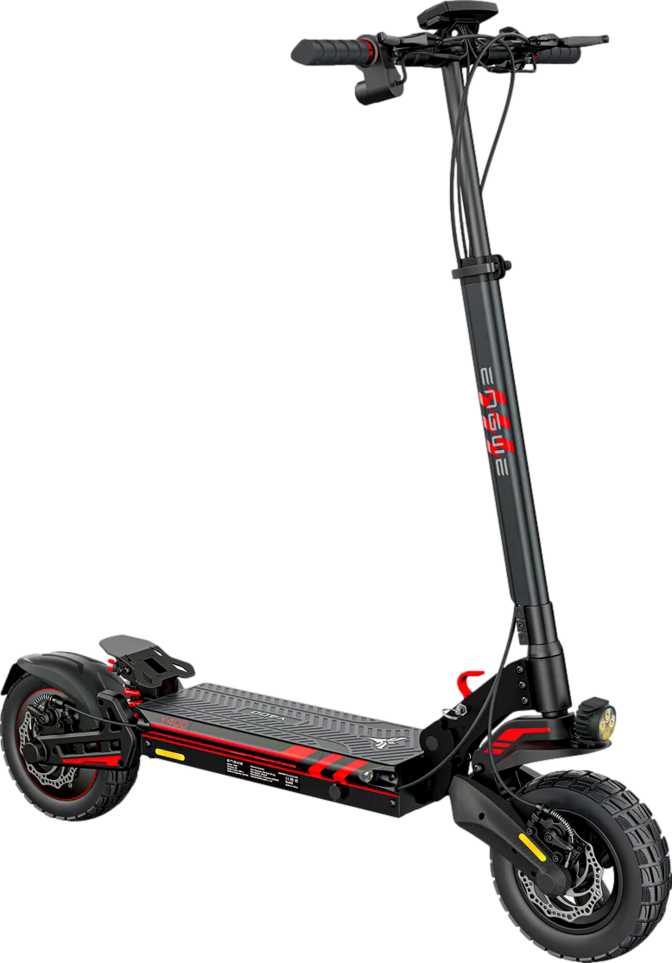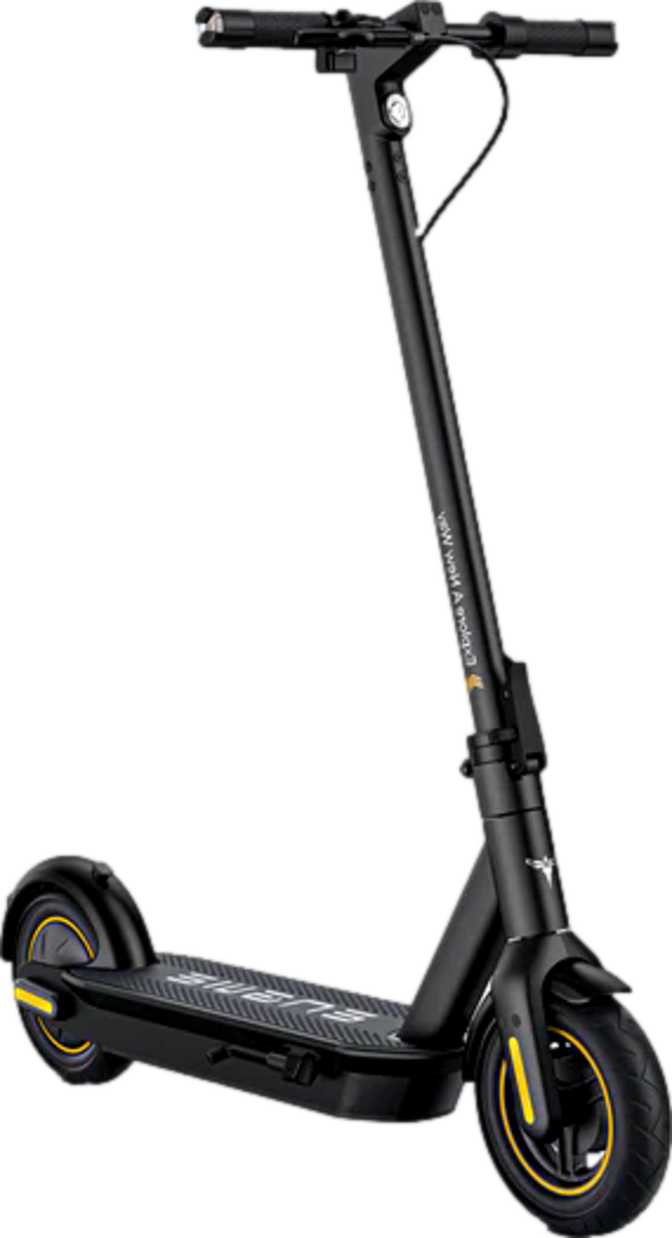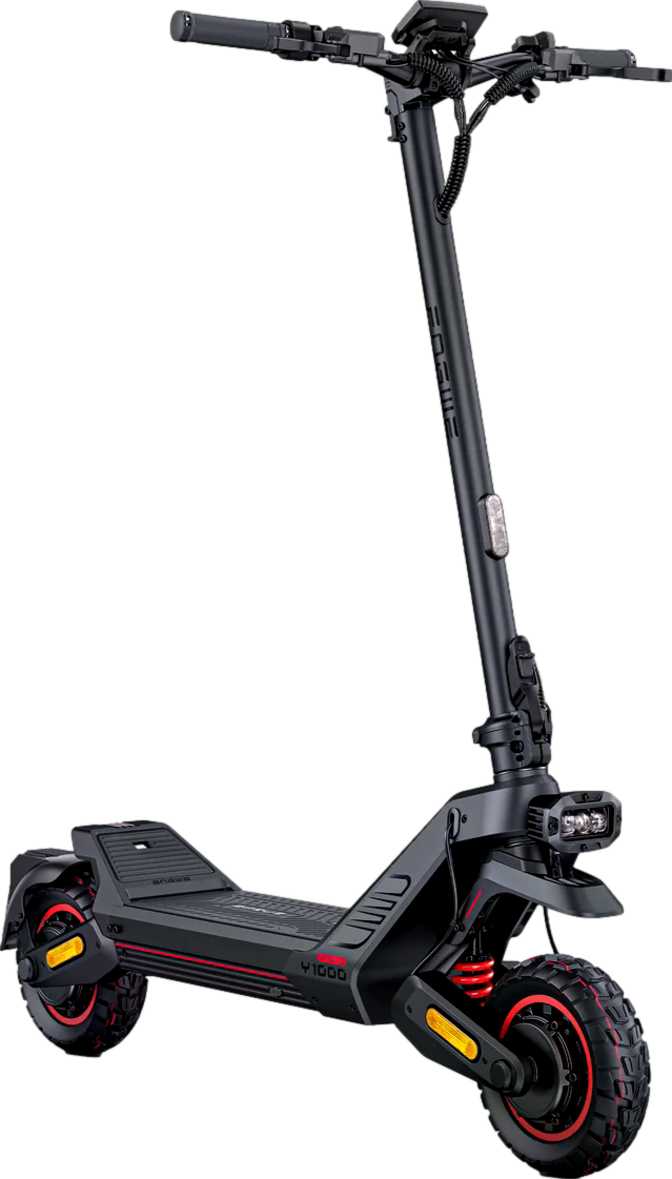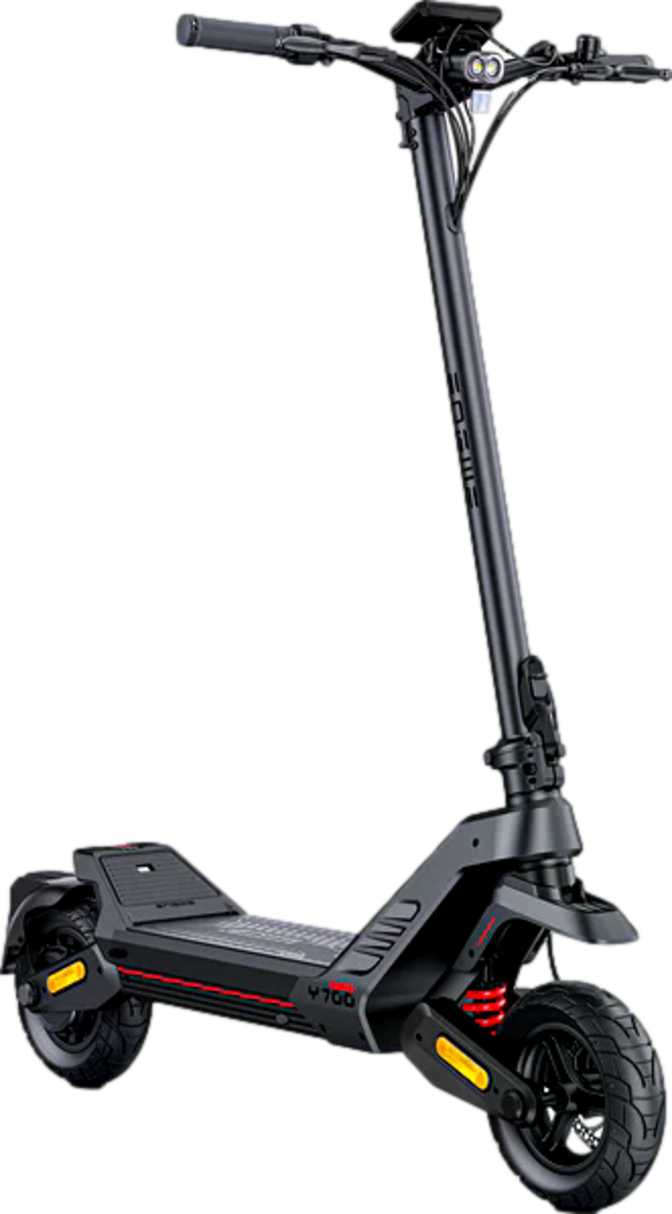
Engwe Y700 Review: The Long-Range Electric Scooter Built for Real Commuters
Electric ScootersMost electric scooters ask you to compromise. Range or portability. Power or price. The Engwe Y700 arrives with an unusually ambitious pitch: a foldable standing scooter built around a battery pack so large it rivals some electric bikes, wrapped in a frame heavy enough to telegraph genuine structural intent. It is not trying to be the lightest scooter on the block. What it offers instead is stamina, capability on imperfect roads, and a confidence in its own engineering that appeals to a specific, well-defined type of rider — one who commutes meaningful distances every day and refuses to be caught short of charge.
Whether that trade-off makes sense for you depends entirely on how you ride, where you ride, and how you get your scooter from Point A to a charging socket. This review works through every angle of that question.
Quick Verdict
- Exceptional battery range
- Powerful single motor
- Full suspension + pneumatic tires
- Heavy at ~37 kg
- 9-hour charge time
At a Glance: Key Specifications
The numbers that define the Y700 — explained in plain terms.
Motor
1,200W
Battery
873.6 Wh
Max Range
85 km
Top Speed
25 km/h
Max Load
120 kg
Weather
IPX5
Design and Build Quality
Built like it means business — here is what the physical experience actually tells you.
Physical Presence and Dimensions
The Engwe Y700 is a large scooter. At roughly 1.3 metres tall and nearly 1.3 metres wide when deployed, it fills its footprint with authority. The chassis dimensions reflect a machine engineered for adults with genuine daily mileage in mind — the deck sits low enough for stability, and the handlebar width gives confident steering leverage on roads that fight back.
Weight Reality Check
At approximately 36.7 kilograms, this scooter weighs roughly twice as much as a typical entry-level commuter model. It folds — a genuinely useful feature — but nobody is casually tucking this under one arm for a flight of stairs. Plan your route accordingly: if your commute involves multiple flights without a lift, you will feel every one of those kilograms.
For riders whose journey is mostly dock-to-dock — from a building entrance to a parking area — the weight is far less of a day-to-day concern, and the structural solidity it implies becomes a genuine advantage.
Build Features at a Glance
-
IPX5 Weather Resistance
Handles sustained rain and puddle spray comfortably. Not designed for submersion or jet washing. For typical all-weather urban commuting, IPX5 is a meaningful and reassuring standard.
-
Integrated Front and Rear Lighting
Both lights are built-in as standard — no aftermarket additions needed. Meets basic legal visibility requirements in most markets and makes the Y700 a credible low-light commuter.
-
10-Inch Pneumatic Tires + Suspension
Air-filled tires absorb road vibration the way solid rubber cannot. Combined with the built-in suspension system, the Y700 handles imperfect urban terrain that turns lighter scooters into fatigue machines. Riders coming from solid-tire scooters will notice the difference immediately.
-
Foldable Frame
The folding mechanism is a practical feature for storage and transport. It does not make the Y700 lightweight, but it does make it more manageable for flat storage, car boots, and tight spaces.
Performance: 1,200 Watts Through a Single Motor
Raw output, real-world implications, and what the numbers mean for your daily ride.
Power and Speed in Context
The Y700's motor delivers 1,200 watts of rated power — a substantial figure for a single-motor scooter. Many urban commuter scooters operate on motors in the 250–500W range. The Y700 operates at more than twice that output, which directly translates into responsiveness at the start of a ride, confident handling under load, and — critically — how the scooter performs when the terrain climbs.
Top speed is capped at 25 km/h, aligning with regulated e-scooter limits across the European Union and many other markets. For most urban commuters, 25 km/h is entirely appropriate: fast enough to make meaningful time over distances of 5–20 kilometres, and within the safe operating envelope of a standing scooter on shared roads.
Torque, Hills, and Load Capacity
At 28 Newton-metres of torque, the Y700 pulls with authority from a standstill and maintains that pull through gradients. The scooter is rated to climb inclines up to 20 degrees — steep by city standards, equivalent to some of the most punishing residential streets in hilly cities. Riders who live at the top of a hill will find the Y700 handles the ascent without the laboured slowing that plagues underpowered alternatives.
The maximum rider capacity of 120 kilograms is generous relative to many competitors, which often cap out at 100 kg or lower. The motor power and build mass back up that figure with credibility — heavier riders retain meaningful performance rather than seeing capability collapse under load.
Performance Metrics Overview
Motor Output
1,200W
vs 250–500W typical
Max Torque
28 Nm
strong hill pull
Climb Angle
20°
steep urban grades
Top Speed
25 km/h
EU-regulation compliant
Battery and Range: The Y700's Most Impressive Credential
This is where the Engwe Y700 separates itself from the field — decisively.
A Battery Pack That Changes the Calculation
The battery at the heart of the Y700 stores 873.6 watt-hours of energy. A typical commuter electric scooter carries somewhere between 250 and 500 Wh. Some premium models reach 600–700 Wh. The Y700 exceeds 870 Wh — territory more associated with electric bikes and mopeds than standing scooters.
The real-world outcome is a claimed range of up to 85 kilometres on a single charge. Accounting for real-world variables — rider weight, terrain, speed, wind, and temperature — a conservative expectation for a heavy rider in varied conditions sits at 55–65 kilometres. Even at that lower bound, the Y700 handles most round-trip urban commutes without a midday charge. That is the practical threshold that separates a viable daily driver from a scooter requiring careful range planning.
For a rider covering 20–30 kilometres daily, the Y700 can go multiple days between charges. For longer-distance commuters, it may still complete a full round-trip where smaller scooters need an office charging session.
Wh capacity by scooter class
Removable Battery
Charge indoors, anywhere
Battery Indicator
Always know your range
Removable Battery: Underrated Feature
The battery is removable — a practically significant feature that often gets underweighted. It means you can carry the pack separately to an indoor charging socket rather than needing a power outlet near where you park the scooter. For riders who park in a secure basement, a shared building entrance, or any space without accessible mains power, this unlocks a charging option that would otherwise be unavailable.
Charging Time: The Trade-Off
Full recharge takes approximately 9 hours — a direct consequence of the battery's size. Charging overnight is the obvious solution: plug in before sleep, ride in the morning. The math works cleanly for a daily commuter. It becomes a mild inconvenience only if you regularly need a midday top-up or forget to plug in the night before. The built-in battery level indicator ensures you always have a clear read on remaining range.
Smart Connectivity
The Y700 pairs with a dedicated smartphone app, adding a layer of control and visibility beyond the handlebars.
The Y700 connects to a dedicated smartphone application. This class of scooter app typically enables ride statistics tracking, battery monitoring, riding mode selection, and anti-theft lock functionality. For riders who want more than a basic on/off experience — who want to log commute data, monitor battery health over time, or adjust performance settings — the app integration is a meaningful addition.
First-time smart scooter owners can expect a short setup curve. The payoff is a more informative and controllable ride experience across the lifetime of the scooter.
- Ride statistics and distance tracking
- Remote battery level monitoring
- Riding mode adjustment
- Anti-theft lock via app
Who This Scooter Is For — and Who Should Look Elsewhere
The Y700 has a clear purpose. Knowing whether it matches yours saves you time and money.
- Rides most days, covering 15+ kilometres one way
- Route includes hills, uneven surfaces, and unpredictable weather
- Stores scooter without needing to carry it up stairs daily
- Weighs up to 120 kg and wants full-performance capability
- Wants a no-compromise commuter that charges overnight and goes all day
- You carry your scooter up multiple flights of stairs daily — at nearly 37 kg, this will cause physical strain quickly
- You primarily use a scooter for short, casual trips where range is irrelevant
- You need speeds above 25 km/h where legally permitted
- You want a seated riding option — the Y700 is a standing-only scooter
- Your storage space is very limited — even folded, the Y700 has a large footprint
How the Engwe Y700 Compares to Its Alternatives
Positioned against comparable commuter and heavy-duty scooter categories.
| Criteria | Engwe Y700 | Typical Mid-Range Commuter | Heavy-Duty Competitor Class |
|---|---|---|---|
| Battery Capacity | ~874 Wh | 350–500 Wh | 500–750 Wh |
| Est. Real-World Range | 55–80 km | 25–45 km | 40–65 km |
| Motor Power | 1,200W (single) | 350–500W | 500–1,000W |
| Scooter Weight | ~37 kg | 12–20 kg | 25–35 kg |
| Pneumatic Tires | Yes (10") | Often solid or smaller | Varies |
| Suspension | Yes | Often front-only or none | Usually yes |
| Removable Battery | Yes | Rarely | Sometimes |
| Climb Capability | Strong (20°) | Moderate | Good |
| Max Rider Weight | 120 kg | 90–100 kg | 100–120 kg |
The Y700's core competitive advantage is its battery-to-capability combination. No comparably sized battery pack typically comes in a package this complete — with full suspension, pneumatic tires, dual brakes, integrated lighting, and app connectivity included as standard. It concedes ground to lighter scooters optimised for urban agility and daily carry, and to dual-motor configurations that offer more raw acceleration at the cost of range or price.
Honest Assessment: Strengths and Where It Falls Short
No product is perfect. Here is what the Y700 genuinely excels at — and where you should temper expectations.
Where It Excels
The Engwe Y700's engineering centres on a single, clear idea: give serious commuters enough range that battery anxiety simply leaves the conversation. That battery pack is genuinely exceptional for this form factor, and the motor has the output to carry that weight and a rider through hilly terrain without hesitation.
The pneumatic tires and suspension combination is not a marketing afterthought — on real roads, it transforms ride quality over anything longer than a casual urban hop. For a rider covering 30–50 kilometres daily, the Y700 is one of a small number of standing scooters that can complete that round-trip in a single charge with margin to spare.
The removable battery and IPX5 rating round out a package that feels genuinely considered rather than assembled from a catalogue.
Where It Asks for Compromise
The weight is the honest counterpoint and deserves directness rather than a footnote. This is a heavy machine by any scooter standard. Riders who carry scooters frequently — up and down stairs, in and out of vehicles, through tight spaces — will find the Y700 tests physical commitment in a way that lighter options do not. The folding mechanism helps, but it does not change the underlying physics.
The 9-hour charge time similarly asks for a committed overnight charging habit rather than opportunistic top-ups.
The single-motor configuration is worth noting for buyers comparing against dual-motor alternatives. A single 1,200W motor is a capable unit, but dual-motor setups distribute load differently and can offer better traction on surfaces where grip is variable. For most paved urban commuting, the single motor is entirely sufficient. For riders anticipating loose surfaces or maximum-load conditions on steep grades, dual-motor options merit a direct comparison.
Questions Buyers Ask Before Purchasing
Straight answers to the most common pre-purchase questions about the Engwe Y700.
Final Verdict: Should You Buy the Engwe Y700?
The Engwe Y700 earns a strong recommendation for one particular buyer: the dedicated adult commuter who covers meaningful daily distances, tolerates a heavier scooter in exchange for exceptional range, and wants a machine with enough motor output and road-smoothing capability to make every ride genuinely comfortable rather than merely functional.
Its battery is the headline act, and it delivers on the promise. The supporting cast — suspension, pneumatic tires, dual brakes, IPX5 protection, and a removable pack — makes the overall package feel considered. For urban riders who have repeatedly been burned by smaller scooters running dry on longer routes, the Y700 resolves that frustration with unusual finality.
If you are buying your first electric scooter for casual short trips, or if stairs are a daily feature of your commute, the Y700 will be more scooter than your situation demands. For everyone else who rides seriously and needs the distance to prove it — the Engwe Y700 makes a compelling case.
Overall Rating
4.5
out of 5